Andalusian Musings

The seed was sown more than a year ago. A colleague based in Seville (and a native Andalusian) suggested a rough itinerary for me after I mentioned my interest in traveling in the region. In early June I used it to guide me on a 10-day tour of some of Andalusia’s highlights.

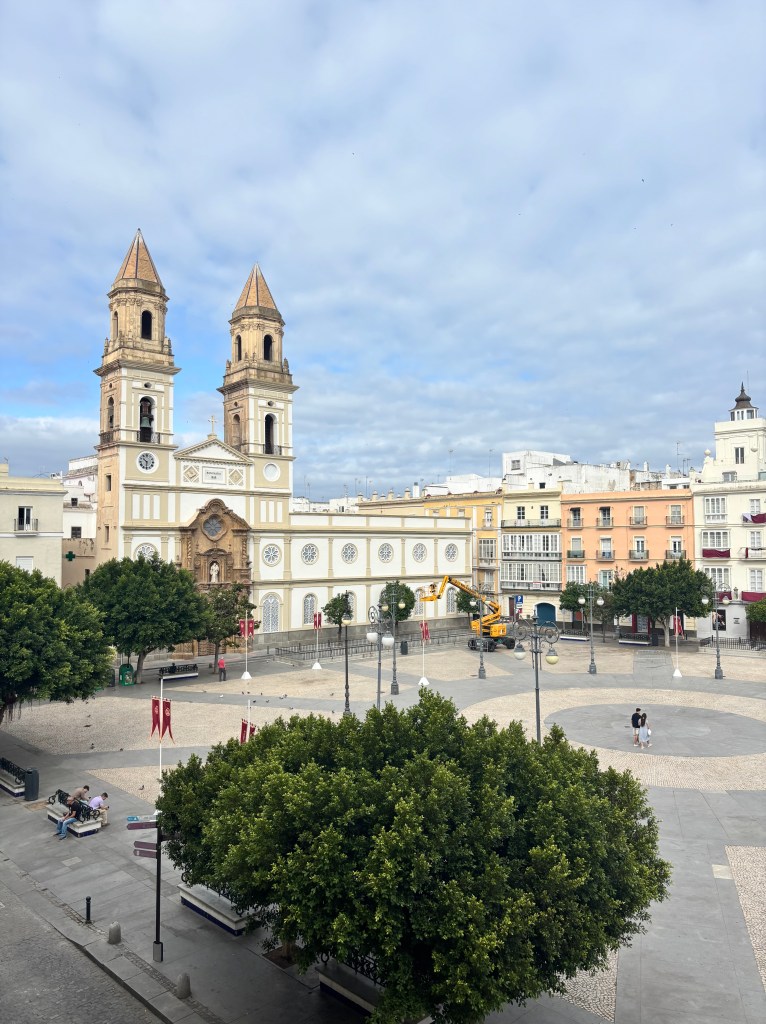
We chose Cadiz as our base for the first part of the trip. It’s the favorite city in Spain of a friend of mine who lives in Madrid, so I could depend on local recommendations of what to see, where to eat and drink, and so on. Our apartment overlooked Plaza San Antonio in the heart of the old city and gave us a great view (below) of its imposing 17th century church. Cadiz is an elegant, unpretentious city. I’m told it attracts plenty of visitors in the summer months, but in early June it still had a slightly sleepy air and was following the usual routines of the locals, not the tourists. It is famous for its windy conditions, and sure enough throughout our stay there was a constant and welcome breeze coming off the Atlantic and Bay of Cadiz. For me the joy of Cadiz was strolling around its streets, sitting in pretty squares, watching the locals, and trying out a few of the bars and cafes. There are for sure plenty of sights to see (the Torre Tavira, the cathedral, the remains of a Roman theater, and the Castillo de San Sebastian to mention just a few) and I recommend them all, but if time is tight use it instead to walk, sit, and watch. My favorite places there? The Barrio de la Vina for its nightlife and people watching. Taberna Casa Manteca and Taberna del Veedor for tapas and a cold beer. Two gorgeous squares, Mina and Candelaria. And for an unforgettable dinner, there’s nowhere better than Restaurante Codgo de Barra in the heart of the old town.
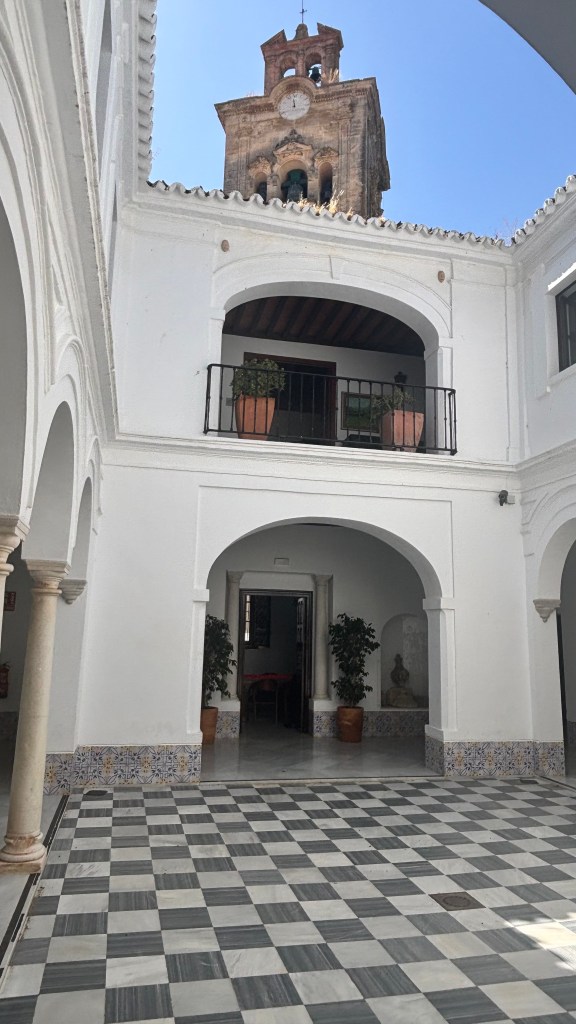
Setting to one side the intrinsic charms of Cadiz, it is also a very convenient base from which to explore many of the pueblos blancos for which this part of Spain is famous. The picturesque “white towns” are a must for anyone interested in history and architecture. The towns often performed a defensive function, so many of them perch on hills and cliffs overlooking the countryside and feature fortifications and towers, many with strong Moorish influences. We visited Arcos de la Frontera, Sanlucar de Barrameda and, most beautiful of all, Vejer de la Frontera. Sanlucar is unmissable for wine aficionados because it’s the production center for manzanilla, the famous dry fino sherry exclusively from this area. Take a tour at one of the town’s bodegas or, even better, sit in the pretty town square and have a chilled glass with some tapas. All the villages I visited seemed to have two distinct parts, one for locals and one for visitors. Vejer is the one most focused on visitors. Its pretty, narrow streets are filled with art galleries, shops, and cafes. I imagine these get pretty congested at the height of the season, so it’s important for those who hate crowds to time their visits carefully.
The next part of my short tour of Andalusia was a few days in two coastal towns, Tarifa and Zahara de Los Atunes. The former, the most southerly town in continental Europe, is a magnet for kite surfers and wind surfers who flock to Tarifa’s beaches. It is a pretty town with a medieval gate and some remnants of ancient walls. Zahara is smaller and its main attraction are the beautiful, sandy beaches nearby. Roughly 25 kilometers from the town stands Baelo Claudia, the unmissable and impressive ruins of a Roman city from the 2nd century BC.
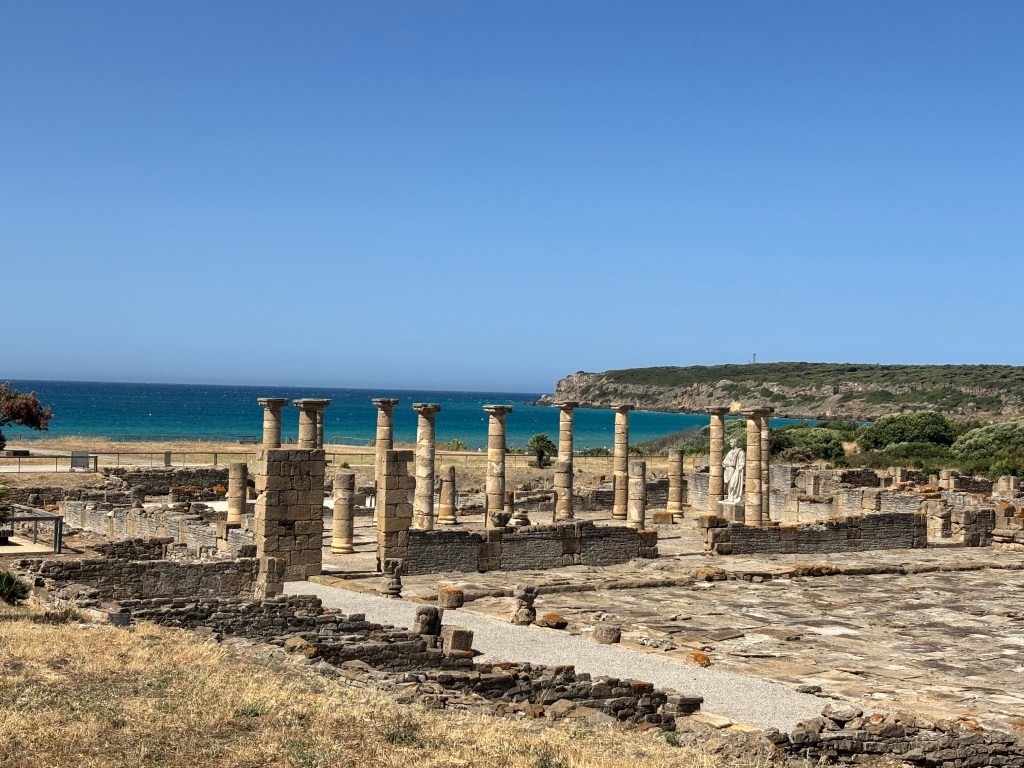
We wound up our stay in Andalusia with a day in Jerez, a place steeped in the region’s culture (think sherry, great food, and flamenco). A fitting end to ten delightful days in an unforgettable part of Spain.
More Tokyo Musings

The immigration authorities in Japan put a sticker in visitors’ passports when they arrive in the country. Counting the stickers recently, I realized this was my twenty-sixth visit to Tokyo since 2012. Every time I am here, I add to my store of experiences and memories. Tokyo isn’t about “must see” attractions. It’s about the gracious, kind, and welcoming people. It’s about the sheer quirkiness and charm of a society that continues to go its own way and follow its own path. It’s a place that at first seems to be all about conformity but is really quietly subversive and does conformity on its own distinctively Japanese terms.

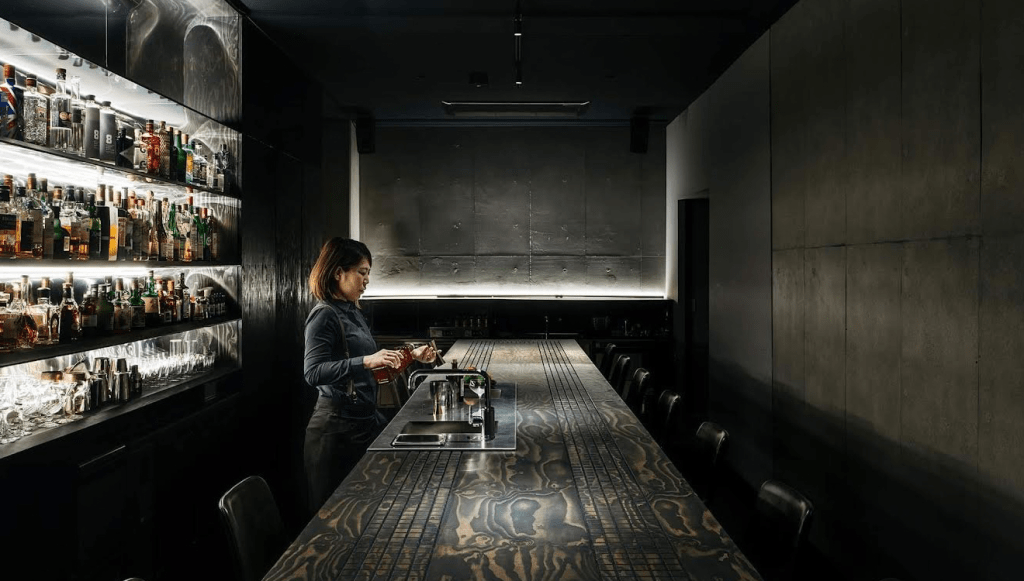
What did I add to my store of memories this time? A charming basement bar in Daikanyama (Flying Bumblebee), an outstanding teppanyaki meal with friends in Ebisu (Teppan Eden), and buying jazz albums in Tsutaya. Plus a lovely coincidence. The taxi driver who took me to Haneda was the same one I met several years ago. A dapper man in his late seventies (charcoal suit, striped shirt, silk tie, and cool, retro glasses) who only plays Bebop in his cab and who likes to talk (in pretty good English) about Japanese novels. We picked up the conversation where we left off last time. Needless to say, he insisted on putting my luggage in the trunk, and did it with the energy and nimbleness of someone forty years younger.

No city can compete with London for my affections, but Tokyo gets very close.

Museo Fortuny (Venice)

Whenever I visit Venice, I am struck by how tourists behave. They flock in huge numbers to St. Mark’s Square and the Rialto bridge, but rarely venture to other neighborhoods rich in atmosphere and treasures like Cannaregio or Dorsodouro. I have no idea why that is, but it does make it quite easy, at least in the off peak seasons, to avoid the crowds for the most part. I had three wonderful days there recently, skipping the most congested spots and taking in areas that happen to be my favorites. One highlight was my first ever visit to Museo Fortuny. Although located in the St. Mark’s sestiere, it’s in a small, quiet square that seems to attract few visitors.

The museum, based in the Palazzo Pesaro Orfei, was the workshop and home of Mariano Fortuny (1871-1949). Today it celebrates Fortuny’s promiscuous talents and interests which ranged from theatre design to photography, painting to fabrics. It also offers a chance to see the interior of a wonderful 15th century palace. Anyone whose tastes go in the direction of textiles, art, and photography should put the Museo on the top of their “must see” lists in Venice. Pick the right moment and you might have the glorious place all to yourself!

Ho Chi Minh City

10 million or 14 million? That’s how widely the estimates vary when it comes to the population of Ho Chi Minh City (HCMC). Either way, it’s a large and crowded city. My first impressions of it were probably no different from every other visitor’s. With more mopeds than I’ve ever seen in one place, crowding not only the streets but also every inch of every sidewalk, HCMC might just be the least pedestrian-friendly city I’ve ever visited. Hot, humid, and with daily thunderstorms (when I visited), it’s not a comfortable place, but it has undeniable energy and character.

Its reputation as a great place for food precedes it and, certainly on the evidence of my few days there, is well deserved. From high-end restaurants to the most casual street food hawkers, HCMC has something for every palate and budget. I sampled as much as I could in my brief stay, focusing on Vietnamese specialities, and enjoyed every mouthful, though no one can convince me to appreciate the local coffee, served with sweetened condensed milk.

I managed to see only a few of the city’s landmarks. One highlight was my tour of the Independence Palace which gave me a concentrated and quite moving history of Vietnam in the troubled and tragic years of the 20th century. Unmissable for the first time visitor, as is the Saigon Central Post Office, competed in 1891 and a masterpiece of French colonial architecture.

Not the calmest or easiest city I have ever been to, Ho Chi Minh City nevertheless has the sort of vibrancy that seduces a visitor. I’m already looking forward to exploring more.

Les Tres Riches Heures

Some experiences really are once-in-a-lifetime experiences. About a year ago it was announced that in mid-2025 one of the rarest and most exquisite medieval manuscripts would go on display to the public. Les Tres Riches Heures du Duc de Berry is an illuminated book of hours (a book of prayers intended to be read at specific hours of the day) first created between 1412 and 1416 for John, Duke of Berry, the brother of King Charles V of France. The manuscript, believed to be the work of the Limbourg brothers, was left unfinished because the brothers died, most likely victims of plague. Further work was done on the manuscript later in the 15th century by Barthelemy d’Eyck and Jean Colombe.

The manuscript is very rarely displayed because of its fragility and has only been seen by the public twice since the end of the 19th century. Even scholars have been denied access since the 1980s and forced to rely on facsimiles. The need to repair its binding gave an opportunity to exhibit some of the unbound pages at the Chateau de Chantilly where it is usually housed, an event so rare that it was described as one of the cultural highlights of the century. Needless to say, art lovers, historians, and bibliophiles have descended on Chantilly in huge numbers since June, but by the time I arrived in mid-September the crowds had subsided and I was able to see the exhibited pages up close.

Twelve pages were on display the day I visited, each one representing a month of the year. It is hard to describe how vivid, rich, and elaborate the illumination is on these pages, as well as the perfection of the calligraphy. It is a credit not just to the artists, but also those charged with the care and conservation of this treasure, that the illustrations look as if they could have been painted yesterday, such is the depth and brilliance of the color.

Some works of art defy categorization. This precious manuscript, a priceless example of medieval art, is one of them. I feel privileged to have seen it.

Rabat

My one previous visit to Morocco, six years ago, had been for pleasure and had included stays in Fes, Marrakech, Essaouira, and the Atlas Mountains. On this occasion, it was work all the way, but I managed to squeeze in a couple of hours personal time for an all-too-quick visit to Rabat’s medina. Unlike those in Fes and Marrakech, the old quarter of Rabat, laid out in its present form in the 17th century, seems to get few tourists, so it’s perfectly easy to walk around without attracting the unwanted attention of shopkeepers selling carpets, argan oil, or whatever.

My destination was the Kasbah of the Oudayas. It sits adjacent to the medina and on a hill overlooking the sea. Its oldest parts date back to the 12th century, notably its elaborately carved Great Gate and Old Mosque. The small area around the Kasbah is beautifully preserved, with streets of traditional houses and gardens, and mercifully few of the trappings aimed at tourists. Walking around without crowds and enjoying a coffee in a small cafe was a real treat.

I enjoyed my few days in Rabat. It’s a relaxing, safe, and calm city (at least compared to the frenetic atmosphere of Fes and Marrakech). My hosts were delightful and generous. It would be good to go back one day with more time and fewer work commitments.

Naples

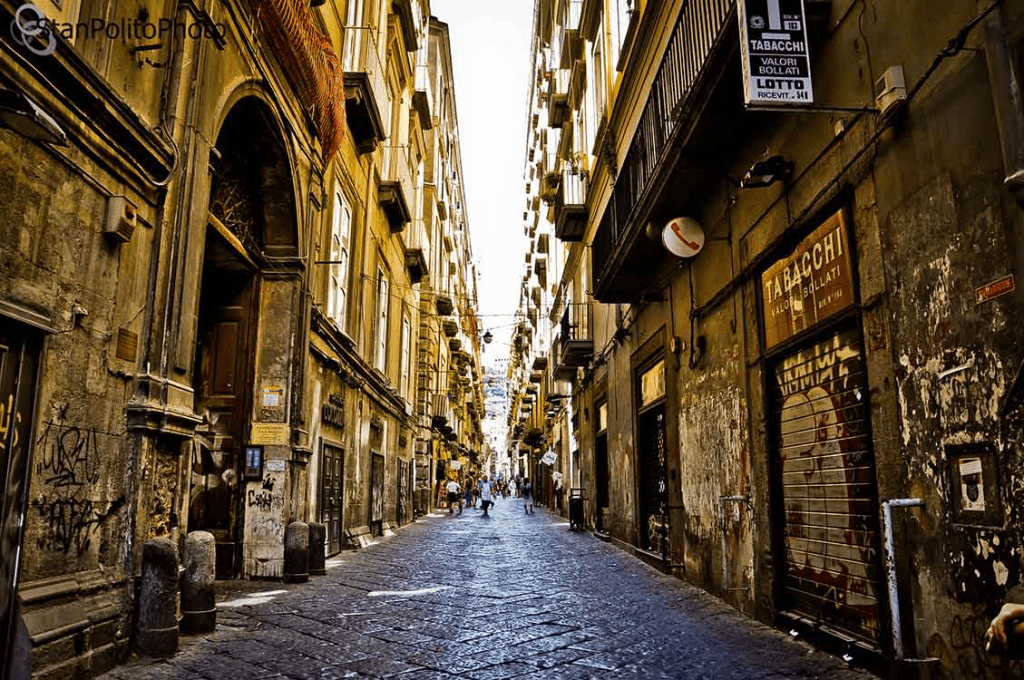
Some reputations are well deserved. Read anything about modern-day Naples and its scruffiness and edginess will feature front and center. I spent a few days in the city recently and, even allowing for everything I had read, I was surprised how dilapidated, graffiti-strewn, and down-at-heel it is. In the old city it seems every square inch of the walls has been defaced by graffiti, even historic buildings. In a place filled with ancient churches, museums, and monuments, it feels as if not a penny has been spent to restore or maintain them.

Surfaces are one thing, and spirit is another. Naples has charm, energy, and vitality in abundance and radiates them day and night. It’s a quirky, noisy, chaotic place, one that prides itself on its reputation for flouting the rules. Food, football, and living life to the full; those are the passions and charms of Naples.

Resist the temptation to use the city as nothing more than a gateway to Pompeii and the Amalfi coast. Take a few days to explore it, and it will repay the effort. Visit the Duomo, take an evening stroll down Spaccanapoli, eat the best pizza and gelato money can buy, and watch the Neapolitans at work and play. Don’t miss Vasari’s sacristy in San’Anna dei Lombardi or the archaeological museum. Naples isn’t “tourist pretty”, but it has a unique and unforgettable energy of its own.

The Amalfi Coast

What do Amsterdam, Venice, and Reykjavik have in common? The answer is over-tourism. And not just over-tourism, but tourism so excessive that authorities in those cities (and many others) are looking at strategies to actively discourage visitors. Based on my personal experience in recent weeks, I want to add two names to the list of over visited places: Capri and Positano.

My advice to anyone planning to visit Capri is simple. Don’t go. By all means take a boat trip around the island and look at the pretty coves and rock formations, but under no circumstances dock at the main harbor and explore the main town. Even at low season, the place is choked with tourists who, undeniably with the best intentions, have destroyed what must have been a beauty a generation or two ago.

Positano, that most picturesque town, is well on its way to sharing the same fate as Capri. The streets climbing up from the port and small beach are lined with mostly average restaurants and uninteresting shops selling expensive tat to tourists. Just by being there, I felt I was hastening the demise of a place of stunning natural beauty.

Sorrento, Atrani, and, most of all, Ravello are a delight, but even those towns have to be visited early in the morning (and preferably at low season) before the hordes arrive. After a few days on the Amalfi coast, I was glad to leave and saddened by its gradual and inevitable desecration, to which I had unwittingly contributed.

Mussoorie

It must have been hard work administering an empire. The punishing heat of India drove the colonial masters to look for cooler places for temporary respite, and they found them in the north of the country in places like Simla, Darjeeling, Manali and Mussoorie. Few of those subjugated by the sahibs and memsahibs had the luxury of escape, but for the ruling class the hill stations were places of recuperation and recovery. Mussoorie was one of the first hill stations and was settled by the British in the 1820s. Today, there is plenty of evidence remaining of those days. Remnants of estates and houses can be seen from the roads, as well as churches built to serve the British community.

Interestingly, the term is still used quite extensively in India, and still designates those towns where people go to seek respite from the intense heat and the frenetic nature of Indian city life. When I was in Mussoorie recently, I didn’t see a single other Western visitor. Indian travelers, however, were there in large numbers, escaping a period of intense heat that had seen temperatures in New Delhi exceed 40 degrees centigrade.

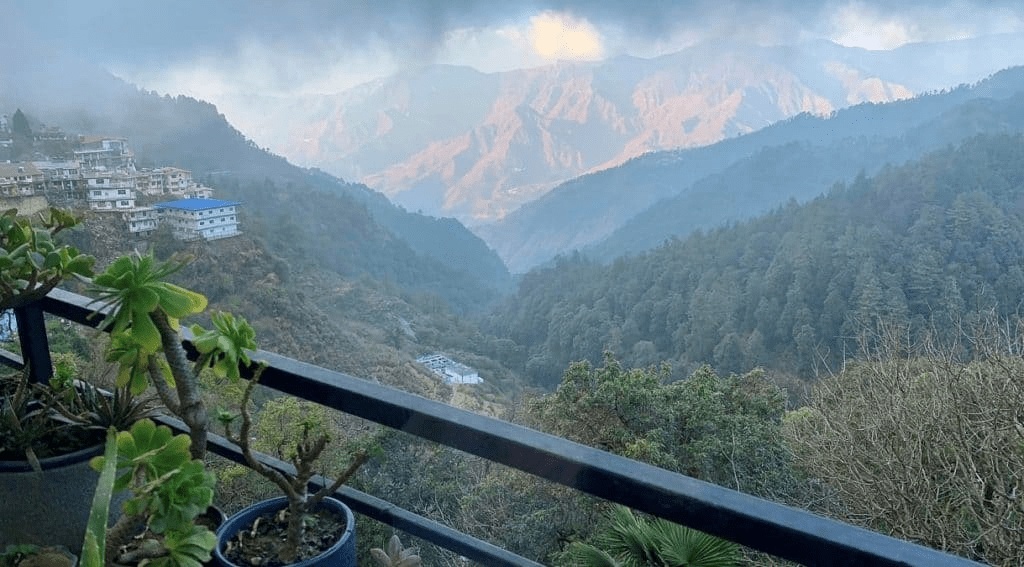
It is a place of extraordinary natural beauty. The Garhwal foothills of the Himalayas reach 7,000 feet here. I found myself entirely captivated by them, spending hours looking at them from different angles, in different lights, and at different times of the day. It’s a wonderful place for walking and hiking, and the relatively benign climate encourages those things. There is also culture here. The area is important in the history of Tibetans because the Dalai Llama settled for a year here in 1959 before moving the Tibetan government in exile more permanently to Dharamshala. A thriving monastery survives near Mussoorie with several thousand Tibetans living nearby.

Mussoorie, and the adjacent town of Landour, are unmissable for those who love mountains and, of course, those looking for a break from the intensity of India’s fascinating, but occasionally exhausting, cities.

Delhi to Mussoorie

Mussoorie is only 200 miles or so from New Delhi, so why does the trip take seven hours by car? The answer will become clear….

On the first part of the journey, a modern and efficient highway takes you, without interruption, from the urban sprawl of New Delhi to the urban sprawl of Ghaziabad. This is the capital city’s commuter belt and it now extends almost as far as Meerut. Anyone falling asleep for an hour after leaving Delhi will miss nothing, but it starts to get a lot more interesting at that point. The next stretch, moving north through Saharanpur and Biharigarh, sees India’s countryside assert itself. This is a place where fields of sugar cane stretch for miles, but it’s certainly not some rural idyll. Scores of brick making factories, their huge chimneys spewing filthy smoke into the sky, make sure of that. Hundreds of dhabas line both sides of the highway, catering for the hungry hordes heading in both directions. Progress slows at this point because India’s highways have a habit of stopping abruptly, giving way to smaller and slower roads. Often, and somewhat frustratingly, a new and as yet unopened stretch of highway, appears on the horizon, promising a speedier trip for future travelers but not today’s. An accident can close the highway entirely, as it did for me, forcing a long and fascinating detour through small villages.

A few miles south of Dehradun things really slow down, sometimes to little more than walking pace as the winding, sometimes treacherous road narrows and makes the climb to Uttarakhand’s capital. Looking to the left, travelers see an elevated, empty, and yes, unopened, highway stretching into the distance. Once in Dehradun, it’s wise to sit back, relax, and enjoy the sights and sounds of the busy city. There’s no alternative. The journey north from here cuts directly across the city and that itself takes a minimum of an hour.

The traveler’s expectation of what constitutes progress is well and truly re-educated by this point, and that’s just as well because what follows next requires patience and a strong stomach. From Dehradun, it’s probably only twenty miles to Mussoorie, but the ride can take anything up to two hours. These are steep mountain roads with hairpin bends, clogged with buses, cars, trucks, and the motorcycles and Vespa-style scooters that Indians love. I came to see the mountains, so I could hardly complain. Needless to say, the views are beautiful. Choose your cliche. Stunningly, breathtakingly, heart stoppingly wonderful.

Mussoorie sits high on the mountain, at approximately 7,500 feet. By the time one gets there, every foot and mile has been felt. But such is the magic and beauty of this place, stepping out of the car after seven uninterrupted hours, everything that came before, every slow mile and every traffic jam, is forgotten.