
The seed was sown more than a year ago. A colleague based in Seville (and a native Andalusian) suggested a rough itinerary for me after I mentioned my interest in traveling in the region. In early June I used it to guide me on a 10-day tour of some of Andalusia’s highlights.
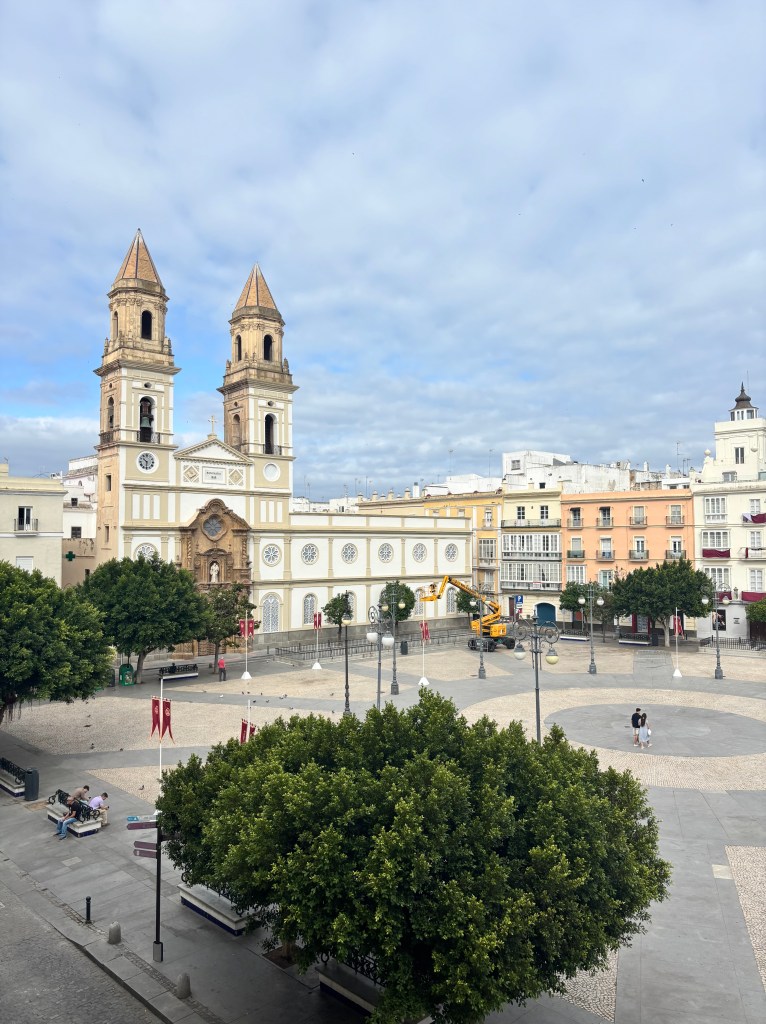
We chose Cadiz as our base for the first part of the trip. It’s the favorite city in Spain of a friend of mine who lives in Madrid, so I could depend on local recommendations of what to see, where to eat and drink, and so on. Our apartment overlooked Plaza San Antonio in the heart of the old city and gave us a great view (below) of its imposing 17th century church. Cadiz is an elegant, unpretentious city. I’m told it attracts plenty of visitors in the summer months, but in early June it still had a slightly sleepy air and was following the usual routines of the locals, not the tourists. It is famous for its windy conditions, and sure enough throughout our stay there was a constant and welcome breeze coming off the Atlantic and Bay of Cadiz. For me the joy of Cadiz was strolling around its streets, sitting in pretty squares, watching the locals, and trying out a few of the bars and cafes. There are for sure plenty of sights to see (the Torre Tavira, the cathedral, the remains of a Roman theater, and the Castillo de San Sebastian to mention just a few) and I recommend them all, but if time is tight use it instead to walk, sit, and watch. My favorite places there? The Barrio de la Vina for its nightlife and people watching. Taberna Casa Manteca and Taberna del Veedor for tapas and a cold beer. Two gorgeous squares, Mina and Candelaria. And for an unforgettable dinner, there’s nowhere better than Restaurante Codgo de Barra in the heart of the old town.
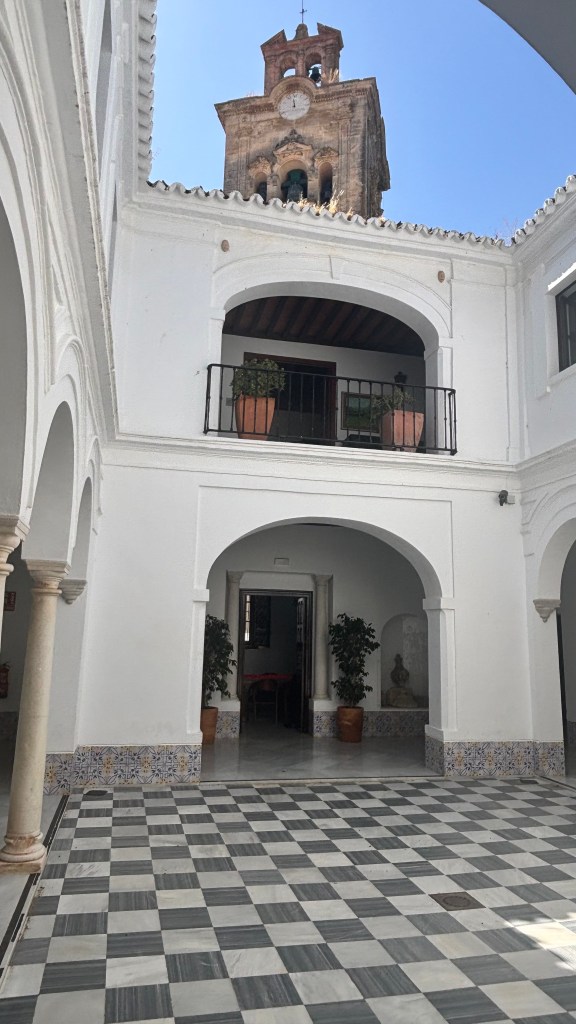
Setting to one side the intrinsic charms of Cadiz, it is also a very convenient base from which to explore many of the pueblos blancos for which this part of Spain is famous. The picturesque “white towns” are a must for anyone interested in history and architecture. The towns often performed a defensive function, so many of them perch on hills and cliffs overlooking the countryside and feature fortifications and towers, many with strong Moorish influences. We visited Arcos de la Frontera, Sanlucar de Barrameda and, most beautiful of all, Vejer de la Frontera. Sanlucar is unmissable for wine aficionados because it’s the production center for manzanilla, the famous dry fino sherry exclusively from this area. Take a tour at one of the town’s bodegas or, even better, sit in the pretty town square and have a chilled glass with some tapas. All the villages I visited seemed to have two distinct parts, one for locals and one for visitors. Vejer is the one most focused on visitors. Its pretty, narrow streets are filled with art galleries, shops, and cafes. I imagine these get pretty congested at the height of the season, so it’s important for those who hate crowds to time their visits carefully.
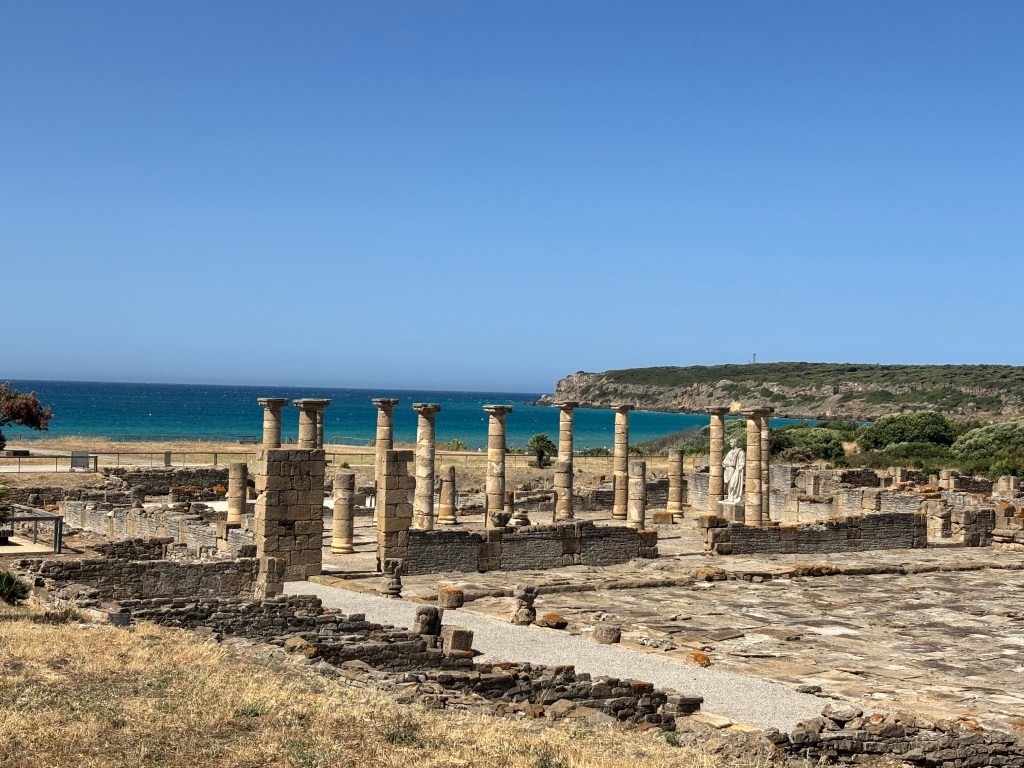
The next part of my short tour of Andalusia was a few days in two coastal towns, Tarifa and Zahara de Los Atunes. The former, the most southerly town in continental Europe, is a magnet for kite surfers and wind surfers who flock to Tarifa’s beaches. It is a pretty town with a medieval gate and some remnants of ancient walls. Zahara is smaller and its main attraction are the beautiful, sandy beaches nearby. Roughly 25 kilometers from the town stands Baelo Claudia, the unmissable and impressive ruins of a Roman city from the 2nd century BC.
We wound up our stay in Andalusia with a day in Jerez, a place steeped in the region’s culture (think sherry, great food, and flamenco). A fitting end to ten delightful days in an unforgettable part of Spain.

