
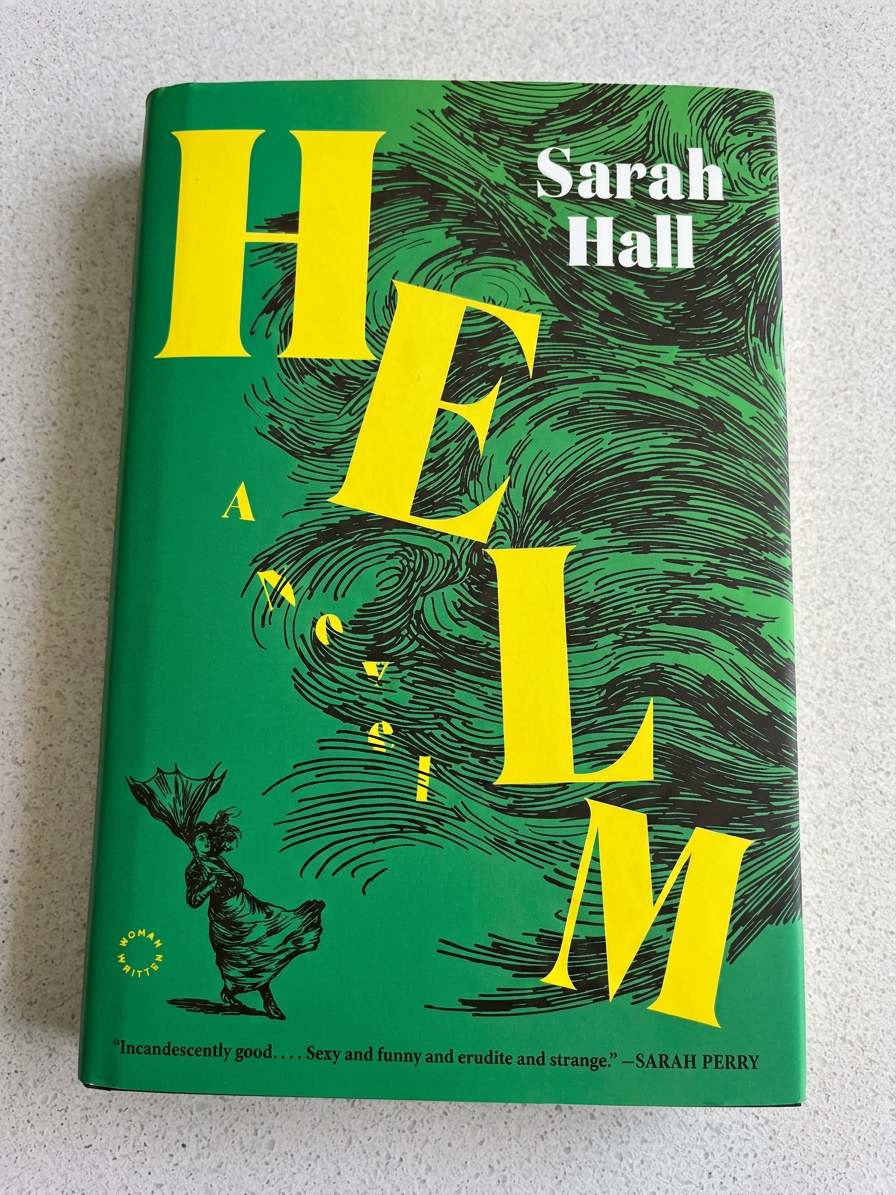
Helm is one of the most imaginative and ambitious novels I have read in a very long time. Its central character is a wind. Not the wind, but a very specific wind peculiar to a certain part of northern England, a wind familiar to its inhabitants since humans first occupied that place. A wind so unpredictable and so ferocious that it has been feared, revered, placated, studied, and measured for thousands of years by those who know it.
The success, critical and commercial, that this novel is enjoying right now must owe something to its resonance with readers at a time when our engagement with the natural world in general and the climate in particular is so complex and divisive. Sarah Hall reminds us that our relationship with nature has never been simple. The characters in this novel may fear or despise the wind for its destructive power and apparently willful influence on their daily lives, but one thing they are not is indifferent. Helm will not allow indifference or tolerate complacency. Wherever one stands on the climate crisis and the extent of it, one thing is unarguable. We are where we are, at least in part, because we have become indifferent to the natural world, careless despoilers of it, and often arrogantly contemptuous of it. Helm reminds us that there are consequences for this, debts to be settled, and a price to be paid. Nature can only tolerate so much before a payback is demanded. I hope this doesn’t make the novel sound preachy or dull because nothing could be further from the reality. Helm is funny, joyful, and quirky, and always thought provoking.
Sarah Hall’s most recent novel was first published in late 2025 and has attracted the sorts of reviews that writers dream of getting. I recall reading her first novel (Haweswater) more than twenty years ago and the deep inpression it made on me. Helm will, I hope, bring a whole new set of readers to her wonderful body of work.
 Miscellaneous Musings