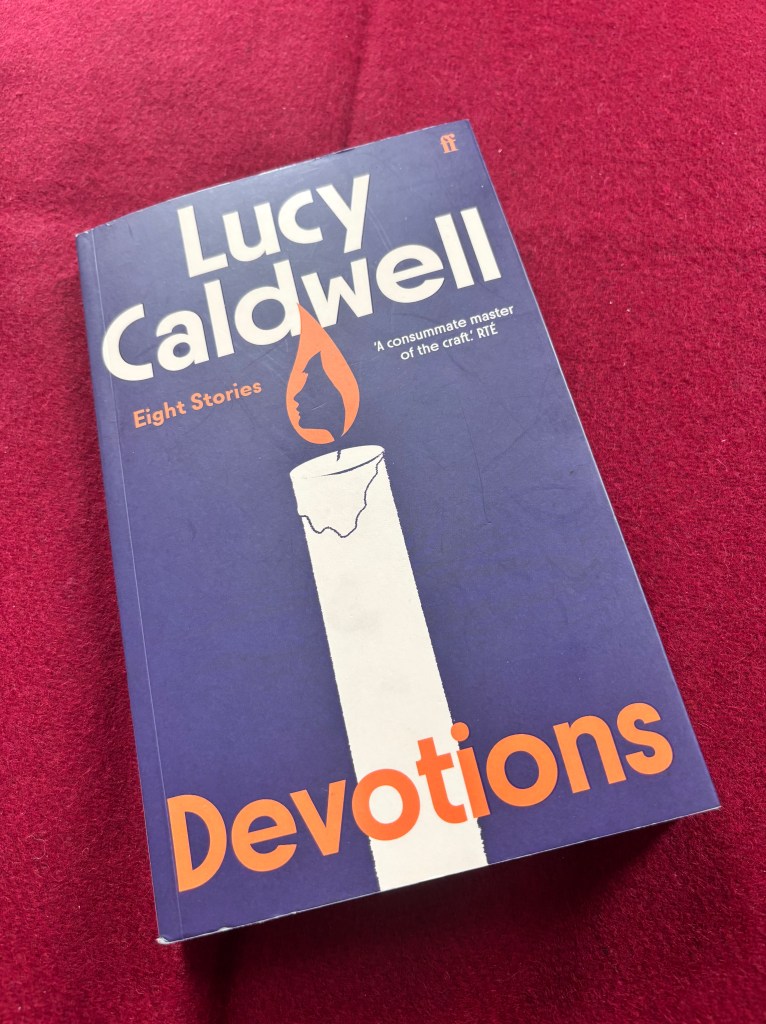
I recently attended an interview that Martin Doyle, the books editor of The Irish Times, gave at the Irish Cultural Centre in London. He talked about how vibrant and exciting the Irish writing scene is right now and the large number of emerging novelists and storytellers there are. He did not mention Louise Caldwell specifically, but she ought to be included in any review of the talented band writing now. Born in 1981 in Belfast, Caldwell has picked up an impressive number of awards and nominations. Devotions, a set of short stories, is the first book of hers that I have read. It’s an enjoyable collection. Caldwell seems to me to be very good at alerting us to experiences that can be numinous and to the potentially transformative nature of nature, religion, and love in daily life. Several of the stories are memorable, notably All Grown Up and Harmony Hill.
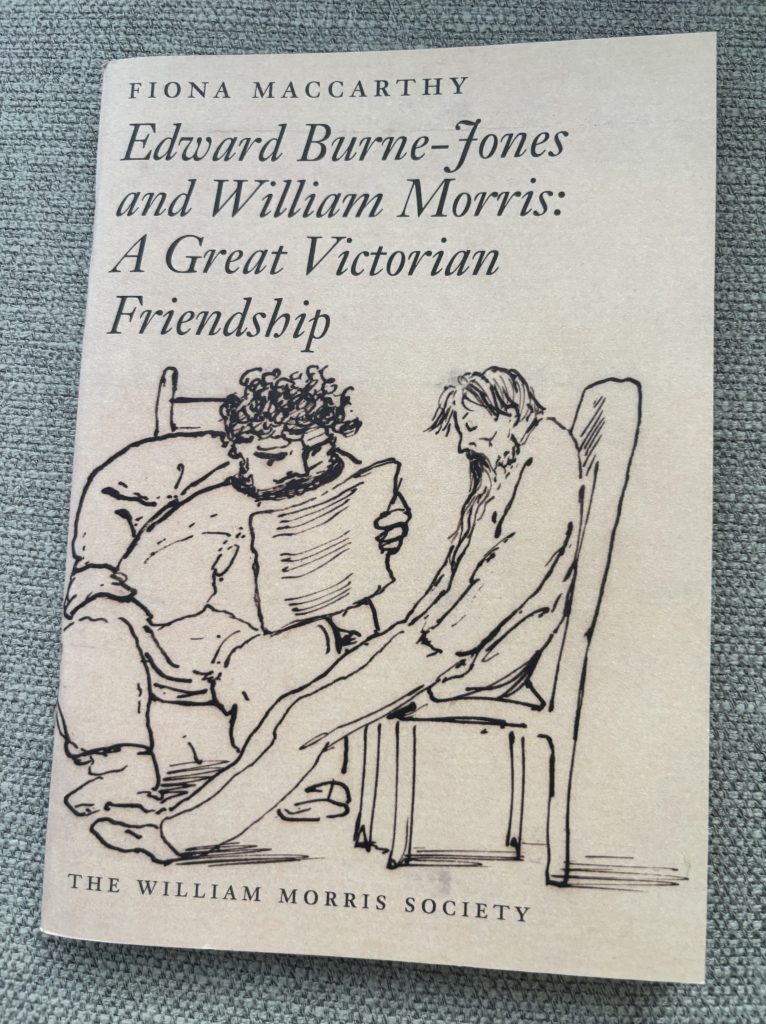
On a recent visit to Kelmscott House, William Morris’s former home in Hammersmith, I picked up the text of a lecture given in 2012 to the William Morris Society by Fiona MacCarthy, the great biographer of Morris and Edward Burne-Jones. Although little more than thirty pages, the lecture gives an interesting account of the two men and their long friendship. From their first meeting as undergraduates at Oxford they formed a working and emotional bond that was to last their lifetimes. So much about them was different. Different social backgrounds, different temperaments, and ultimately different paths, but they were united by a vision of the place that art and craft ought to have in the lives of everyone. Their friendship led to an extraordinary creative collaboration that left a deep mark on the arts and crafts of the late 19th century and gave the world works of profound beauty and meaning.
MacCarthy went on to write wonderful, full-length biographies of both men. Her lecture might whet the appetite of those interested in learning more about these visionary figures of the 19th century.
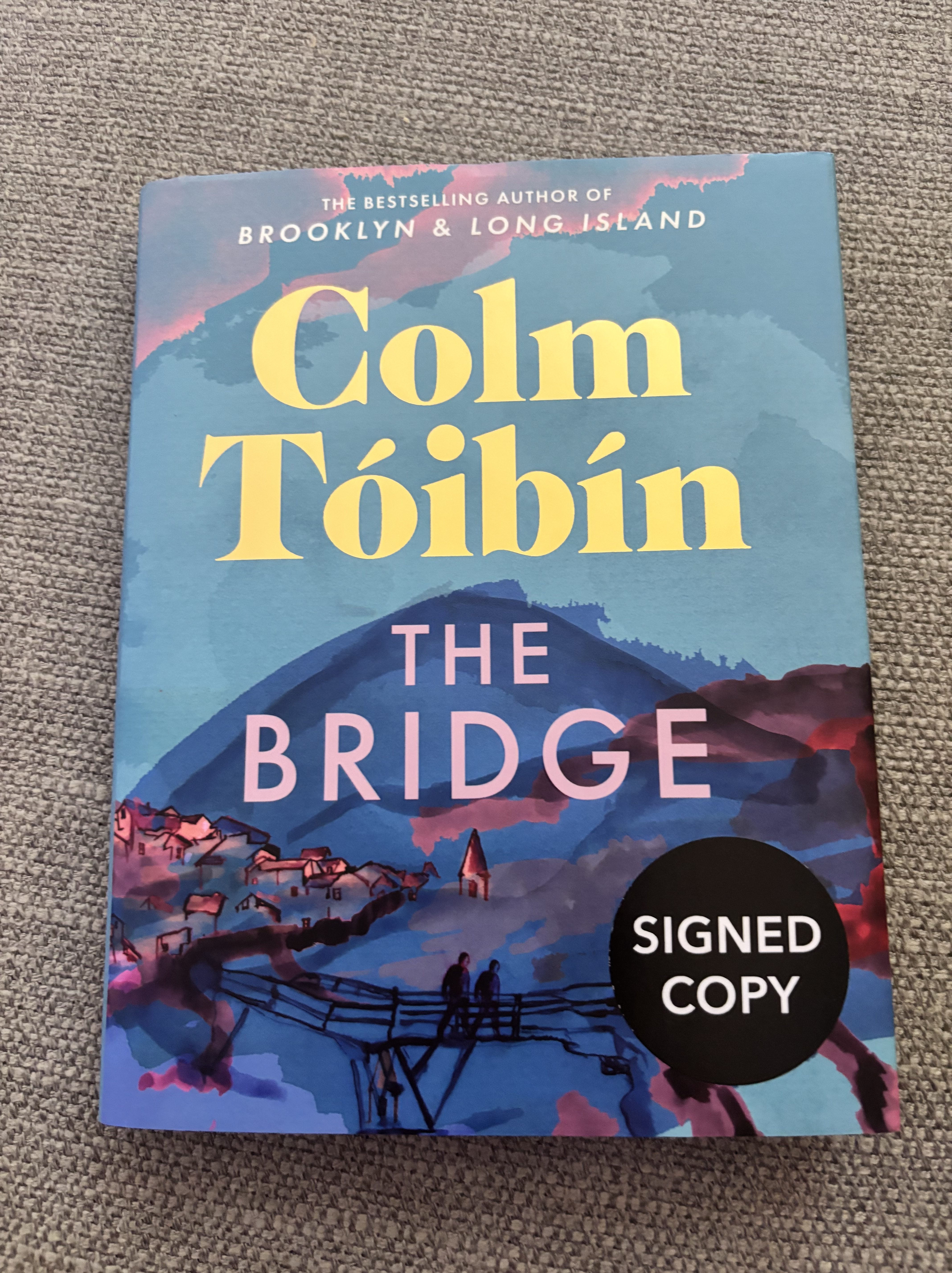
When I read A Long Winter in March this year (a novella that had first been published in 2005), I had no idea that a sequel was in the works. The Bridge picks up the story of Miguel and his father who live in a remote part of the Pyrenees. They have sold their old farm and moved to the house to which Miguel’s mother had been returning the day she died. The opening of a new bridge is set to transform the isolated villages, opening them to the wider world for good or for ill.
The novella is written in the spare and elliptical style for which Colm Toibin is celebrated. There is hardly a wasted word. The desolation of Miguel’s life and his acceptance of his fate are brilliantly conveyed in a short novel that opens up worlds of experience and emotion. The Bridge is a remarkable achievement.
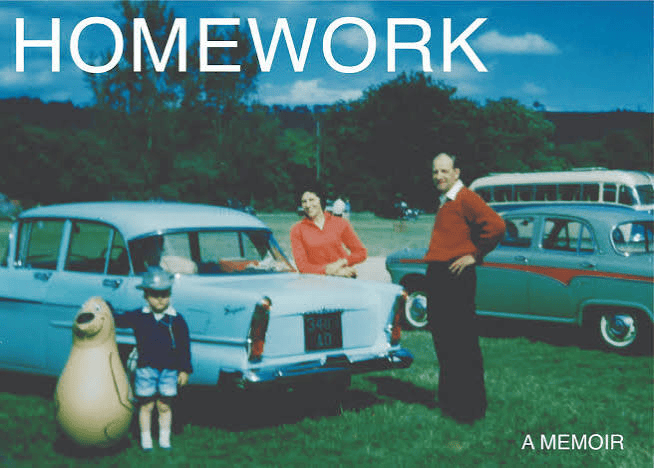
Geoff Dyer is a year older than me. He was born and raised in Cheltenham, less than a hundred miles from London where I grew up. His delightful memoir of childhood, Homework, describes a world that in many respects has vanished, though not from the memories of those who were children in England in the 1960s and 1970s. The pleasures evoked by the book for Dyer’s contemporaries, like me, are a lot to do with recognition and memory. Airfix models, Action Man, the arrival of the first color televisions, playing football in the school playground, discovering one’s tastes in music and books, horrible food: these things were important parts of our lives in much the same way that memoirs in forty years will feature social media, mobile phones, and the launch of Netflix.
Dyer is very good at poking fun at his parents, his wider family, his friends, and himself, but it’s all done in such an affectionate, tolerant and forgiving way. In fact, it’s the tone of Homework that lingers long after the final page is turned, not just the stories and the personal memories that surface because of them. He recalls his childhood with just the right balance of affection, nostalgia, and embarrassment. He’s never cruel or sentimental and knows how fortunate he is to have loving (though never demonstrative and occasionally infuriating) parents and to have been raised in a safe and comfortable place. Homework is also very funny, at least to those of us who grew up at the same time.
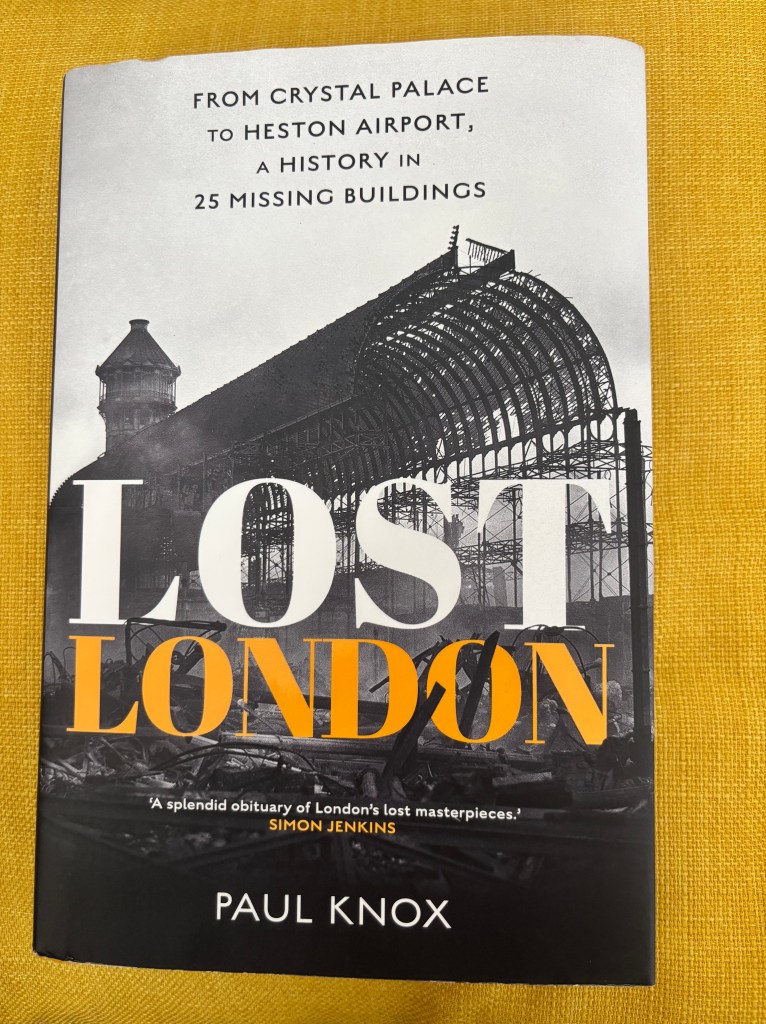
Somewhere between five and seven thousand buildings are demolished in London every year. Most of those torn down and replaced will not be mourned or even remembered. They are little more than the casualties of a city going about the never-ending business of change. Some buildings, however, qualify as “lost”. Buildings of such importance, whether especially beautiful, interesting, or unusual, that their loss through fire, war or, more often, the carelessness and greed of city developers and planners is remembered or regretted for generations. Fourteen churches built by Sir Christopher Wren after the Great Fire of London were demolished in the second half of the 19th century, many of them for no better reason than money was needed to build churches in the so-called godless suburbs while congregations in the capital dwindled. (A further fifteen were destroyed in the German bombardments of the Second World War). The losses are not just churches, but private homes, civic buildings, offices and industrial buildings; all erased in the name of progress and often repented in the years that follow. The careless destruction of significant buildings throughout the UK led in previous generations to the creation of conservation groups whose work has undoubtedly saved treasures from the wrecking ball and helped raise awareness of the importance of balancing the new and the old, progress and preservation, in the life of a great city.
Paul Knox, a British-born academic working in the United States, tells the story of twenty-five of London’s lost buildings. Some are probably quite well known to a wide audience, like Crystal Palace and the Army & Navy Club. Others are wonderful surprises, even to those of us born and raised in London. Two stood out for me as especially intersting. The first was the train station in Waterloo, now long abandoned, that was used exclusively to take corpses and mourners from London to the huge burial ground in Brookwood. The second was Columbia Market. This vast, elaborate, Gothic structure, was constructed in Bethnal Green and was the brainchild of do-gooding philanthropists determined to eradicate the chaotic, unsanitary, but much-loved street markets of East London. The idea failed within a few years and the remarkable building was eventually torn down.
Lost London is a book that ought to appeal to anyone who loves urban history or architectural history, but most of all to anyone who loves London, a city changing constantly and conserving carefully, a city filled with built treasures (old and new), and a place of endless fascination to those of us who know and love it.
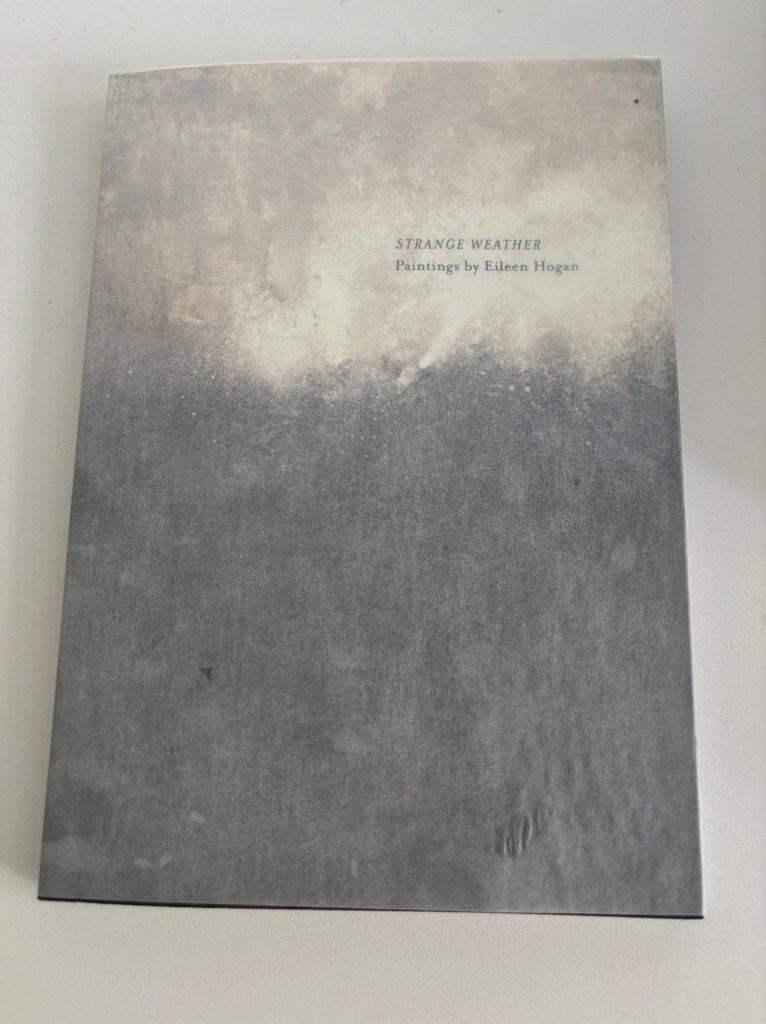
I discovered this delightful book, and the artist who wrote it, when I was browsing recently in Hatchards in Piccadilly. This bookshop has to my mind the best art department of any in London and has an added bonus of knowledgeable, helpful staff. Strange Weather was written to accompany an exhibition of the artist’s then recent work put on in late 2024 by her London gallery, Browse & Darby. The works in the exhibition and the catalog were completed mostly around the time of the pandemic and immediately after, and the title refers, as the artist says, “to the natural climate and the political weirdness of pandemic period, the fear, isolation – and the occasion euphoria triggered by nature”.
I wish I had seen the exhibition. The paintings and drawings in the book, though beautiful, are small. The landscapes and nature paintings, made in London, France, and Scotland, are especially lovely. Strangely impressionistic and precise at the same time, the oil paintings of trees and wildflowers speak to the resilience of the natural world in the face of the pandemic and its imperviousness to it. Eileen Hogan is also a portraitist and a couple of examples of commissions (Alan Rusbridger, Justin Welby) are included here, as are some works resulting from her appointment as the official Coronation artist.
There have been several times in my reading life when the well worn refrain “fiction is dead” has been a popular and critically fashionable point of view. It’s heard a lot less these days, partly because sales of fiction are very high, driven at least in part by the popularity of genres like fantasy and romance, but also because of the number of new and distinctive writers stretching the boundaries of what fiction can be. Coming across for the first time a novelist experimenting with the form and approaching the art of storytelling in a fresh and challenging way remains one of the great joys of reading.
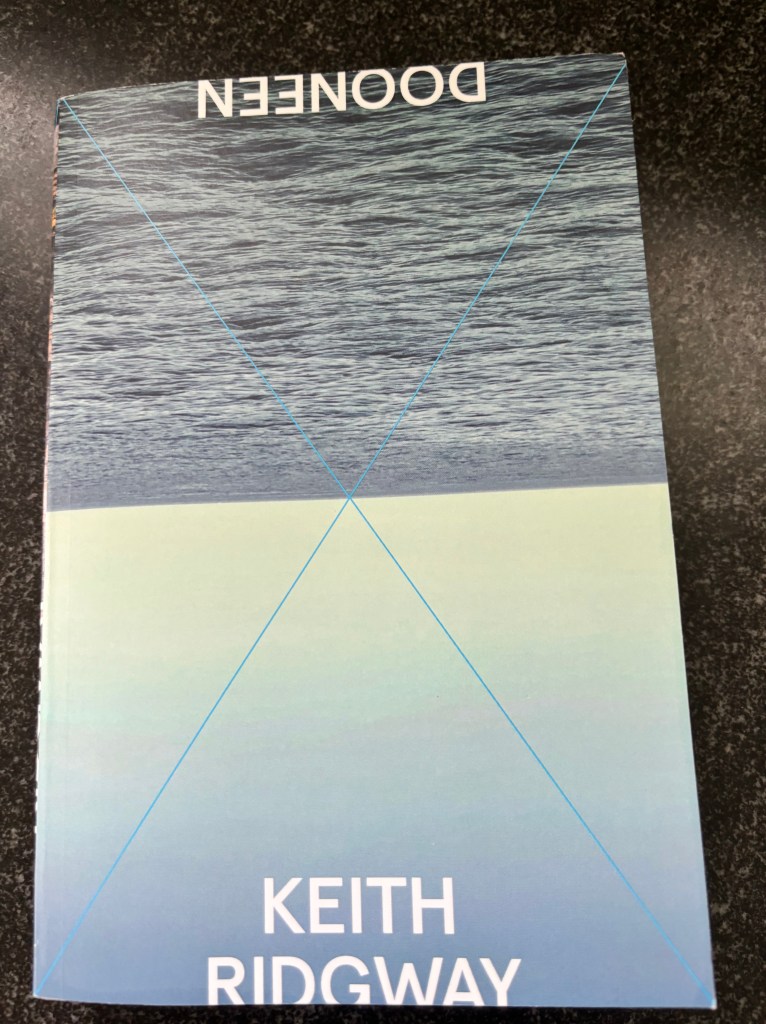
I was in a bookshop in Kent, CT recently and spotted a newly published paperback called Dooneen by an Irish writer I had never heard of, Keith Ridgway. The unusual cover art caught my eye and, turning to the back, I discovered that Ridgway had won several prestigious awards for some of his previous novels. I bought it, along with Colson Whitehead’s latest (Cool Machine), intending to add it to my summer reading pile.
Bartholomew Port, known to everyone as Mew, steps into bushes in a London park and emerges, dirtier and more disheveled, from bushes in a park in Dublin. Mew is back in a city he knows well to speak at a festival, but finds Dublin to be old and new, familiar and strange, all at the same time. Cars and all motorized vehicles are no longer permitted, and have been replaced by carts. “Clickers” (moving sidewalks) are the norm, though some are not working. It’s a place in turmoil. Popular insurrection is brewing. Revolution is in the air. Protestors and conspirators are everywhere, meeting in secret and in small groups, fearful of state-sponsored crackdowns and violence. Mew finds himself drawn into their mysterious underground world and led around a sinister and ominous city.
Those who love Irish literature will hear, as Mew makes his way around Dublin, echoes of Leopold Bloom in Ulysses and will find the playfulness of James Joyce and Samuel Beckett on almost every page. But there’s darkness in Dooneen and in its portrayal of a city on the edge of popular revolt. There’s also tenderness as Mew attempts to reconnect with his great love, Mootie. This is a quirky, unclassifiable novel. Part homage to a much loved city, part love story, part political satire, and part fantastical odyssey; Dooneen is a reminder of how provocative and engaging fiction can be, and how relevant it remains.
I didn’t enjoy reading The Ghostwriter, a mystery novel written by Julie Clark. I cared nothing for the protagonist (a ghostwriter commissioned by her estranged father, a celebrated novelist, to write a memoir about the infamous murders of his brother and sister decades earlier). The plot felt contrived and unbelievable, the prose flat, and the disjointed structure irritating. All of this was apparent quite early, so why did I persevere? Because the novel was a gift from a family member. Not reading it or abandoning it half-read would have been unconscionably rude. Those near and dear to me know what books mean to me and the outsized role they play in my life. An act of such kindness and thoughtfulness – someone walking into a bookstore and taking the time to choose a title they think I would enjoy (even if on this occasion they got it wrong) – means a lot to me.
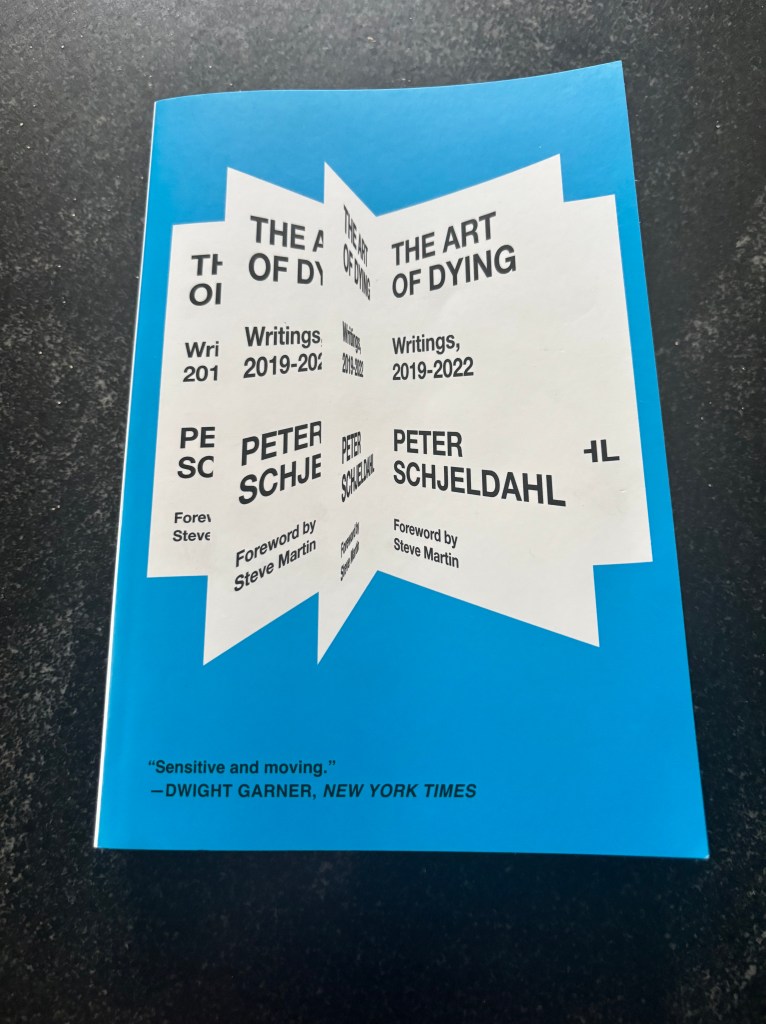
When I used to subscribe to The New Yorker I would look forward to Peter Schjeldahl’s articles about the art world. More often than not, the artists he wrote about were unfamiliar to me, but that never seemed to matter because he wrote with such energy, color, and humor, and because he was always so opinionated and entertaining. He died in 2020, having been diagnosed with lung cancer some time earlier. Between diagnosis and death, he published more than forty articles and these have been collected in The Art of Dying. The first of them is the celebrated and deeply moving autobiographical piece he published in The New Yorker. “Lung cancer, rampant. No surprise. I’ve smoked since I was sixteen, behind the high school football bleachers in Northfield, Minnesota”. Buy the book for this essay alone.
There are pieces in this collection about artists I don’t know. Charles Ray and Faith Ringgold, for example. I read first the articles about artists and places I know well such as Morandi, Holbein, and Storm King, seeing and appreciating them in slightly new ways thanks to Schjeldahl’s intelligence, perceptiveness and humor. He was a one-off, as Steve Martin’s tribute at the beginning of the book recalls; contrary, funny, and brilliant. I read The Art of Dying while dipping into Hot, Cold, Heavy, Light, a collection of his writings from 1988 to 2018. I receommend them both.
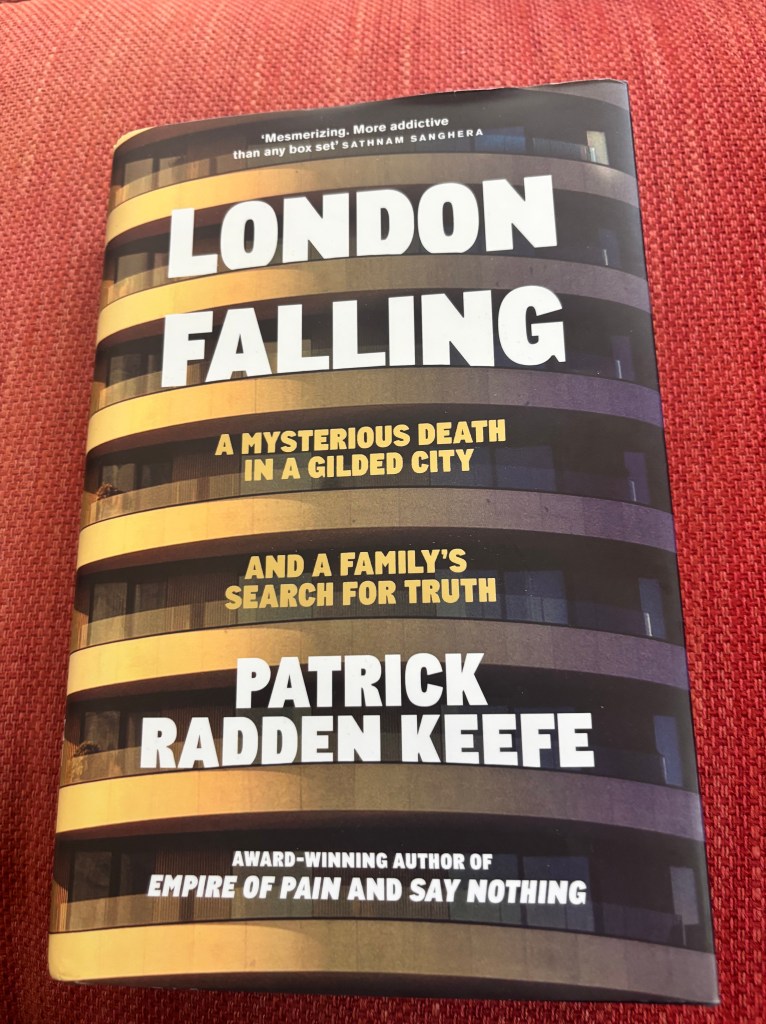
London Falling. What’s the meaning of that title? The tragic fall to his death from a luxury apartment block of a young man? The sinister decline in London’s reputation as it welcomed without question or scrutiny the influx of Russian oligarchs, their dubious money, and even more dubious morals? Or just a nod to the apocalyptic warnings in The Clash’s famous song, London Calling?
The ice age is coming, the sun’s zooming in Engines stop running, the wheat is growing thin A nuclear error, but I have no fear ‘Cause London is drowning, and I, I live by the river.
And what type of book is this? A story about the agonies and frustrations of parenting? An investigation into police incompetence? A warning about the dangers facing young men growing up surrounded by false promises, lies, unattainable aspirations, and charlatans? A critique of the politicians and financiers in awe of money and careless about where it comes from? In truth, Patrick Radden Keefe’s new book is all of these things and much more. What happened to Zac Brettler that night in November 2019 was a chilling and heartbreaking human tragedy for his parents, brother, and friends. For all of us it ought to be a warning and an alarm call.
Anyone who read Say Nothing will know how good a reporter Patrick Radden Keefe is. London Falling certainly matches and perhaps exceeds that achievement, and that’s saying something. He has a genuine interest in and compassion for his subjects, matched by the appetite for detail and the relentlessness that are the hallmarks of great investigative journalists. He also writes very well, pacing and shaping the story with meticulous care and skill.
I suppose it could be argued that he “overcooks” the account, setting up for the reader a mystery that will never be solved. Perhaps, but it is such a great story and told with a lot of compassion and just enough anger. We all need to know what happened to Zac even though we may never understand it. And we all need to be told just how wicked, greedy, and corrupt some people can be.