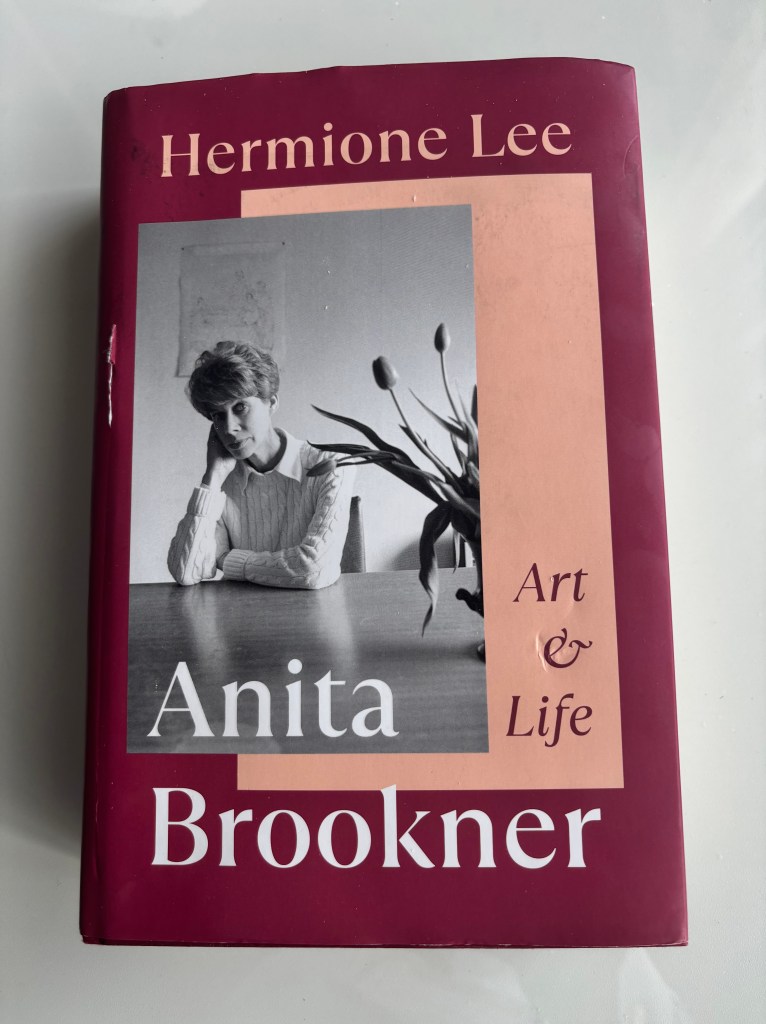
Hermione Lee must love a challenge. The celebrated biographer of Virginia Woolf, Edith Wharton, and Tom Stoppard chose to confront some intimidating obstacles when she took on the job of writing about the life and work of Anita Brookner. While it is not unusual for some writers to protect their privacy (think Samuel Beckett, Thomas Pynchon, or J.D. Salinger), Brookner was exceptionally guarded. She left very few personal papers, deliberately and carefully culling materials that future biographers might use and eliminating as much of her past as she could from what she saw as prying eyes. Time and time again, particularly in the early chapters of Anita Brookner: Art and Life, Hermione Lee bemoans the lack of documentary sources for Brookner’s childhood, school and student life and for the early years she spent in Paris preparing for her doctorate. Where are the diaries, address books, and letters? All destroyed as part of Brookner’s comprehensive mission to conceal her personal story.
Faced with these constraints, Lee turns to Brookner’s friends, colleagues, and students to build the portrait. Those taught by Brookner at the Courtauld Institute remember her as a compelling, colorful, and demanding teacher. Things get a little easier as Brookner’s life as a novelist takes off because Lee can draw upon the memories of Brookner’s friends in the publishing industry: Carmen Callil, Liz Calder, and Christopher MacLehouse among others. A fuller, more satisfying but by no means complete picture emerges of a complex woman. Fiercely private and solitary, but a loyal, warm, and generous friend. Sociable, but strictly on her own terms, yet prone to depression and self deprecation.
As might be expected from a Professor of English Literature at Oxford, Lee is very good at reading the novels, not only finding in them clues to the life of their elusive and guarded author but reminding us of their qualities and what led them to being so highly regarded by some of her contemporaries. (Brookner won the Booker Prize in 1984 for Hotel du Lac). By no means everyone liked Brookner’s novels and she had her fair share of bad reviews, many of them patronizing and sexist. The most repeated criticism was that she wrote the same book over and over again and that her emotional range was too narrow. Her output was certainly prolific, particularly as she started publishing novels when she was in her fifties, and it’s probably fair to say her reputation was damaged by the appearance of a novel every year.
It’s hard to know how widely read she is today. This engaging, fair, and humane biography made me want re-read some of the novels I remember enjoying in the 1980s and 1990s.