I didn’t enjoy reading The Ghostwriter, a mystery novel written by Julie Clark. I cared nothing for the protagonist (a ghostwriter commissioned by her estranged father, a celebrated novelist, to write a memoir about the infamous murders of his brother and sister decades earlier). The plot felt contrived and unbelievable, the prose flat, and the disjointed structure irritating. All of this was apparent quite early, so why did I persevere? Because the novel was a gift from a family member. Not reading it or abandoning it half-read would have been unconscionably rude. Those near and dear to me know what books mean to me and the outsized role they play in my life. An act of such kindness and thoughtfulness – someone walking into a bookstore and taking the time to choose a title they think I would enjoy (even if on this occasion they got it wrong) – means a lot to me.
book-reviews
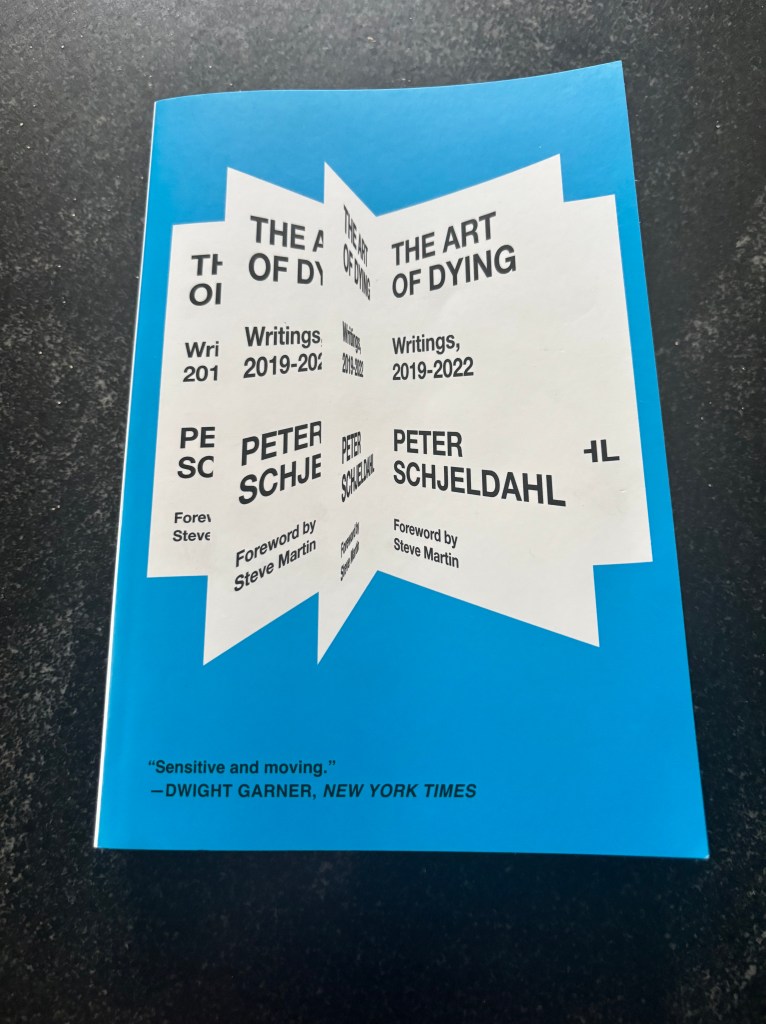
The Art of Dying
When I used to subscribe to The New Yorker I would look forward to Peter Schjeldahl’s articles about the art world. More often than not, the artists he wrote about were unfamiliar to me, but that never seemed to matter because he wrote with such energy, color, and humor, and because he was always so opinionated and entertaining. He died in 2020, having been diagnosed with lung cancer some time earlier. Between diagnosis and death, he published more than forty articles and these have been collected in The Art of Dying. The first of them is the celebrated and deeply moving autobiographical piece he published in The New Yorker. “Lung cancer, rampant. No surprise. I’ve smoked since I was sixteen, behind the high school football bleachers in Northfield, Minnesota”. Buy the book for this essay alone.
There are pieces in this collection about artists I don’t know. Charles Ray and Faith Ringgold, for example. I read first the articles about artists and places I know well such as Morandi, Holbein, and Storm King, seeing and appreciating them in slightly new ways thanks to Schjeldahl’s intelligence, perceptiveness and humor. He was a one-off, as Steve Martin’s tribute at the beginning of the book recalls; contrary, funny, and brilliant. I read The Art of Dying while dipping into Hot, Cold, Heavy, Light, a collection of his writings from 1988 to 2018. I receommend them both.

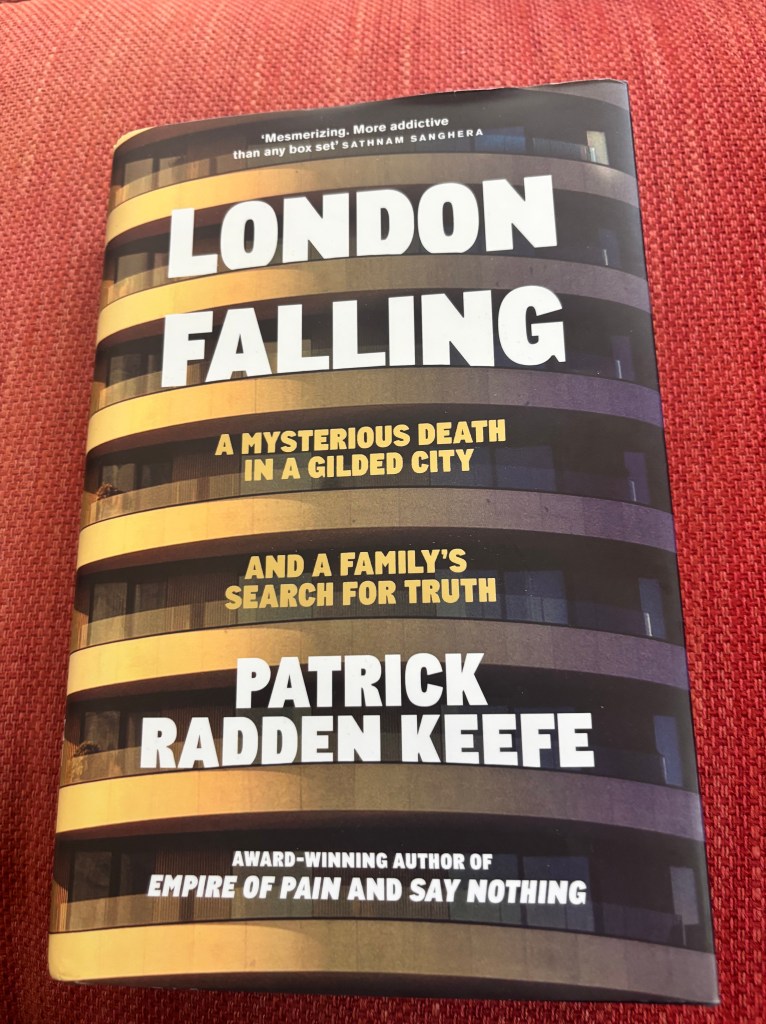
London Falling
London Falling. What’s the meaning of that title? The tragic fall to his death from a luxury apartment block of a young man? The sinister decline in London’s reputation as it welcomed without question or scrutiny the influx of Russian oligarchs, their dubious money, and even more dubious morals? Or just a nod to the apocalyptic warnings in The Clash’s famous song, London Calling?
The ice age is coming, the sun’s zooming in
Engines stop running, the wheat is growing thin
A nuclear error, but I have no fear
‘Cause London is drowning, and I, I live by the river.
And what type of book is this? A story about the agonies and frustrations of parenting? An investigation into police incompetence? A warning about the dangers facing young men growing up surrounded by false promises, lies, unattainable aspirations, and charlatans? A critique of the politicians and financiers in awe of money and careless about where it comes from? In truth, Patrick Radden Keefe’s new book is all of these things and much more. What happened to Zac Brettler that night in November 2019 was a chilling and heartbreaking human tragedy for his parents, brother, and friends. For all of us it ought to be a warning and an alarm call.
Anyone who read Say Nothing will know how good a reporter Patrick Radden Keefe is. London Falling certainly matches and perhaps exceeds that achievement, and that’s saying something. He has a genuine interest in and compassion for his subjects, matched by the appetite for detail and the relentlessness that are the hallmarks of great investigative journalists. He also writes very well, pacing and shaping the story with meticulous care and skill.
I suppose it could be argued that he “overcooks” the account, setting up for the reader a mystery that will never be solved. Perhaps, but it is such a great story and told with a lot of compassion and just enough anger. We all need to know what happened to Zac even though we may never understand it. And we all need to be told just how wicked, greedy, and corrupt some people can be.

The Palm House
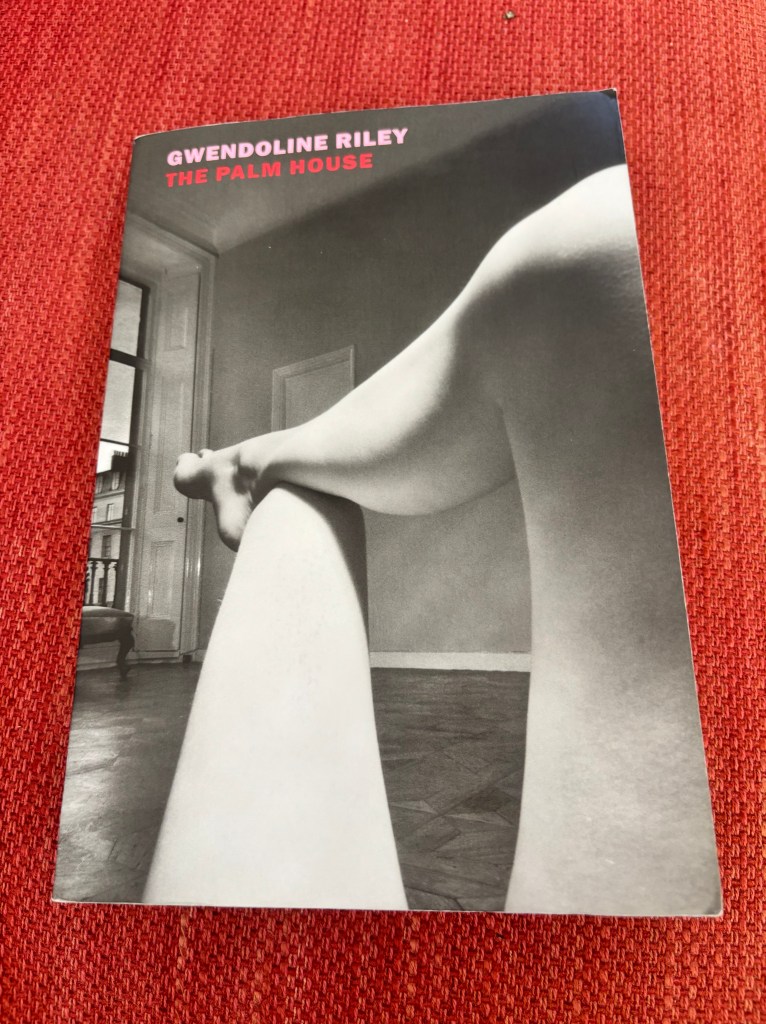
What did I miss? The author is highly regarded. The reviews were very positive, sometimes effusive. Even Sarah Jessica Parker praised it! So why, turning the final page, did I wonder what all the fuss was about? Thinking back on The Palm House by Gwendoline Riley, I could find nothing especially noteworthy or engaging about it. And I’m the sort of reader who likes and tends to gravitate towards quiet, mannered, minimalist novels, the sorts of novels by the likes of Tessa Hadley that never normally fail to delight and impress me. And while I’m feeling puzzled, can someone please explain the relevance of the cover image and the title?

Perfection
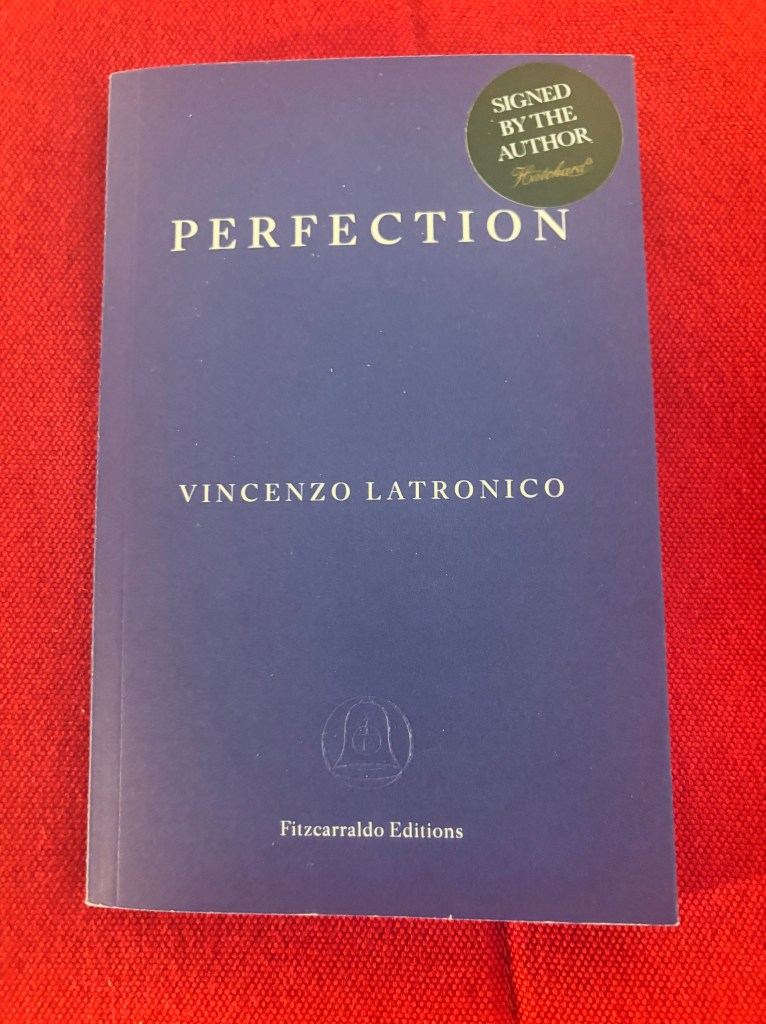
Vincenzo Latronico’s short novel, Perfection, is an unsettling social satire. It follows the lives of Anna and Tom, two young “digital creatives” who move to Berlin in the 2010s from an unnamed country in southern Europe. Well-paid freelance work is plentiful and Berlin is still affordable, so Anna and Tom live an enviable life comprising hard work, easy friendships, and a vibrant social scene. It’s a time of abundance and apparently endless possibility. But as the years pass, things change. Berlin starts to be very expensive and their fellow “digital nomads” wander home or elsewhere. Work gets a little harder to find and clients look for a younger and cheaper workforce. The perfect life, the lovely home filled with just the right possessions, the social routine of nightclubs, restaurants, and gallery openings – it all seems to be slipping away and unsatisfying. Disillusionment creeps in.
How could they ever have chosen to spend their days like that, hunched over a computer screen in their living room? They will be tempted to search elsewhere for what they found all those years ago in Berlin. But it will prove impossible because that abundance was the result of a specific overlap between the city’s history and theirs.
What Anna and Tom discover may not be revelatory to everyone. A life filled with little more than work becomes stale and purposeless, especially when that work produces little of substance and lasting value. Life lived in the bubbles and echo chambers of social media ends up being hollow and unmoored. No amount of fashionable furniture and artisanal coffee can compensate. Obvious? Perhaps, but not to those searching for the illusion of a perfect life in places it will never be found.
Perfection isn’t a perfect novel. Anna and Tom are indistinguishable from one another and sometimes seem little more than empty cyphers. Everything here is a little heavy-handed and didactic. Nevertheless, the novel captures very well a spirit, a moment in time, and a way of living that we may all look back on with astonishment and disbelief.

Helm
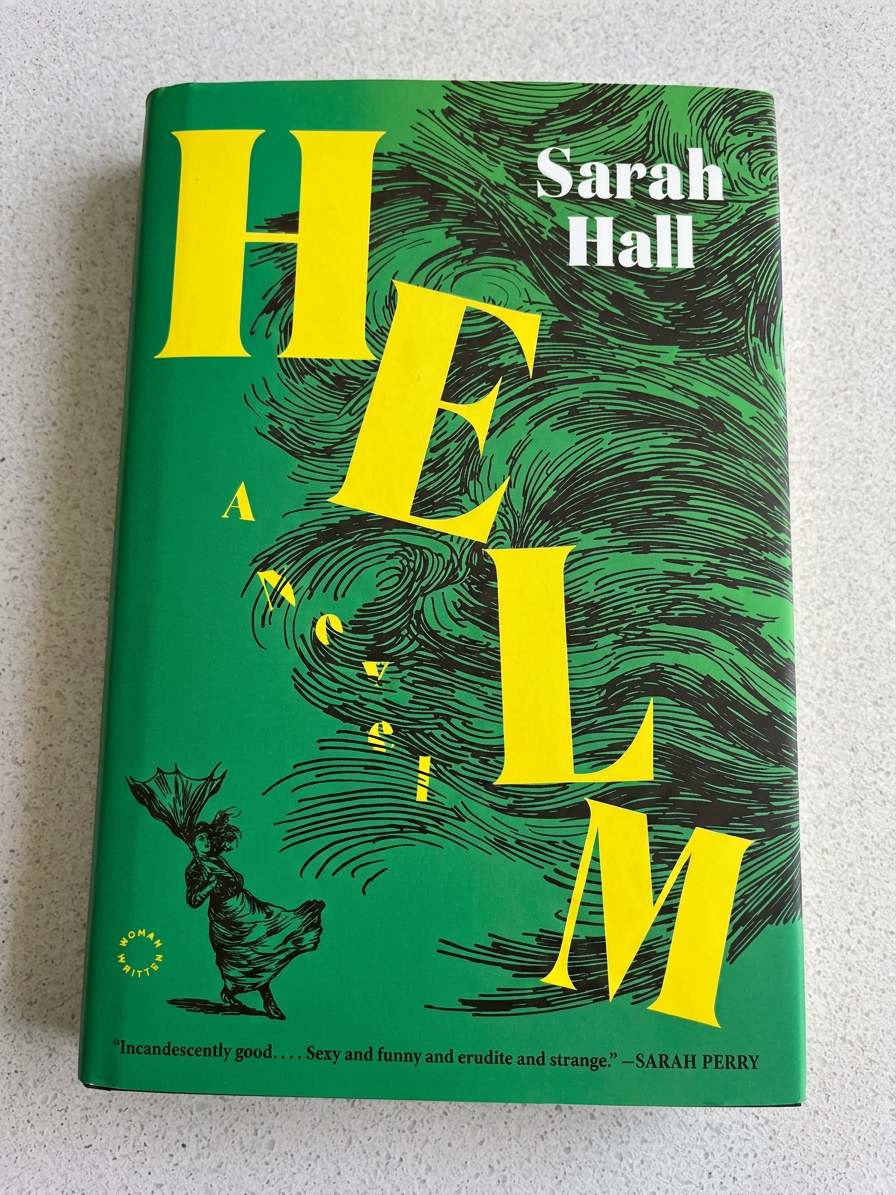
Helm is one of the most imaginative and ambitious novels I have read in a very long time. Its central character is a wind. Not the wind, but a very specific wind peculiar to a certain part of northern England, a wind familiar to its inhabitants since humans first occupied that place. A wind so unpredictable and so ferocious that it has been feared, revered, placated, studied, and measured for thousands of years by those who know it.
The success, critical and commercial, that this novel is enjoying right now must owe something to its resonance with readers at a time when our engagement with the natural world in general and the climate in particular is so complex and divisive. Sarah Hall reminds us that our relationship with nature has never been simple. The characters in this novel may fear or despise the wind for its destructive power and apparently willful influence on their daily lives, but one thing they are not is indifferent. Helm will not allow indifference or tolerate complacency. Wherever one stands on the climate crisis and the extent of it, one thing is unarguable. We are where we are, at least in part, because we have become indifferent to the natural world, careless despoilers of it, and often arrogantly contemptuous of it. Helm reminds us that there are consequences for this, debts to be settled, and a price to be paid. Nature can only tolerate so much before a payback is demanded. I hope this doesn’t make the novel sound preachy or dull because nothing could be further from the reality. Helm is funny, joyful, and quirky, and always thought provoking.
Sarah Hall’s most recent novel was first published in late 2025 and has attracted the sorts of reviews that writers dream of getting. I recall reading her first novel (Haweswater) more than twenty years ago and the deep inpression it made on me. Helm will, I hope, bring a whole new set of readers to her wonderful body of work.

This House of Grief

I read “true crime” books very rarely. In fact, I can only think of a few. Capote’s In Cold Blood, of course, and one or two others. My aversion to the genre is simple enough to explain. Many such books, at least in my experience, are badly written and are motivated by a ghoulish and sometimes prurient interest in the misfortune and misery of others. They are, more often than not, the literary equivalent of slowing down to watch a car accident.
This House of Grief is something very different. It is mostly an account of the trial of Robert Farquharson who stood accused of the murder of his three sons on Father’s Day, 2005. The crime and the trial captivated Australian society at the time, but I was entirely unaware of them, and of the book (first published in 2014), until I started to get interested in its author, Helen Garner. Garner recently won the Baillie Gifford prize for her diaries, How to end a Story, and it was those that led me to look at her earlier work. On a visit to The Brick Lane Bookshop in London, This House of Grief was displayed prominently and I snapped it up. I am glad I did.
I think the book has become a classic for several reasons. As an account of the drama that can unfold in a courtroom, it is hard to imagine anything better. Garner has a very sharp eye for the peculiarities of human behavior and the trials gave her a great opportunity to train it on the lawyers, spectators, and witnesses. It is also a deeply disturbing report of the depths of wickedness into which a person might descend. It is a story that could have been recounted in a sensational and vulgar way, but in Garner’s hands it is all done with such humanity. This House of Grief is a truly brilliant and compassionate piece of reporting. Garner’s award winning diaries are now top of my Christmas reading wish list.
Death and the Gardener
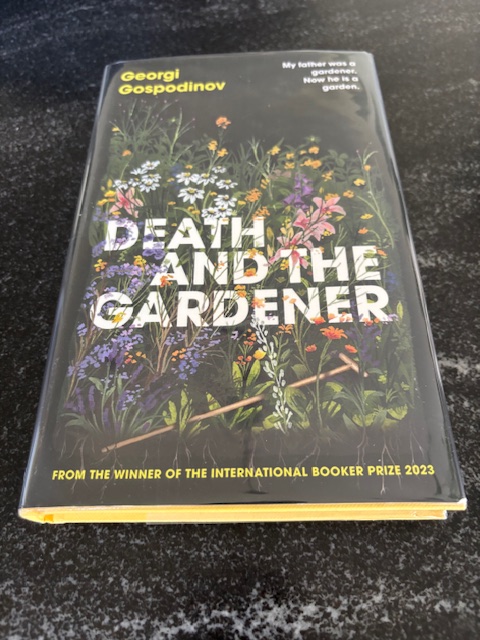
I have the impression that fewer novels are written about fathers and fatherhood than mothers and motherhood. That may simply reflect my reading choices and experience. Anyone who loved their father and lost him to illness is likely to be moved deeply by Death and the Gardener, the most recent novel from the Bulgarian writer (and winner of the International Booker prize in 2023), Georgi Gospodinov.
The book reads like a memoir. The narrator is a celebrated Bulgarian writer and his story is told with the apparently unflinching candor that one normally associates with journals or autobiographies. His account weaves memories of his father with a description of the old man’s illness, treatment, and death, all told in a style marked by simple directness with flashes of real tenderness. It’s one of those books that you find yourself wanting to read more slowly, more carefully, going back over particular sentences and paragraphs to embed them firmly in your memory and experience.
In remembering his father, and telling those remembrances, the narrator creates a eulogy and a memorial that will outlast the father and the son. And Gospodinov, in creating the story, creates a eulogy and memorial for every father that was loved and lost, so that perhaps the sons still living might realize and cherish what they had and what will never return. “We will never be as safe as we once were in our father’s arms“.

A Bigger Message
Martin Gayford wrote a book a few years ago about the experience of having his portrait painted by Lucien Freud. Man with a Blue Scarf proved to be not only an insightful, up-close-and-personal look at Freud, but also an engaging account of what it took to be one of his sitters. It’s one of my favorite books. Gayford has now focused his attention on David Hockney, transcribing a series of conversations he had with the prolific artist over more than a decade.
The portrait that emerges from the book is of an inexhaustibly inventive, restless, curious, and thoughtful artist. Now in his late eighties, Hockney has spent some seven decades not just painting and drawing, but thinking deeply about the act of looking. The book is filled with his insights on his own working methods, on other painters (Constable, Fra Angelico, Picasso, Van Gogh and many more), his fascination with new technologies, and the tireless determination to see clearly and record faithfully. It’s not in any sense a conventional biography, but Gayford’s clever and sensitive questioning tells you more about the personality, passions, and compulsions of this extraordinary painter than a traditional account might.
A Bigger Message is a book for Hockney fans for sure, but also for anyone interested in the mind and work of a great artist.

Munichs

Only a small proportion of Manchester United’s fans around the world gets to visit Old Trafford. For those that do, the trip to the Theatre of Dreams has the character of a pilgrimage. The statue of Best, Charlton, and Law might top the list of sights to see, or a seat in the Stretford End, but for many it’s the Munich clock, that painfully poignant memorial to the terrible day in 1958 when eight of the first team died as their plane crashed on take-off from Munich airport. David Peace’s book, Munichs, tells the story of that tragic day and its aftermath. It is, quite simply, a masterpiece.
Although the tragedy happened less than seventy years ago and is remembered vividly by older United fans, Munich has become part of the mythology of the club. And, as is so often the case with myths, the real story of what happened that snowy day in 1958 is known to many only in outline. The death of the precociously talented Duncan Edwards or the remarkable recovery of the manager, Matt Busby, for example. But Munich was about much more. The journalists who died that day, the relatives of those who perished, the guilt of those who survived, the grief of hundreds of thousands of supporters who lined the streets for the funerals, and the shock of a nation – all this and more is captured brilliantly and unforgettably by David Peace.
Munichs is not a history book. It’s a novel, but one obviously informed by a deep engagement with contemporary sources. Its brilliance in part is due to its evocation of a world that feels long past. A world in which football was a working class sport, one with deep roots in local communities and one where the passion to play and win had nothing to do with money. David Peace tells the story with the imagination, empathy, and compassion of a fine novelist, portraying the grief, courage, and resilience of those who survived and those who lost loved ones. Only ten years after the tragedy, Manchester United went on to win the 1968 European Cup. I remember that game very clearly, but had no idea as I watched the post-match celebrations on television that Bobby Charlton, Bill Foulkes, and Matt Busby had been pulled from the burning wreckage only a decade earlier. Munichs should be read by anyone who loves football, but it will have special meaning for those who follow United.