Strange Weather

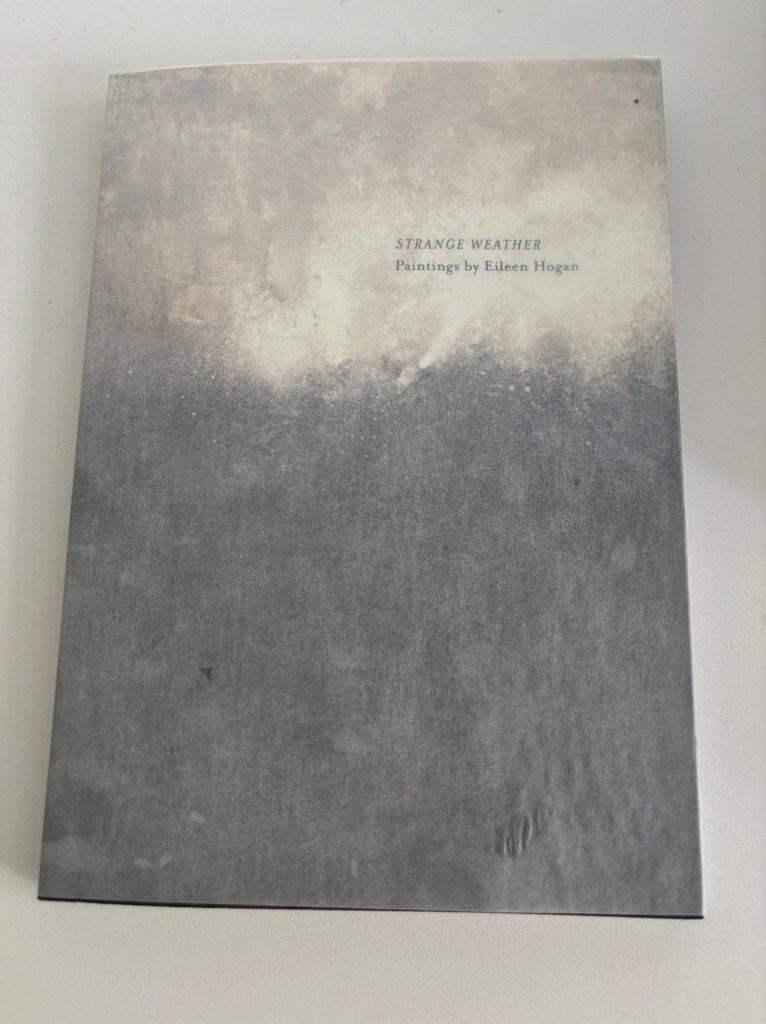
I discovered this delightful book, and the artist who wrote it, when I was browsing recently in Hatchards in Piccadilly. This bookshop has to my mind the best art department of any in London and has an added bonus of knowledgeable, helpful staff. Strange Weather was written to accompany an exhibition of the artist’s then recent work put on in late 2024 by her London gallery, Browse & Darby. The works in the exhibition and the catalog were completed mostly around the time of the pandemic and immediately after, and the title refers, as the artist says, “to the natural climate and the political weirdness of pandemic period, the fear, isolation – and the occasion euphoria triggered by nature”.

I wish I had seen the exhibition. The paintings and drawings in the book, though beautiful, are small. The landscapes and nature paintings, made in London, France, and Scotland, are especially lovely. Strangely impressionistic and precise at the same time, the oil paintings of trees and wildflowers speak to the resilience of the natural world in the face of the pandemic and its imperviousness to it. Eileen Hogan is also a portraitist and a couple of examples of commissions (Alan Rusbridger, Justin Welby) are included here, as are some works resulting from her appointment as the official Coronation artist.

The Art of Dying

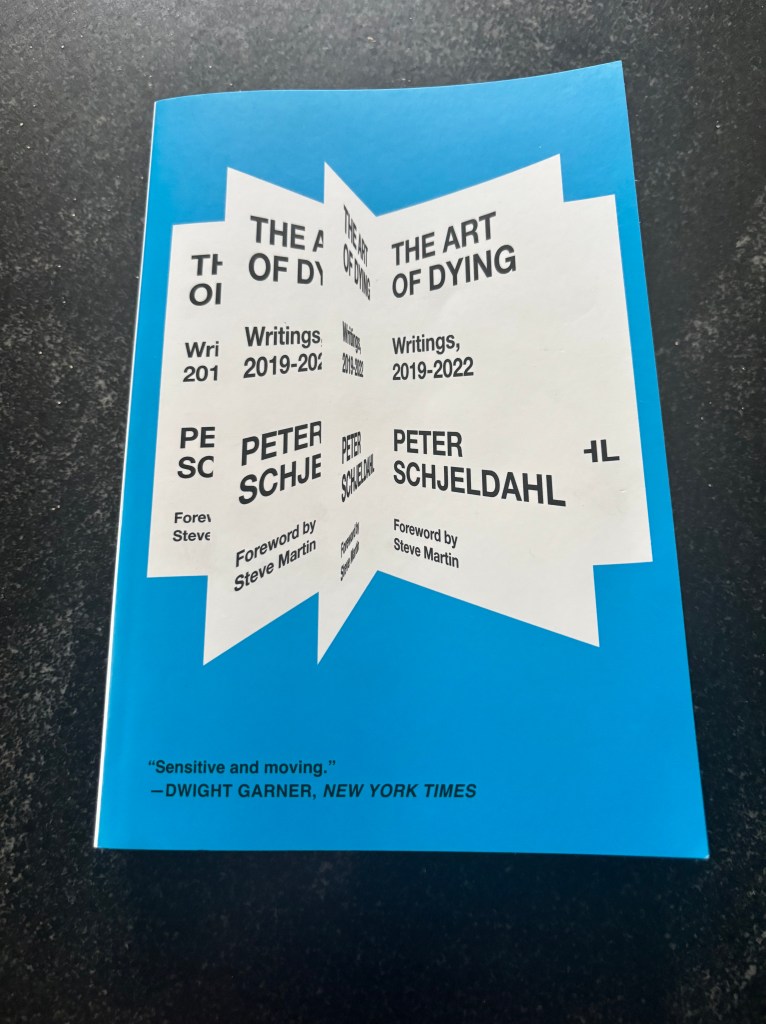
When I used to subscribe to The New Yorker I would look forward to Peter Schjeldahl’s articles about the art world. More often than not, the artists he wrote about were unfamiliar to me, but that never seemed to matter because he wrote with such energy, color, and humor, and because he was always so opinionated and entertaining. He died in 2020, having been diagnosed with lung cancer some time earlier. Between diagnosis and death, he published more than forty articles and these have been collected in The Art of Dying. The first of them is the celebrated and deeply moving autobiographical piece he published in The New Yorker. “Lung cancer, rampant. No surprise. I’ve smoked since I was sixteen, behind the high school football bleachers in Northfield, Minnesota”. Buy the book for this essay alone.

There are pieces in this collection about artists I don’t know. Charles Ray and Faith Ringgold, for example. I read first the articles about artists and places I know well such as Morandi, Holbein, and Storm King, seeing and appreciating them in slightly new ways thanks to Schjeldahl’s intelligence, perceptiveness and humor. He was a one-off, as Steve Martin’s tribute at the beginning of the book recalls; contrary, funny, and brilliant. I read The Art of Dying while dipping into Hot, Cold, Heavy, Light, a collection of his writings from 1988 to 2018. I receommend them both.

Henry Moore: Monumental Nature

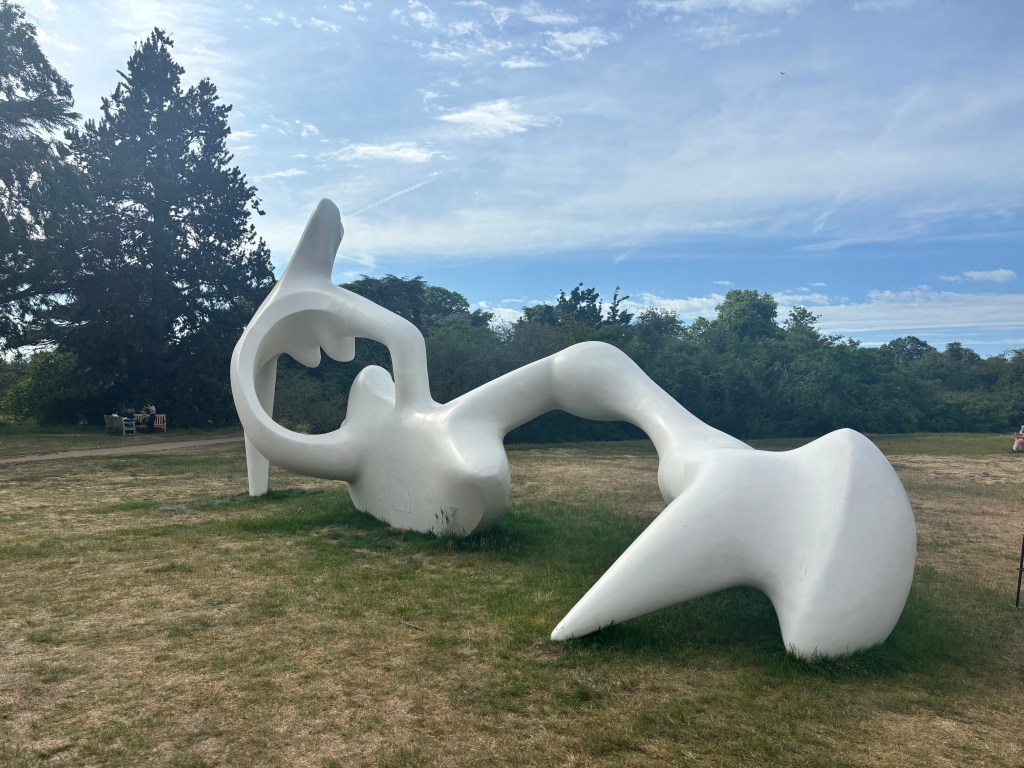
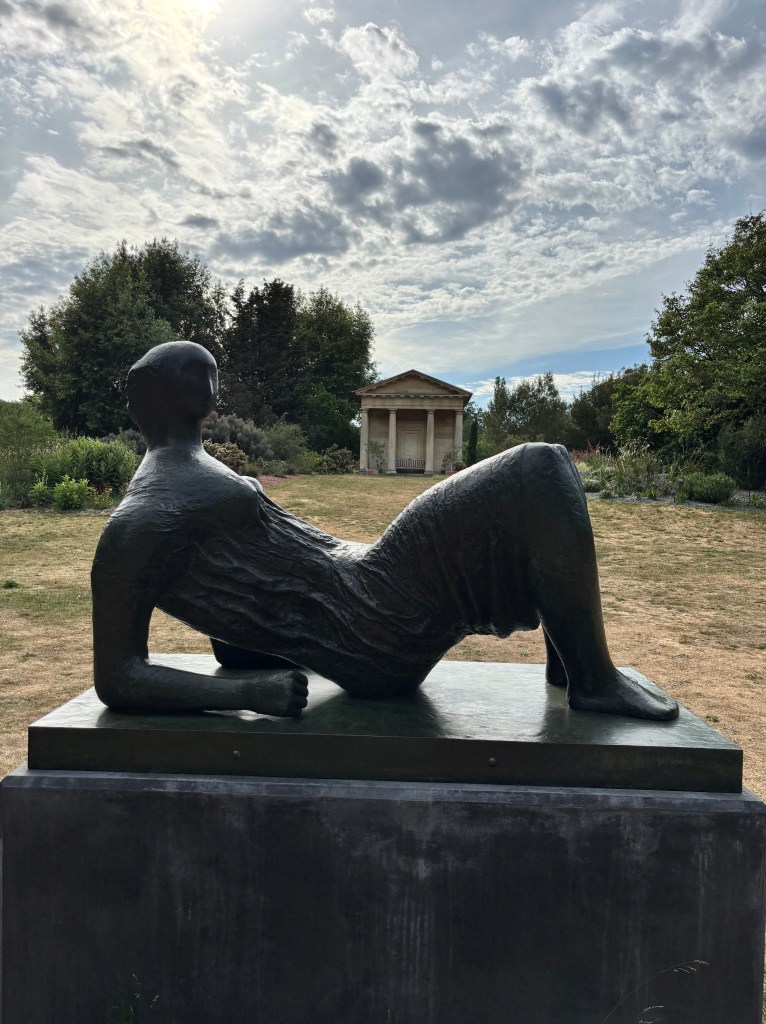
Henry Moore preferred his large sculptures to be displayed outdoors. He would, I expect, be delighted by the decision to place thirty of them in the Royal Botanic Gardens in Kew. The pieces here vary greatly. Some are representational, others purely abstract. Some are made of bronze, some of fibreglass. Most are huge and imposing and somehow seem even more so set amongst Kew’s magnificent trees and glass houses. Being able to walk around them, to see them close up, to see their markings and their variations in color and texture provides an opportunity to appreciate Moore in a new way. His extraordinary ability to infuse these massive, heavy pieces with such movement and gracefulness and the wonderful delicacy and gentleness when sculpting the human form are appreciable here in a way they could never be inside a gallery or museum.

Raphael: Sublime Poetry

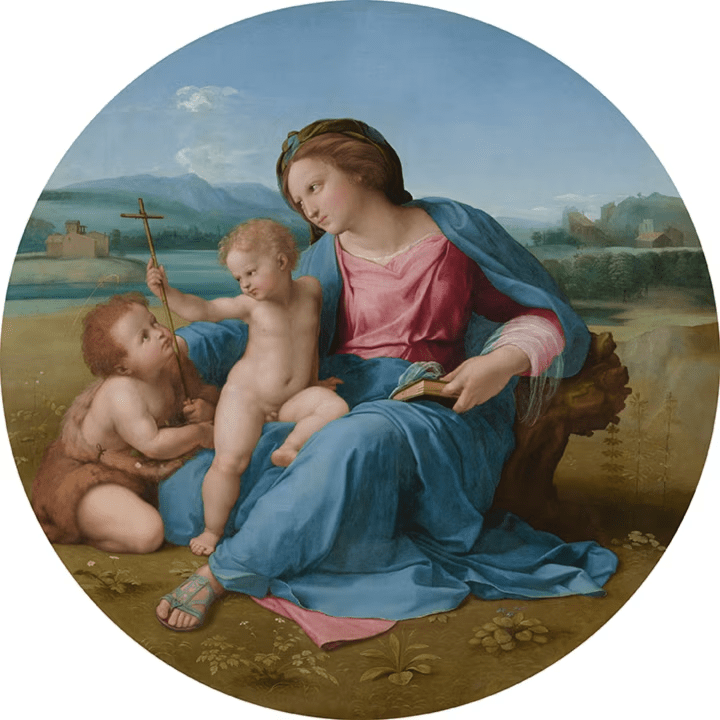
I have two pieces of advice for anyone thinking about going to see the blockbuster exhibition at the Met, Raphael: Sublime Poetry. First, don’t hesitate. This is a once in a generation event that closes at the end of June, a unique opportunity to see in one place a collection of truly wonderful paintings and drawings by the Renaissance master (1483-1520). Second, plan your visit with great care and cunning. Anyone who doesn’t will be standing in very long lines and in small crowds clustered around the major works.

As is so often the case with exhibitions devoted to great Renaissance painters (I recall the same experience at the Michelangelo show in 2024 at The British Museum), the thrill here is the opportunity to see up close drawings, “cartoons”, and preparatory sketches normally hidden in or dispersed among different collections around the world. It’s not that the paintings are not superb. They are, and, in fact, this might be the exhibition that puts Raphael as a painter back where he belongs in art lovers’ eyes, as the equal of Michelangelo and Leonardo. It’s just that the drawings demonstrate his exquisite skill for rendering every part of the human figure with such expressiveness and delicacy. The grace, power, and fragility of the body have rarely been captured so beautifully.

My Heart is This

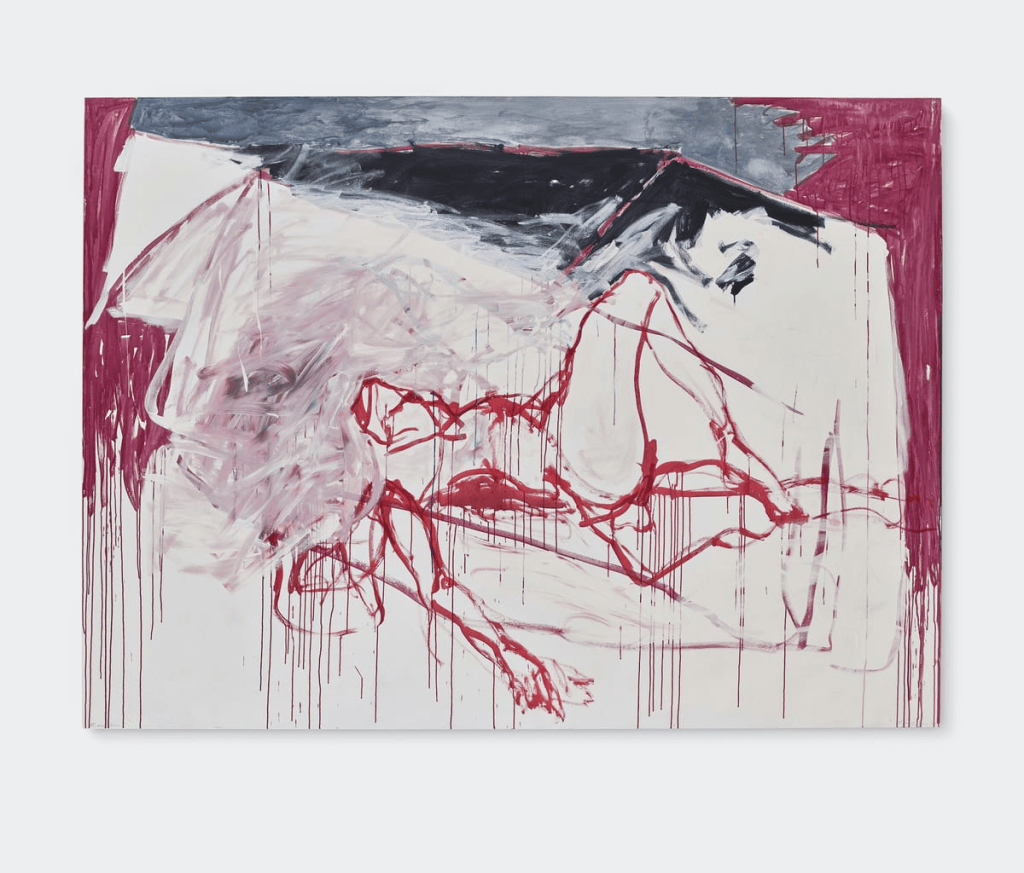
Tracey Emin is one of those artists whose name is known to a wider public beyond those who follow contemporary art. The broader public recognition she enjoys is probably due to an artwork she first created in 1998, My Bed. That installation, plus her association with the Young British Artists (YBA) group that emerged in the late 1980s, has given her a degree of celebrity that few artists of her generation have achieved.

Her work has embraced many media including installations, photography, and video, but in recent years she has focused on painting. Martin Gayford’s most recent book, My Heart is This: Tracey Emin on Painting, captures a series of conversations with the artist about her painting and her influences. Gayford has become something of a “painter whisperer”, having written excellent, critically acclaimed books about Lucian Freud and David Hockney.

I haven’t yet made up my mind about Emin as a painter and Gayford’s book, interesting and insightful as it is, didn’t do much to convince me about the importance of her work. It did, however, do something it intended to do, make the reader go back to the paintings and look more closely and carefully. Emin would be happy about that.

Museo Fortuny (Venice)

Whenever I visit Venice, I am struck by how tourists behave. They flock in huge numbers to St. Mark’s Square and the Rialto bridge, but rarely venture to other neighborhoods rich in atmosphere and treasures like Cannaregio or Dorsodouro. I have no idea why that is, but it does make it quite easy, at least in the off peak seasons, to avoid the crowds for the most part. I had three wonderful days there recently, skipping the most congested spots and taking in areas that happen to be my favorites. One highlight was my first ever visit to Museo Fortuny. Although located in the St. Mark’s sestiere, it’s in a small, quiet square that seems to attract few visitors.

The museum, based in the Palazzo Pesaro Orfei, was the workshop and home of Mariano Fortuny (1871-1949). Today it celebrates Fortuny’s promiscuous talents and interests which ranged from theatre design to photography, painting to fabrics. It also offers a chance to see the interior of a wonderful 15th century palace. Anyone whose tastes go in the direction of textiles, art, and photography should put the Museo on the top of their “must see” lists in Venice. Pick the right moment and you might have the glorious place all to yourself!

Life in Progress

Hans Ulrich Obrist is a celebrated curator and gallery director. He is currently Artistic Director of the Serpentine Galleries in London. His professional success, at least on the basis of this autobiography, seems to owe as much to determination, drive, hard work, and imagination as it does to any formal training in art history or curation. All very commendable, not least because I imagine the world in which he operates is very competitive.

His professional life has been an interesting one so far (he is only 57), filled with encounters with many of the world’s greatest artists. He has thought deeply about exhibition making and the role of curators in the artistic process. Life in Progress is the story of those experiences and thoughts. Unfortunately, Obrist is no writer. The prose here is flat and lifeless, and the effect of that is occasionally to render a life filled with achievement and insight as something bland and trite. Surely he could, like many others, have found a ghost writer or collaborator. It would have been a far better book if he had.

Les Tres Riches Heures

Some experiences really are once-in-a-lifetime experiences. About a year ago it was announced that in mid-2025 one of the rarest and most exquisite medieval manuscripts would go on display to the public. Les Tres Riches Heures du Duc de Berry is an illuminated book of hours (a book of prayers intended to be read at specific hours of the day) first created between 1412 and 1416 for John, Duke of Berry, the brother of King Charles V of France. The manuscript, believed to be the work of the Limbourg brothers, was left unfinished because the brothers died, most likely victims of plague. Further work was done on the manuscript later in the 15th century by Barthelemy d’Eyck and Jean Colombe.

The manuscript is very rarely displayed because of its fragility and has only been seen by the public twice since the end of the 19th century. Even scholars have been denied access since the 1980s and forced to rely on facsimiles. The need to repair its binding gave an opportunity to exhibit some of the unbound pages at the Chateau de Chantilly where it is usually housed, an event so rare that it was described as one of the cultural highlights of the century. Needless to say, art lovers, historians, and bibliophiles have descended on Chantilly in huge numbers since June, but by the time I arrived in mid-September the crowds had subsided and I was able to see the exhibited pages up close.

Twelve pages were on display the day I visited, each one representing a month of the year. It is hard to describe how vivid, rich, and elaborate the illumination is on these pages, as well as the perfection of the calligraphy. It is a credit not just to the artists, but also those charged with the care and conservation of this treasure, that the illustrations look as if they could have been painted yesterday, such is the depth and brilliance of the color.

Some works of art defy categorization. This precious manuscript, a priceless example of medieval art, is one of them. I feel privileged to have seen it.

A Bigger Message

Martin Gayford wrote a book a few years ago about the experience of having his portrait painted by Lucien Freud. Man with a Blue Scarf proved to be not only an insightful, up-close-and-personal look at Freud, but also an engaging account of what it took to be one of his sitters. It’s one of my favorite books. Gayford has now focused his attention on David Hockney, transcribing a series of conversations he had with the prolific artist over more than a decade.

The portrait that emerges from the book is of an inexhaustibly inventive, restless, curious, and thoughtful artist. Now in his late eighties, Hockney has spent some seven decades not just painting and drawing, but thinking deeply about the act of looking. The book is filled with his insights on his own working methods, on other painters (Constable, Fra Angelico, Picasso, Van Gogh and many more), his fascination with new technologies, and the tireless determination to see clearly and record faithfully. It’s not in any sense a conventional biography, but Gayford’s clever and sensitive questioning tells you more about the personality, passions, and compulsions of this extraordinary painter than a traditional account might.

A Bigger Message is a book for Hockney fans for sure, but also for anyone interested in the mind and work of a great artist.

The Aberlemno Stones

Relatively little is known about the Picts. They lived in what is now northern Scotland between 300 AD and 900 AD before gradually integrating with other tribes and kingdoms. They resisted the expansion of the Romans and earned the reputation of being fearsome warriors. They left behind a significant artistic legacy, and it was specifically their beautifully carved stones that drew me recently to the tiny village of Aberlemno in Angus. Normally one would find four stones in Aberlemno, three by the roadside and one in the churchyard, but a storm recently toppled and damaged Aberlemno 3, causing it to be removed from the site for inspection and repair.

Precise dating of the stones is, of course, difficult, but there seems to be consensus that the earliest could have been carved in the 6th century and that the most recent (Aberlemno 2, the one in the churchyard) is from around 850 AD. Aberlemno 1 is carved with mysterious Pictish symbols, including a serpent, a double disc and what appears to be a comb. It’s a powerful and confidently executed piece of work, but much simpler than Aberlemno 2. The stone in the churchyard feels like two distinct works. One side depicts Pictish symbols and figures in what looks like a battle, while the other side is a Celtic cross with beautiful and elaborate knotwork and keywork designs.

The stones, beautiful works of art though they are, are also extraordinary reminders of a long disappeared civilization. They have stood for all to see for more than 1.200 years, among a community, not hidden in a museum. I hope they are cared for and protected for generations to come because they testify to our persistent and enduring creativity.