I scarcely noticed a feature in The Financial Times earlier this year encouraging readers to visit the latest “hot” destination, the small island of Porquerolles. Yet only a few months later there I was after a short ferry ride from Hyeres. For most visitors, Porquerolle’s beaches are the top attraction. After disembarking, they head to the bike rental places along from the ferry terminal and on to one of the many beautiful stretches of sand.
My plan was different. I was there to see Villa Carmignac, a gallery dedicated to contemporary art and housed in a striking building just a short walk from the small downtown area. It’s the brainchild of Edouard Carmignac and was set up in 2000 to house a collection of some 300 works of art. Figures like Lichtenstein, Richter, and Warhol feature, but also a large number of less well known artists. It’s well worth a visit, not least to see the beautiful building itself with its cool, white space and aquatic ceiling.
Whether you’re interested in swimming, sunbathing, or immersing yourself in modern art, Porquerolles makes for a wonderful day trip, especially in September when the summer crowds have left.
The Gilbert & George Centre opened in April this year, a few steps from the artists’ home in Fournier Street. Its inaugural exhibition, The Paradisical Pictures, is an interesting one. The pictures, intensely colored like all their recent work, feature Gilbert and George, staring out from behind and sometimes partly concealed by rotting vegetation and flowers. Their eyes are reddened, perhaps by fatigue, grief, or demonic power. Are these sinister images of decay and death some kind of exhortation to reverse the damage we are all inflicting on the world? Like almost all their work, the surface playfulness, the cheerful vividness of the colors, and the omnipresence of the artists themselves, are counterpoints to the deep seriousness of the exhibition’s message. The Centre itself consolidates the presence of Gilbert and George in Spitalfields, giving them a permanent place to display their work in a neighborhood they have called home since 1968.
From East London I headed to Trafalgar Square, the heart of London’s traditional art establishment, and The National Portrait Gallery. The NPG reopened in June after being closed for three years. Among other things, the collection was re-hung during the closure, and I was interested to see the results. That wasn’t as easy as I had hoped because half of London had the same idea. The galleries were very crowded – a good thing, of course – so I restricted my trip to some of the rooms on the second floor and to a wonderful small exhibition dedicated to the sketchbooks of Lucian Freud. I’ll certainly be going back, but next time I’ll choose the time more wisely.
Ordovas, a leading commercial gallery, has its premises in Savile Row, a few minutes’ walk from the NPG. I try to make a visit whenever I’m in London because its exhibitions, though small, are always curated with real care and always seem to include treasures I’ve never seen. My most recent visit was no exception. Entitled Endless Variations, it features only eight works, four by Francis Bacon and four by Andy Warhol. It claims to “explore common interests and influences shared by the artists”. I am not convinced, but what matters is the opportunity to see up close three masterworks by Bacon, Portrait of Henrietta Moraes (1969), Study for Portrait of John Edwards (1984), and Three Studies for Portrait of George Dyer (1964). All are magnificent, confirming, if confirmation were needed, that Bacon was one the greatest painters of the late 20th century. Warhol may be the better known of the two, but his work looks trivial and vacuous in this setting.
At some time around 1157, a group of Cistercian monks abandoned a property they had occupied near Tourtour and moved to Le Thoronet, a site more fertile and better suited to their system of agriculture. No one can be sure when they completed work on the monastery, but it’s likely to have been at the very beginning of the 13th century. The monks remained there until the abbey was deconsecrated in 1785. Many of the buildings were acquired by the French government in 1854 and Le Thoronet was one of the first sites to be added to the list of national monuments.
Unlike many ancient abbeys, Le Thoronet was largely built in one, uninterrupted period, and it’s this fact that gives the site such architectural integrity and purity. Much of it is beautifully preserved, especially the church and cloisters. Visit outside the summer months and you’ll experience the deep tranquility and splendor of this magnificent place without the crowds. Time on this occasion didn’t allow me to get to Le Thoronet’s sister abbeys in Provence, Senanque and Silvacane, but I’m already hatching a plan for a future visit.
Jamie O’Neill is not a typical teenager. He likes the rain and the works of Edgar Allan Poe. He likes to watch videos of lectures delivered by famous mathematicians, and knows the exact number of steps between his house and his school. He’s more than a little pre-occupied by the idea of building a perpetual motion machine because, for reasons only clear to Jamie, he thinks it will allow him to go back in time and meet his mother, who died shortly after giving birth to him. Unsurprisingly, Jamie doesn’t fit in at school. Classmates bully him. The headteacher has no time for misfits and outliers like Jamie, preferring boys with more conventional ambitions and more predictable behaviors.
Fortunately for Jamie, he has a loving father and grandmother, and he attracts the attention of two caring teachers, both of whom have complex lives and pasts of their own. One of them is Tadhg Foley, a woodwork teacher, who encourages Jamie to help him build a currach, a traditional Irish boat.
Elaine Feeney’s second novel could easily have ended up as sentimental and cloying. It doesn’t, largely because she portrays so compassionately how difficult it is to be Jamie. Nevertheless, she isn’t able to avoid entirely the traps she builds for herself. Much of the story’s setup is predictable, and not all the characters come alive from the page. Not everyone fits neatly into the slots the world makes for them, and many need care and affection to find their way. Parenting, and especially the consequences of its absence, is Feeney’s theme and it’s one she studies with a compassionate eye.
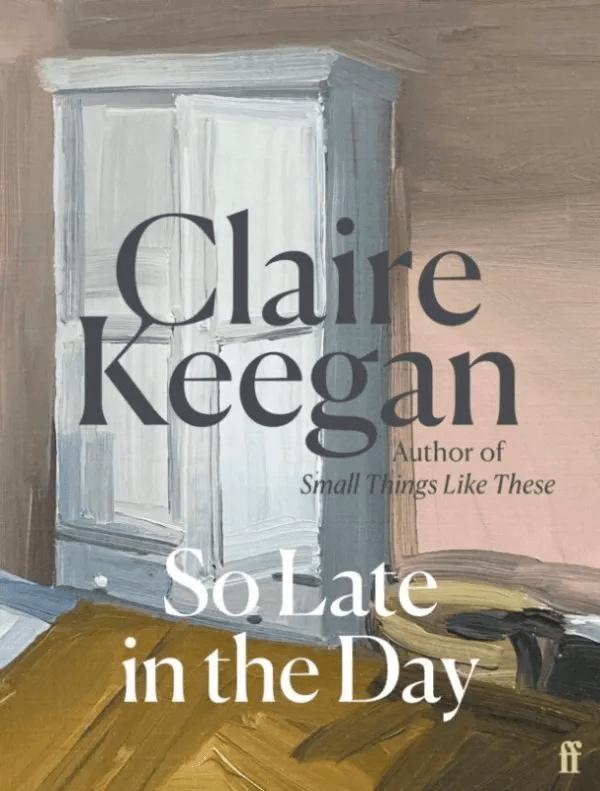
It tells us, I suppose, how hot a property Claire Keegan is these days that her UK publisher, Faber & Faber, is able to package and publish one of her short stories as a hardback book for £8.99. Commercial opportunism for sure, but it’s hard to complain when the story is as exquisite as So Late in the Day.
Not a single word is wasted in this poignant tale. Cathal faces an evening alone and time to reflect on what he might have had with Sabine if only he had been more generous. So much pain, bitterness, and loss is compressed into a few pages, reminding readers yet again what mastery Claire Keegan has over the short story. Her work recalls that of William Trevor, and for me there’s no higher praise than that.
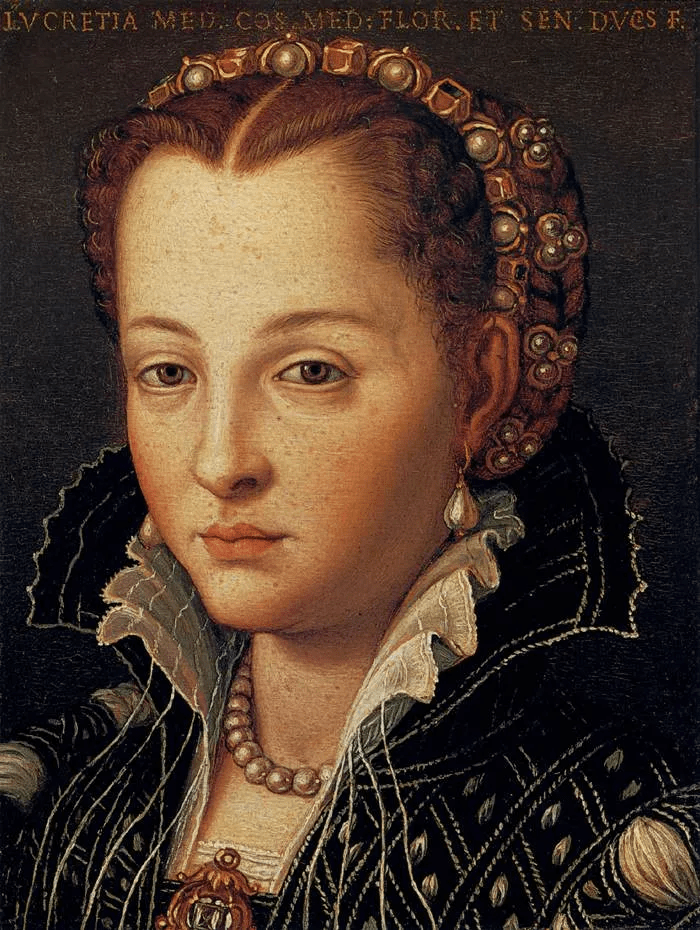
Having enjoyed Maggie O’Farrell’s previous novel (Hamnet), The Marriage Portrait was a big disappointment. Set in 16th century Italy, it tells the story of Lucrezia de Medici and her betrothal at a young age to the Duke of Ferrara. The union of two aristocratic families is the intention, and Lucrezia’s role is clear: the production of a male heir.
The Marriage Portrait is overlong and overwritten. I found I had no interest in the fate of Lucrezia or the machinations of her cruel husband. I can’t recall when I last looked forward so much to a book from such a gifted novelist and ended up so disappointed.
I finished this biography of George Eliot appreciating for the first time how courageous and brilliant she was. I had loved several of her novels (Middlemarch, Silas Marner, The Mill on The Floss) when I was a student, but I knew almost nothing of her life until I read Clare Carlisle’s book, The Marriage Question.
In 1854, Marian Evans (as she was then) took the decision to elope with a married man, George Henry Lewes. It is hard, nearly two centuries later, to understand how much scandal and rejection her commitment to Lewes provoked. She was for a time ostracized by family, friends, and “polite society”, and only the celebrity that came with the success of her writing in the 1860s helped to mitigate some of the effects of her “marriage” to Lewes.
Claire Carlisle is an academic and philosopher, and is particularly good at explaining Eliot’s intellectual development and the influence that philosophers such as Hegel and Spinoza had on her thinking and work. Carlisle’s insistence that ideas about “marriage” are the key to understanding Eliot’s novels is, in my view, overstated, but she is a sensitive reader of the key works. I recommend this book without reservation, but it will appeal most to those who know and love the Eliot canon.
Sigh and Bell, along with their two dogs, decide to rent a dilapidated, old farmhouse deep in the Irish countryside. Its remoteness is a big part of the appeal because Sigh and Bell have chosen to have as little contact as possible with other people. No contact with family, no contact with friends, no contact with anyone except the occasional and unavoidable encounter with the neighboring farmer. Sigh and Bell don’t do much. They walk to the local beach, swim in the sea, and make a trip when necessary to the local shop to buy essentials.
Sigh and Bell are just two creatures passing through the house and the landscape. They make a conscious and determined effort not to impose themselves on the teeming life around them. Birds, insects, fish, dogs, and cows share the world, taking the space and everything else they need to survive. And watching over everything is the mountain, the mountain directly behind the house, the mountain that they don’t climb until eight years have passed.
With so little information, the reader’s imagination tries to fill the gaps. Are Sigh and Bell eco-warriors or hippies turning their backs on the modern world? Are they hiding from some terrible trauma in their past? Are they two individuals striving to merge and live a single life? Hints are provided, but they are fleeting and oblique.
Seven Steeples is an unconventional, demanding, daring, and puzzling book. It’s as much a prose poem as it is a novel, rich in language and rhythm. It’s not a book one closes and forgets. It lingers. It tunnels into one’s imagination, leaving images of decay, decline, and transience.
What exactly is Kettle’s Yard? Is it a museum or a private home preserved for future generations? Both, I suppose. But it’s clear from the indelible impression it leaves on so many visitors that it acts in some mysterious way like no other museum or home, that for many it represents a different way to live, a way to put art and beauty at the center of life.
I’m not sure when I made my first visit. Most likely it would have been 1995 when I moved to Cambridge. I may have forgotten the date but the impact Kettle’s Yard made that day never left me. It seemed to me to be the perfect place to live. I suppose the art in the house was bound to make an impression because I had loved the work of David Jones, Barbara Hepworth, Henri Gaudier-Brezska and Ben Nicholson long before the visit. But it was more than that. And it was more than the pared back elegance of the house or the tasteful arrangement of everything. It was something to do with harmony and the determination you find in every part of the house to express a vision that art belongs in our domestic surroundings, not just in galleries and museums.
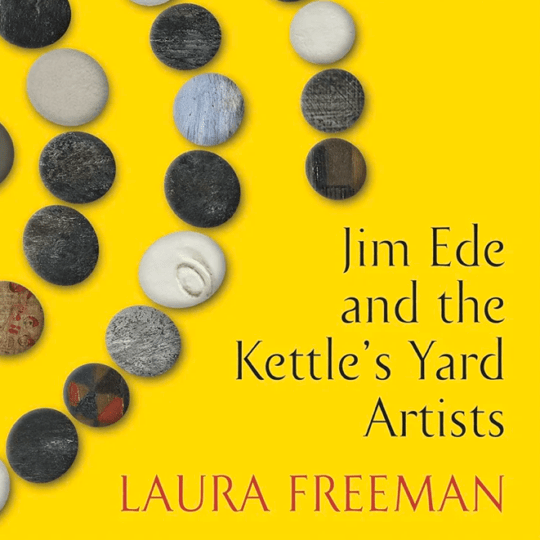
The house was the creation of Jim Ede. Ede didn’t achieve very much in conventional career terms. His great talent was for friendship and for supporting the artists whose work he loved. His patronage of the likes of Alfred Wallis, David Jones, and many others was fundamental to their careers and reputations. He had a special eye for bringing together and arranging artworks to create unique spaces. Kettle’s Yard was the ultimate expression of that gift, though it opened relatively late in Ede’s life.
Ede comes alive in all his complexity in Laura Freeman’s wonderful and beautifully illustrated biography. It will delight anyone who has visited and loved Kettle’s Yard. I hope it drives many more who have never seen the house to visit for the first time.
My goals had been limited. A visit to Hauser & Wirth’s gallery, followed by lunch, and then on to Wells and its lovely cathedral. But Bruton proved to be a little gem, so we lingered longer than planned. The exhibition at Hauser & Wirth’s Somerset outpost at Durslade Farm (GRUPPENAUSSTELLUNG) was wacky, funny, and thought-provoking, and the site itself pretty and picturesque. Heading into the small town center, we parked close to St. Mary’s church just as its bell was tolling for the Sunday morning service. Pevsner calls St. Mary’s “one of the proudest churches of East Somerset”, and I know what he means. It occupies a prominent position overlooking the river and is clearly the focal point of the town. I explored the interior once the service had ended. Although its 14th century core has been much added to over hundreds of years, it presents as a harmonious and satisfying whole.
The main streets of Bruton are as pretty as can be, conforming to most people’s image of what a small, ancient, English town should look like. It’s clearly prosperous and enjoying its reinvention as a destination for art connoisseurs and food lovers. We had made a lunch reservation in advance at Osip, and what an inspired choice that proved to be. Outstanding food and service – not to be missed if you find yourself in this part of Somerset. Another stroll after lunch around the lovely, quiet streets, and then off to Wells as planned. A special day in a really charming town.