Having enjoyed Maggie O’Farrell’s previous novel (Hamnet), The Marriage Portrait was a big disappointment. Set in 16th century Italy, it tells the story of Lucrezia de Medici and her betrothal at a young age to the Duke of Ferrara. The union of two aristocratic families is the intention, and Lucrezia’s role is clear: the production of a male heir.
The Marriage Portrait is overlong and overwritten. I found I had no interest in the fate of Lucrezia or the machinations of her cruel husband. I can’t recall when I last looked forward so much to a book from such a gifted novelist and ended up so disappointed.
I finished this biography of George Eliot appreciating for the first time how courageous and brilliant she was. I had loved several of her novels (Middlemarch, Silas Marner, The Mill on The Floss) when I was a student, but I knew almost nothing of her life until I read Clare Carlisle’s book, The Marriage Question.
In 1854, Marian Evans (as she was then) took the decision to elope with a married man, George Henry Lewes. It is hard, nearly two centuries later, to understand how much scandal and rejection her commitment to Lewes provoked. She was for a time ostracized by family, friends, and “polite society”, and only the celebrity that came with the success of her writing in the 1860s helped to mitigate some of the effects of her “marriage” to Lewes.
Claire Carlisle is an academic and philosopher, and is particularly good at explaining Eliot’s intellectual development and the influence that philosophers such as Hegel and Spinoza had on her thinking and work. Carlisle’s insistence that ideas about “marriage” are the key to understanding Eliot’s novels is, in my view, overstated, but she is a sensitive reader of the key works. I recommend this book without reservation, but it will appeal most to those who know and love the Eliot canon.
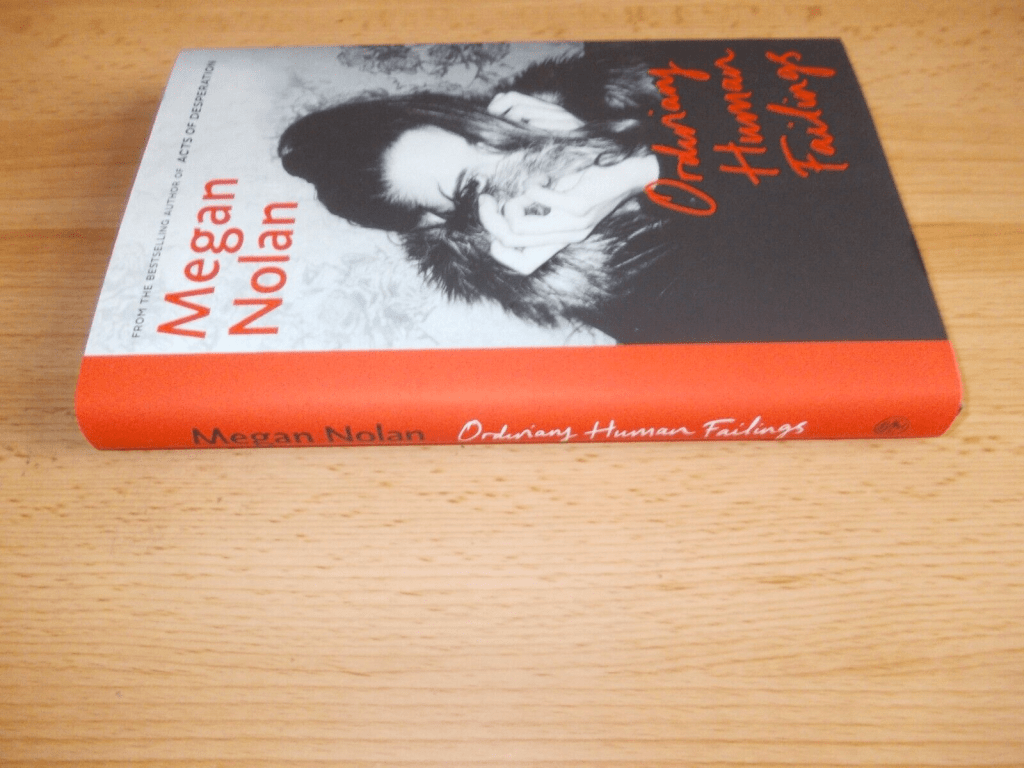
Sigh and Bell, along with their two dogs, decide to rent a dilapidated, old farmhouse deep in the Irish countryside. Its remoteness is a big part of the appeal because Sigh and Bell have chosen to have as little contact as possible with other people. No contact with family, no contact with friends, no contact with anyone except the occasional and unavoidable encounter with the neighboring farmer. Sigh and Bell don’t do much. They walk to the local beach, swim in the sea, and make a trip when necessary to the local shop to buy essentials.
Sigh and Bell are just two creatures passing through the house and the landscape. They make a conscious and determined effort not to impose themselves on the teeming life around them. Birds, insects, fish, dogs, and cows share the world, taking the space and everything else they need to survive. And watching over everything is the mountain, the mountain directly behind the house, the mountain that they don’t climb until eight years have passed.
With so little information, the reader’s imagination tries to fill the gaps. Are Sigh and Bell eco-warriors or hippies turning their backs on the modern world? Are they hiding from some terrible trauma in their past? Are they two individuals striving to merge and live a single life? Hints are provided, but they are fleeting and oblique.
Seven Steeples is an unconventional, demanding, daring, and puzzling book. It’s as much a prose poem as it is a novel, rich in language and rhythm. It’s not a book one closes and forgets. It lingers. It tunnels into one’s imagination, leaving images of decay, decline, and transience.
What exactly is Kettle’s Yard? Is it a museum or a private home preserved for future generations? Both, I suppose. But it’s clear from the indelible impression it leaves on so many visitors that it acts in some mysterious way like no other museum or home, that for many it represents a different way to live, a way to put art and beauty at the center of life.
I’m not sure when I made my first visit. Most likely it would have been 1995 when I moved to Cambridge. I may have forgotten the date but the impact Kettle’s Yard made that day never left me. It seemed to me to be the perfect place to live. I suppose the art in the house was bound to make an impression because I had loved the work of David Jones, Barbara Hepworth, Henri Gaudier-Brezska and Ben Nicholson long before the visit. But it was more than that. And it was more than the pared back elegance of the house or the tasteful arrangement of everything. It was something to do with harmony and the determination you find in every part of the house to express a vision that art belongs in our domestic surroundings, not just in galleries and museums.
The house was the creation of Jim Ede. Ede didn’t achieve very much in conventional career terms. His great talent was for friendship and for supporting the artists whose work he loved. His patronage of the likes of Alfred Wallis, David Jones, and many others was fundamental to their careers and reputations. He had a special eye for bringing together and arranging artworks to create unique spaces. Kettle’s Yard was the ultimate expression of that gift, though it opened relatively late in Ede’s life.
Ede comes alive in all his complexity in Laura Freeman’s wonderful and beautifully illustrated biography. It will delight anyone who has visited and loved Kettle’s Yard. I hope it drives many more who have never seen the house to visit for the first time.
My goals had been limited. A visit to Hauser & Wirth’s gallery, followed by lunch, and then on to Wells and its lovely cathedral. But Bruton proved to be a little gem, so we lingered longer than planned. The exhibition at Hauser & Wirth’s Somerset outpost at Durslade Farm (GRUPPENAUSSTELLUNG) was wacky, funny, and thought-provoking, and the site itself pretty and picturesque. Heading into the small town center, we parked close to St. Mary’s church just as its bell was tolling for the Sunday morning service. Pevsner calls St. Mary’s “one of the proudest churches of East Somerset”, and I know what he means. It occupies a prominent position overlooking the river and is clearly the focal point of the town. I explored the interior once the service had ended. Although its 14th century core has been much added to over hundreds of years, it presents as a harmonious and satisfying whole.
The main streets of Bruton are as pretty as can be, conforming to most people’s image of what a small, ancient, English town should look like. It’s clearly prosperous and enjoying its reinvention as a destination for art connoisseurs and food lovers. We had made a lunch reservation in advance at Osip, and what an inspired choice that proved to be. Outstanding food and service – not to be missed if you find yourself in this part of Somerset. Another stroll after lunch around the lovely, quiet streets, and then off to Wells as planned. A special day in a really charming town.
John Healy and I grew up in the same London neighborhood. We attended the same elementary school. He is nearly twenty years older than me, and during my childhood years he would have been living rough on the streets and in the parks near where I lived. He would have been one of the “winos”, “down-and-outs”, or “tramps” that my parents warned me to avoid on my way to and from school, part of that frightening underclass we saw all the time, begging, fighting, passed out in doorways.
The Grass Arena is the story of Healy’s early years, but mostly of the long period he spent as a chronic and homeless alcoholic. It is a terrible tale, one filled with violence, cruelty, and misery. But this is no self-pitying “misery memoir”. To find its stylistic antecedent you have to go to a work like Orwell’s Down and Out in Paris and London – part autobiography, part reportage, part social criticism.
Unlike the lives of thousands of others like him, Healy’s life didn’t end in tragedy. During one of his many short stays in prison, Healy discovered chess. It gripped his imagination and gave him the strength to relinquish alcohol. He mastered the game and along the way found the words to tell his story. And what an unforgettable story it is.
In the hands of its best practitioners the spy novel has always been a vehicle for exploring themes such as betrayal, disillusionment, and regret. Throw in atonement and the possibility of redemption and you have David Park’s short and engaging novel Spies in Canaan. Set mostly in Vietnam in the final days of America’s horror-filled engagement there, it tells the tale of an innocent, junior data analyst who gets pulled from his routine translation work into something altogether more murky and complex by a CIA officer. The corruption of innocence, the slow dissolution of ideals, and the effort to live a good life in spite of it all – those are Park’s preoccupations in this atmospheric and memorable story.
The result was no surprise. I doubt there is a better team in the world right now than Manchester City, and the team that I have supported since I was 8 years old, though somewhat improved in the past year, was never going to be a serious obstacle on City’s road to securing the Treble. And so it proved to be. We were beaten 2-1 by a much better team and, quite frankly, the scoreline flattered us. The gulf in quality between the old rivals was there for everyone to see.
But it was a great day nonetheless. My first ever F.A. Cup final. The first time these two teams had ever met in the final. Only my second visit to Wembley Stadium. A wonderful spectacle in early summer sunshine enjoyed by two sets of the most partisan fans you could ever hope to meet. I felt very fortunate to be there, and even the disappointing result could not change that.
Some attractions seem more attractive if you arrive by boat. It was a beautiful, warm, sunny evening when I stepped on to the dock and strolled up the short path leading to the Thielska Galleriet. The museum had been opened to us for a private visit, and we had the great privilege of being able to walk around the rooms without crowds.
The house itself dates back to 1907 and was the home of Ernest Thiel, a wealthy banker, and his wife Signe Maria. It was built in part to showcase their splendid art collection and has been carefully preserved in its original style. For many visitors the centerpiece at Thielska is the collection of paintings by Munch, including his extraordinary portrait of Nietzsche. If all you know of his work is The Scream, the lightness of some of Munch’s work here will be a revelation. There is sculpture in the pretty garden, including work by Rodin.
It’s hard not to sympathize with anyone who takes on the task of writing a biography of John Donne. His was a rich and varied life, driven by a mixture of ambition, restlessness, occasional penury, and an unusual abundance of talent. He was, at various times, a lawyer, diplomat, parliamentarian, adventurer, clergyman, and, of course, one of the greatest poets of the English language. If his prodigious talents were not enough to intimidate would-be biographers, you might think the lack of original sources might be a deterrent. It’s quite remarkable how little is known about a man who, by the end of his life, was something of a celebrity in the worlds of church and state at the beginning of 18th century England.
Any great biographer has to be more than a serious historian. Imagination needs to be married to scholarship, and in that regard Donne is very well served by Katherine Rundell. Super-Infinite: The Transformations of John Donne is a superb piece of work, and richly deserves all the accolades and awards heaped on it. In this account, Donne the man comes alive in all his contradictions and brilliance. “He was a man constantly transforming. He was a one-man procession: John Donne the persecuted, the rake, the lawyer, the bereaved, the lover, the jailbird, the desperate, the striver, the pious”.
It might be argued that the truest sign of a great literary biography is that it drives the reader back to Donne’s own work. I am not convinced. Much of Donne’s prose work, all those sermons, letters, and devotional writings, are far beyond even a well-read general reader today. The poetry is a different matter. I suspect Rundell’s brilliant advocacy for Donne will encourage many to re-visit or read for the first time those extraordinary love poems.