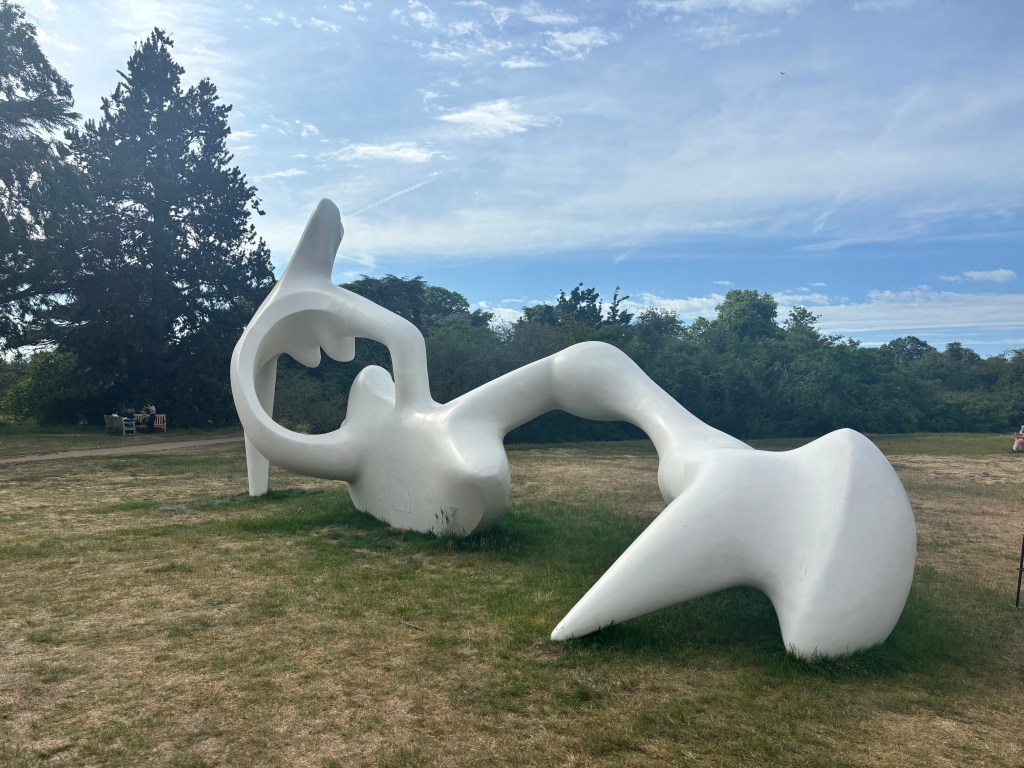
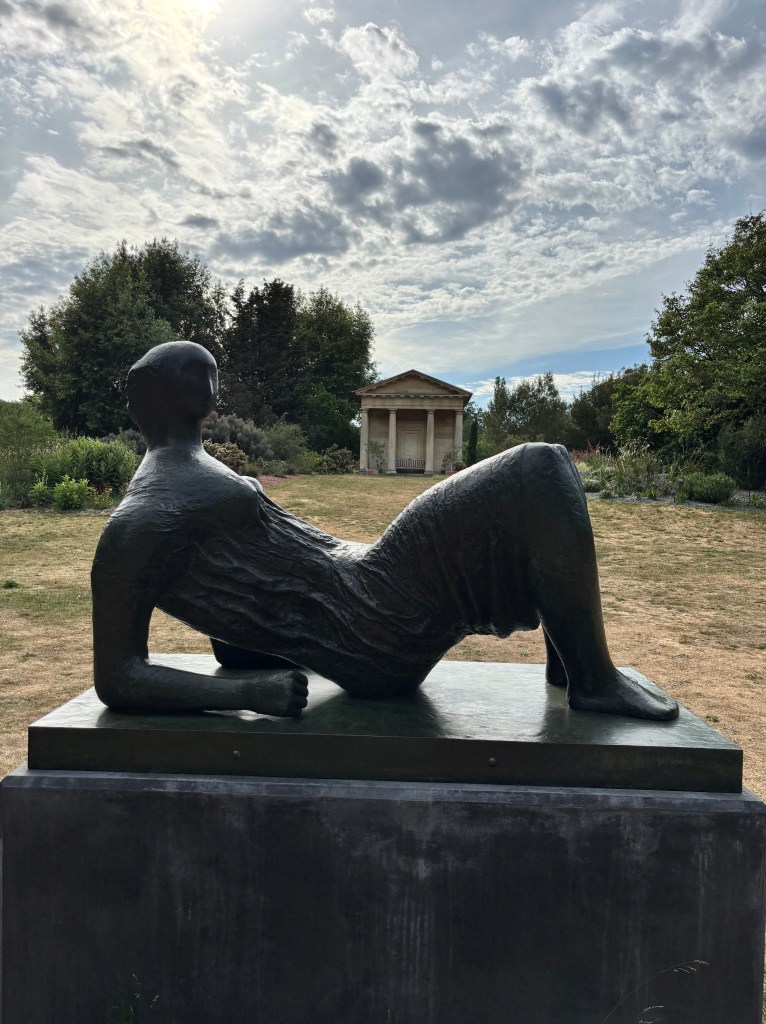
Henry Moore preferred his large sculptures to be displayed outdoors. He would, I expect, be delighted by the decision to place thirty of them in the Royal Botanic Gardens in Kew. The pieces here vary greatly. Some are representational, others purely abstract. Some are made of bronze, some of fibreglass. Most are huge and imposing and somehow seem even more so set amongst Kew’s magnificent trees and glass houses. Being able to walk around them, to see them close up, to see their markings and their variations in color and texture provides an opportunity to appreciate Moore in a new way. His extraordinary ability to infuse these massive, heavy pieces with such movement and gracefulness and the wonderful delicacy and gentleness when sculpting the human form are appreciable here in a way they could never be inside a gallery or museum.
Relatively little is known about the Picts. They lived in what is now northern Scotland between 300 AD and 900 AD before gradually integrating with other tribes and kingdoms. They resisted the expansion of the Romans and earned the reputation of being fearsome warriors. They left behind a significant artistic legacy, and it was specifically their beautifully carved stones that drew me recently to the tiny village of Aberlemno in Angus. Normally one would find four stones in Aberlemno, three by the roadside and one in the churchyard, but a storm recently toppled and damaged Aberlemno 3, causing it to be removed from the site for inspection and repair.
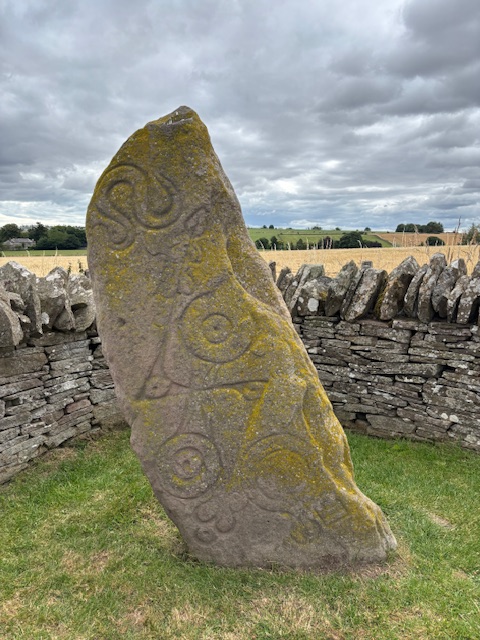
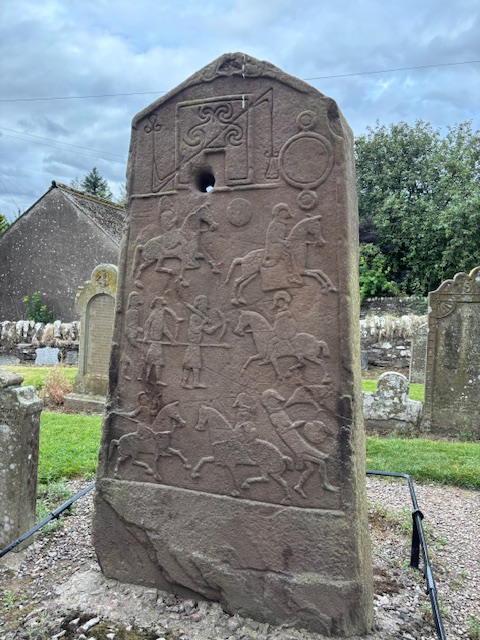
Precise dating of the stones is, of course, difficult, but there seems to be consensus that the earliest could have been carved in the 6th century and that the most recent (Aberlemno 2, the one in the churchyard) is from around 850 AD. Aberlemno 1 is carved with mysterious Pictish symbols, including a serpent, a double disc and what appears to be a comb. It’s a powerful and confidently executed piece of work, but much simpler than Aberlemno 2. The stone in the churchyard feels like two distinct works. One side depicts Pictish symbols and figures in what looks like a battle, while the other side is a Celtic cross with beautiful and elaborate knotwork and keywork designs.
The stones, beautiful works of art though they are, are also extraordinary reminders of a long disappeared civilization. They have stood for all to see for more than 1.200 years, among a community, not hidden in a museum. I hope they are cared for and protected for generations to come because they testify to our persistent and enduring creativity.