Woman With A Secret

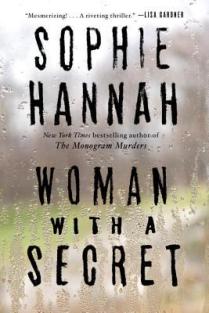
My third book of 2016 proved to be a big disappointment, providing further evidence, if any were needed, that book reviews can’t always be trusted.  I rarely read crime fiction and generally trust only a handful of authors working in the genre who have written books I’ve admired in the past.  Susan Hill, Henning Mankell, and George Pelecanos are good examples.  When I try unfamiliar names, trusting reviews rather than my own judgment, as I did in this case, I find that I’m often disappointed.

The problem here was a simple enough one.  I didn’t care at all about any of Sophie Hannah’s protagonists.  Not a single one of them was likable, interesting, or credible.  For me, no amount of plot trickery can compensate if I don’t care about what happens to the characters.  Whodunnit just isn’t enough.

23461002

Jordan: Petra

Petra_1


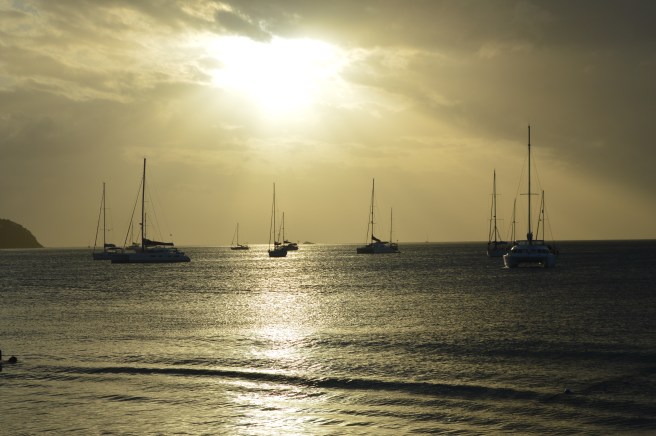
It’s hard to imagine a better time to see Petra than on an early winter’s morning, as I did recently.  Getting up in Amman at 4am may not be much fun, but seeing the magnificent “red-rose city half as old as time” (and a UNESCO World Heritage site) without summer’s intense heat and suffocating crowds more than compensated for the early start.  I had the site to myself for more than an hour and that made the experience all the more special and memorable.

I eventually met someone who I assumed – wrongly – was a visitor and asked for her advice on which of the many paths to take.  In an unmistakable Australian accent, the woman informed me she was walking to work, had married a Bedouin tribesman, and had lived in a small village near the site for 37 years.  She suggested that I sit and enjoy the silence.  It proved to be great advice.  Later, browsing the bookshop in Amman airport, I found her autobiography.  A strange encounter and even stranger coincidence.


John Minihan

It must have been 1986 or 1987 when I first met the photographer, John Minihan.  It wasn’t a chance encounter.  The truth is I practically stalked him.  I had been completely captivated by a portrait of Samuel Beckett that John had taken in Paris and that had recently appeared in one of the UK’s Sunday newspapers.

Samuel Beckett in his local cafe in Montparnasse, Paris

I was determined to get a print of the picture, but finding John proved surprisingly difficult.  Let’s not forget this was the pre-Google era.  After weeks of persistent research, I was finally directed to the photo desk of the Evening Standard where John was working at the time.  He couldn’t have been more charming and agreed to meet me in a private club popular with journalists and photographers.  He gave me prints of some of the beautiful pictures he had taken of Beckett and told me lovely stories of their many encounters in Paris and London.

John became very well known for his Beckett portraits, but it’s his famous picture of Diana Spencer, taken many years before she became Princess Di, that is his single best-known work.

princess-diana-skirt

Many of John’s portraits of Beckett are masterpieces.  Richard Avedon, Jane Bown, and others took wonderful individual pictures of him, but John’s corpus amounts to a sustained and very intimate insight into the great writer.  It was through the Beckett pictures that I first got to see what I think is John Minihan’s best work, the photographs  he has taken over more than 40 years in Athy, the town in County Kildare in which he was raised.  Stunning images from an outstanding photographer who was gracious, generous, and kind whenever we met.

Herding sheep in 1960s London

One of my earliest childhood memories is so bizarre that I have, until very recently, doubted its veracity.  The memory is of visiting a cattle market in London with my father in the early 1960s.  Think about that for a moment.  A live cattle market.  In London.  In the 1960s.  How can that be possible?  Yet the memory is a very vivid one and some of its details are very precise.  For example, I remember walking there from our home in Camden.

My father’s ancestors were farmers and he was always sentimental both about his rural childhood and about animals generally, so it would have been perfectly in character for him to take me to such a market.  He certainly took me to the pet market in Club Row, Shoreditch (which closed in the 1980s) on several occasions to look at dogs, cats, rabbits, and so on.  But a livestock market?

After relatively little digging (thank you to Google and my mother!), it seems my memories are more trustworthy than I thought, or at least they’re not completely untrustworthy.  The place we visited wasn’t a market in the strictest meaning of the word, but it was the collection of slaughterhouses around Caledonian Road to which large numbers of animals were driven until the mid 1960s. Congestion in the local area (a long but manageable walk from our home for a young boy) meant that the animals (sheep, not cattle) were routinely herded along the local streets to meet their demise at the hands of north London’s butchers.  Don McCullin’s beautiful and eerie picture of Caledonian Road in 1965 (below) captures something of the place I remember.

sheep

I’m pleased to have witnessed first-hand something now long passed, days when the countryside intruded into the busy city.  I’m even more pleased that what I was beginning to think was a fantasy actually happened.  But it begs another question.  What was my father thinking, taking his young son to a collection of abattoirs?  I doubt Google can help me with that one …

The courtesy of (Middle Eastern) strangers

My first visit to the Middle East was more than thirty years ago.  Since then I’ve traveled fairly extensively in the region: to Israel, Egypt, Iraq, Iran, Saudi Arabia, Oman, Jordan, Turkey, and the United Arab Emirates.  The places you visit when you’re young are often those that make the deepest impression on you, and that has certainly been true for me with the Middle East.  Part of the impact it has made on me can be explained by its historical and cultural richness.  Who could fail to be moved at any age by the old city of Jerusalem, by the temple at Karnak, or by Petra?  But when I think of the ingredients that make the region so special and memorable for me, it’s the courtesy, hospitality, and personal kindness from ordinary people that I have encountered everywhere, and the sincerity with which those feelings are expressed, that make the region so special for me.   These qualities really seem to matter in the Middle East and seem to have been an integral part of all the interactions I have had there.

It’s dangerous to generalize, of course, and I don’t suppose courtesy to strangers is any more ubiquitous in the Middle East than it is in South East Asia, for example.  All I can tell you is that ineffable kindness and hospitality have been the norm for me in my dealings with people from all over the region.  This goes a long way to explaining why I love going back to all parts of the Middle East.

Perhaps this matters to me because the qualities I admire there no longer appear to be treasured in the country in which I live.  It probably also explains why “Have a nice day” – said mechanically and insincerely in a hundred trivial exchanges every day – still irritates me more than it should.

London: Kings Cross

Growing up in Camden (in north London) in the 1960s and 1970s, the streets immediately north and east of Kings Cross and St. Pancras stations were no-go areas.  They were popular with drug dealers, prostitutes, their customers, and no one else.  I worked for a short time in the neighborhood in 1982 and even then it was a grim place. I remember walking up Pentonville Road at lunchtime one day and seeing someone shooting up in a doorway, oblivious to the passers-by.  It was that kind of place. The railway arches were home to various small businesses, especially car repair shops.  I remember a particularly gruesome episode of the TV series Prime Suspect being set in one of the arches – a perfect setting for sinister dealings.

Regeneration was slow to arrive.  When the British Library opened its new building on a plot immediately to the west of St Pancras station in 1998, I expected it to spur a wider renaissance of the area, but nothing very much seemed to happen until the new Eurostar terminal was built.  With that, and with the refurbishment of the St Pancras hotel, Gilbert Scott’s Victorian Gothic masterpiece, the tide of modernization was unstoppable.  Today the area is home to new hotels, restaurants, and bars and almost every vestige of the old and seedy has been wiped away, replaced with shiny offices for Google and Amazon.  I’ve been back there a few times recently and such is the extent of the transformation that it’s almost impossible to trace the streets that I remember forty years ago.  A place that once existed no longer does, except in my memory.

No one could possibly lament the disappearance of the old neighborhood, but amid all the gains – the well-lighted, safe streets, the public art, the energy that comes when a new generation of visitors discovers and claims a previously unknown part of central London – something has been lost.  Kings Cross and St Pancras today are shiny and new, but aren’t they also a little bland?  Isn’t it just a little regrettable that when we talk about regeneration what we usually mean is more expensive apartments, more offices, more restaurants and bars?  Does regeneration have to mean gentrification and uniformity?

History is inescapable in London and that’s what makes it one of the world’s truly great cities.  Amazing work has been done to preserve London’s magnificent old buildings from every era, but something of the great industrial heritage of Kings Cross and St Pancras has been lost forever.  For some reason that feels quite personal.

trolleybuspancrasroad

The alchemy of a great bookshop

A mysterious alchemy is at work in a great bookshop.  What special magic is needed to turn piles of books and lots of shelves into those remarkably few special havens that enchant book lovers like me (and part us so easily from our money)?

A beautiful setting helps, whether it’s old or new.  Think of El Ateneo in Buenos Aires or the Tsutaya shop in the Daikanyama neighborhood of Tokyo, places where great care has been taken to display books in a warm, inviting way.  Book-loving booksellers are not as common as they ought to be, but when you find them they make a world of difference.  The staff at Hatchards in London seem to have all the time in the world to share their enthusiasm for books with their customers whereas, a few hundred yards away and on the same street, at Waterstone’s Piccadilly the staff might as well as be selling cans of soup, such is the lack of charm.  How peculiar that both shops have a common owner.

In the very best bookshops you can feel the entire collection has been put together specially for you.  Heywood Hill and Maggs, now very conveniently situated opposite one another on Curzon Street in London, have that effect on me, as does The London Review of Books store near the British Museum and Daunt Books in Marylebone.

As these rather random recommendations make clear, London is my place for buying books, though plenty of other cities have great shops.  Can anyone direct me to a great bookstore in Manhattan?  I haven’t found one yet that I really love.  Bauman Rare Books is wonderful but it’s hardly the place one goes to for everyday book buying.  I like McNally Jackson in SoHo but it lacks that special ingredient that keeps me browsing for hours and coming away poorer but happier.  Help me out – I promise to be a loyal customer!

heywod-hill-exterior

Academy Street

Isn’t it miraculous that, through the careful and artful combination of words on a page, it’s possible to communicate truthfully something of the essence of what it is to live, to be human?

My second book of 2016 was Academy Street, a debut novel by the Irish writer, Mary Costello.  It’s a short novel – fewer than a hundred and fifty pages of taut, precise prose – that tells the story of Tess Lohan from her childhood days on a family farm in the west of Ireland through to her emigration and old age in New York.  Tess’s life is an unexceptional one, quietly lived, but it’s the great achievement of this novel that you turn its final page and appreciate that there’s no such thing as an unexceptional or quietly lived life.  The milestones of Tess’s life – the death of her mother, the failure of love, the agonies and ecstasies of being a parent, the tiny accumulation of minor disappointments and triumphs – are not much different from any other.  It’s in what we do with what happens that we find what’s distinctive and unique in every human life.

The novel is much like the life it describes: a study in quietude. Its contemplative tone and the spare, measured writing reminded me of John McGahern and Anne Enright.  I was, but only very occasionally, jarred by sentimentality, bu this is a lovely, memorable book, and I’m looking forward to whatever comes next from Mary Costello.

AcademyStreet_Instagram


Stories of home

If you could eat only one type of cuisine for the rest of your life, which would you choose?  Italian, French, Indian?  It’s a question I have occasionally discussed with friends and their answers often illuminate their personalities.  Even more illuminating is the question “If you could read only one nation’s literature for the rest of your life (whether in translation or not), which would you choose?”

I don’t find it a difficult question to answer.  For me it would be Ireland (including its diaspora), without hesitation.  Why?  It can’t simply be because Ireland has produced a handful of writers whose work is inexhaustibly fascinating to me and repays repeated reading (think of Samuel Beckett, James, Joyce, and W.B. Yeats).  Can’t every country make a similar claim?  And it can’t be because it’s a country that refreshes its stream of fascinating writers on a regular basis.  Ireland’s stream of new talent is no greater than England’s or America’s.

So what is it that draws me to stories from Ireland?  It has to be something to do with a connection to “home”.  I read the stories of William Trevor, John McGahern, and Colm Toibin and I hear the voices of Ireland and the rhythms, cadences, and accents of Irish men and women talking.  I can picture the settings, the places, the faces.  I understand at some intuitive level the lives, feelings, and motivations of the characters and that deepens immeasurably the experience of reading and my engagement with the stories.  I like my answer but don’t like the implication.  Will I always miss nuances in a John Updike novel because I wasn’t born or raised in America or because my parents weren’t Americans and will my experience always be less than that of a reader who was?  Is there no such thing as a global story?

samuel-beckett-quotes-2

The Buried Giant

My first book of 2016 could prove to my least predictable choice of the year.  I loathe fantasy fiction, so why did I choose as my first book a novel that features ogres, she-devils, and Sir Gawain (yes, King Arthur’s faithful sidekick)?  Simple.  It’s by Kazuo Ishiguro, one of my favorite living novelists, and I was intrigued that he should use Britain in the early post-Roman era as the setting for his newest book.

It’s a strange, simple tale of two protagonists, Axl and his wife, Beatrice.  They travel from their home to find their grown son and along the way encounter hostile Saxons, dangerous ogres, and the aging Sir Gawain.  Little happens very slowly, but it’s the eerie atmosphere that stayed with me long after I closed the book that makes The Buried Giant so distinctive.  It’s a book about the importance of memory and the dangers of forgetting, and about how the creation of a sustainable future (whether personal or political) is impossible if memories are lost.

A great novel?  No.  Ishiguro’s best?  Certainly not.  But it’s a deceivingly simple, unsettling, and memorable story.

51tXDWW3TAL._SX341_BO1,204,203,200_