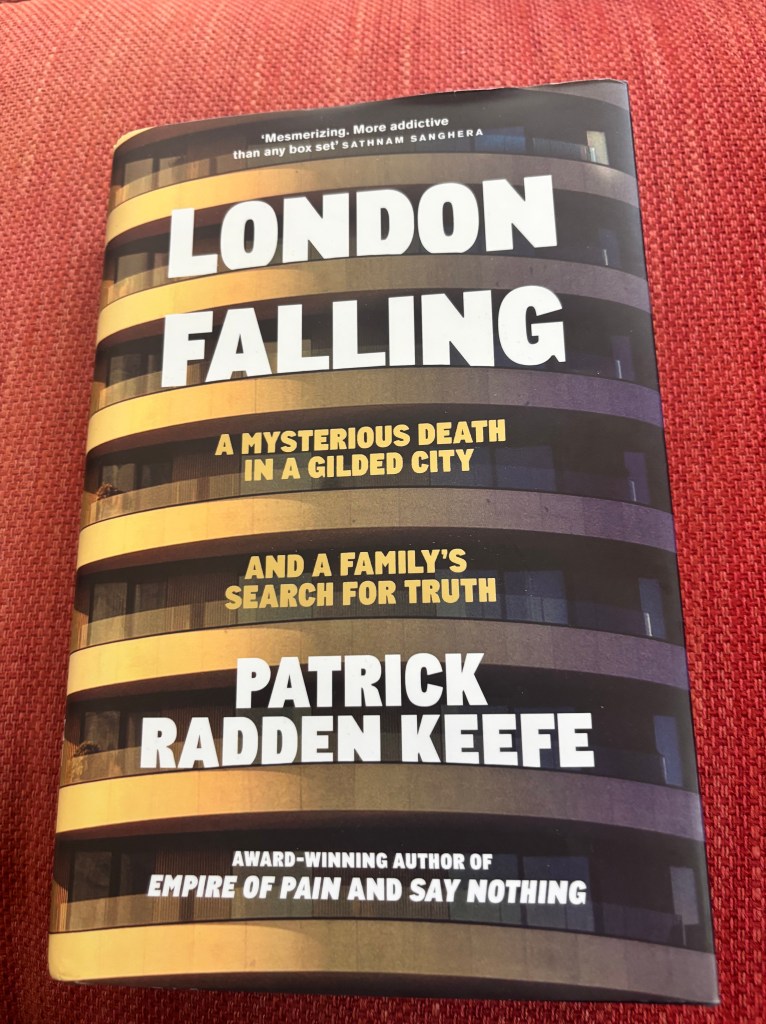
London Falling. What’s the meaning of that title? The tragic fall to his death from a luxury apartment block of a young man? The sinister decline in London’s reputation as it welcomed without question or scrutiny the influx of Russian oligarchs, their dubious money, and even more dubious morals? Or just a nod to the apocalyptic warnings in The Clash’s famous song, London Calling?
The ice age is coming, the sun’s zooming in
Engines stop running, the wheat is growing thin
A nuclear error, but I have no fear
‘Cause London is drowning, and I, I live by the river.
And what type of book is this? A story about the agonies and frustrations of parenting? An investigation into police incompetence? A warning about the dangers facing young men growing up surrounded by false promises, lies, unattainable aspirations, and charlatans? A critique of the politicians and financiers in awe of money and careless about where it comes from? In truth, Patrick Radden Keefe’s new book is all of these things and much more. What happened to Zac Brettler that night in November 2019 was a chilling and heartbreaking human tragedy for his parents, brother, and friends. For all of us it ought to be a warning and an alarm call.
Anyone who read Say Nothing will know how good a reporter Patrick Radden Keefe is. London Falling certainly matches and perhaps exceeds that achievement, and that’s saying something. He has a genuine interest in and compassion for his subjects, matched by the appetite for detail and the relentlessness that are the hallmarks of great investigative journalists. He also writes very well, pacing and shaping the story with meticulous care and skill.
I suppose it could be argued that he “overcooks” the account, setting up for the reader a mystery that will never be solved. Perhaps, but it is such a great story and told with a lot of compassion and just enough anger. We all need to know what happened to Zac even though we may never understand it. And we all need to be told just how wicked, greedy, and corrupt some people can be.