Walking the streets of Delhi

Here are two simple, unarguable travel truths.  If you want to know a city, walk.  If you want to have an encounter with a city and its people, walk without a purpose or a destination. (This latter truth is my re-working of Lao Tzu’s well-known dictum “Meandering leads to perfection“).  Some of my most memorable travel experiences have come from simply wandering around, walking from one street to the next, turning one corner after another, with no goal in mind other than seeing where they lead me.  I think I learned this first from my father who liked to take me along on Saturday walks in London that seemed to have little purpose other than exercise and a delight in unfamiliar streets.

A city is so much more than a list of sights.  Unless you’re very short of time, forget those websites and guidebooks that point you to the “Top 10 Things To See in …”  Leave the maps and GPS behind.  Lose the guides.  Get out and walk.  Look, listen, taste, and smell.  A city you breathe, ingest, digest, and absorb becomes part of you, unforgettable.  It changes you.  That’s true for every city and perhaps especially so for a place such as Delhi.

Exploring Delhi’s streets on foot isn’t always easy and it’s rarely comfortable.  Crossing from one sidewalk to another demands patience and nerves of steel.  This isn’t the place for the fainthearted.  You have to summon all your courage and dive in.  No one driving a car or rickshaw, or riding a motorbike, would ever consider stopping for you on a walkway.  Forget all the rules and the etiquette you learned elsewhere; this is a competitive sport in which the bravest and fittest prevail.  Drivers apparently determined to speed you to your next cycle of reincarnation are only the beginning of your problems.  There’s the crumbling, garbage-strewn pavements, the constant obstacles, the over-curious, bug-ridden street dogs (not to mention the occasional cow), the crowds, the calls of the rickshaw drivers and street vendors, and the endless stares of the locals (“Why is that white guy walking when he can afford a taxi?”).

Sun filters through the busy streets of the Pahar Ganj district of New Delhi.

Why, indeed?  Why bother?  Simply because the rewards far outweigh the mostly minor hassles.  I walked a couple of miles there recently.  The early morning sun was fighting to make itself felt through the dust, mist and smog, but Lodi Gardens looked gorgeous, no different from how they looked nearly forty years ago when I first saw them. I had a friendly chat with a very impressive-looking Sikh rickshaw driver keen to complain about the government and the recent demonetization policies. I had a mug of steaming hot chai in one of the scores of casual street cafes that have sprung up in recent years, enduring the stares and enjoying the questions of office workers, delivery boys, and taxi drivers, keen to know where I lived, what I thought of India, why I was awake so early, and much more.  A special couple of hours that added to my trove of India memories and deepened even further my affection for that amazing country and its people.

Saturday Requiem

Nicci-French-A-Crime-Writing-Partnership-1080x675.jpeg

It puzzles me how two people can collaborate to write a novel.  How does that work in practice?  Do they divide the chapters or sections between them and, if so, how do they manage to create a uniform, cohesive style?  Nicci French, the “author” of Saturday Requiem, is the pseudonym of the husband-and-wife writing team, Nicci Gerrard and Sean French.  The novel is the latest in the series (Blue Monday, Tuesday’s Gone etc.) featuring psychotherapist-turned-sleuth, Frieda Klein.

Having read all five previous books in the series, I was keen to read what I thought (rightly, as it turned out) would be good fodder for my winter vacation.  Although Saturday Requiem was no less absorbing than the others, I think it’ll soon be time to draw this series to a close.  The books are becoming repetitive and more and more implausible.  I have a hunch that the authors will take the opportunity to “wrap up the week” with a Sunday novel in which Dr. Klein will meet her nemesis, Dean Reeve.  The question is who will prevail?

The Radical Eye

I’ve loved looking at photographs for as long as I can remember.  Glancing along my bookshelves I find collections of pictures by many of the great photographers, mostly exhibition catalogs and monographs that I started to buy while I was still in my teens and have been buying ever since.  The artists represented – Don McCullin, Fay Godwin, Henri Cartier- Bresson, Bill Brandt,  Dorothea Lange, Horst, and Gordon Parks, among many others – are those I find I go back to time and time again, often just to look at a single image.

radical-eye-book-hardback-17733-large

The Radical Eye is an exhibition at Tate Modern of modernist photography from the collection of Elton John.  The period covered in the show is roughly 1920 to 1950, the time in which photography came into its own as a medium and, arguably, one of the most exciting in its short history as an art form.  The show’s selection of beautiful pictures is extraordinary and features not only celebrated artists such as Man Ray, Stieglitz, Weston, Arbus, and Lange, but also lesser-known figures such as Josef Breitenbach and Herbert Bayer.

I found this show fascinating at so many levels.  It captured the conoisseurship, excitement and impulses of a single collector.  It revealed how a single print (in this case mostly vintage, but occasionally modern) can alter your perception of an image that you thought you knew well.  Best of all, it showed me a handful of stunning photographs I’d never seen before, such as Steichen’s portrait of Gloria Swanson from 1924.  Of course, I bought the catalog, knowing that I’ll be dipping into it for years to come.

APTOPIX Britain Elton John Photography

London: a South Bank stroll

tate-modern

On a chilly, damp afternoon in London recently, just after Christmas, I spent a really enjoyable few hours walking around a part of London’s South Bank.  It occurred to me afterwards that it might also be a great itinerary for anyone visiting that part of London over the next few months.  Your interests will have to be similar to mine – art, food, London pubs, local history, and good theater – but who doesn’t love those things?  Here’s the tour I recommend, all done on foot and several miles in total.  I’ve inserted a few links for further information if you’re interested.

  • The Radical Eye at Tate Modern.  This exhibition showcases a small fraction of Elton John’s wonderful collection of photography.  I’ll be writing a separate post on this shortly, so it’s enough to say here that this is an unmissable show if you find your self in London before May 2017.
  • Borough Market.  I know, this wonderful food market hasn’t been a hidden gem for many years and it’s often very crowded, but it has got to be experienced at least once.  Try to avoid the temptation to taste what’s on offer here if you’re planning to follow some of my later recommendations!
  • The Market Porter.  This historic pub at the heart of Borough Market featured in one of the Harry Potter films, but its attraction for me is the range of real ales.
  • Bermondsey Street.  This street is the heart of a neighborhood rich in history and now very much gentrified and re-born as a center for contemporary art.  (We passed David Schwimmer, aka Ross from Friends, during our stroll in Bermondsey).  It’s well worth a look to see the historic storefronts, the White Cube gallery, and the lovely church of St. Mary Magdalene.
  • The Woolpack.  There are dozens of places to eat and drink on Bermondsey Street, but The Woolpack is an especially cute pub with an excellent seasonal menu and some great ales.
  • The Garrison is that rare thing, a gastropub that has retained a lovely, comforting neighborhood vibe.  Don’t miss its excellent food.
  • Nice Fish.  After far too much food and drink, I needed the 3 mile walk along the Thames that took me from Bermondsey to the heart of the West End to see Nice Fish, a play starring Oscar-winner Mark Rylance.  Set on a frozen Minnesota lake, it has echoes of Samuel Beckett and Harold Pinter and is very funny.

A simple, but wonderful day in a lovely neighborhood in the world’s greatest city.

bermondsey-steet

Judas

My final book of 2016 proved to be one of the best.  Judas, the most recent novel by Amos Oz, is set in Jerusalem in the late 1950s.  Shmuel Ash, a young biblical scholar, forced to abandon his studies and recently jilted by his girlfriend, finds work as a resident caregiver for a cantankerous old scholar called Gershom Wald. Living with them in the old Jerusalem house is Atalia Abravanel, the widow of Wald’s only son and the daughter of a disgraced Zionist leader.

27750d8267

The novel works brilliantly on so many levels.  It’s a tender love story and a sensitive coming-of-age tale.  It’s also a piercing, deeply intelligent study of betrayal and of the soul of the state of Israel.  There is some beautiful writing here, with passages I found myself re-reading several times.  It’s a story that stays in the mind long after you turn the final page, much like a biblical tale from which the novel draws its title. It was my first novel by Oz and now I can’t wait to read others.

With this wonderful novel my reading in 2016 comes to a close.  It started in Saxon England in a mysterious landscape of ogres and warriors and ended in Jerusalem in 1959.  Where will next year’s books take me?

Reading This Year And Next

2016 wasn’t a great year for reading.  Having said back in January that I would follow my nose when it came to choosing books, it turned out my nose wasn’t always reliable.  Looking back on the reviews written for this blog, I find I simply chose too many books that proved to be disappointing and mediocre.  Ho hum.  I hope for more discernment next year.

Just as I expected, fiction dominated, accounting for 80% of everything I read.  Several good novels are on the list – Addlands by Tom Bullough and Helen Dunmore’s Exposure, for example – and one very good one (Mothering Sunday), but many were fodder, entirely forgettable.  Biography was more rewarding in 2016 with outstanding accounts of the lives of Ted Hughes and Kenneth Clark among my favorites of the year.

A truly great book changes you forever, altering your perspective and outlook or moving you intensely. I was privileged to read one of those in 2016, Night by Elie Wiesel.  That, without question, was my book of the year.

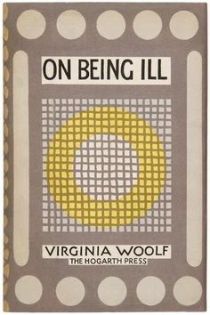
Now it’s time for some reading resolutions for 2017.  Braver choices.  More unknown and young writers, voices from other worlds. Maybe it’s the year for some of the great authors of the past whom I’ve wholly or largely neglected: Thomas Mann, Evelyn Waugh, Tolstoy, Katherine Mansfield, or Virginia Woolf?  Isn’t it finally time to read Proust?  Less fiction, and especially contemporary fiction, more biography, history, and poetry.  Watch this space!

top-10-psychology-books-elearning-professional-read

Paris: Le 12eme

Exploring an unfamiliar neighborhood is one of my favorite things to do when I travel.  All the better if it’s a neighborhood that draws few other visitors.  I spent a little time recently in the 12th arondissement of Paris, a district with few attractions on a typical tourist’s “must-see” list.  It has the Bois de Vincennes, L’Opéra de Bastille, and not much else, but I had a wonderful few hours threading my way through the mostly quiet streets of a mostly residential neighborhood.  On a chilly Wednesday evening in late November, many of the locals were sensibly holed up in small, unassuming bars and brasseries.  Others were checking out the cute, artisan stores in Le Viaduc des Arts.

viaduc-des-arts-7cd9d

If, like me, you find yourself getting hungry and thirsty wandering around Le 12eme, I recommend two places very highly.  Chez Habibi on Rue Traversière is one of those perfect, tiny wine bars that only Paris produces, and to round off your evening, head to Maguey on Rue de Charenton and check out their “mystery menu”.  You won’t be disappointed.

Therese Raquin

therese-raquin1

When Zola’s Thérèse Raquin was first published in 1868, it was an immediate succès de scandale.  It’s not difficult to see why.  Its account of lust, betrayal, murder, and madness had all the ingredients for popular success, but it was its explicit portrayal of female sexuality that drove the censorious French critics and readers to outrage and condemnation.

It’s a straightforward enough, though somewhat lurid, read.  There’s nothing subtle about it.  In fact, its relentlessly grim and sombre tone left me feeling somewhat smothered by darkness and longing for even a glimmer of light.  I read the novel in English, in a translation by Leonard Tancock first published in the early 1960s that in part reminded me of the sensational and excessively dramatic language used in penny dreadfuls.  I’d be interested to see if this is muted in a more recent translation or whether it reflects faithfully Zola’s original.

This year’s travels

34ce8e86ecb69ca417379ab9c90ad64d

It proved to be a busy year.  Fourteen countries visited in twelve months, some of them on multiple occasions: UK (five times), Japan (twice), United Arab Emirates (twice), Jordan (twice), India (three visits), Germany, France, Netherlands, Spain, St. Lucia, Belgium, Australia, New Zealand, and South Korea.  Somehow I managed to touch down in four countries in a single day: New Zealand, Australia, Singapore, and Japan, a milestone for me that I never want to repeat or recommend to anyone else.

What will I always remember from 2016?  Walking completely alone in the chilly, early morning hours through the ruins at Petra.  Exploring the temples of Kyoto and an unforgettable kaiseki dinner.  The road from Queenstown to Glenorchy.  The quiet streets of Segovia.  I’ll never forget my first-time visits to Jordan and New Zealand, two beautiful countries where I couldn’t have been welcomed more warmly, countries I already want to re-visit, countries I want to share with others. Not all the delights were international.  My first sight of Fallingwater – just a few hours drive from my home – was unforgettable.

Don’t believe the clichés or the cynics.  It’s not a small world. It’s not a homogeneous world.  It’s a huge, diverse, gorgeous, thrilling, and humbling world, and here are a few pictures I took in 2016 to prove it!

DSC_0063DSC_1410IMG_1498

A Handful Of Dust

Other than the unforgettable TV adaptation of Brideshead Revisited, I knew almost nothing about Evelyn Waugh’s novels before picking up a copy of A Handful of Dust in the Amsterdam branch of Waterstone’s recently.  I had thought for some time that I should do something about this gap in my reading, but two things deterred me.  First, by all accounts Waugh was a horrible man; a cruel, snobbish misogynist.  I’m not sure why this should matter, but it certainly influenced me. Second, I’d absorbed the impression (from where I’ve no clue) that his novels were little more than period pieces; brittle, superficial accounts of a society long past.

5071
The dust jacket of the first edition of A Handful Of Dust, published by Chapman & Hall, 1934

It’s easy enough to read A Handful Of Dust as a light comedy or social satire, a biting critique of the feckless, bored, and immoral upper classes of the interwar years, but it’s much more than that. However bitter and caustic its tone, there is at the heart of the book a real sense of sadness.  Tony and Brenda, trapped by their addiction to wealth, social status, conventional good manners and routine, occasionally touching sentimentality but always incapable of reaching and expressing genuine, deep feelings, are terrifying reminders of what can happen to the aimless and lightly rooted, however privileged their circumstances.  Published in 1934, it’s very much a novel for today.