The Perfect Nanny

ows_151639952235853

A novel occasionally comes along that attracts hordes of readers to a genre that they normally wouldn’t consider.  The Fifty Shades trilogy did it for erotica and Gone Girl gave a similarly positive lift to sales of mysteries.  The Perfect Nanny, published as Chanson Douce in France and as Lullaby in other English-speaking markets, looks like it might have the same impact on … what?  The domestic thriller or readable literary fiction genres?  Leila Slimani’s novel is a difficult one to classify, but one thing’s for certain.  Having won the prestigious Prix Goncourt in France, it’s far better written than anything E.L. James or Gillian Flynn are ever likely to produce.

At first sight the setting might appear gruesome and schlocky.  An apparently perfect nanny, a godsend to two busy working parents, murders the small children in her care.  But the plot, sensitively handled and never titillating, is a vehicle for some profoundly serious issues: race, class, parenthood and domesticity.  It’s an unsettling book because it reminds us of the casualties and consequences of the “wanting it all” mindset and the profoundly unequal societies we are busy creating.

Delhi Days

This year marks the fortieth anniversary of my first visit to Delhi.  I have returned many times in those forty years and it remains one of my favorite cities.  I recently had the opportunity to spend a few days there with someone seeing it for the first time.  I enjoyed being a tour guide, accompanying her to Humayun’s Tomb, Gandhi Smriti, and the Lotus Temple.  February can be a lovely month in Delhi, with cool, clear days and that extraordinary light, and we were blessed with brilliant blue skies.

Delhi has been transformed since my first visit and although I find it easy to remember the city of those days and the wonder-struck teenager I was, I have no nostalgia for the dirty and crumbling Delhi of the late 1970s.  It’s a cleaner, less chaotic city for sure, but seeing it through someone else’s eyes made me realize it’s lost none of its power to amaze.

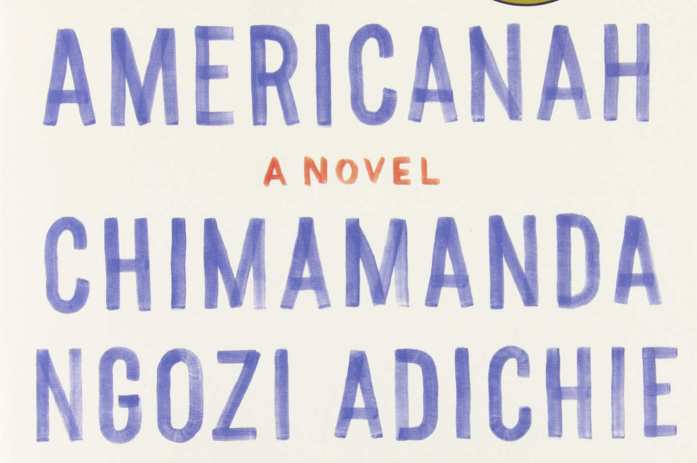
First-time visitors to India tend to arrive in the country laden with misconceptions, half-truths, and distortions.  This is what Chimamanda Ngozi Adichie describes as “the danger of a single story” in her wonderful TED Talk.  Those who love India and its people, those who are drawn back again and again – and I’m certainly one of them – know it’s a place of a billion stories.  Some of them are mine.

1034039879

Nakameguro

Nakameguro-10

When the cherry trees that line the Meguro river are heavy with blossom, the crowds fill the narrow streets of Nakameguro, a tiny neighborhood not far from Ebisu and Daikanyama.  On a chilly late January afternoon, with tidy mounds of snow reminding us of winter’s grip, I had few companions for my riverside stroll.  I try to visit the area whenever I’m in the city and have come to think of it as “Tokyo’s Brooklyn”.  With its dozens of small coffee shops, hipster boutiques, and salons (not to mention an absurd number of tiny dogs), it’s a favorite spot for Tokyo’s affluent younger residents, especially at weekends.  I always drop by Cow Books and Irma Records, two of my favorite stores, but, just like almost anywhere else in Tokyo, it’s the people-watching that takes me back to Nakameguro time and time again.

Elmet

Elmet-Featured-Image

It’s hard to imagine that a novel so sure-footed and so confident as Elmet could be an author’s first.  Set in modern-day Yorkshire, it tells the story of two children, Cathy and Daniel, raised on the margins of society by their father. They live in the deep countryside in a makeshift house built by “Daddy”, go to school only intermittently, and live on what their father earns through prizefighting and other casual jobs.  With no friends and minimal interaction with society, the children form a powerful bond with their fearsome father, famed for his strength, courage, and brutality, and with the surrounding natural world.  Their efforts to create a rural idyll for themselves fail as modern “civilization” encroaches in the most hostile way imaginable.

Elmet is certainly not a perfect novel, but the scale of the achievement is such that it feels ungenerous to cavil at its shortcomings.  One of the many pleasures was the fun I had detecting the author’s literary influences.  Ted Hughes (obviously), Emily Brontë, and D.H. Lawrence stood out, but with time I think I could find others. I’m already looking forward to seeing what Fiona Mozley does next.

Modigliani (Tate Modern)

Self Portrait, 1919 (oil on canvas)

Modigliani, much like Chagall, has taken something of a critical beating in recent years.  Once revered as one of the great figures of Modernism, he seems to have been thoroughly re-appraised by critics and found to be wanting. Too narrow in his range, a clumsy borrower from the greater figures who surrounded him in Paris in the early years of the 20th century: so go the critical complaints. The recent show at Tate Modern, the largest retrospective ever put together in the UK, can be seen as an effort to start the reversal of that trend.  Not that the effort is needed, if the horde of visitors on the day I was there is any indication.

The centerpiece of this show is a room filled with those extraordinary, languorous nudes (so shocking when first exhibited), but it’s the other portraits, of friends, lovers, and strangers, that really captivate.  Yes, the style is remarkably uniform and seems to have been modified little in his short working life, but the richness of color and the emotional impact are hard to deny.

It’s fun to speculate what direction Modigliani, dead at 35, might have taken if his career as a painter had been longer.  So distinctive was his style of portraiture – those mask-like faces, impossibly long necks, and black eyes – that it’s difficult to imagine that he might have evolved. Kudos to the Tate for this lovely show, but can we now please see the sculptures?

Waking Lions

It was such a good idea.  Take a privileged and slightly self-absorbed Israeli neurosurgeon with a beautiful wife and two children he adores, and plunge him – through a moment’s carelessness and bad luck – into an underworld of poor immigrants and petty criminals he didn’t know existed.  Use it to highlight the chasms that routinely divide near neighbors: the rich from the poor, the carelessly affluent from those that clean their houses, serve their meals, and take care of their kids.  Cast a bright light on the separateness that’s now routine in profoundly divided societies, our inability to see truthfully what’s under our noses. Mix it all up in a thriller-style story set in today’s Israel, a place of profound and deeply ironic discrimination.  It sounds like a winner, right?

Well, yes and no.  Waking Lions is Ayelet Gundar-Goshen’s second novel and the first she’s published in the US.  She’s written an ambitious and deeply felt book, but it’s clear she’s still learning her craft.  The narrative perspective moves around, sometimes clumsily, leaving the reader feel unclear whose story this really is.  There are too many indulgent, reflective passages that lessen the overall impact of what could have been a much harder-hitting tale.

waking-lions-ayelet

Nothing Personal

top_j3FTP3l

In 1964, the photographer Richard Avedon and writer James Baldwin (pictured above), friends since their schooldays in New York, collaborated on an extraordinary book, Nothing Personal.  It was unavailable for many years until Taschen published a facsimile at the end of last year along with a second slim volume of previously unpublished pictures and a new essay by Hilton Als.

Avedon’s pictures for the book are mostly portraits, many of them of well-known figures from the early 1960s such as Marilyn Monroe, President Eisenhower, Billy Graham, and Malcolm X.  Scattered between these images of the powerful and famous are pictures of young civil rights activists, ordinary couples getting married at City Hall, and a shocking set taken in what would have been called in 1964 a mental hospital.  I flicked through these photographs, ignoring Baldwin’s essay, looking for and failing to find at first any connections between what seemed random images.  But as I looked again, and as I studied them more carefully, I started to see things linking the pictures.  Some are explicitly political in the narrow sense of the word.  Contrast, for example, the smug self-satisfaction of the young Billy Graham or the aggressive self-assurance of Governor Wallace with the innocent beauty of Dr. Martin Luther King’s young son.  Celebrities from the world of entertainment such as Marilyn Monroe, the Everly Brothers, and Fabian look lost, sinister, or superficial.  What at first seemed random gradually came into focus and took shape as an exposé, a visual indictment of the injustice, vanity, and cruelty that Avedon saw in contemporary American society.  It’s a visual catalog of spiritual bankruptcy lightened occasionally by an image of the innocence of a child or the sadness of a veteran.

If the intensity of Avedon’s pictures reveals itself slowly, Baldwin’s prose is blisteringly hot from the first line. His anger about the condition of America burns in every word.  Reading passages such as this, so true for its day and so resonant now, I was left wondering how he would excoriated Trump’s America:

“But we are unbelievably ignorant concerning what goes on in our country – to say nothing of what goes on in the rest of the world. – and appear to have become too timid to question what we are told.  Our failure to trust one another deeply enough to be able to talk to one another has become so great that people with these questions in their hearts do not speak them; our opulence is so pervasive that people who are afraid to lose whatever they think they have persuade themselves of the truth of a lie, and help disseminate it; and God help the innocent here, that man or woman who simply wants to  love, and be loved.”

This is a powerful, beautiful, and timely book by two perfectly matched and intensely committed artists.  The accompanying volume, with additional documentary material and an interesting essay by Hilton Als, enhances the overall package.

Reading reflections and resolutions

Vall1478

If a great book is one that stays in your memory long after you complete it, or one that you find yourself recommending all the time to friends, then I read two great books in 2017.  Both were non-fiction.  Ghosts of the Tsunami is a wonderful piece of reportage and a deeply moving reflection on the consequences in individuals’ lives of an overwhelming natural disaster.  Notes on a Foreign Country is an intelligent and perfectly timed study of America’s place in the world and its sometimes deeply malign influence.  I loved both books and continue to recommend them to anyone who will listen.

It wasn’t a bad year for fiction.  Three books stood out from the mass of my reading.  Back in the springtime, Sebastian Barry’s Days Without End was indeed what the judges of the Costa Book Award described, “a miracle of a book“, a tender evocation of love between two men fighting in the Indian Wars.  Murakami’s unique voice shone through his wonderful collection of stories, Men Without Women.  His latest novel will appear this year and I’ll be one of those who buys it as soon as it’s published.  Finally, Midwinter Break, Bernard MacLaverty’s first novel in sixteen years, was a gem, prompting Hilary Mantel to ask “Why is Bernard MacLaverty not celebrated as one of the wonders of the world?“.  Amen to that.

There were a few duds on the reading pile in 2017, but I won’t dwell on those.  My reading resolution for 2018 is simply “more voices from other worlds”.  Voices from other cultures (novels from Israel and Korea are to hand and waiting to be read) and voices from the past will, I hope, feature prominently.

The Sparsholt Affair

What is one to make of Alan Hollinghurst?  Winner of the Man Booker Prize (for The Line of Beauty in 2004), loved by critics, feted as a great prose stylist, he seems to be Britain’s foremost literary novelist du jour.  And yet … It seems entirely possible to admire his writing, all that elegance, careful craft, and cool poise, and not be moved even slightly by his novels.

alan-hollinghurst-the-sparsholt-affair-book-new

That was certainly my experience with his most recent book, The Sparsholt Affair.  The story follows a coterie of painters, writers, and various hangers-on from their time in Oxford in the early years of the second world war through to the 1970s and centers on David Sparsholt, athlete and fighter pilot, whose impact on the group and his family reverberates through more than forty years. Time and again as I read the novel, I found myself impressed by Hollinghurst’s skill and simultaneously untouched by the story or its protagonists.  All in all, a disappointing end to my 2017 reading.

Winter in St-Germain-Des-Pres

It snowed heavily on my second evening in Paris, the first snow in the city for five years according to the concierge.  The heavy, swirling snowflakes made St-Germain-Des-Prés, picturesque on any day, postcard perfect. Where better to watch this winter wonderland than from a great café?  Although they’re undeniably touristy, it’s hard to resist the romantic appeal of the literary and artistic cafés of St-Germain-Des-Prés.  But which to choose?  Café de Flore with its starry clientele going back to the 1890s or Deux Magots, much loved by the Surrealists?  Or maybe Brasserie Lipp if you feel like channeling the spirit of Hemingway?  I considered going to all of them, but that would have meant getting wet and cold, so I opted for Café de Flore and got a window seat from which I watched the Parisians rushing to the Metro.

The snow receded, so I ventured out into the early evening.  Is there anywhere in the world with a greater concentration of wonderful bookshops and galleries than St. Germain?  I visited an old favorite (Galerie Maeght on Rue du Bac) and made some new favorites. What better way to end a bitterly cold evening than robust, country-style French cooking?  Earlier in the day I had stumbled across Cinq Mars, so I made sure I was waiting outside when it opened .  A good move – the restaurant was full within ten minutes of opening its doors. Pâté en croute, jugged hare, a glass of wine … la belle vie.

cb553e5703c53e76e5b8f6c268a16fc9