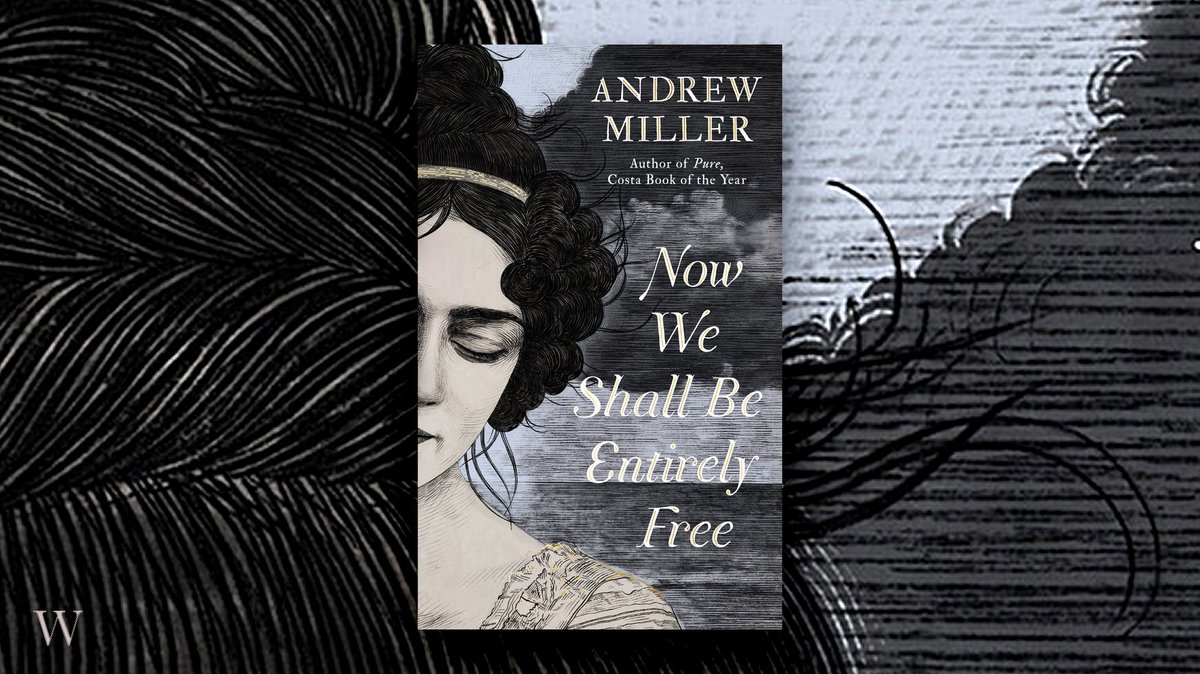
Last Stories

In his long writing life it was commonplace for critics to compare William Trevor to Chekhov; that’s how highly he was considered as a writer of short stories.  Although he wrote twenty or so novels – some of them wonderful – the short story was his true métier, the craft at which he excelled and in which, at least in my opinion, he had no equals, not even Chekhov and Alice Munro.

Last Stories is just that: the final collection of ten stories from the master who died in 2016.  Isn’t there a rule somewhere that says the powers of great artists inevitably decline in old age?  If so, William Trevor didn’t get the message because some of these stories are as good as anything he ever wrote and I imagine will make other writers, even those supposedly at their peak, groan with envy.

I gave Last Stories to a friend as a birthday gift and later wondered if I had chosen wisely.  A thick mist of melancholy clings to these stories.  No one reads Trevor for the jokes and there’s no denying that the dignity he saw in the human condition was something hard-won from solitude and often from quiet, unremarked loneliness.  The brilliance of his craft, though never showy, stopped me repeatedly as I read this beautiful collection of miniatures.  What a magnificent storyteller he was.

William Trevor (William Trevor Cox), by Mark Gerson, February 1982 - NPG x88231 - © Mark Gerson / National Portrait Gallery, London

Day of the Dead

Day of the Dead is the eighth and final installment in the series of crime novels featuring the psychotherapist Frieda Klein and her would-be nemesis Dean Reeve.  By now it’s familiar fare: an implausible story line redeemed by likeable characters and driven by slick, cleverly plotted storytelling.  Frieda and Dean, having played cat-and-mouse over eight novels, are heading towards their inevitable final confrontation, the path to which is littered with more bloody corpses than London would normally expect to see in a year.  Fear not: I won’t spoil the fun by revealing the dénouement.  I’m going to miss this series, which I’ve been reading for several years.  It will be interesting to see where husband-and-wife team Nicci Gerard and Sean French go next.

Image result for day of the dead nicci french

A History of Loneliness

Image result for boyne history of loneliness

The abuse of children over many decades by Roman Catholic clergy was made possible by many things but the silent complicity of otherwise blameless priests, who knew what their colleagues were doing but failed to report it, was key to its persistence.  John Boyne’s novel, set in Ireland, has as its central character one such witness, Father Odran Yates.  His crime isn’t the appalling cruelty practiced so relentlessly by other priests or the explicit covering-up by the bishops and cardinals of his church.  His sins are hubris and selfishness.  His self-regard, bolstered by the reverence accorded to priests over centuries, makes true connections with others impossible.  Yates can’t see this, nor what’s unfolding under his slightly upturned nose.  Of course, he has his own scars.  His father drowns one of his sons and then takes his own life.  His mother, embittered by this tragedy and her disappointing marriage, centers all her cloying affection and ambition on her remaining son.  Fr. Yates, preoccupied with his own clerical career and haunted by a sad and trivial infatuation with a waitress, sees the signs of persistent abuse in his colleague and friend but fails to act until the devastation is uncovered by others and the evidence is irrefutable.

Boyne’s novel isn’t perfect.  The interludes in Rome and Norway, for example, are unconvincing and clumsy.  Nevertheless, this is a haunting book.  Not for what it uncovers about the cruelty of the abusers or the suffering of the victims; nothing could be more shocking than the official accounts of what happened in those decades.  What lingers after closing A History of Loneliness is the tragic confirmation, if confirmation were needed, that the only thing necessary for the triumph of evil is that good people do nothing.

Packing My Library

Image result for personal library

For bibliophiles like me, it’s the stuff of nightmares.  Moving from a spacious farmhouse in the Loire Valley to a one-bedroom apartment in Manhattan sounds horrible enough, but on top of that having to pack a personal library of more than 30,000 books, deciding which to discard, which to store, and which to retain? Hideous.  That was the task faced by  Alberto Manguel and recounted with insight, humor, and elegance in his memoir, Packing My Library.  Señor Manguel, a distinguished critic, translator, library director and writer, thinks of himself primarily as a reader and book-lover, and what a sensitive and subtle one he is, gently teasing apart the tightly connected strands of possessiveness, obsessiveness, curiosity, commitment, and awe that bind all book lovers to their libraries.  A shelf in my own library is devoted to books about books and Packing My Library has now taken its place there alongside favorites by Diana Athill, Gabriel Zaid and others.

The book’s subtitle is “An elegy and ten digressions“.  It’s hard to miss the quality of pensiveness and sorrow that infuses the memoir, as if the act of boxing his precious library awoke an existential sadness, provoking melancholic reflections on creativity, collecting, solitude, faith, and much more.  Not that this is a humorless memoir.  Quite the opposite, in fact, but it’s serious, as all important books must be, and it gives appropriate place to the sorrow that’s inescapable in every life. The separation from his beloved library foreshadows the bigger letting-go that faces every one of us.

Commitment

We were about fifteen minutes into the performance of Red, John Logan’s award-winning play about Mark Rothko, when the theater’s fire alarm went off.  With the sangfroid and perfect timing you’d expect from a great actor, Alfred Molina turned to the audience and said “We never rehearsed this”.  This being London, we all filed out of the building good humoredly and politely, returning unharmed to our seats after a half hour or so for the re-started production. It’s an extraordinary, multi-layered play about many things, but mostly, I think, about Rothko’s fierce, unyielding, uncompromising commitment to his vision of art and life.

During the enforced intermission I got talking to a stranger who’d sat next to me in the theater.  A human rights worker from Mexico City, she was devoting her life to protecting the interests of the poor in places such as Guatemala and Honduras from unscrupulous corporations and corrupt governments who take their lands, livelihoods, and liberties without the slightest thought of the consequences. We continued the conversation over drinks after the wonderful show.  What impressed me as she talked – about injustice, precarious funding, and the petty rivalries of NGOs – was her total certainty about the trajectory of her professional life and the deep sense of mission driving her forward.  Hers was no job, no career, but a vocation propelled by a bright determination to fix something broken in dark places unknown and unimportant to almost everyone.  Vocations tend to cost something and hers certainly had in her personal life, but she’d paid the price happily because nothing else really mattered other than doing something, however small, for those unable to protect themselves.  Something small, but something still larger than herself.

Rothko would have understood.

Image result for rothko red

The Neighborhood

Image result for vargas llosa the neighborhood

Mario Vargas Llosa, the Peruvian novelist, was awarded the Nobel Prize for Literature in 2010.  I have to assume his powers have waned since those heady days because The Neighborhood, his most recently published novel, is a minor work of little significance.  It’s a story composed of several strands tied together to make up what was clearly intended to be an angry and cutting indictment of Peru under the control of Alberto Fujimori.  Sadly, the plot is trite and its handling clumsy and clichéd.  There’s little or nothing to recommend the novel and it can only detract from a distinguished writer’s legacy.

Basel/Bacon/Giacometti

Visitors landing at the airport in Basel, once they complete the immigration and customs formalities, need to make a decision at the exit: turn left for France and Germany or right for Switzerland.  I can’t immediately think of another airport that offers you a choice of three countries when you arrive.  On the two occasions I’ve been to Basel, commitments forced me to turn right and head to Switzerland and the city center, but I’ve often wondered about that other door …

The center of Basel is a pretty, refined place with medieval buildings, small shops and cafés.  The vibe, as in so much of Switzerland, is unhurried, affluent, conservative, and downright civilized.  Rushing feels vulgar. Immediately after checking in at my hotel, I took the tram (free to visitors!) to Fondation Beyeler to see what I think was one of the most impressive exhibitions I can remember of two of my favorite artists: Francis Bacon and Alberto Giacometti.

Image result for bacon giacometti exhibition switzerland

A great exhibition makes you think about art, artists, and experience in a new way.  I hadn’t previously thought about connections between the two artists and wasn’t aware how closely each followed the career of the other.  Their shared interest in exploring extremes of abstraction as they represented the human form came across so clearly in the hundred or so masterpieces displayed here.  And have any 20th century artists spoken so powerfully about the painful solitude of humanity and the strange dignity it confers?

Lamma Island

The relentless pushy commercialism of Hong Kong gets irritating after a while. (How many luxury watches can people really want?).  An Irish friend who used to live there recommended I head to Lamma Island, so on a sunny, very humid Saturday morning, I found myself stepping onto the dock at Yung Shue Wan, thirty minutes but a world away from Kowloon craziness.

Lamma is a quiet, intensely green place.  A place to walk, to sit on a pretty, sandy beach, to eat excellent seafood in one of the restaurants by the harbor, and most of all to separate yourself for a while from the uglier sides of Hong Kong life.  I walked to Lo So Shing beach, meeting no one except a few workmen repairing the trail.  The only sounds?  Chirping tree frogs and someone practicing scales and chords on a piano.

Image result for lamma island

The Only Story

I’ve written here before about novelists who seem unable to find a story worthy of their skills. Alan Hollinghurst is a good example.  Bags of style and all the tricks but as yet no compelling tale to tell.  Perhaps that’s the definition of a great novelist (or, at least, my favorite novelists, which I think is the same thing): telling a tale I want to read in ways that make it feel new and alive and with a voice that is unmistakable and inimitable.

Image result for the only story julian barnes

Would you rather love the more, and suffer the more, or love the less, and suffer the less?  That is, I think, finally, the only real question.  You may point out – correctly – that it isn’t a real question.  Because we don’t have the choice.  If we had the choice, then there would be a question.  But we don’t, so there isn’t.  Who can control how much they love?  If you can control it, then it isn’t love.  I don’t know what you call it instead, but it isn’t love.  Most of us have only one story to tell.  I don’t mean that only one thing happens to us in our lives: there are countless events, which we turn into countless stories.  But there’s only one that matter, only one finally worth telling.  This is mine.

Isn’t that a wonderful opening to a story?  I could read those lines over and over.  In fact, I have, and so far I’ve discovered something new every time.  Who wouldn’t want to carry on reading after such a teasing, provocative, and confident tee-up?

The story that matters for Paul, the not entirely reliable narrator of The Only Story, is a story about love.  Falling in love at the age of nineteen with a much older, married woman, Paul’s life starts down a path he could not have foreseen. Narrated at different times in the first, second, and third persons, it’s a slippery tale about youth and maturity, shifting perspectives and, most of all, about how, what, and why we remember.  The Only Story is a beautiful and important novel from a brilliant writer who seems to get better with every book.  If I read this year another novel as good as this, I will consider myself very fortunate.

A Far North Day

The unmade gravel road wound for several miles through dairy and sheep farms, gentle rolling countryside reminiscent of England. At its end, incongruous and mysterious, stood Puketi Forest, a remnant of the vast, thousand year-old woodland that once covered northern New Zealand.  Puketi is home to one of the grandest species of tree, the kauri.  Topping out at more than fifty meters, some kauri live for more than 2,000 years and are sacred to the Maori people.  I parked my car and strolled for an hour among these ancient giants, getting thoroughly soaked by the mid-morning rain.

Image result for puketi forest

A few hours and thirty miles later the sun was shining as I strolled on the beach at Matauri Bay.   A few hardy surfers were in the water but I had the stunning strand to myself.  The contrasts are striking in what New Zealanders call Far North.  Pristine beaches, subtropical forests, pretty farmland, towering cliffs, and stunning coastline – all within the space of a few miles.  And if, as I did, you visit at the end of autumn, you get to see it all without the crowds.  The weather might be a little unpredictable – four seasons in a single day is typical – but it’s a tiny price to pay to have this paradise to oneself.

IMG_3409

In the late afternoon I was the sole passenger on the ferry from Paihia to Russell, docking there in warm sunshine with lots of time before dinner to explore the small town.  It boasts the oldest church in New Zealand with a gravestone marking the burial place of Hannah Letheridge, “the first white woman born in New Zealand”.  Having fun can be hungry work, so I settled down at The Gables for delicious fish and chips overlooking the dock.  My reward?  The most perfect sunset to end my day in Far North.

IMG_3431