Days Without End

When they gave the Costa Book Award 2016 to Sebastian Barry’s Days Without End, the judges described it perfectly.  “A miracle of a book – both epic and intimate – that manages to create spaces for love and safety in the noise and chaos of history“.
Screen Shot 2016-10-29 at 09.13.31

The novel is narrated by Thomas McNulty, an Irish-born immigrant, who enlists to fight in the Indian Wars and again in the Civil War on the Union side.  His tale is of conflict and peace, of savagery, suffering, and tenderness, of hatred and love.  Love most particularly for a fellow soldier, John Cole, and the Native American daughter they adopt and raise together.

In these times when America is so divided, uncertain, and suspicious, Days Without End is a piercing reminder of what millions of unnamed immigrants sacrificed for the country, what they gave, what they lost, and what they destroyed in the endless task of building and renewing America. It also reclaims for gay men a place in the past from which conventional history-telling has erased their memory.  It’s a novel of unusual beauty and power, a shocking depiction of war and the experience of soldiers, and filled with tenderness found in the least likely of places and circumstances.  Somewhat surprisingly, it’s also very funny in parts.  It’s simply one of the best novels I’ve read in a long time.
The Clothing of Books

When e-books and e-readers started to become popular, many commentators in the publishing industry were making predictions about the imminent demise of printed books, claims that even at the time seemed silly and extravagant.  Ten or more years on, sales of e-books have flattened, printed books are prospering, and the pundits are hoping the rest of us have forgotten their silliness.

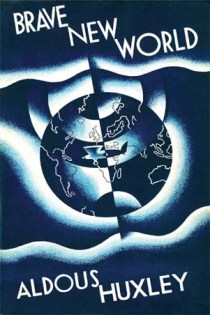
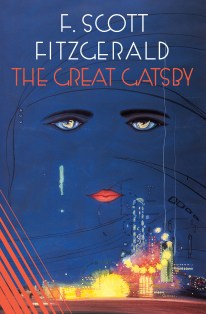
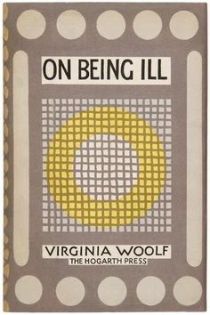
The affection readers feel for “traditional” books isn’t especially difficult to understand.  Books can be beautiful objects, and today it’s easier to find gorgeous examples of the craft than at any time in history.  Book jackets are a big part of the appeal.  You don’t have to be a true bibliophile – the aficionado looking for the perfect harmony of paper, binding, and typeface – to appreciate a beautiful book jacket and recognize what it adds to the experience of reading.  Here are a few of my personal favorites.

608ef5f4f20f7c4662421f1e032a6abfBraveNewWorld_FirstEditionThe-Great-Gatsby

I’ve often wondered what influence authors have on the covers of their own books and what they think about the end result.  Jhumpa Lahiri, celebrated novelist and short story writer, has written a delightful account of her own complicated relationship with book covers in an essay published by Bloomsbury, The Clothing of Books.  She’s wonderfully direct about the subject:

“The right cover is like a beautiful coat, elegant and warm, wrapping my words as they travel through the world, on their way to keep an appointment with my readers. The wrong cover is cumbersome, suffocating.  Or it is like a too-light sweater: inadequate.  A good cover is flattering.  I feel myself listened to, understood.  A bad cover is like an enemy; I find it hateful”.

This is a lovely, revealing, and surprisingly personal essay.  It deserves to be read, not just by bibliophiles or fans of Jhumpa Lahiri, but by everyone stubbornly faithful to printed books, those incomparable and perfect devices for delivering truth and beauty of all kinds.

Banqueting Hall

Like most Londoners, I tend to take for granted the architectural treasures of my native city.  I’ve become a little less blasé since I moved overseas more than ten years ago, but not much.  Recently I was lucky enough to be invited to a private dinner in the Banqueting Hall, and I defy even the most hard-bitten and hard-to-impress of my fellow Londoners to be unmoved by the extraordinary beauty and historical richness of this room.

Banqueting-House-London-Banqueting-Hall-2

Perhaps its chief glory is the ceiling painted by Rubens in 1636.  I sat in the Hall, trying to imagine King Charles I being led through one of its windows facing Whitehall and onto the scaffold where he was beheaded on January 30th, 1649.  I sat next to an English historian over dinner who told me that the king, on that bitterly cold morning more than 350 years ago, requested an additional shirt in case the crowd gathered for the execution might see him tremble and mistake it for fear.

It was thrilling to spend time in that beautiful room.  I felt very fortunate, jolted out of my complacency, and reminded yet again how wonderful London can be.

In Memoriam: Howard Hodgkin

45e052e3be1ab1c6ef87ec45a9047d07

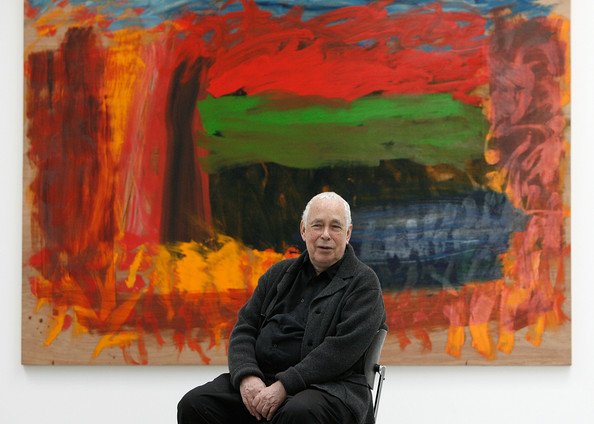
I wrote about Howard Hodgkin here last year.  I was saddened to read yesterday the news of his death at the age of 84.  I used to see him quite frequently some fifteen years ago at a café in Museum Street in London, close to his studio.  On the first occasion, I recognized him and pretended not to.  Many well-known people have finely-tuned antennae for such things and I could tell he was grateful to be left alone and enjoy his coffee.  After a few such “sightings” over several weeks, he finally came and sat at my table and struck up a conversation.  Then, and on many subsequent occasions, we talked for a few minutes over our coffees.  I don’t remember our conversations, except one about India, a place he loved and visited often. I saw him one final time, last year in New York, at the opening of one of his shows.  He was in a wheelchair.  I shook his hand.

We never broke the silent conspiracy.  I knew who he was.  He knew I knew.  We both pretended not to know. At the time, that seemed the right thing to do.  Yesterday, reading of his death, I wished for a moment that I’d told him how beautiful his pictures were.

Silence

silence-978144729985101

Although Shusaku Endo’s novel Silence won the prestigious Tanizaki Prize and has been called one of the 20th century’s finest novels, I was unaware of it until I saw Martin Scorsese’s recent film adaptation.  In the publicity that accompanied the release of the film, Scorsese made the following remark in an interview: “It has given me a kind of sustenance that I have found in only a very few works of art“.  It was that comment, not so much the film itself, that drew me to the novel.

Silence tells the story of two idealistic and devout Jesuit priests who visit Japan in 1640, a time when Christians were being persecuted brutally for their faith.  The priests go in search of Father Ferreira, who is rumored to have apostatized after being tortured by the local authorities.  They arrive in Japan to find the tiny Catholic community living in secrecy and in constant fear of betrayal, exposure, torture and execution.  The two priests separate and one of them, Fr. Rodrigues, becomes the center of the story.  We follow him through his capture, imprisonment, and inevitable encounter with Ferreira.

Rodrigues is no saint.  Patronizing, conceited, and snobbish, he’s a flawed Christian, a sinner-priest, and that makes his struggle all the more real and moving.  Confronted by the suffering of the believers, and the silence of God in the face of that suffering, Rodrigues renounces his faith in a devastating act of apostasy.  It’s the extraordinary climax to an unusually powerful, complex, subtle, and sensitive novel.

Sharjah

From time to time I visit Sharjah, one of the seven emirates that comprise the United Arab Emirates.  In my experience, it’s much less well-known than its immediate neighbor, Dubai, and lacks its glitz, glamor and playboy-playground status.  It’s the only emirate where it’s illegal to buy alcohol, and that’s a reflection of its generally conservative status and reputation.  If Abu Dhabi is the “business emirate” and Dubai is the “fun emirate”, Sharjah would like to be known as the “cultural emirate”.  There’s some justification for its claim as there are several good museums there, and the local ruler, himself a published historian, has invested heavily in educational and cultural projects.

images

Merging seamlessly as it does into the Dubai conurbation, Sharjah can feel like the quiet, unassertive, shy sibling of its bigger, brasher brother.  Nevertheless, it shares many of the features of the other emirates: shiny, new office buildings that dwarf the mosques around them, sandy back streets where you feel the nearby desert encroaching, the relentless construction everywhere, and, of course, the inevitable traffic jams.   I’ve always enjoyed my short stays in Sharjah, not because of any particular sights or distractions it has to offer, but because of the courtesy and the kindness I find there and the gentleness and elegance of its people.

Connemara

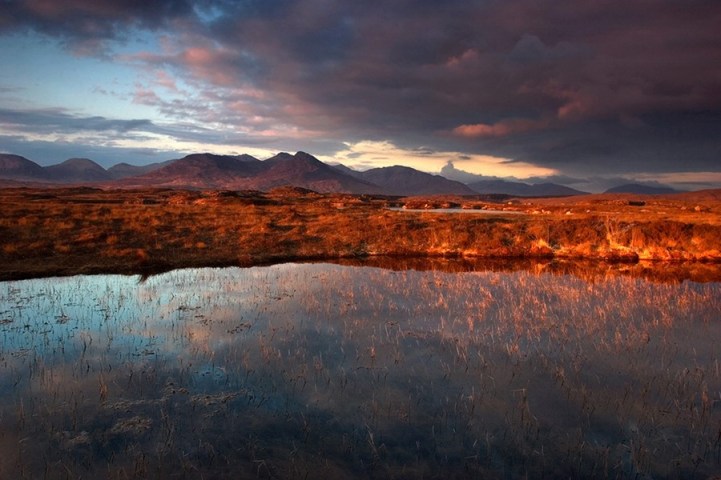
I’ve loved the wild, beautiful countryside and coastline of west Galway for a long time.  My mother was born there in the heart of the Connemara Gaeltacht, one of Ireland’s Gaelic-speaking communities.  I spent part of almost every summer there as a child, visiting uncles and aunts, many of whom spoke little or no English, and what seemed at the time cousins too numerous to name.  I don’t suppose I appreciated it much in those days, but over the years it has become more and more special to me.

0c8ceec3-6767-4d1d-b043-e31a17358614_connemara-05

It’s a remote place, the westernmost edge of Europe, pretty much the last stop before the Atlantic ocean.  An uncle there used to joke that even the birds didn’t go to Connemara, and even today, with fast cars and even faster technology, it’s a landscape that still speaks of its separateness.  For generations, many of those born in Connemara have left, for England, America and almost everywhere else, unable to make a life in that harsh, extraordinarily beautiful place.  In my experience, many of the emigres left with great sadness. For them, the beauty they found anywhere else was always measured against Connemara – its mountains and oceans, its peat bogs and lakes, the blue eyes and dark hair of those born there.

I was there recently on what the Irish call a “soft day”, a February day of mist and dampness. Apart from a few stray sheep, the roads were almost empty in Maam Valley, an especially lovely stretch of Connemara between Leenane and Cor na Mona. Keane’s Pub on Maam Bridge, a simple, unfussy local’s place, unchanged in all the years I’ve been visiting it, was just as quiet.  A coal fire burning in the hearth, a glass of Smithwick’s, and a sandwich were just what I needed.

Europe, so cluttered and crowded, still has its rare, wild places.  Places of harsh, breathtaking beauty, places that feel secret, remote, and unknowable.  For me, Connemara will always be the best of them, the continent’s mysterious, most westerly, most magical extremity.


Musings on misery (the travel kind)

6360682043939961571135400114_cancelled-flight

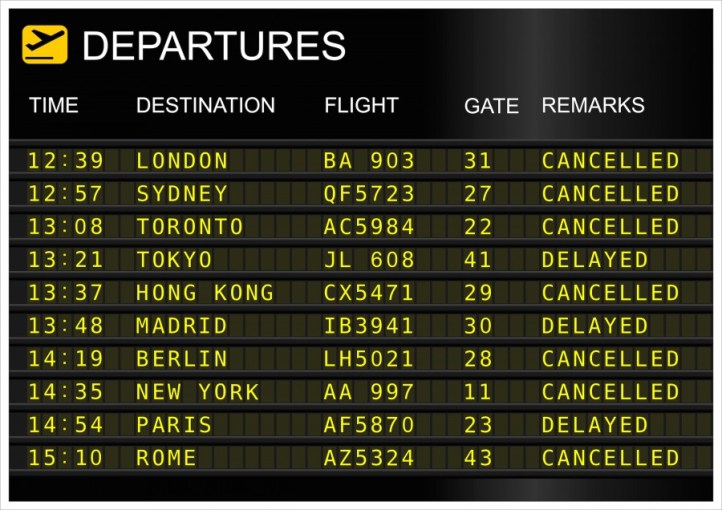
If you travel enough, you start to accumulate your own stock of personal war stories.  At best, they’re stories of delays and cancellations: irritating and inconvenient at the time, harmless enough in hindsight.  At worst, they’re a lot more…. let’s say “colorful”.  My personal catalog of travel horrors includes an engine fire (shortly after taking off from Newark), two lightning strikes (Boston and Baghdad), and an especially memorable aborted landing (Houston). Incidents like those remind you that travel encounters with the unknown can involve a lot more than inedible food or horrible traffic..

My flight from Tokyo took off on time, but after thirteen hours in the air, followed by nearly two hours flying in circles, 28,000 feet above New York’s JFK airport, I knew it was inevitable.  Right on cue, the pilot announced that snow had closed the airport and we were on our way to Washington Dulles.  What I didn’t know was that the misery was only beginning.  After touching down and taxiing to the gate in Washington, we stayed on the plane for two hours, fidgety and irritated, as we waited for news that JFK had re-opened.  When we finally pushed back, I allowed myself a tiny glimmer of optimism, but I should have known better.  We got no more than 500 yards until we pulled into a parking bay and waited a further three hours before being told that the crew had exceeded its maximum working hours.  After 21 hours on the plane, it was time to abandon the flight and look for other ways of getting to New York.

After a few phone calls and a frantic taxi ride that wouldn’t have disgraced a Formula 1 driver, I made it to Union Station in time to get on the 6pm Acela Express to New York.  I needn’t have rushed.  Mechanical problems killed the train before it  ever left the platform and  we were all transferred to a different service.  There couldn’t be any more problems, could there?  Surely that was enough for one day, right?  The weather had other ideas.  After finally leaving Union Station an hour later, the new train lost all power outside Philadelphia.  I eventually made it home just before midnight, 33 hours after leaving my hotel in Tokyo.

Experiences such as these happen every day to travelers and, of course, they’re especially common in winter.  I learned one thing about myself during that messy and unpredictable day: I’m very patient as long as I’m kept informed about what’s happening.  Starve me of information and my tetchiness soars very quickly.  Travel can deprive you of control over your own circumstances.  Information creates the illusion that control has been restored.  So, my advice to cabin crew and all travel personnel is simple.  Keep your customers informed very frequently, especially if you have nothing new to tell them.  You’ll be glad you did because it will keep you safe from the wrath of grouchy control freaks like me!

Galway

galway

Galway for me is a city of memories and ghosts.  Throughout my childhood we would stop there for a few hours on our way to family holidays in Connemara, a short blast of the city before being swallowed by the countryside.  It’s rare for me to return to Galway, but I spent a day there recently.  I felt like an archaeologist, digging below the surface, looking for the bones of the city I remembered from nearly 50 years ago.  It proved to be surprisingly easy.  Though the city has spread wildly in the intervening years and much of its surface has changed – so many new restaurants, coffee shops, and bars – it wasn’t difficult to uncover the city of my childhood and some of the places I remember.  Taafe’s Bar, a favorite watering hole for one of my uncles, is still there, as is Fallers, the jeweler where my father bought his claddagh ring. Eyre Square, Galway’s centerpiece, has been re-modeled and is a lot less charming than it used to be.  I was shocked to discover that the statue of Pádraic Ó Conaire, the Irish writer (and my great uncle), had been moved from the square to Galway City Museum following an incident of vandalism many years ago.

Galway is a slightly scruffy, charming, and romantic place, with a young vibe it didn’t have years ago.  It’s not a place to detain a visitor for much more than a day, though it’s a great base from which to explore the wild countryside and coastline further west.  If you’re there and feeling hungry, don’t miss Ard Bia on the quayside.

The Fall Guy

28789706Matthew, between jobs and a little down on his luck, decides to spend part of the summer with his wealthy cousin, Charlie, and Charlie’s beautiful wife, Chloe, at their idyllic country house in upstate New York.  It’s an uneasy ménage.  Charlie – spoiled, entitled, and self-obsessed  – treats his cousin little better than the hired help, while Matthew suffers an unspoken and unrequited passion for the vague, listless Chloe.  It has all the makings of a suffocating love triangle until Matthew discovers that there’s much more to Chloe than he ever expected …

James Lasdun is a versatile writer of novels, poetry and non-fiction.  Although he must have crossed my radar previously  (I found on my bookshelves an unread proof copy of one of his earlier novels, Seven Lies), the impetus to read The Fall Guy came from a very positive review in the Financial Times.  It has an unusually intense atmosphere: hot and claustrophobic, its enervated characters weighed down by a torpor that’s as much moral as it is physical.  There’s also some savage satire here as Lasdun skewers the self-absorbed, self-important “New York summer set” in the wake of the 2008 financial crash.

The Fall Guy is a difficult novel to categorize.  Part social satire and part literary thriller, it’s not completely satisfactory as either.  The sterile lives of the rich and privileged have given material to writers for generations.  Something a little special is needed to make that material feel unfamiliar and strange.  Lasdun didn’t provide that twist, though he did serve up an atmospheric and engaging story.