London: Kings Cross

Growing up in Camden (in north London) in the 1960s and 1970s, the streets immediately north and east of Kings Cross and St. Pancras stations were no-go areas.  They were popular with drug dealers, prostitutes, their customers, and no one else.  I worked for a short time in the neighborhood in 1982 and even then it was a grim place. I remember walking up Pentonville Road at lunchtime one day and seeing someone shooting up in a doorway, oblivious to the passers-by.  It was that kind of place. The railway arches were home to various small businesses, especially car repair shops.  I remember a particularly gruesome episode of the TV series Prime Suspect being set in one of the arches – a perfect setting for sinister dealings.

Regeneration was slow to arrive.  When the British Library opened its new building on a plot immediately to the west of St Pancras station in 1998, I expected it to spur a wider renaissance of the area, but nothing very much seemed to happen until the new Eurostar terminal was built.  With that, and with the refurbishment of the St Pancras hotel, Gilbert Scott’s Victorian Gothic masterpiece, the tide of modernization was unstoppable.  Today the area is home to new hotels, restaurants, and bars and almost every vestige of the old and seedy has been wiped away, replaced with shiny offices for Google and Amazon.  I’ve been back there a few times recently and such is the extent of the transformation that it’s almost impossible to trace the streets that I remember forty years ago.  A place that once existed no longer does, except in my memory.

No one could possibly lament the disappearance of the old neighborhood, but amid all the gains – the well-lighted, safe streets, the public art, the energy that comes when a new generation of visitors discovers and claims a previously unknown part of central London – something has been lost.  Kings Cross and St Pancras today are shiny and new, but aren’t they also a little bland?  Isn’t it just a little regrettable that when we talk about regeneration what we usually mean is more expensive apartments, more offices, more restaurants and bars?  Does regeneration have to mean gentrification and uniformity?

History is inescapable in London and that’s what makes it one of the world’s truly great cities.  Amazing work has been done to preserve London’s magnificent old buildings from every era, but something of the great industrial heritage of Kings Cross and St Pancras has been lost forever.  For some reason that feels quite personal.

trolleybuspancrasroad

The alchemy of a great bookshop

A mysterious alchemy is at work in a great bookshop.  What special magic is needed to turn piles of books and lots of shelves into those remarkably few special havens that enchant book lovers like me (and part us so easily from our money)?

A beautiful setting helps, whether it’s old or new.  Think of El Ateneo in Buenos Aires or the Tsutaya shop in the Daikanyama neighborhood of Tokyo, places where great care has been taken to display books in a warm, inviting way.  Book-loving booksellers are not as common as they ought to be, but when you find them they make a world of difference.  The staff at Hatchards in London seem to have all the time in the world to share their enthusiasm for books with their customers whereas, a few hundred yards away and on the same street, at Waterstone’s Piccadilly the staff might as well as be selling cans of soup, such is the lack of charm.  How peculiar that both shops have a common owner.

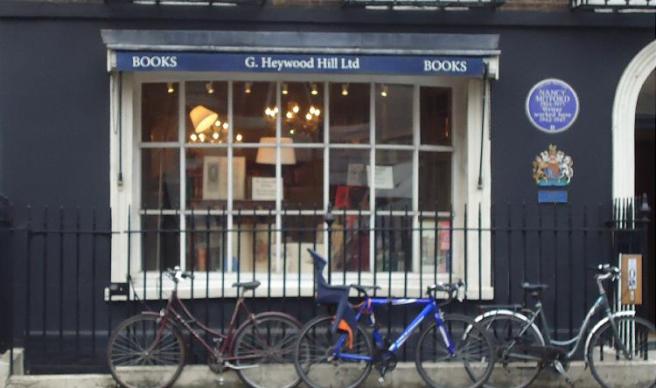
In the very best bookshops you can feel the entire collection has been put together specially for you.  Heywood Hill and Maggs, now very conveniently situated opposite one another on Curzon Street in London, have that effect on me, as does The London Review of Books store near the British Museum and Daunt Books in Marylebone.

As these rather random recommendations make clear, London is my place for buying books, though plenty of other cities have great shops.  Can anyone direct me to a great bookstore in Manhattan?  I haven’t found one yet that I really love.  Bauman Rare Books is wonderful but it’s hardly the place one goes to for everyday book buying.  I like McNally Jackson in SoHo but it lacks that special ingredient that keeps me browsing for hours and coming away poorer but happier.  Help me out – I promise to be a loyal customer!

heywod-hill-exterior

Academy Street

Isn’t it miraculous that, through the careful and artful combination of words on a page, it’s possible to communicate truthfully something of the essence of what it is to live, to be human?

My second book of 2016 was Academy Street, a debut novel by the Irish writer, Mary Costello.  It’s a short novel – fewer than a hundred and fifty pages of taut, precise prose – that tells the story of Tess Lohan from her childhood days on a family farm in the west of Ireland through to her emigration and old age in New York.  Tess’s life is an unexceptional one, quietly lived, but it’s the great achievement of this novel that you turn its final page and appreciate that there’s no such thing as an unexceptional or quietly lived life.  The milestones of Tess’s life – the death of her mother, the failure of love, the agonies and ecstasies of being a parent, the tiny accumulation of minor disappointments and triumphs – are not much different from any other.  It’s in what we do with what happens that we find what’s distinctive and unique in every human life.

The novel is much like the life it describes: a study in quietude. Its contemplative tone and the spare, measured writing reminded me of John McGahern and Anne Enright.  I was, but only very occasionally, jarred by sentimentality, bu this is a lovely, memorable book, and I’m looking forward to whatever comes next from Mary Costello.

AcademyStreet_Instagram


Stories of home

If you could eat only one type of cuisine for the rest of your life, which would you choose?  Italian, French, Indian?  It’s a question I have occasionally discussed with friends and their answers often illuminate their personalities.  Even more illuminating is the question “If you could read only one nation’s literature for the rest of your life (whether in translation or not), which would you choose?”

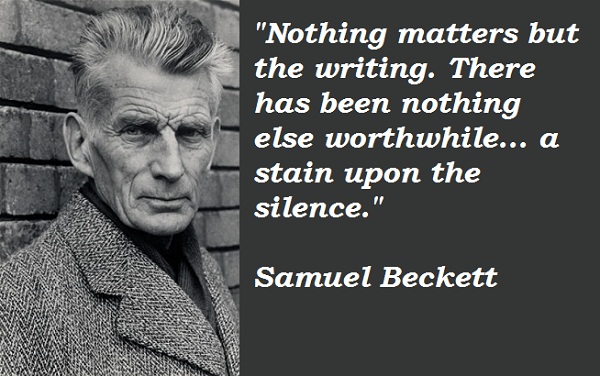
I don’t find it a difficult question to answer.  For me it would be Ireland (including its diaspora), without hesitation.  Why?  It can’t simply be because Ireland has produced a handful of writers whose work is inexhaustibly fascinating to me and repays repeated reading (think of Samuel Beckett, James, Joyce, and W.B. Yeats).  Can’t every country make a similar claim?  And it can’t be because it’s a country that refreshes its stream of fascinating writers on a regular basis.  Ireland’s stream of new talent is no greater than England’s or America’s.

So what is it that draws me to stories from Ireland?  It has to be something to do with a connection to “home”.  I read the stories of William Trevor, John McGahern, and Colm Toibin and I hear the voices of Ireland and the rhythms, cadences, and accents of Irish men and women talking.  I can picture the settings, the places, the faces.  I understand at some intuitive level the lives, feelings, and motivations of the characters and that deepens immeasurably the experience of reading and my engagement with the stories.  I like my answer but don’t like the implication.  Will I always miss nuances in a John Updike novel because I wasn’t born or raised in America or because my parents weren’t Americans and will my experience always be less than that of a reader who was?  Is there no such thing as a global story?

samuel-beckett-quotes-2

The Buried Giant

My first book of 2016 could prove to my least predictable choice of the year.  I loathe fantasy fiction, so why did I choose as my first book a novel that features ogres, she-devils, and Sir Gawain (yes, King Arthur’s faithful sidekick)?  Simple.  It’s by Kazuo Ishiguro, one of my favorite living novelists, and I was intrigued that he should use Britain in the early post-Roman era as the setting for his newest book.

It’s a strange, simple tale of two protagonists, Axl and his wife, Beatrice.  They travel from their home to find their grown son and along the way encounter hostile Saxons, dangerous ogres, and the aging Sir Gawain.  Little happens very slowly, but it’s the eerie atmosphere that stayed with me long after I closed the book that makes The Buried Giant so distinctive.  It’s a book about the importance of memory and the dangers of forgetting, and about how the creation of a sustainable future (whether personal or political) is impossible if memories are lost.

A great novel?  No.  Ishiguro’s best?  Certainly not.  But it’s a deceivingly simple, unsettling, and memorable story.

51tXDWW3TAL._SX341_BO1,204,203,200_

A year of reading


I once asked a friend how he chooses the books he reads.  His answer?  “Life is too short and too busy to read bad books, so I only read the really good ones”.  Not the most helpful answer perhaps, but he was trying to say something serious.  Reading a book takes a commitment of time and effort and there are millions of books to choose between.  But how do you know what’s good or even what you like?  The simplest thing would be to read only the genres we love or the authors we admire, but where does that leave us if we want to experiment with new styles, new forms, and new writers?  What about the new books our friends and loved ones recommend, sometimes so passionately?  What about the hottest new book, the one every critic raves about?  And what about reading backwards, filling the gaps in our knowledge of the great classics?

I don’t have the answers to the questions, so I’m going to do in 2016 what I’ve done every year since I started to read seriously more than forty years ago – I’m going to follow my nose, my prejudices, and my instincts.  What does that mean in practice?  More fiction than non-fiction.  More newly published titles than classics.  Probably no fantasy or science fiction and little poetry.  And, of course, only really great books.