Dublin Musings

I admit it freely.  Dublin is not my favorite city.  It’s not even one of my favorite cities. Just saying that out loud makes me feel better because Dublin is one of those places that tells you continually and none too subtly that you ought to be enjoying yourself.  Fun (with several exclamation points) is what Dublin is all about. And it’s a particular form of fun – the craic – the type of fun you have with a pint of something in front of you. Now I like a good pub as much as anyone (and there are some excellent ones in Dublin), and I agree with Benjamin Franklin that beer is God’s way of telling us he loves us, but Dublin tries too hard.  Parts of the city center, and Temple Bar in particular , with its countless watering holes and restaurants, have become nasty and squalid to the point that no self-respecting Dubliner sets foot in the place in the evening, leaving it to the stag and hen parties instead.  I have a suspicion that all my Irish literary heroes – Joyce, Beckett, Wilde, and so on – didn’t flee Dublin because of its provincialism or intellectual narrowness, but because they felt guilty they weren’t enjoying themselves enough.

Having got that out of my system, I admit there’s still much to like in Dublin.  Just don’t try looking for those things on a Bank Holiday Monday, as I did on a recent business trip.  The Chester Beatty Library? Closed.  Ulysses bookshop? Shuttered.  Every third rate pub, restaurant, and tattoo shop was open, but not one of my favorite spots.  Even Christ Church Cathedral, open but now charging visitors €7, seemed to be testing my patience. I realize these are tough times for churches, but the velvet ropes blocking access to the nave were telling the pious and the penniless alike “Keep Out.  This isn’t a place of worship, it’s a tourist attraction”.

Dublin’s leaders have worked hard to attract tourists and maybe they have been too successful because the city was crowded during my stay.  As other small cities have discovered (Amsterdam, Venice, etc.), you make a pact with the devil when you commit to encouraging mass tourism.  Much is gained but much is lost also.

Image result for dublin city centre pubs

Kinsale

Like so many pretty, picturesque places, Kinsale is infested with visitors in the summer months.  Its main attractions used to be its sailing facilities and golf courses, but in recent years it has drawn more and more foodies to its excellent restaurants. Popularity comes with problems; crowded pavements, insufficient parking, and more cafés than anyone could ever need.  Come out of season and you’ll have its charming streets, lovely harbor, and historic sites – not to mention all that wonderful food – without the crowds.  Just don’t tell anyone else.

Image result for kinsale

Everything In Its Place

I’ve read none of the books on which Oliver Sacks’s critical reputation rests (Awakenings, The Man Who Mistook His Wife for A Hat, and so on).  In fact, until now I had read only the posthumously published collection of essays he wrote about illness and dying called Gratitude (2015).

Image result for everything in its place oliver sacks

What I remember about Gratitude are the qualities that Sacks’s readers tend to remark upon: his sensitivity, tenderness, and limitless curiosity about what it means to be human.  All are found again in Everything In Its Place.  It’s otherwise something of a hotch-potch of a collection, combining a few very personal essays about things that influenced him in his early life (libraries, museums, and so on) with some clinically-centered pieces of the kind that made him famous.  All are written beautifully.  The explicitly autobiographical pieces are especially good, but it’s an essay in the middle of the collection called The Aging Brain that captured best for me what made Sacks such a deeply engaging writer and, I assume, such a wonderful doctor. The essay is a distillation of what he learned from a lifetime of treating patients with various types of dementia.  It’s not so much the clinical conclusions that matter here.  What sticks is his unshakeable belief in the dignity to be found in every human life, including those ravaged by cruel mental illnesses.

Kagurazaka

After twenty-plus visits to Tokyo, I think I have quite a good grasp of the city’s main neighborhoods, but just like any other visitor my personal topography of Tokyo is shaped by what I do and enjoy.  For me, working in Tokyo means time in places like Nogizaka, Nihonbashi, and Aoyama. Fun means Ebisu, Hiroo, Daikanyama, and Nakameguro. The opportunity, and maybe the inclination, to explore new areas is limited, so it’s a treat when someone or something introduces me to somewhere new.

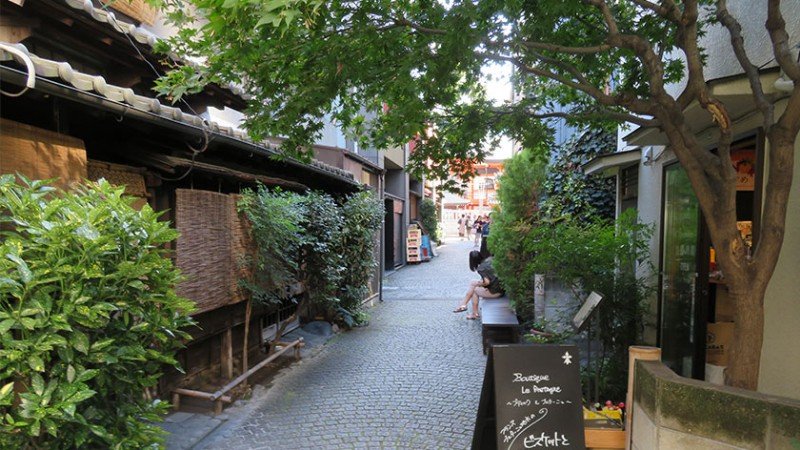
Kagurazaka is a small neighborhood within Shinjuku ward that was famous in the early 20th century for its numerous geisha houses.  It has a cultured feel today, perhaps because of the proximity of a number of university campuses and publishing houses, or maybe because it’s favored by French expatriates as a place to live.  At its heart you find a warren of narrow alleyways, inaccessible to cars, where several ryotei (traditional high-end Japanese restaurants) can be found.  It was one of these, Restaurant Kamikura, that took me to the neighborhood.  It’s an enchanting area, quieter than many in the city; a place for strolling, a coffee, and most likely an outstanding dinner.  I’m already looking forward to going back.

Image result for kagurazaka

Modernists & Mavericks

Image result for modernists and mavericks

Martin Gayford is something of an insider in the London art world and has been talking about painting for more than two decades to the likes of Francis Bacon, Lucien Freud, Frank Auerbach, and David Hockney.  (His account of sitting for his portrait by Freud – Man with a Blue Scarf – is a brilliant book). It’s difficult to think of someone better qualified to write a history of what happened in English painting in the time between the end of the Second War World and the mid-1970s. With Modernists & Mavericks, he has written a really engaging and intelligent account of that period, steering clear of both gossipy reminiscence and dry theory to produce a vivid story of what we can now see was an extraordinary flourishing of talent in London.

Gayford’s own critical preferences are clear enough.  He sees Bacon as the towering figure of the period and as one of the greatest artists of the 20th century, with Freud not far behind.  He presents a strong case for this opinion and overall I think he manages to avoid the risk of making the London scene in the period feel at some points as having been all about a reaction to these two extraordinary painters. He’s sensitive to what would have been both a critical and historical distortion, presenting important painters as walk-on parts in a drama dominated by Bacon and Freud.  Nevertheless, it’s impossible to give appropriate space to everyone who flourished in London at that time, so we’ll all have to look elsewhere for a full critical appreciation of the likes of Bridget Riley or Howard Hodgkin. And only time will tell if the reputations of others will rise to challenge Gayford’s assessment.  My own hunch is that Frank Auerbach will, as time goes on, be seen as at least the equal of Bacon and Freud.  Time will tell, but in the meantime Gayford has given us a readable, even-handed, and intelligent review of a fascinating period in modern art history.

Come Rain Or Come Shine

Faber Stories is a series of short works published to celebrate the 90th anniversary of Faber & Faber.  Ishiguro’s story Come Rain Or Come Shine was first published in 2009 and now appears for a wider audience as a volume within Faber Stories.  It’s a slight and intriguing tale of seventy or so pages.  Ray, an unambitious and mostly unsuccessful language teacher in his forties, comes to stay with his two university friends, Charlie and Emily.  Charlie heads to the airport for a business trip almost as soon as Ray arrives, but not before confiding that his marriage to Emily is in trouble.  Ray is enlisted to help repair the relationship by acting so much his useless self that he makes Charlie look good by comparison.  Left alone with Emily for a day or two, will Ray succeed?

The story starts in a realistic style, but as it develops a slightly dream-like, surreal, and comic atmosphere takes hold.  Even with all his confidence and skill, Ishiguro can’t quite pull this off.  It’s entertaining enough but I was left with the feeling that he didn’t quite know what to do with a promising idea.

Image result for come rain or come shine ishiguro

Favorite Bookshops: Littered With Books (Singapore)

Great bookshops are about much more than books.  The best ones display something of what’s best about the human spirit.  Perhaps a sense of curiosity, imagination, or adventure, the longing to learn and communicate.  I often find when I leave a newly discovered bookshop that what stays with me is something it reveals about its proprietors.

Enthusiasm and fun are what strike you when you browse around Littered With Books, a small store on two levels on Duxton Road.  The neighborhood is sleepy on Sunday afternoons.  There were few customers in the bookshop but the young staff bustled around, laughing and having fun.  Colorful, handwritten post-it notes litter the edges of the shelves, recommending things to read and dispensing advice and bons mots.  A skylight in the middle of the shop floods the room with light, adding somehow to the feeling that this is a place telling you it’s OK to have fun here. The least I could do faced with all this generosity and warmth was to buy something.  I walked out with Kazuo Ishiguro’s Come Rain or Come Shine.  The salesperson gave me a free bookmark, of course.  It was pretty and fun, of course.

Image result for littered with books

Singapore’s Little India

Image result for singapore little india

With temperatures in the mid-nineties and humidity close to 100%, my walk from Tanjong Pagar to Little India wasn’t as much fun as it should have been. A cold mango lassi in one of the many restaurants on Sarangoon Road revived me and I carried on my trek around the neighborhood.

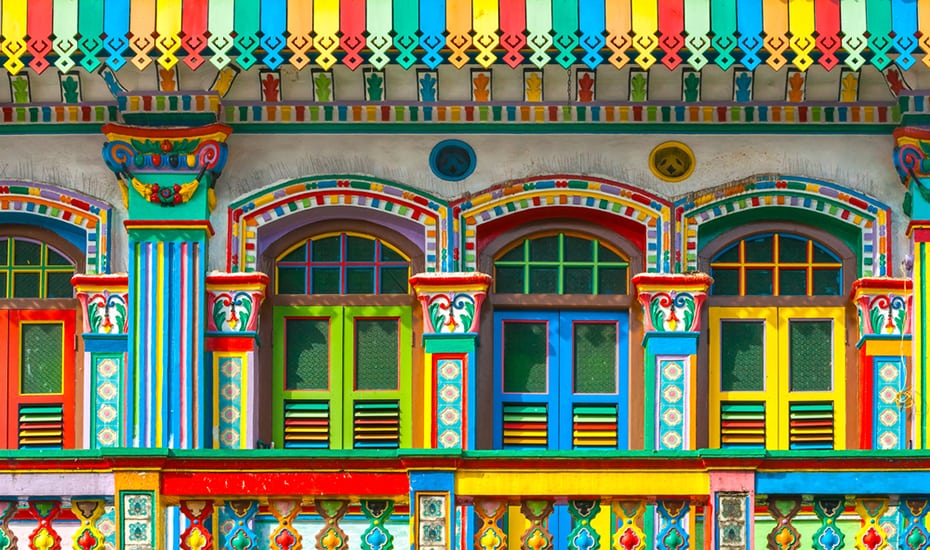
It’s not an area bursting with must-see monuments or buildings, though Sri Veeramakaliamman temple, with its facade crowded with colorful statues, is well worth a look. Dedicated to the goddess Kali, the temple has been the heart of Singapore’s Hindu community since the 19th century.  What makes Little India such a fun excursion is its vividness, color, and energy.  Shops selling saris and the bright yellow gold jewellery loved by Indians all over the world line Sarangoon Road, and on the Saturday I visited the pavements were crowded with young families heading out to lunch in the scores of South Indian vegetarian restaurants in the neighborhood.  Visitors to Singapore – myself included – often complain that its urban development has stripped away the traditional ethnic character of the city and leveled its older buildings to make way for bland office and apartment buildings.  Thankfully, that isn’t true of Little India.

Image result for singapore little india

Reunion

Hatchards’ bookstore at St. Pancras station in London is small, but its staff have a talent for displaying lesser-known titles in a way that catches the eye of browsers like me.  They seem especially interested in promoting neglected classics and on more than one occasion I’ve discovered a book I’ve ended up loving and recommending to friends.  Reunion, a slim novella by Fred Uhlman first published in 1971, is one such gem.

Image result for fred uhlman

The story is set in Germany in 1932. Two teenage schoolboys, innocent and unworldly, become firm friends. One, Hans, is Jewish, the son of a doctor. The other, Konradin, is a Protestant from a distinguished, aristocratic family.  All is innocence and purity. It’s Eden before the fall, the calm before the hurricane that would transform the world. But even in their sheltered, civilized town, disturbing rumors reach them from Berlin that Germany is changing and that it’s no longer safe to be Jewish.

The power of Reunion, a short and simply told story, is very difficult to describe.  All I can say is that in fewer than a hundred pages it speaks of innocence, awakening, horror, and some kind of redemption from a time in our recent history that all of the world’s literature will never explain adequately.  The rest I will leave to Rachel Seiffert’s elegant Afterword to the novel. “It is rare to use the word perfect to describe a book.  I don’t hesitate here”.  Neither do I.


Louvre Abu Dhabi

Image result for abu dhabi louvre

The Louvre Abu Dhabi opened in November 2017 and is situated on Saadiyat Island, a neighborhood in Abu Dhabi that will eventually  house a complex of major cultural institutions, including a new Guggenheim museum.  The building, designed by the French architect Jean Nouvel, is simply wonderful.  A structure of white cubes dazzles the eyes, reflecting (as it inevitably does) the bright Gulf sunshine, and is crowned by an intricate webbed roof that makes you think of palm fronds and Arabic calligraphy.  Inside it’s all cool, white space; a serene setting for a relatively small collection of art treasures from around the world.

The arrangement of the exhibits is loosely chronological, beginning with galleries dedicated to classical antiquity and ending with abstraction and modernism.  It’s easy enough to be snobbish about the “ready made” collection of masterpieces brought together in this extraordinary showcase.  A Leonardo here, a Delacroix there. An exquisite Torah scroll set next to a 14th century bible, and so on.  It feels like the collection of a fabulously wealthy benefactor determined to show off their buying power and the breadth (if not the depth) of their interests.  Museums can’t be hatched, fully formed.  They take decades, sometimes even centuries, to mature and to grow into their surroundings and the riches they display.  But they have to start somewhere.  It will be interesting to see how Louvre Abu Dhabi evolves and finds its natural shape. For now, we have been given a glittering jewel case filled with nothing but exquisite wonders.