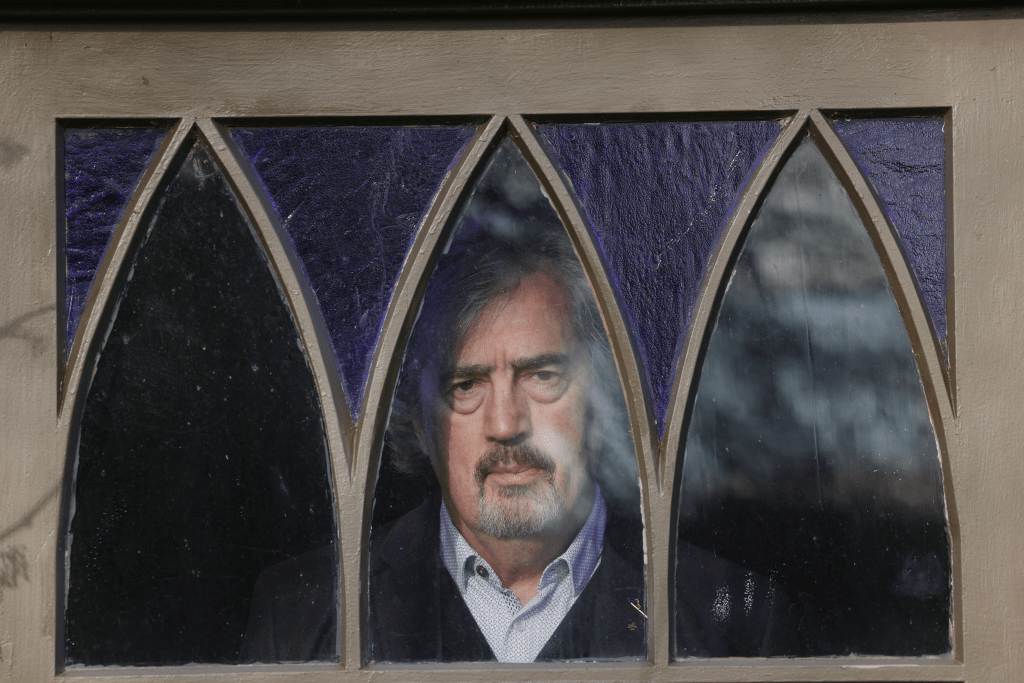
I seem to be on something of a winning streak as far as reading novels is concerned. After Andrew Miller’s wonderful work comes Sebastian Barry’s latest, Old God’s Time. Its central character, Tom Kettle, is living in quiet retirement after a career as a Dublin detective. He spends his days pottering around a small apartment overlooking the sea, but his peace is broken when two of his former colleagues come knocking on his door ….
My summary makes the novel sound like a thriller, but it isn’t, at least not in the conventional sense. There may be deaths, one of them a murder, intrigue, suspicion, and a few policemen, but Barry has more in his sights than conventional clever plotting. Tom Kettle has memories and secrets, some of them shocking and tragic, and the arrival of the detectives uncovers the very worst of them. This is a novel about aging and about the ties that bind a family. It’s about memories, fantasies, stories, and the differences between them. Because it’s by Sebastian Barry, it’s written beautifully, infused with a poignancy, tolerance, and compassion that is typical of his work. Nobody who loves fiction and wants to see a master at work should miss this book.
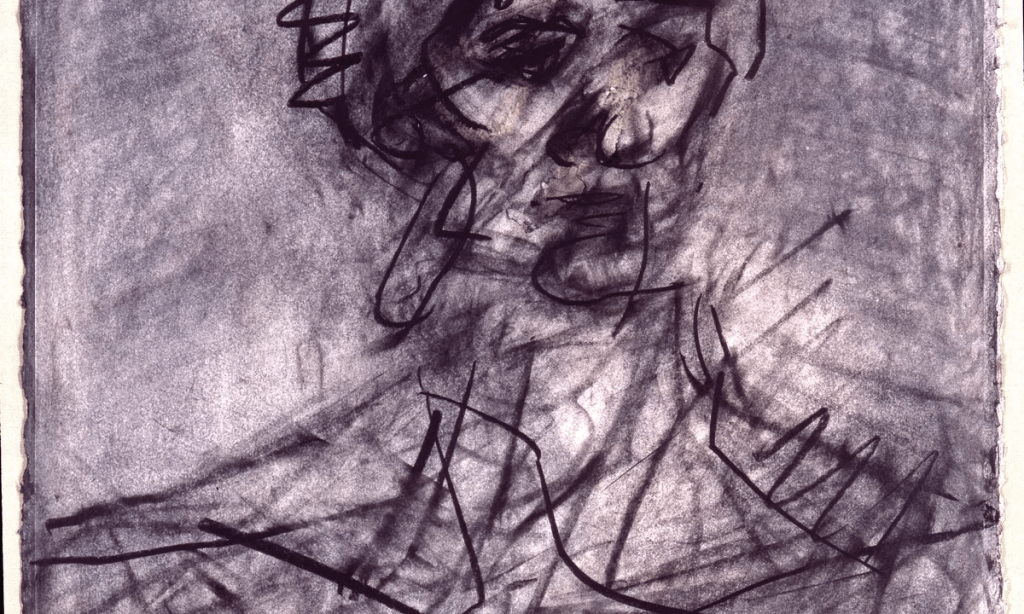
I take the view (and I am not alone in this) that Frank Auerbach is our greatest living painter. He has been based for decades in the same studio in Mornington Crescent, and has painted throughout that time the neighborhood in which I grew up. They are demanding works. There is nothing easy about them. Canvases thickly layered in paint, almost sticky, challenging you to see what you think you know and recognize in a new way. Sinewy, tough, uncompromising pictures that I love without knowing why.
He is also a brilliant portrait painter. Much like his old friend, Lucian Freud, Auerbach has painted a small number of friends over and over again and over many decades. There is an intimacy to the portraits and sometimes great tenderness. Again, they are not always easy, but they are often wonderful and affecting.
I could not resist this recently published collection of the portraits when I saw it on the tables at Hatchards. I was tempted to snap it up immediately until a bookseller told me that a small number of copies signed by Auerbach would be available soon. I waited patiently and was rewarded after a few weeks. His paintings sell for millions, but at least I have this beautifully produced book signed by one of my favorite artists.
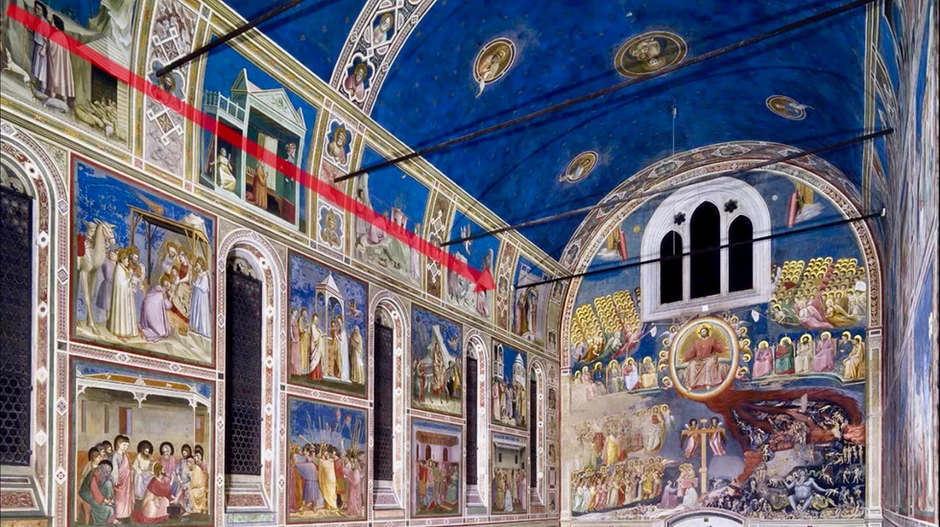
I wonder what Enrico Scrovegni was expecting when he commissioned Giotto to paint frescoes in his chapel at the very beginning of the 14th century. Perhaps some high-minded decoration to impress his friends and competitors. After all, Padua at that time was an intensely political place and Scrovegni was something of an operator in local society. Maybe his motives were more pure and he was looking for something quite traditional to help him focus on the divine mysteries as he prayed with his family. Whatever his expectations and motivations were, surely he cannot have predicted the wonders that Giotto would produce, one of the greatest masterpieces in Western art and work that revolutionized the language of painting.
My short visit to Padua (Padova) was not long in the planning. In fact, it was little more than an impromptu stop-off on my way from Lake Garda to Venice. Pulling off the highway, I looked for a parking spot with no plan other than to spend the afternoon strolling around what I had heard was a lovely, small city. Perhaps a quick visit to the Basilica, the Church of the Eremitani, and the ancient university? I had read previously that unplanned, same day visits to The Scrovegni Chapel were impossible. What I didn’t know was that visitors in the off-season were far fewer than in the summer, and that all I needed to do was go to the ticket office to secure my timed admission later that day.
The frescoes are fragile and are vulnerable to environmental pollution, so access to the Chapel is managed very strictly. Entry is achieved through a temperature controlled anteroom and only small groups are permitted. Once visitors are inside, the Chapel doors are closed to minimize pollutants and stabilize the immediate environment. The visit is timed and quite short, so there is no opportunity to study Giotto’s masterpiece in any real depth. None of that should deter visitors. The constraints and controls are necessary, and it is a privilege to spend any time, however short, surrounded by these treasures.
It is not easy to find the words to describe how wonderful these frescoes are, or their impact, but since returning I find myself thinking about them every day. Craning my neck that day to look at the sequence of images, it was difficult to focus, such is the richness and scale of the work as a whole. The vividness of the color is remarkable in a work more than 700 years old, not to mention the sense of animation in some of the figures depicted. What Giotto achieved here in the confines of a small family chapel is nothing less than one of the greatest artworks of Western civilization.
If you visit, I recommend getting Giuliano Pisani’s guide to the chapel. It deepened my appreciation of it. And don’t miss the Eremitani church next door.
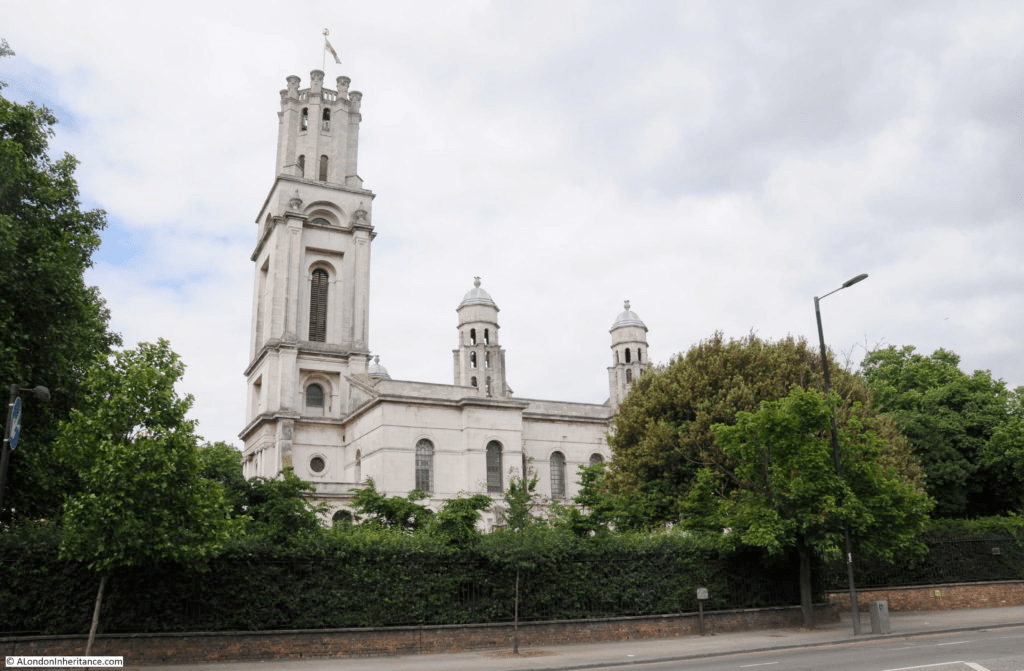
Continuing my pilgrimage to see all six of Hawksmoor’s churches in London, I walked a little more than a mile from St. Anne’s, Limehouse to St. George-in-the-East. The direct route, which I chose to take, is not the prettiest of walks, and it took me along noisy, traffic congested roads leading into and away from the old City of London. But arriving at the magnificent church, I found it set in a small oasis of calm created by the large, quiet churchyard surrounding it. It was a blustery and overcast day but the gardens east of the church were dotted with daffodils and crocuses signalling the arrival of spring.
The church was built between 1714 and 1729 with its construction funded by the same Act of Parliament in 1711 that gave us St. Anne’s and other Hawksmoor masterpieces. Sadly, the original interior was destroyed by a bomb during the Blitz of May 1941, but the strange and extravagant exterior survived somehow. With its distinctive “pepper pot” towers, St. George-in-the-East continues to stand as one of Hawksmoor’s most imposing and peculiar London churches. Don’t be deterred by the location. It’s a spectacular, unmissable building for anyone who loves the work of Hawksmoor.
In the middle of March the towns on the shores of Lake Garda start to emerge from their winter hibernation. This is the time when the restaurants, bars, and gelaterias get a fresh coat of paint and when the store owners re-stock their shelves for the influx of visitors who will arrive with the better weather. It is a good moment to be here. The days are bright and there is enough warmth in the sun to walk around the lake in comfort, but visitors are few and the lovely towns can be enjoyed in relative solitude.
I traveled perhaps two thirds of the lake’s coastline recently, from Riva del Garda on the northwestern tip to Bardolino and Garda on the east coast. The towns I visited all shared an understated elegance and, without their seasonal crowds, an air of melancholy. At this particular time of the year, this is a place for long walks, for visits to ancient churches, and for a coffee or aperol spritz overlooking the gorgeous lake. My base was Desenzano del Garda, one of the largest and loveliest towns on the lake, but if forced to pick my favorites I would have to choose Limone sul Garda, Sirmione, or Lazise. Not that a choice is required. Pretty much everywhere is easily accessible by car. My advice? See it all, pick your moment carefully, and go in the autumn or the spring.
Stephen Rose is a former soldier. Serving in the British Army during the Troubles in Northern Ireland, he shot and killed an innocent teenager. Many years later, now a recovering alcoholic, divorced, and trying to build a relationship with the daughter he barely knows, Stephen receives an invitation to testify before a commission investigating the conflict. The invitation provokes him to write a letter to his daughter setting out the steps that led to that fateful day in 1982 and all the consequences that flowed from it.
The experience of reading a novel as good as The Slowworm’s Song is in part an appreciation of the particular genius required to convey an authentic human life in a work of fiction. Stephen Rose is an unforgettable creation – wholly believable in all his complexity, his longing for love and acceptance, his evasions, and his honesty. This is a human life rendered in words of fiction, yet entirely convincing and real. It is more than four years since I first discovered Andrew Miller’s 2018 novel Now We Shall Be Entirely Free and, on the evidence of the two novels by him I have read, I think he is one of the most talented and creative novelists working in English today.
Ian Rankin’s Rebus novels make up one of the most successful and admired series of detective stories ever written. It has been many years since I last read one and I was intrigued to catch up on the canny and curmudgeonly John Rebus, now in declining health and officially retired from the Edinburgh police force. I say officially retired because Rebus seems as busy as ever here. The story begins with him agreeing to investigate for his old adversary, Ger Cafferty, the apparent re-appearance of a man thought long dead. What should be a routine assignment turns into much more as Rebus gets drawn in to a corruption inquiry that focuses on many of his former colleagues and threatens to uncover secrets long buried.
The story has all the ingredients that have enticed Rankin’s fans for decades. The plot is just intricate enough to keep the mind buzzing about who did what and why, but the special sauce in this series has always been the characterization. Rebus himself, his sidekick Clarke, and Rebus’s old nemesis Cafferty are the reasons why millions buy and devour these books. In A Heart Full of Headstones we meet Rebus and Cafferty when their powers are waning and at a time of growing infirmity for both men. A new generation of villains and police officers has taken control. But there is still life in the old dogs, and they can still growl and bite when occasion demands.
At the beginning of the 18th century, London’s non-conformist chapels were enjoying a surge of popularity. Baptists, Quakers, and Presbyterians were in the ascendant, having enjoyed political power in the period after the English Civil War. Thousands of immigrants had flooded into the City of London from Europe, setting up their own chapels. In contrast, London’s Anglican churches, many of which had been destroyed in The Great Fire of 1666, were in the doldrums. Things started to change in 1710. The Tories, supporters of the Church of England, returned to power. Queen Anne, an Anglican, had been on the throne since 1702.
In 1711 an Act of Parliament was passed with the aim of building 50 new Anglican churches, and a new Commission was established to oversee the work. Construction was to be funded by a tax on coal arriving in London that had first been introduced following the Great Fire. The Commission ultimately failed to meet its target, but several of London’s most famous churches had their origins in the scheme. Perhaps its biggest individual beneficiary was Nicholas Hawksmoor (c.1661-1736), London’s leading architect of the time and a pupil of Christopher Wren, who was commissioned to build several of the churches. St. Anne’s in Limehouse, my local church in London, is one of them. Completed in 1727 and consecrated in 1730, St. Anne’s stands at the heart of the Limehouse community, its huge spire sharing the sky-scape with the modern towers of nearby Canary Wharf.
The best opportunity to see the interior is the Sunday morning service because the church is rarely open on other occasions. Anyone hoping to see an early 18th century interior will, however, be disappointed, because a fire in 1850 destroyed much of the original fittings. Today the enameled and colorful east window made by Charles Clutterbuck following the 1850 fire dominates an otherwise plain and unadorned interior. The window is in poor condition and a fundraising effort is underway to restore it.
To see St. Anne’s at its best, go on a winter’s evening when the sky is clear and the church is floodlit. With the moon hovering over the spire, it’s something of an eerie sight, one that has been familiar to Limehouse residents for nearly 300 years.
I made it. Three volumes and some 3,500 pages later, I have completed the final installment of Chips Channon’s unexpurgated diaries. Was it worth it? I’ll come back to that ….
Volume 3 opens in 1944 with Britain still at war with Germany and Channon still sitting as a Member of Parliament. His interest in politics seems to have waned in the years covered in these diaries and his position remains unchanged as a minor and marginal figure in British public life. Channon seems to have made few friends in Parliament (and many enemies) and any hope of advancement or influence appears to have been extinguished by 1944. Despite this, there are some interesting and colorful depictions here of Parliamentary life at important moments and of some legendary figures in action like Churchill, Rab Butler, and Lloyd George. Nevertheless, there is little in this final volume to interest history lovers, other than some colorful accounts of a few key moments such as VE Day and Churchill’s shock defeat in the 1945 election.
With little to interest or divert him on the political front, Channon’s focus shifts to the personal. Although his relationship with Peter Coats continues, he falls hard for the playwright, Terence Rattigan, a romance that introduces Channon to a younger, more bohemian circle that includes John Gielgud and Frederick Ashton. The center of his social circle remains, however, the now familiar assortment of British aristocrats and European royals, with whom Channon lunches and dines as energetically as he did in the preceding volumes. His relationship with his only child, Paul (later to become a Cabinet minister under Margaret Thatcher), is a close and touching one in these years.
By the time I had turned the final page of the final volume, I was certain that Channon was, in many respects, a repulsive character. Snobbish, racist, anti-Semitic, spoiled, foolish, and conceited, he accomplished little despite all the benefits and good fortune that came his way and that he did so little to earn. But here is the paradox. This dilettante left us not only a compelling portrait over forty years of an age of huge historical significance and of a political scene he witnessed first hand and at close quarters. He gave us one of the most exposing, most sustained, and most honest self-examinations in history. Wrong about almost everything that mattered, and often self-deluded, Cannon’s gift was this decades-long diary, a remarkable study in introspection.
Our own passions absorb, fascinate, and sometimes consume us. In contrast, the passions of others can seem bewildering and often tedious. That paradox seems to me to sit at the heart of Annie Ernaux’s account of the love affair that overwhelmed her life in 1989. That year Ernaux, then in her late forties, started an intense relationship with a married man, a Soviet diplomat attached to the embassy in Paris. Her diary, published as Getting Lost, tells that story. With the benefit of distance and separation, the reader gets to see two things that Ernaux, in the cauldron of that affair, was unable to see. First, the object of her infatuation, identified here only as S, is using her for sex, to feed his ego, and nothing more. Second, none of the intensity, passion, and obsession felt by Ernaux was reciprocated by S. That lends a poignancy and pathos to this diary when read more than thirty years after the experiences it recounts. It may sound harsh, but none of this is intrinsically interesting. She committed herself to someone unworthy of her love, that commitment wasn’t reciprocated, and she suffered greatly. Keeping a journal as a record of that experience is easily understood, but publishing it seems to me to require some explanation. Does Ernaux’s undeniable brilliance as a writer necessarily elevate this record of painful, deeply felt experience into literature? No, I don’t think so. Although honest, frank, and courageous, Ernaux’s diary of a year of deception and self-deception, agony and bitterness ultimately left me feeling that it should have been kept in a locked drawer, for her eyes only.
When it was announced that Annie Ernaux had won the 2022 Nobel Prize in Literature, I was very intrigued to read her work. Getting Lost may not have been the best place to start, but I am eager now to read her fiction.




 Miscellaneous Musings