Free Love

How does one live a life that is authentically one’s own, free from all the constraints imposed by upbringing, social class, and convention? When the pressure to be “normal” and “reasonable” seems overwhelming, what responsibilities does one have to passion and to the longing to break free? Such questions, as perennial as they are, seem to be felt more deeply and sharply at those inflection points in history when society, for a brief moment, seems determined to abandon slow, gradual evolution in favor of a more sudden rupture, a more decisive separation from the old ways.

England in the 1960s was such a time. With their music, their clothes, and their language, young people proclaimed loudly they wanted nothing to do with what came before. The wars, the famines, the class divisions; all these would pass away just as soon as the old men in suits gave way to their children. The children grew up (as they tend to do), started their own wars and famines (as they tend to do), and got busy destroying the planet, but for a brief moment some found themselves in no man’s land with decisions to make. Move forward or stay still. Suburb or city, tradition or rebellion, old or young?

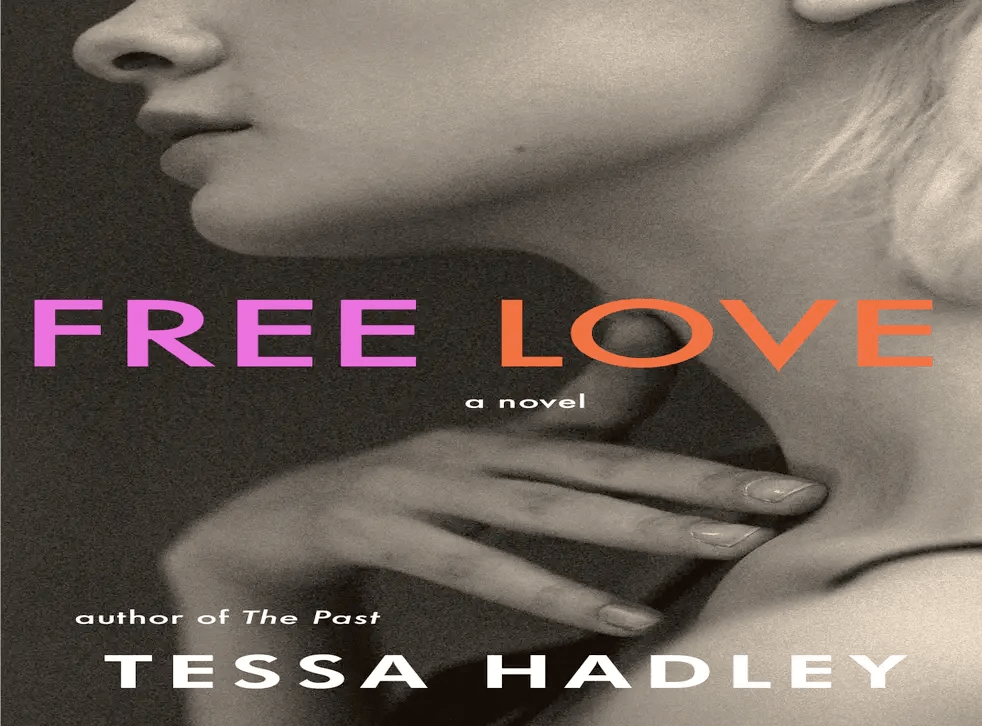
Phyllis Fischer, neither rich nor poor, not yet old but no longer young, lives in the London suburbs, keeping a tidy house, taking care of her husband (someone frightfully clever in the Foreign Office), and raising two young children. The Fischers have lived in Cairo but are now contentedly and quietly entombed in that borderland between city and country. Everyone knows how to behave. Everyone knows what is expected, until Nicky, the son of family friends, comes for dinner.

I have written here several times of my admiration of Tessa Hadley’s novels. I can think of very few writers for whose new work I wait so expectantly, so it took a lot of will power not to put everything else on hold when Free Love arrived on my doorstep (thanks to a friend at HarperCollins US). Deferred gratification has its own powerful appeal, so I decided to save the novel for a long flight when I would be free of distractions and duties and I could focus properly on devouring a work I knew I would enjoy. Hadley never disappoints; Free Love is a wonderful novel and enhances Hadley’s reputation as an especially insightful, compassionate, and humane writer.
The Fortune Men

Nadifa Mohamed reads from and discusses "The Fortune Men" Tickets, Tue, Jan  25, 2022 at 6:00 PM | Eventbrite

My classmates at school in London were a diverse bunch. Their parents had settled in England, traveling from places like Jamaica, Italy, India, Portugal, Cyprus, and Ireland to find work in the decades following the Second World War. All of them had stories to tell of discrimination and prejudice, and occasionally direct experience of racial hatred and violence. They knew what it felt like to be in the underclass. They had all seen the signs in the windows saying “No Blacks, No Irish”. They had all been refused service in restaurants and pubs. Beneath these everyday expressions of racial hatred lay something very dangerous, the deep-rooted inequality in Britain’s institutions and systems, and in processes that could lead so easily to people losing their freedoms or, even worse, their lives for no other reason than their faces didn’t fit.

Nadifa Mohamed’s novel, set in Cardiff in 1952, is based on the real-life story of Mahmood Mattan, a Somali sailor convicted and executed for the murder of a local shopkeeper, a murder he didn’t commit. A combination of fabricated evidence, corrupt police officers, and false witness statements based on nothing more than hatred of immigrants was enough to seal Mattan’s fate and send him to the gallows, leaving behind a grieving family. It’s a horrific tale, the type of story that we hear too frequently but that never loses its power to appall. Such stories don’t necessarily make good novels, and The Fortune Men, though affecting in many ways, somehow ultimately lacks the powerful punch it ought to have had. There’s so much to admire in Mohamed’s novel, but ultimately the man at the heart of this story, the complicated man who journeyed from Somalia to Wales and the hangman’s noose, never comes fully to life, and never quite becomes something more than a name in a newspaper clipping from seventy years ago.

Burnt Sugar

Burnt Sugar | Avni Doshi | Granta

My Christmas gifts included not only last year’s Booker Prize winner (The Promise), but also two of the titles shortlisted. I’ll get around to The Fortune Men in due course, but I was especially intrigued by Avni Doshi’s Burnt Sugar, not least because it’s unusual to see a debut novel make it to the shortlist of such a prestigious award. I started the novel with high hopes (it has a terrific opening line – “I would be lying if I said my mother’s misery has never given me pleasure”), but I tired of it quite quickly. Yet another novel about troubled mother-daughter relationships and the unreliability of memory? Enough already. It didn’t help that I found the whiny, self-obsessed narrator obnoxious. Avni Doshi is clearly very talented, but Burnt Sugar should have been a novella at most.

The Promise

There was a time many years ago when I was diligent about reading all the titles on the Booker Prize shortlist. I’ve grown out of that habit. Looking back over a list of the prize’s winners in the past fifteen or so years, I see I had read only one (Girl, Woman, Other by Bernardine Evaristo) before picking up the 2021 winner, The Promise. The novel was widely, and in some places wildly, praised when it appeared and again when it got the prize, so I was pleased when it showed up, neatly wrapped, under the Christmas tree.

It’s an ambitious novel, though not obviously so. The story itself is simple enough and follows from the mid-1980s to roughly the present day the declining fortunes of the Swarts, a white family who own a ramshackle farm not far from Pretoria. The novel opens with a gathering of the clan for the funeral of Ma and we’re quickly introduced to the grieving Pa (part owner of a reptile-themed amusement park), his three children, Amor, Astrid, and Anton, and some of the wider family. This is South Africa in the 1980s, so we also meet the black farm workers and servants. Among these is Salome, the old housemaid, to whom Ma had made a promise.

No spoilers here, so that’s enough about the plot. Suffice to say the Swart family sees plenty of death over the next 200 pages, and as for that fateful promise made to Salome you’ll have to read the book to find out what happens. I recommend you do. It may have its flaws (I didn’t like the intrusive, occasionally clumsy narrator), and it’s not “the most important book of the last ten years” (as it says on the cover), but it’s a powerful and affecting story through which the painful and hopeful recent history of South Africa is told. If you have read anything by some of the other greats of modern South African literature – Nadine Gordimer, J.M. Coetzee, and André Brink, for example – you may feel, as I did after finishing The Promise, that Damon Galgut is an exciting newcomer to that great community of writers.

The Art of Solitude

In Praise of Solitude - Los Angeles Review of Books

A great deal has been written in the past two years about how the pandemic, and especially the isolation it has demanded, has damaged the mental health of so many people. Forced to separate from others for long periods and to suspend many of the social rituals on which we depended previously, many have suffered greatly, not just from loneliness, but from depression and anxiety. Being alone is deeply troubling for many, and enforced solitude for long periods for those unprepared for it has led to sickness.

In the midst of this comes The Art of Solitude by Stephen Batchelor, a book the publisher calls a literary collage. The author, previously unknown to me, is a celebrated scholar of Buddhism and a former monk, someone who has sought the experience of being alone, learned from others who loved solitude, and thought deeply about its value. Batchelor’s book isn’t some dry, impartial thesis on the history of hermits or one of those sickly self-help manuals promoting the benefits of a solitary life. The Art of Solitude is something much more interesting. It’s a short and engaging set of reflections and observations about the experience of being alone and what that experience can teach us about living a good life with ourselves as individuals and with others. For me the most enjoyable part of the book was the weaving together of Batchelor’s personal journey with the wisdom of others who have engaged deeply with solitude. it’s an eclectic and fascinating bunch: Michel de Montaigne, the Buddha, Aldous Huxley, Agnes Martin, Vermeer, and more.

Some parts of Batchelor’s experience might alienate some readers. I’m thinking particularly of his exploration of the use of psychotropic drugs. No matter. He isn’t trying to convince or convert anyone and he’s certainly no crazy evangelist espousing one type of experience over another. The Art of Solitude is a sensitive, balanced, and nuanced account of one man’s personal experience of solitude and mindfulness. I learned a lot and can imagine returning to the book in the future.

It is easy in the world to live after the world’s opinion, it is easy in solitude to live after our own; but the great man/woman is he/she who in the midst of the crowd keeps with perfect sweetness the independence of solitude. (Emerson).

Last year’s reading

6 Business Books That Will Revolutionize Your Business and Change Your Life

Looking back at my reading in 2021 I see with some dismay that once again I read fewer titles than in the previous year. I offer in mitigation the excuse that some of the books – biographies of Bacon and Freud and especially the Channon letters – were very long. Reversing the trend of recent years, novels and stories dominated my reading last year (24) while non-fiction fell far behind (10).

It interests me that books about nature and biographies/memoirs made up almost all of the non-fiction pile. Some of them made a deep impression on me, but if forced to pick the best of the bunch I would have to choose the account of Ivor Gurney’s tragic and piteous life. I vowed this time last year to choose my novels more carefully and I think I succeeded. I read some wonderful fiction last year, with works by Kazuo Ishiguro, Niall Williams, and Francis Spufford standing out. It’s silly to try to pick one clear favorite, but MacLaverty’s latest collection and Ali Smith’s quartet stand out as especially memorable.

At my elbow is a small pile of ten books that will accompany me into 2022. I can’t wait to get started.

Small Things Like These

Small Things Like These by Claire Keegan | Audiobook | Audible.com

Discovering a new writer is still a thrill. I came across Claire Keegan and Small things like these when browsing the tables at McNally Jackson Books in SoHo recently. It’s a novella set in a small town in Ireland in the days leading to Christmas. It’s the 1980s but it could just as easily be the 1950s. The people work hard, go to Mass, respect and fear the Church. Hardship is familiar to many, and even those fortunate to be working are frugal, knowing how quickly fortunes can change.

Bill Furlong, the local coal merchant, is one of the blessed ones. A steady job, a loving wife, five dutiful daughters, Bill has much to be thankful for. But, entering his middle years, Bill is grappling with how to live a good life. Is it enough to count one’s blessings, walk a straight and steady path, work hard and care for his family? Or is a more active form of goodness required, taking risks to help a stranger and a stand against injustice?

On the evidence of this novella, Keegan is working within and adding to a tradition of storytelling very familiar to anyone who follows modern Irish literature, a tradition I associate with the likes of Enright, McGahern, and MacLaverty. Great writers all. I’m already looking forward to reading Keegan’s earlier works next year and keeping an eye out for new books by this talented writer.

Light Perpetual

Imagine a missile hitting a department store in London in 1944. Imagine the children shopping at that moment with their parents, those young, unlived lives obliterated in that second of heat and noise. It would make a good beginning to a story, wouldn’t it? But how much better would the story be if the tape, having moved forward just a little, could be re-wound and we instead imagine the missile falling a few seconds later or a hundred yards further on. What would happen to those same children twenty, thirty, fifty years later? What would the trajectory of a life have been if the trajectory of the missile had been slightly different? Imagine following those children’s lives knowing that they all grow from a common experience, the moment the bomb exploded (or didn’t explode), the moment the bomb fell on them (or fell safely somewhere else). Wouldn’t the story of their lives be so much more poignant in the knowledge that those lives came to maturity (or perhaps didn’t) because the beginning was ever so slightly different?

This is everyone’s experience. Turn left at the intersection instead of right. Leave the office an hour later or earlier. Buy the red scarf instead of the blue one. How is a life changed by a decision or by the accumulation of an infinite number of decisions? Light Perpetual follows the lives of six children extinguished by that V-2 rocket, lives saved and allowed to take their course over six decades of London history. Time passes. Everything ends. Whatever the choices you make (or don’t make).

The V2 attack on Woolworths – History of Sorts

Silverview

Although I’ve read many of his novels over the years and consider him a fine writer, I’ve never been one of those diehard fans that John Le Carré seemed to have in such large numbers. That has nothing to do with the fact that the spy story was his chosen genre. I’m a book snob in some respects, but not in that way. Le Carré was a brilliant novelist, not just a brilliant spy novelist, but I’ve never fully understood his appeal or the reverence he attracted.

Silverview was published after his death in December 2020. It will in some respects be familiar to anyone who has read one of his earlier books, set as it is among the cultured and well educated community of senior British spooks. It’s tightly plotted, meticulously constructed, and absorbing, just like all the Le Carré novels that came before it. But it also has something else – the feel, quite appropriately, of a valediction, a veteran’s farewell not just to the world of espionage, but to the craft of storytelling at which he had labored so skillfully for nearly sixty years.

Spy author John le Carre's final, elegiac novel released posthumously | The  Star

April in Spain

April in Spain by John Banville, Read by John Lee ‹ Literary Hub

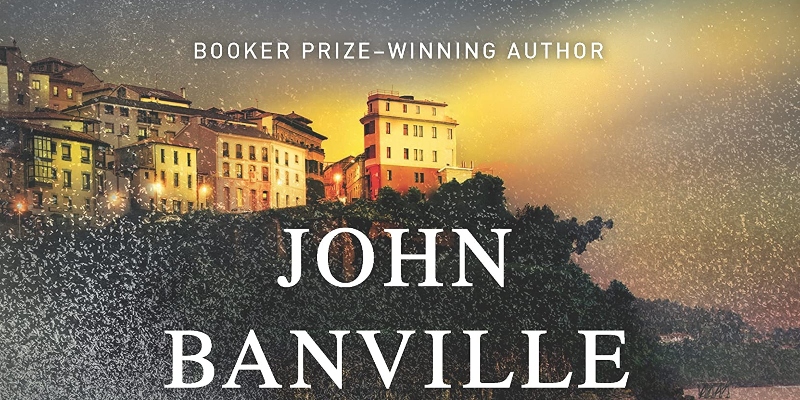
Dr. Quirke, a booze-sodden curmudgeon who happens to be Ireland’s state pathologist, is taking a vacation with his new wife in San Sebastian when he comes across a young woman he’s certain is an old friend of his daughter. But how is that possible? The young woman had been murdered by her brother in Ireland some time earlier, her body never found. A phone call to Dublin brings Quirke’s daughter to Spain, accompanied by one of Ireland’s finest, Inspector Strafford ….

A story that in the hands of a lesser writer might be a pleasing crime yarn is elevated by the beauty and elegance of John Banville’s prose. Anyone looking for something engrossing and somewhat comforting (well, as comforting as a story about murder, incest, and corruption can be) to read during the holidays could do worse than curl up for a couple of days with April in Spain. Something tells me we have a series in the making here.