Regular readers of The Times Literary Supplement know and love its NB column. It was written by James Campbell (J.C.) for more than twenty years. NB by J.C. is a compilation of those weekly columns between 2001 and 2020. J.C.’s patch is the literary world, but he interprets his job quite widely. Grammar, writerly reputations and rivalries, book prizes, pronunciation, the art of the translator, and much, much more attract his attention. Whatever the week’s topic, his style is unmistakable. Wry, teasing, ironic, and, more often than not, laugh-out-loud funny. This is a book to be dipped into and enjoyed time and time again.
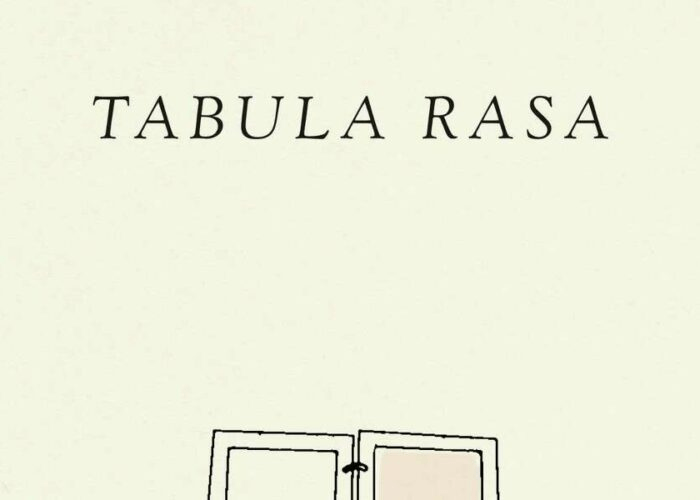
Although I have subscribed to The New Yorker for many years, I wasn’t at all familiar with John McPhee until I saw a copy of Tabula Rasa displayed at McNally Jackson’s store in SoHo in the run-up to the Christmas holidays. That now feels like culpable ignorance on my part, or at the very least a huge gap in my reading experience, because McPhee is something of a legend in American literature and regarded by many as a master of creative non-fiction. The elegant cover of the book was what drew my eye, and I knew after a quick glance at the opening essay in the collection that this was a must-read.
The pleasure I felt reading McPhee’s essays had little or nothing to do with their subject matter. Bridge building, fly fishing, training sessions with long-dead Princeton coaches, imposter syndrome. These, and many more, are subjects about which I know nothing and in which I have little interest. Yet when McPhee writes about them, my attention never wandered. Why? Because of the delight of seeing something done so well. The craft McPhee has mastered is fully visible in every essay, and the beauty of the overall effect is in no way compromised by its display. Read Tabula Rasa to marvel at good writing, if marveling is your thing, and to learn how tough and wonderful it is to turn experiences, memories, and feelings into the kind of prose that will surely last.
Bob Mortimer isn’t well known in the US, but he’s something of a national treasure in the UK, famous as a quirky and offbeat comedian and TV personality. The Clementine Complex (published in the UK as The Satsuma Complex) is a silly and slightly fantastical yarn, as quirky and offbeat as its author. If your taste in fiction runs towards the light, the comic, and the eccentric (imaginary talking squirrels feature here, for example), this is for you.
Werner Herzog’s uncompromising gaze appears to challenge the reader from the cover of his autobiography Every Man for Himself and God Against All. “This is me, like it or not”, he seems to be saying, and that is very much the tone of this collection of essays about his life and work. And what a life he has had. Born in a remote part of Bavaria during the Second World War and raised in poverty and hunger, Herzog turned himself into one of the world’s most celebrated and accomplished filmmakers, driven by extraordinary determination, single-mindedness, and a unique artistic vision.
I first discovered Herzog’s films when I was a regular visitor to The National Film Theatre in London in my 20s. They made a big impression on me at the time, and I still think of Fitzcarraldo as one of my favorite movies. But the chapters in this essay collection devoted to the making of those films were for me, somewhat surprisingly, the least interesting. What will stick with me is the account of his boyhood in Bavaria and those early years making his way in Munich. He was a maverick, daredevil, and rule breaker from the very beginning, and he grew into the most marvelous storyteller.
I didn’t plan it that way, but my reading in 2023 seems to have been dominated by Irish fiction. Firm favorites like Sebastian Barry and John Banville appeared, but what pleases me especially is how many new names featured in 2023. Books by Elaine Feeney, Megan Nolan, Claire Keegan, Sara Baume, and Louise Kennedy all showed up last year and I’m very glad they did.
There were few turkeys in my choices. That’s a good sign and shows I was choosing wisely. That hasn’t always been the case. But it makes it very hard to choose my Book of 2023, so much so that I’m forced to pick two. Old God’s Time by Sebastian Barry and After The Funeral by Tessa Hadley. Brilliant books by two of my favorite living writers.
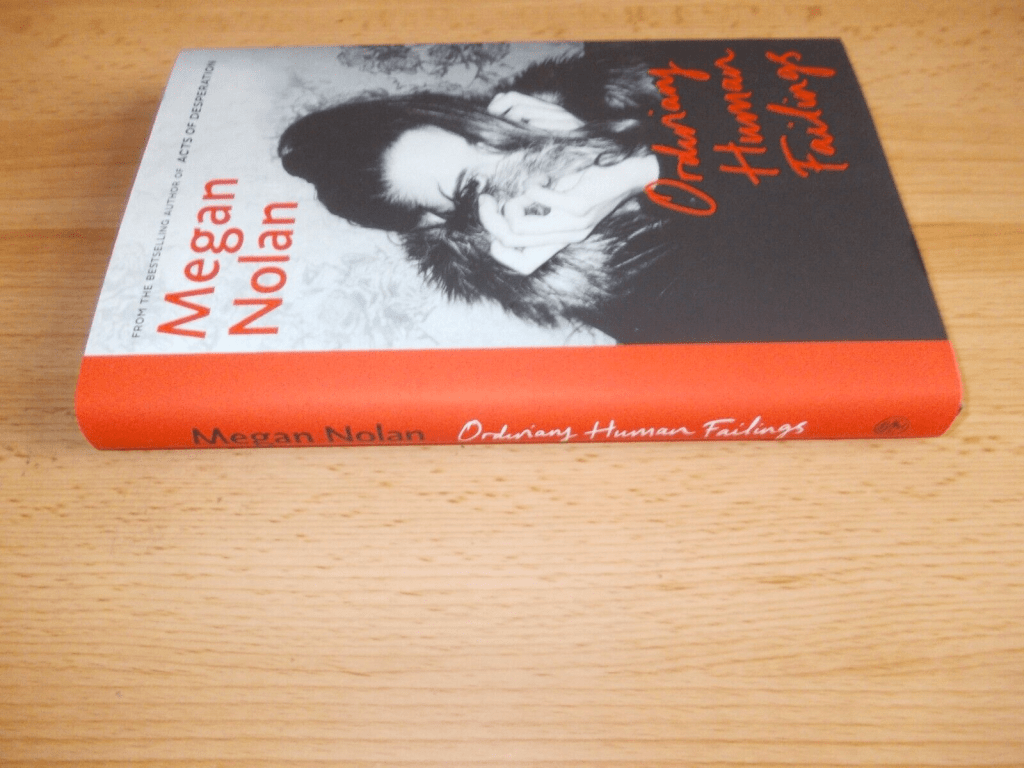
My last book of 2023 was Megan Nolan’s well-received second novel, Ordinary Human Failings. It started strongly and I found myself intrigued to see what would happen when Tom, a young and ambitious news journalist sent to cover the tragic and suspicious death of a child, met Carmel, the mother of the young girl accused of the crime. The early chapters are especially good, focusing on Carmel’s terrible alienation, her background in Ireland, and the sad (yet all too common) circumstances that led her to London. If only Nolan’s lens had kept its focus on Carmel and Tom. Instead, other characters come into view, notably Richie, Carmel’s broken down brother, and John, her father, and somehow the carefully built tension is lost and the overall spell gets broken. There’s some very good writing here, and I suspect Nolan may have great novels ahead of her, but Ordinary Human Failings was ultimately a disappointment.
Brian lives alone in a small, rented flat. He has a dead-end job. He has no contact with his family, no romantic relationships, and avoids all unnecessary interactions with colleagues. The closest thing he has to friends is the small group of film aficionados he meets on his nightly visits to the British Film Institute. His unhappy childhood has left him fearful, anxious, and determined to eliminate the risks and uncertainties of daily life. He knows how difficult that is but the occasional intrusion of unpleasant surprises (the local launderette closes without warning) and accidents (he is hospitalized after being hit by a car) make him all the more determined to try. The guiding principles of his life are Keep watch. Stick to routine. Guard against surprise.
Film is not just Brian’s passion. It’s his way of understanding the world and interacting with it. It affirms and tempers his solitude, and channels him to worlds of experience and feeling otherwise inaccessible. The months turn into years. Brian retires, and little changes in his routines, but the final page sees an anonymous act of kindness. Is it the start of something new?
Brian is an unusual and unusually affecting novel. Depictions of solitude can be patronizing, but Jeremy Cooper avoids that pitfall with a characterization that is generous, kind, and ultimately moving.
Susie Steiner, the author of the Manon Bradshaw trilogy that I just finished reading, died in 2022. Her plots may ostensibly have been all about dying (sometimes in the most gruesome and pathetic of circumstances), but her real preoccupations were really about the difficulties of living. How hard it is to grow old, how painful it can be to raise children, how frustrating work can be, and how tough marriages and families are. Her ability to write about such things without preaching and without talking down to readers, and to do it all in such an entertaining and empathetic way, is the heart of Steiner’s appeal.
The final book in the series, Remain Silent, was my least favorite. The flipping between past and present and the multiple perspectives were discordant and fractured my attention. In some way that I cannot pinpoint it all felt rushed and less cared for than its predecessors. That’s not to say I disliked the book, just that I felt disappointed after the highs of the previous two.
A 13 hour flight to Tokyo seemed like the perfect excuse to indulge the Manon Bradshaw habit I acquired after reading Missing, Presumed. Persons Unknown has the same cast of characters as the first book in the series, but it’s an altogether darker novel. The murder of a high-flying wealth manager leads detectives to a grotesque world of exploitation and violence, but DI Bradshaw is forced to the sidelines of the investigation because the initial suspect is none other than her adopted son.
Whatever superficial differences there might be between the stories, there is a common ingredient that makes this series work so well: credible and likable characters. The long flight passed quickly in Manon Bradshaw’s quirky company. I’m hooked and I have already bought the final book in the trilogy.
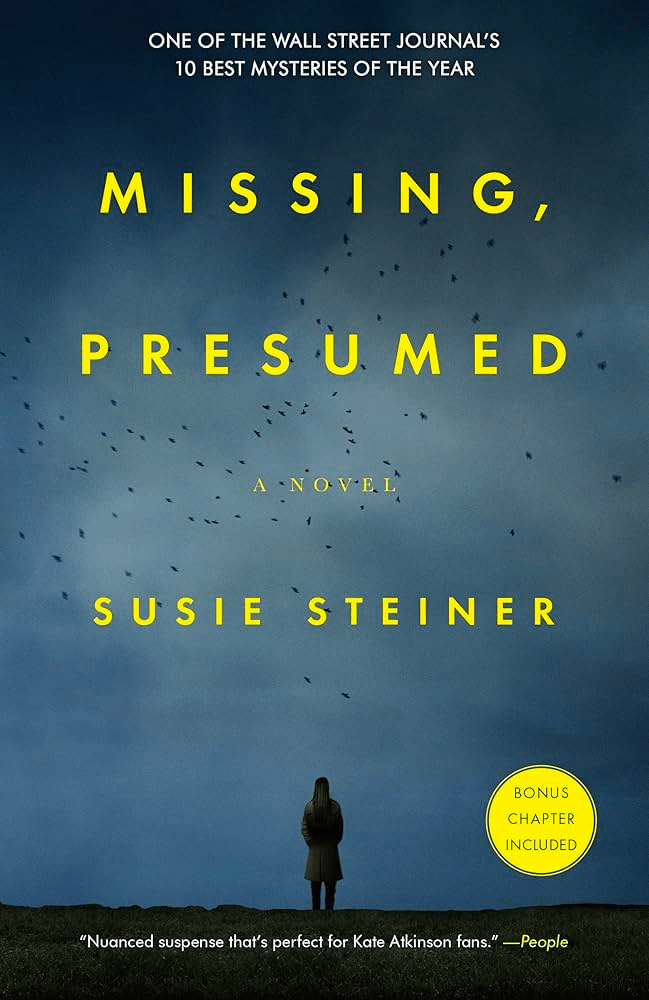
The flawed detective has at this point become a staple ingredient of police procedurals. From Colin Dexter’s Morse to Henning Mankell’s Wallander, we have all become accustomed to the clever sleuth whose personal life is a mess. DS Manon Bradshaw is squarely in that tradition. As Missing, Presumed opens, we find her on her latest Internet date with yet another comically unsuitable man. Just beneath Manon’s growing disillusionment with men and life in general lies a suspicion she can’t quite shift that she would be better off alone or that some character flaw makes her unsuited to a lasting relationship.
At work in the Cambridgeshire police service, things are somewhat different for Manon. She might lack flair, but she has doggedness and determination, and whatever world weariness might have blighted her personal life hasn’t yet spoiled her appetite for the job. The job on this occasion is finding out what has happened to a Ph.D student who goes missing from her home without explanation. A complicated love life and a privileged background add spice to what might otherwise have been an unremarkable missing persons case.
As is so often the case with this genre, the real fun lies less in the plot than it does in the characterization. I’m already looking forward to seeing what happens next wtih Manon Bradshwaw.






 Miscellaneous Musings