Musing About Kaiseki

The meaning of kaiseki is elusive.  Some of my Japanese acquaintances use the term quite generically and in much the same way as others might use haute cuisine, to refer to elaborate and expensive Japanese food, regardless of region, type, or ingredients.  For those who use it more specifically, kaiseki describes a multi-course dinner in which the flavor, texture, color, and appearance of the ingredients are carefully combined and artfully presented on beautiful tableware.  The most pedantic of foodies go even further, distinguishing the more generic kaiseki-ryori from cha-kaiseki, the simple meal served before a ceremonial tea.  It can all get very confusing very quickly, like so many other things in Japan.
IMG_1617

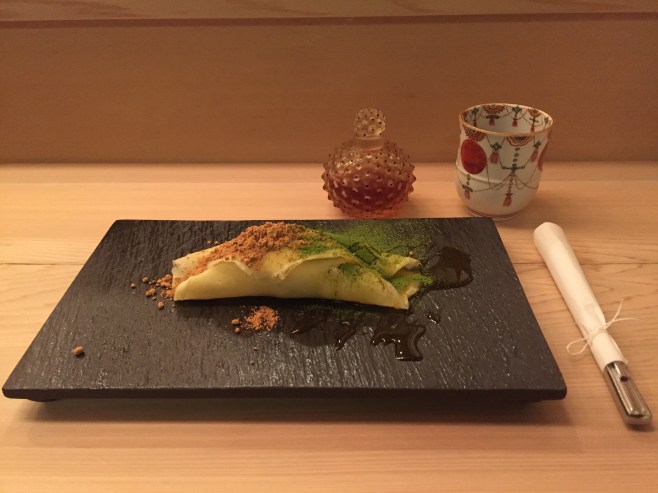
I’ve been fortunate enough to experience kaiseki at its best on a few occasions, most recently at Kichisan in Kyoto.  The picture above – a crepe stuffed with banana and yuzu sorbet drizzled with cognac – shows one of fourteen or so courses served that evening at a dinner that took nearly three hours.  It’s not the type of cuisine to suit the abstinent or the impatient.  What’s the point of preparing and eating food so elaborate, intricate and – let’s be honest – so extravagant?  It certainly has little or nothing to do with satisfying hunger, so the usual frame of reference seems unhelpful.  Of course, for the restaurateur it’s a money making proposition, but it’s probably less lucrative than many other types of commercial food ventures.   So what’s going on with kaiseki?

Unless you’re inclined to conclude that it’s just one of those victim-less crimes – the rapacious ripping off the gullible, the gluttonous, and the greedy – and need look no further, I think the answer can be found by looking at other experiences that are elaborate and transient.  Why do some people pay large sums to watch performance art or new orchestral music – events that require meticulous preparation, are expensive to stage, and that are often unrepeatable in the precise form in which they are experienced?  Can’t the appeal of kaiseki be explained in a similar way?

Japan: Kyoto

Kyoto-69643

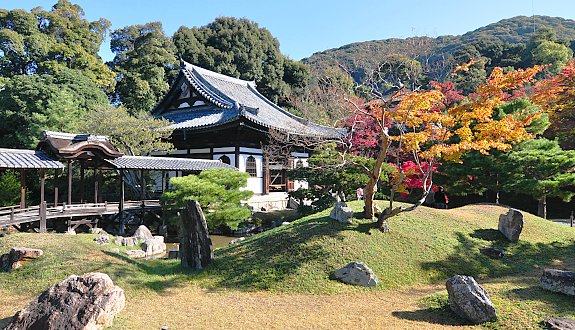
The cherry trees were just starting to flower when I arrived in Kyoto.  The appearance of the blossom marks the peak of the city’s tourism season, but the old, narrow streets leading to Kyomizu-dera temple were quiet and the shops still shuttered when I visited in the early morning.  The day had started grey and chilly.  By the time I had reached the Yasaka shrine a few hours later the sun had broken through and it was warm enough to have a coffee sitting outside and watch the occasional honeymooners in traditional costume walking in Maruyama park.

The spiritual and the temporal co-exist comfortably in most of the Japanese cities I have visited, but nowhere so well as they do in Kyoto.  The city’s many shrines and temples are far more than visitor attractions or historical monuments.  Like ancient parish churches in England, they feel like the heart of a persistent but understated religious culture.  In Kodai-ji and Chion-in temples and in Otani Sobyo I came across scores of Buddhists of all ages quietly praying or meditating, largely oblivious to those like me drawn to the buildings by more secular interests.  In Kyoto, a city otherwise as frenetic as any in Japan, the modern and the secular haven’t swept away a more enduring and contemplative spirit.

3927_02b


After The Quake

July 7th 2005.  I was in central London the day terrorists detonated suicide bombs on three underground trains and a bus.  Fifty-two people were killed and more than seven hundred injured.  What I remember particularly of that terrible day was an image that came to me very suddenly and that has stayed with me ever since: an image of the fabric of daily life being torn by the sudden and indiscriminate violence.  Looking through the ripped fabric, I felt I was looking into a parallel world in which everything seemed more or less familiar, but also slightly and permanently altered.  Feeling secure and safe no longer seemed possible.  In fact, security and safety suddenly seemed like childish ideas, innocent delusions shattered by the bombs as surely as the victims.  For a moment, the proximity of devastating violence created a completely new reality, a reality in which there was no longer a place for innocence.

That glimpse of a new reality cannot be sustained for long.  The thing you see so clearly for a short time through the torn fabric fades.   It’s impossible to live in the new reality because “normal life” repossesses you powerfully, at least until the next devastation rips the fabric once again.  But something small, deep, and fundamental is changed by proximity to death and injury on that scale.  Whatever you catch sight of momentarily through the torn veil – mortality, insecurity, whatever – stays with you and is never wiped away completely.  One’s life is changed, in a way that is perhaps imperceptible to others and inexplicable to oneself but that is real and profound nevertheless.

haruki-murakami_apaisado

The small, subtle, almost invisible changes wrought by violence are the subject of the six powerful short stories collected in Haruki Murakami’s After The Quake.  All the stories were inspired by the Kobe earthquake of 1995 in which more than 6,000 people died.  The quake looms in every story, less a backdrop than a malign influence shaping the lives of the characters.  It’s a provocative and transformational force, causing a woman in one story to leave her husband and a man in another to declare love that had been unspoken for years.

The essence of Murakami can be found in these stories.  Here you’ll find in miniature everything that has made him one of the most impressive, distinctive, and admired novelists writing today.  It’s very difficult to isolate what it is that makes his work so compelling for so many readers.  The prose is spare and stripped down.  Reading Murukami, I often find myself re-reading individual sentences trying to discover how something apparently so simple ends up being so distinctive and powerful.  His characters, so precariously and tenuously connected to life and to the world, so vulnerable and so fragile, look to me like heroes in a violent, dangerous, and uncertain world.

“Pay very close attention.  He is telling us the story of the free spirit that is doing everything it can to escape from within him.  That same kind of spirit is inside me, and inside you.  There – you can hear it, I’m sure: the hot breath, the shiver of the heart.”

Outline

There’s something a little unsettling about disliking a book that everyone else seems to have applauded.  What did I miss?  Why did the virtues acclaimed by others leave me cold?  These and similar questions were on my mind as I read Rachel Cusk’s critically admired novel.  I wanted to like it, tried hard to understand why it seemed to attract so many plaudits, and ended up resenting both the time and effort I had invested and the trivial return I got from the investment.

41aQW6ctt1L._SX331_BO1,204,203,200_

If I had looked more carefully at the book’s cover, I would have noticed that most of the fulsome comments were from fellow writers.  That’s always a give-away.  What writers usually admire in the work of other writers – style – is rarely what readers think is important, and Outlook is a novel in which literary style is particularly prominent. The idea of a series of conversations being used to illuminate the character of the narrator (who’s an author teaching creative writing to wannabe authors, of course!) is an interesting one, but only if the conversations themselves or what they reveal are interesting.  That simply isn’t the case here.  Without that simple human interest, the whole effort felt  self-referential, an arid exercise in style – a writer’s book, not a reader’s book.

St. Lucia

DSC_1398

Some Caribbean islands have wiped away every trace of their local culture, so determined have they been to create homogenized winter playgrounds for tourists from all over the world.  It’s a short-sighted policy because it fails to recognize that many visitors want more than beaches and pools, visitors who can afford to take their dollars, euros, or whatever to other destinations offering something more distinctive.

St. Lucia, like its near neighbor Grenada, seems to be looking for the middle road.  It helps that the island is naturally distinctive, with its volcanic, hilly landscape, lush vegetation and stunning waterfalls.  The government is attempting to diversify the island’s economic base, moving into areas such as port facilities and petroleum storage.  Of course, many visitors won’t know or care about this, content with the stunning beaches, dependable weather, and warm waters, but it’s vitally important for the St. Lucians and their future.

Ted Hughes: The Unauthorized Life

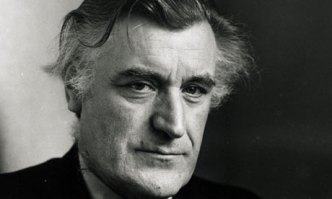
For me there’s one simple and true test of a great literary biography.  Does it lead you (or lead you back) to the subject’s work?  By this test, Jonathan Bate has succeeded in writing an outstanding biography.  Before picking up the book it had been many years since I had read or listened to Ted Hughes, but Bate’s close engagement with the poetry encouraged me to go back to what had once been familiar work.

Bate’s compelling and persuasive account of Hughes’s work and life initially had the support of the poet’s notoriously sensitive estate.  The fact that the support was withdrawn says a great deal more about Hughes’s executors than it does about the book.

Ted-Hughes-007

Surely they can’t have expected an exclusively “literary” study?   It hardly seems plausible that they didn’t understand the extraordinarily intimate connection between the life and the work.  More likely they were unhappy with some of the “revelations” about Hughes’s personal life.  They shouldn’t have been anxious.  Bate – a renowned literary scholar – is a scrupulously fair biographer and a critical admirer.  Even-handedness was in short supply in some earlier accounts of Hughes’s life, with many biographers (and others) eager to make him “responsible” (whatever that means) for the suicides of Sylvia Plath and Assia Wevill.  Ted Hughes has had to wait a long time for impartiality.

The central premise of the book is that Ted Hughes emerged as a poet of myths and archetypes but very gradually over a period of nearly forty years found a more personal and elegiac voice as he discovered ways to transmute his tragic personal experience – most particularly the suicide of Sylvia Plath – into verse of extraordinary power and appeal.  Bate makes the case persuasively, though I still believe some of the earliest poems are among the best written by Hughes. Whatever one makes of Hughes the man or Hughes the poet, this compelling account of his life and work is going to stand as the authoritative biography – authorized or not – for a very long time.

“It’s my suspicion that no poem can be a poem that is not a statement from the powers in control of our life, the ultimate suffering and decision in us.  It seems to me that this is poetry’s only real distinction from the literary forms that we call “not poetry””.  Ted Hughes.


Giorgio Morandi

“I personally couldn’t care less about a bunch of bottles – but I’m sure glad Morandi could”.  Chuck Close.

Giorgio-Morandi-Still-life

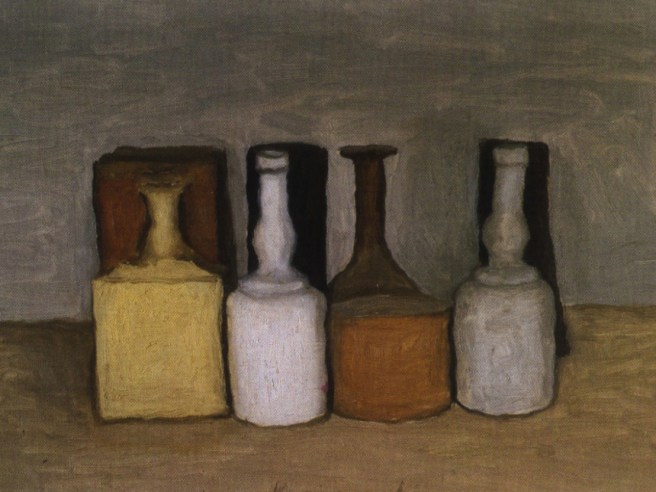
I once visited Morandi’s small studio in Bologna. It was something of a pilgrimage for me because I had loved his calm, meditative paintings of simple domestic objects for many years.  There can be few painters with such a recognizable style, a style applied to such a narrow range of subjects.

This small exhibition at the Center for Italian Modern Art (CIMA) focused on Morandi’s paintings from the 1930s, a relatively unproductive decade for the painter and one in which he completed fewer than a hundred paintings. Work from that era is mostly held in private collections and only rarely exhibited publicly.  It was wonderful to see these paintings, a reminder of how an artist’s repeated engagement with familiar objects can provoke a much wider and deeper contemplation.

CIMA opened only two years ago and is a great addition to New York’s gallery scene. It’s something of a secret treasure.  It occupies the fourth floor of a nondescript building in SoHo and only visitors with an appointment are admitted.  Once inside, a large, elegant gallery, all clean, white lines provides a lovely setting for paintings and sculpture.

Night

Millions of voices were silenced by the Holocaust, leaving millions of stories untold and millions of memories never shared.  The murdered multitude who will never bear witness speak through the testimonies of those who survived and recorded their experiences.  The literature of the Holocaust speaks, weeps, and remembers for the millions who will never again speak, weep, or remember.  That’s its power.  Every elegy, unique in itself, is sung by millions of voices we will otherwise never hear.  The soloist is a choir.  What’s individual is also communal.

tumblr_static_ulcsadu96lw80wgssgskcwws

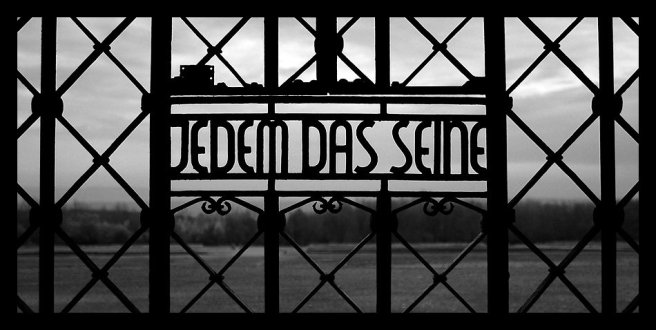
Night is Elie Wiesel’s account of the year he spent as a teenager in Auschwitz-Birkenau and Buchenwald, a year in which he lost his mother, father, and sister to the Nazis’ crematoria.  You may have read, as I have, many accounts of those years – the forced marches, the hunger, the beatings, and the systematic extermination of millions of Jews – but nothing can prepare you for Wiesel’s short memoir.

It’s impossible to find the words to describe how powerful, moving and beautiful Night is.  It’s a work of art, not just of reportage.  It should be read by everyone, preferably in Marion Wiesel’s translation and with Francois Mauriac’s original introduction from 1958.  Books such as these can change lives.  If we let them.  If we reflect and take their message deep inside ourselves.  If we do more than mourn and remember, but also take action in a world that has given us and continues to give us so many new horrors: apartheid, countless wars, genocides, and the forced migration of millions of innocent people.

“For the survivor who chooses to testify, it is clear: his duty is to bear witness for the dead and for the living.  He has no right to deprive future generations of a past that belongs to our collective memory.  To forget would not only be dangerous but offensive: to forget the dead would be akin to killing them a second time.”

The Bell Jar

I last read The Bell Jar in February 1980.  I know that because the date is penciled into the faded, yellowed paperback I picked from my bookshelves recently.  I’m not sure why I chose to re-read it now.  It may be because Sylvia Plath has been on my mind recently.  I’m reading and enjoying Jonathan Bate’s biography of her husband, the poet Ted Hughes, in which she features prominently.  (More about that another time).  Or perhaps it was because I realized I couldn’t remember a single thing about a novel that is supposed to be harrowing and unforgettable.  Thirty-six years since my first encounter seemed like as good a time as any to re-engage with it.

thebelljar

Several things surprised me.  I had forgotten the dominant tone – the controlled, but intense bitterness – and how extraordinarily angry a book it is, considering how young Plath was at the time. (She was only 30 years old when it was first published under a pseudonym in 1963). It strikes me now, though it didn’t in 1980, as the work of a very young writer.  I closed the novel for the last time feeling impressed and disappointed at the same time.  There is some wonderful and very unsettling writing in it and beautiful, startling imagery, but it also feels rushed, like something the author needed to excrete urgently.  Her true voice – frenzied and cynical – found its perfect expression in the late poems.  The Bell Jar feels like a dry run, someone testing how their final, prolonged scream might sound.

Noonday

The depiction of war (and other types of violence) is so casual in our culture that we need to be reminded by artists of all kinds what suffering it inflicts on individual lives and what that suffering really feels like.  War kills and maims individual people. Individuals just like me and just like you. It destroys the homes of individuals, robs individuals of their loved ones, their health, their security, and sometimes their sanity.  War is organized fighting between groups or nations, but what are nations and groups if they’re not collections of individual lives?

War and its scorching impact on the individual is the subject of so much of Pat Barker’s work.  Noonday completes her latest war trilogy, concluding what was started with Life Class and Toby’s Room.  The first two novels were set during The Great War.  Noonday finds the same characters twenty-five years later in London during the Blitz, but the long and dark shadow of The Somme can still be felt.  War in Barker’s novels is a live, looming presence – something hot, fetid, and suffocating.  It insinuates itself into people’s thoughts, feelings, and actions just as devastatingly as it destroys bodies and buildings.  It paralyzes the mind and spirit as well as the body.  Her description of London in 1940 is searing.  Corpses strewn on the rubble after the nighttime air raids.  Orphaned children wandering the streets.  The crowded bomb shelters.  The terror, the resignation, the exhilaration, and the routine heroism of individuals in war.

There’s some unusually powerful writing in Noonday, but it’s a flawed novel.  The plot relies too much on coincidence and Elinor’s and Paul’s characters don’t develop or rise from the page as realistically as they did in the earlier books. The introduction of Bertha adds almost nothing to the story and feels tentative. But Barker’s singular achievement here, just as in her previous Regeneration trilogy, is the truthful and necessary depiction of war and the havoc it wreaks in the lives and loves of real people.

noonday cover-xlarge