Mansaf

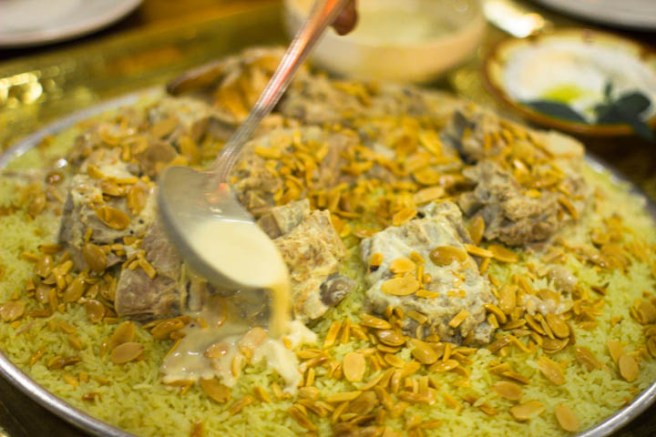
Mansaf – lamb cooked in a fermented yoghurt sauce, served with rice or bulgar, and garnished with almonds – is a traditional dish throughout the Arab world, but it’s especially popular in Jordan.  I tried it for the first time on a recent visit to Amman.  It’s typically served on special occasions – for example to welcome an honored guest or at weddings or birthday feasts – and usually eaten from a communal platter.

Jordanian_Food_Mansaf

Jordanians typically eat mansaf without using cutlery.  The rice, meat, and sauce are molded by hand (always the right hand!) into small balls.  I was told that it’s frowned upon to blow on the food no matter how hot it is!  Jordanians, the most courteous and hospitable of people in my experience, allowed me to use a spoon.   If you’ve never been to Jordan, there are hundred reasons to do so and mansaf is one of them.

Mothering Sunday

header_5

Back in 1983 Granta dedicated an issue of the magazine to the Best of Young British Novelists.  Almost all the authors featured have lasted the course and, more than thirty years later, some of them – Julian Barnes, Kazuo Ishiguro, Ian McEwan for example – have matured into outstanding writers.  Graham Swift was on the list.  Many years later he won the Booker prize for Last Orders, so he’s hardly unknown, but he hasn’t attracted the wide readership and huge sales of some of his contemporaries.  He isn’t especially prolific – I counted thirteen books in thirty-six years – and his work is more difficult to classify than his more famous peers, but I think he’s a better writer than almost all of them and one of a handful whose books I always buy as soon as they’re published.

Swift’s latest book is that rare thing – a novella.  Too short to be novels, too long to be short stories, novellas seem to have gone out of fashion.  Whether that’s because publishers discourage or dislike them (it’s tough to charge the price of a novel for something only a hundred pages or so long), or because it’s too challenging a form for most writers, I’m not sure.  It seems to suit certain writers: the careful and precise, those who weigh every word, those sensitive to the pace and rhythm of every sentence.

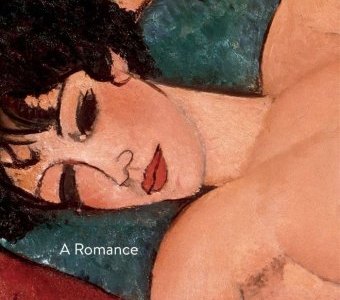
In Mothering Sunday, Jane Fairchild, celebrated novelist, looks back from old age to one momentous day in 1924 when she was a housemaid.  On the surface, it could hardly be a simpler story: a recollection of a few stolen hours with her middle class, soon-to-be married lover, Paul Sheringham.  She lies in bed one March morning, watching her lover get dressed before he leaves to join his fiancee for lunch, and then wanders naked and alone through his deserted house.  Simple, but in little more than a hundred pages, Swift gives us an entire world.  A world just emerging from the first world war but already preparing for the second.  A world of crumbling social norms and structures, a world dying quickly but unpredictably.  As Jane the housemaid, rising from her lover’s bed, sticky from sex and contraceptive cap still in place, moves naked through the empty house (the type of place she’s paid to clean), looking at paintings, touching dusty books, you feel not just an individual life on the brink of change, but a whole world.  The world of Paul and his kind is dying and out of its ashes a new one is emerging, one that will be claimed and shaped not by men and the former masters but by women and the sharp, strong, and confident servants like Jane.

This is an exquisite book, one that I can imagine reading over and over again in the future.  I loved every line of it.  How often can you say that?

London: Shepherd Market

I’m drawn in the busiest parts of the busiest cities to look for the spots that feel hidden.  Places that offer temporary relief from crowds and noise, places that feel as if they belong only to the locals.  Mayfair isn’t a neighborhood you’d normally associate with peace and quiet, but it has its havens if you know where to look.  I always try to snatch a few minutes to walk in Mount Street Gardens or sit in Farm Street church when I’m in the area.

Shepherd Market, though it’s hardly quiet in the evenings, is another one of those tucked-away places, sandwiched between Piccadilly and Curzon Street.  imagesLondon’s original May Fair was held here.  The square itself was laid out in 1735 and named after a local landowner called Edward Shepherd.  It’s always had a “colorful” reputation. Prostitutes and their clients were a feature of the neighborhood from the 18th century and it had a pretty seedy atmosphere until quite recently when a clean-up campaign was mounted by the local council and police. Now, with its historic pubs, art house cinema (one of the best in London, by the way), fancy shops, and a dozen or more restaurants, it’s become part of squeaky-clean Mayfair.

Much of its louche character may have been lost, but Shepherd Market still has one or two hidden gems.  Piccolo, an otherwise unexceptional takeaway sandwich shop, has a tiny basement cafe serving great English breakfasts, mostly to taxi drivers, police officers, and the very few visitors (like me) who know about it.  L’Artiste Muscle still occupies the same spot in the market where one of my favorite writers, Patrick Leigh Fermor, had dinner in 1938 before starting his epic walk across Europe to Constantinople.  Nearby is one of the best bookshops in London (Heywood Hill).  Even the Queen’s bookseller, Magg’s, has opened in the square, though I’m told that’s just a temporary move while it looks for a more permanent home.

Breakfast in Piccolo, followed (later in the day, of course) by a pint in The Market Tavern, a film at the Curzon Mayfair, and an hour or two browsing in the bookshops?  There are worse ways and places to spend your time.

Flying to Lebanon

IMG_1262

Don’t get excited.  I’m not talking about THAT Lebanon, the one famous for its cedar trees, its civil war, its refugee camps, and one of my favorite red wines, Chateau Musar.  I’m talking about Lebanon, New Hampshire, a more tranquil and – let’s be honest – altogether less exciting place.

I recently boarded the smallest plane I’ve ever traveled in – a nine-seat Cessna 402 – for the short flight from White Plains NY to Lebanon NH.  Guess what?  I learned something.  I learned that after 30+ years traveling around the world and probably tens of millions of miles of air travel, I hate small aircraft.  When it comes to matters of aviation, I’ve decided big is beautiful.  If someone builds an airplane the size of a city block, I’ll buy a ticket.  Just don’t ask me to fly in small planes.  Why?  Because when I’m flying I like to pretend I’m not flying, and that’s not possible in a Cessna.  Everything about the experience – every sight, every sound, every movement – reminds me that I’m doing something no one should be doing.  Flying.

It didn’t help that I left White Plains on a very stormy day.  I’m tempted to compare the take-off and landing to those nauseating roller coaster rides I used to loathe as a kid, but that wouldn’t be true.  When your stomach lurches on a roller coaster ride, the lurching is predictable.  You know when the feeling is coming and can prepare for it.  That wasn’t the case with my recent Cessna experience.  Just when I felt we were in for a period of settled air, the plane would shift violently left, right, up, or down in no predictable pattern.  Horrible.  The other thing I learned: I don’t want to watch pilots close-up.  I want them hidden behind a locked door, their magic and mystery intact and invisible to me.  I don’t need to see alarmingly young pilots grappling with the controls or looking bored.  I’m like one of those pre-Vatican 2 Catholics: I don’t need to see the priest’s performance to understand its significance.  Give me the mystique, not the reality.

T-site

Courtyard at Tsutaya T-Site Bookstore.  Daikanyama, Tokyo, Japan.
Courtyard at Tsutaya T-Site Bookstore. Daikanyama, Tokyo, Japan.

It’s perhaps a little strange that one of my favorite bookshops anywhere in the world should be one in which most of the books are inaccessible to me.  I can’t read Japanese, but somehow it doesn’t seem to matter when I visit T-site, something I always do when I’m in Tokyo.  The shop is in an upscale neighborhood called Daikanyama, an area that on Sunday afternoons teems with affluent young couples pushing strollers and with hipsters checking out the local high-end boutiques.

So what makes T-site so special?  It’s certainly a beautiful store, comprising three striking buildings connected by a central aisle on the ground floor.  It’s also, as you might expect in a country renowned for its efficiency and aesthetic sensibility, smartly designed.  My favorite part of the store is the Anjin Library and Lounge on the second floor, a beautiful haven where you can order a coffee or have a bite to eat surrounded by rare books and vintage magazines.

But the best thing about T-site is the hordes of book lovers that crowd the store.  I’m not exaggerating.  Whenever I visit, its aisles are packed with young people browsing, buying, reading, and chatting.  It can be tough to move around freely – that’s how popular this store has become. If bookshops are dying, the young people of Tokyo don’t seem to have got the message, thank goodness.

York, PA

York was supposed to be nothing more than a convenient stop-over, a place to break the long drive home after my visit to Fallingwater.  First impressions weren’t favorable.  It looked like one of those many once-prosperous towns hit hard by the economic downturn: slow-moving, a little shabby and neglected.  It’s sometimes hard to give a place a second look when you’re traveling.  Time is often tight and it’s tempting to move on without exploring beneath the surface of things.  I’m glad I resisted the temptation and lingered a little while in York.

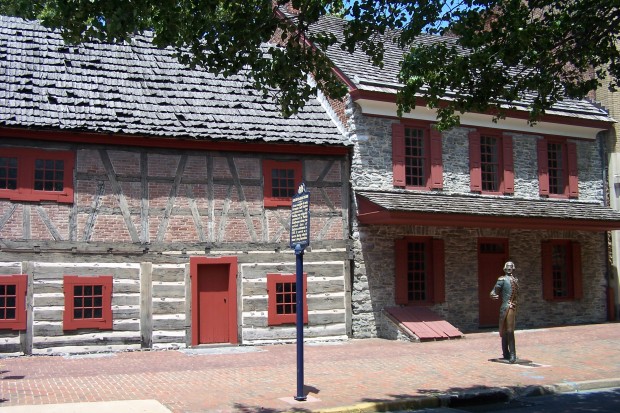
The first surprise was the abundance of historic buildings downtown, mostly brick-built but also some half-timbered, such as The Golden Plough tavern built in 1741.  One of these buildings, the Central Market Hall, built in 1888, felt like the beating heart of York, filled with small stalls selling produce of all kinds and a few eating places such as The Copper Crust Company where I had breakfast.

r41kafavcruduackwtxt

The more I wandered around the town, the more I noticed the beginnings of York’s tentative revival.  As in many places, it’s a revival that seems to be led by artists.  I stumbled across a number of small studios and galleries, including Marketview Arts Studio which offered affordable work and exhibition spaces to young artists.  And don’t overlook the culinary arts if you find yourself in York.  For a great dinner I’d recommend especially The Left Bank.

Fallingwater

“Study nature, love nature, stay close to nature.  It will never fail you”.  Frank Lloyd Wright.

It snowed the night before I visited Fallingwater for the first time.  The rhododendrons that surround the house had a fine coating of snow when I arrived on a sunny and cold morning for the first guided tour of the day. Approaching the house down the long driveway, I saw the paradox that lies at the heart of this beautiful house and Frank Lloyd Wright’s genius as an architect: that something made of steel, concrete, and glass should celebrate the natural world and remind you of its central significance in our lives.

The family that commissioned the house in the late 1930s, prosperous store owners from Pittsburgh, was surprised when it first saw the designs because they offered no view of the waterfall at the center of the site.  Wright patiently explained that his intention was that his houses should allow people to live in the natural world,  not to offer pretty views of it.

new_first

So much of the construction we see around us every day seeks to obliterate, marginalize, or smother the natural world.  Fallingwater represents the opposite viewpoint: a building that celebrates the integration of people into the environment.  Nearly 80 years after the Kaufmanns moved into their “modest cabin by the falls”, Wright’s gift to the world is much more than a house.  It’s a message about how to live.

Kinki Fish

1403768_685017868176350_1910796901_o

Whenever I go to Japan I look forward to trying cuisine that is often strikingly different from that I find at home. New ingredients, new tastes, textures and flavors – they’re all part of the magic of travel. With a Japanese friend as a guide, I recently went restaurant-hopping in Ebisu.  In the narrow streets around the train station I met the kinki fish for the first time.  Also commonly known in some places as idiot fish and more properly referred to as thornyhead rockfish, kinki is typically found in the northern Pacific.  Its habitat is the deep ocean, where low oxygen levels make it difficult for most species to survive.  Served whole and on the bone and with its crispy skin in place, kinki is a delicious and, it has to be said, very ugly fish.

Having enjoyed the food and being of a curious disposition, I decided to find out more about my kinki dinner guest, only to discover that it’s on a list of protected and at-risk species.   To say that spoiled my evening is an understatement and provoked this question. How can you be an adventurous and spontaneous traveler and at the same time be responsible to and aware of your environment?   I’m still thinking about that one and my encounter with the kinki fish.

The Dust That Falls From Dreams

Lord Flashheart, the randy fighter ace played by Rik Mayall in Blackadder Goes Forth, once jokingly complained of the First World War, “This damn war. The blood, the noise, the endless poetry”.  He could just as easily have said “the endless novels”, given how much inspiration that war has provided to novelists in recent years.

Louis de Bernières’ latest story is a sprawling 500 page family saga set mostly during and after “the war to end all wars”, as H.G. Wells described it.  It centers on the McCosh family, an affluent and somewhat eccentric clan living in Eltham, and more especially on the fates of its four daughters.

the-dust-that-falls-from-dreams

This is a soothing, comforting novel, a type of fiction that’s gone out of fashion, perhaps deservedly.  In the hands of a less gifted writer it might have turned out sentimental and silly, but de Bernières knows how to tell a story.  Reading it, I was reminded of watching Downton Abbey and that feeling of being drawn into an enchanting, seductive, and not entirely believable world.  There’s some vivid and occasionally very funny writing, and overall it’s never a strain to read, but the effort to portray the significance of the war often seems labored.  This is ground covered more subtly and effectively by the likes of Pat Barker and Sarah Waters.

Incidentally, the dust jacket of the U.S. hardback edition is one of the most attractive I’ve seen recently.

Sushi Musings

There’s a sushi restaurant in the Gotanda neighborhood of Tokyo.  It’s one of those places hidden in plain sight, easy to find only if you know it’s there, tucked among other undistinguished buildings on a featureless, busy street.  It’s small, with six seats at the counter and a private room at the back that no one ever seems to use.  It’s slightly rundown and looks like it hasn’t been modernized since it was first opened a few decades ago. I suspect it might fail any rigorous hygiene inspection.  No menu is offered and only cash is accepted.

The place is owned and run by the sushi chef and his clearly devoted wife.  He prepares and serves the sushi (usually nigiri) while she takes care of drinks, the bill, and everything else.  They’re a boisterous and hospitable pair, yelling welcomes when you arrive, farewells when you leave, and smiling all the time in between.  It feels like you’re eating in someone’s home.  Someone you can’t understand, who grins at you throughout your meal, tells you what to eat, and takes your money before you wander off happily into the night.

IMG_1622

Sushi is apparently the simplest of foods.  What other popular cuisine consists of only two ingredients: rice and fish?  But if you listen to the aficionados, they’ll tell you it’s very difficult food to pull off.  They’ll also argue endlessly and tiresomely about which of the two ingredients matters most, but will eventually agree that it’s the pairing of both that makes the difference.  In experienced and skilled hands, like those above, that simple combination can taste sublime.

If you ask me nicely and promise never to go there, I might tell you the name of the place in Gotanda.