A Little Life

maxresdefault

I knew nothing about this novel when I bought it.  All the kudos, all the hype that followed its appearance last year had somehow passed me by.  It wasn’t until I kept seeing – on the subway, on airplanes, on trains – so many people immersed in A Little Life, that it piqued my curiosity enough to pick it up at my local bookstore.   My first impressions weren’t positive and I came close to giving up on it on several occasions within the first hundred or so pages. It was partly the setting.  800+ pages about a quartet of entitled, privileged New Yorkers – a lawyer, actor, architect, and artist?  Not again, please. I’m very glad I stayed the course. If I had given up, I would have missed something special: a story that eventually grabbed me hard and wouldn’t let go even after I closed the book for the last time.

A Little Life is the story of Jude St. Francis, a brilliant, successful New York lawyer, and the friends who loved and admired him.  That sounds like the summary of a comforting, uplifting tale, doesn’t it?  But Jude has secrets that he can share with no one, secrets so terrible that success, love, friendship, and all the other gifts that usually sustain a life aren’t enough to rescue him, to pull him free from the pit of self-hatred in which years of childhood abuse and betrayal had buried him.

My summary makes A Little Life sound like a melodrama. In some respects it is.  It’s a novel with conspicuous faults.  It’s over-long and often over-written, cheaply sentimental in places.  A better, more confident editor would have pruned it hard.  But these shortcomings, though important, don’t diminish the novel and its power.  I can’t recall reading a story that traveled so convincingly to the heart of someone’s suffering, a suffering so ravaging that it hollowed out its victim, leaving nothing but the longing to die. Parts of it were very painful to read.  I so much wanted the redemptive power of love and friendship to be enough to heal Jude.  I wanted a happy ending, a tidy resolution, a comforting lie.  A Little Life didn’t oblige and that’s why it’s so good.

Dosai

dosa-1

Growing up in London it was never difficult to find a curry house, but only when I was older did I realize that most of the “Indian” restaurants weren’t Indian at all, but owned and operated by Bangladeshis and Pakistanis.  I was told once that the food served in London’s curry houses, unlike that in Bradford or the West Midlands, had more in common with the cuisine of Sylhet (a city in northern Bangladesh) than that of any part of India.  That was certainly my experience when I first went to India in 1979 and failed to find any of the dishes I had grown used to in London.  It took me a while to realize that, if I dug more deeply in London, I could find authentic regional Indian food without too much difficulty.  In fact, less than a mile from where I grew up, I could find several restaurants (in Drummond Street in Euston) that specialized in the vegetarian dishes of South India and one of its staples: dosai.

A dosa is a thin pancake made from a fermented batter consisting mainly of rice and urad beans.  The pancakes are usually stuffed with spicy vegetables and served with sambhar (a lentil broth) and some type of fiery chutney.  They’re a staple of South Indian cuisine but can now be found in many regions.  Whenever I return to India, one of the first things I do is to find somewhere that serves dosai for breakfast.  Watching a chef ladle the batter on to the griddle, spreading it thinly to make the pancake as crispy as possible, folding in the spicy vegetables – this has become a little ritual for me.  The texture and flavors of a dish that most Indians think of as little more than inexpensive, fast food somehow conjure up for me great memories of India … and London.


My Travel Wish List

World-Polit-Med-TMSWORLD

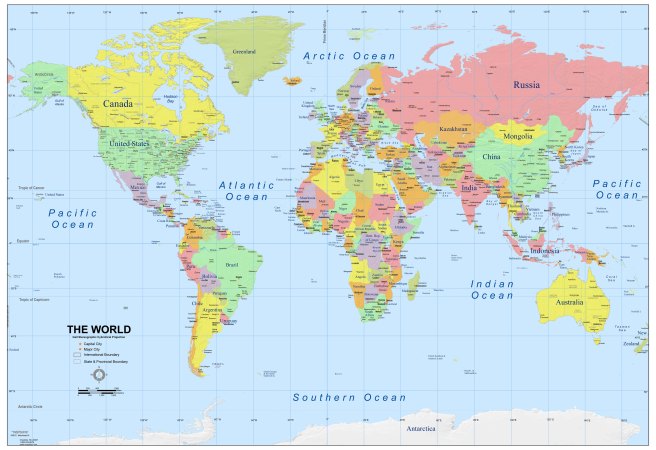
Counting the countries of the world.  That ought to be simple, right?  Well, yes and no.  Politics complicate things slightly.  Depending on whether you think Taiwan is a separate country or not, there are either 196 or 197 countries in the world.  I have visited only 63.

A favorite dinner table conversation with my kids is to name the top 10 countries that each of us would like to visit.  Here are mine.

  1. Ethiopia
  2. New Zealand
  3. Bhutan
  4. Tibet
  5. Tanzania (including Zanzibar)
  6. Peru
  7. Vietnam
  8. Laos
  9. Morocco
  10. Russia

I notice two things about my list.  First, it changes quite frequently, so I plan to check it again in a year’s time.  Second, as my kids point out to me, there are only nine countries on the list unless you think Tibet is a sovereign state (which I do).

Black Chronicles

TMC002_copy_600_443_80_s

The history of black Britons wasn’t part of the curriculum when I was growing up in London.  The history I remember learning in school – the causes of the first world war, Russia in the nineteenth century and so on – now seems to me to have been chosen precisely because it had nothing to do with me or my classmates.  We were black and white: Irish, Indian, Pakistani, Jamaican, and Italian, mostly born to immigrant families.  What did the fate of the Romanovs have to do with us?  Nothing.  That was the point.  It was equally irrelevant to all of us.

Later I learned of the arrival of Caribbean immigrants in 1948 to help re-build post-war London and saw the influx of South Asians following the crisis in Uganda in the 1970s.  Even then no one taught me that black men and women had been part of British life for hundreds of years, that there had been black Londoners long before The Windrush docked.  I knew nothing of the histories of my black friends and neither did they.  I wish I had seen then the wonderful exhibition of photographs at the National Portrait Gallery in London that I saw recently.

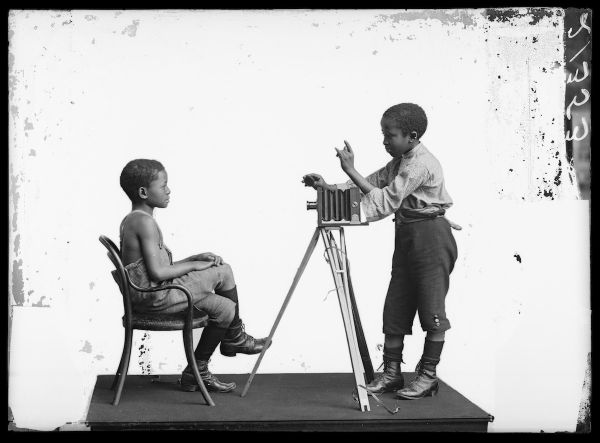
Black Chronicles shows more than forty photographs from the NPG’s own collection and the Hulton Archive.  New, large prints made from the original negatives portray black politicians, musicians, dignitaries and dancers from as early as 1862.  Many of the portraits are beautiful, but the exhibition does much more than bring together a set of striking images.   It did something my history teachers should have done more often: it taught me something important about where I was born.

Snowsfields

IMG_1731

Everyone knows that London is a city of villages, but it sometimes comes as a surprise to visitors and residents alike to find that the villages themselves are often collections of historic hamlets.  Many of these hamlets have been absorbed so completely into the larger local neighborhoods that even their names have been lost to history.  Some have survived, though sometimes you have to look hard to find them.  Wandering recently around Bermondsey (near London Bridge station), I came across one of these places: Snowsfields.

Bermondsey itself is an area with an ancient history.  There’s evidence of settlement in Roman times, and from the 11th century onward its importance grew as a center of ecclesiastical and political power.  From medieval times, it was the heart of London’s tanning and brewing industries, and even today you’ll find some great pubs in the area.  In recent years, it has become more gentrified, with galleries such as White Cube moving in, followed by restaurants, shops, and so on.  It’s a long way from the slum housing that plagued the neighborhood for much of the 19th and 20th centuries, leading to charitable projects in Snowsfields such as the Guinness Trust estate and Arthur’s Mission, both of which can still be seen.

I would have known none of this without the small plaque I found on the street outside the Guinness Trust estate as I walked around the area on a quiet, sunny Sunday afternoon.  Thank goodness for local history enthusiasts, proud of their neighborhoods, who remind of us of the rich history beneath our feet and protect the monuments – religious and secular – that would otherwise be wiped away by the rush to the future.

Howard Hodgkin

I don’t know how to write about paintings.  The reasons for this may be quite simple – that I lack the vocabulary, the training, or the confidence –  but I think it’s something else.  When I stand in front of a painting I like, searching for words to describe its effect on me strikes me as absurd.  I don’t look to music when I’m trying to express the impact a novel has on me, so why should words help me when it comes to paintings?

Gagosian-gallery-howard-hodgkin-sea_medium

I called into one of Gagosian’s galleries on the Upper East Side a few days ago to look at eighteen recent paintings by Howard Hodgkin.  I’ve loved his work for years.  He claims (sincerely or mischievously?) to be a representational painter, but I’ve never been able to relate his works to the titles he gives them or to see the figures and so on that others claim to identify so easily.  What I see are smears, splodges and stipples of color – nothing more. That’s not a complaint – quite the opposite.  Standing the other day in front of Hodgkin’s recent paintings,  all of them oil on wood, they had the same effect as almost all his paintings have had on me over the years.  They don’t provoke particular thoughts or specific feelings.  The sensation is something akin to being stunned or absorbed by color.

See.  I told you I don’t know how to write about paintings.  It doesn’t matter.  To quote Popeye, I yam what I yam.  And the paintings were gorgeous.

Van Gogh’s Bedrooms

20160305_bkp502

By the time he died at age 37, Van Gogh had lived in 37 separate homes in 23 cities.  Perhaps that’s why, when his wanderings came to an end and he had found the sanctuary of the Yellow House in Arles, he should want to paint The Bedroom not just once, but three times.  The two paintings normally found at the Van Gogh Museum in Amsterdam and the Musée D’Orsay in Paris have been brought together with the third at The Art Institute of Chicago for one of those “mega exhibitions” that breaks all attendance records and that curators and visitors seem to love.

It is an extraordinary exhibition that includes more than 30 of the artist’s works, a digital reconstruction of his bedroom, and findings from the latest scientific research into the three famous canvases.  None of this explains the remarkable popularity of this show, which I caught the day before it closed.  What is it that draws us in such numbers to these exhibitions?  After all, it isn’t an especially comfortable or enjoyable experience, standing in line for an hour, shuffling around at a snail’s pace, catching glimpses of pictures over other people’s shoulders.  Is it the rarity value –  the once-in-a-lifetime opportunity to see these beautiful paintings in the same room?  Perhaps.  Whatever the explanation, once you stand in front of them, the minor discomforts and irritations disappear and you’re left with those three timeless and glorious expressions of the artist’s quest for a home.

111/44

Blazing Hot Sun

British people love to talk about the weather but we’re amateurs compared to Indians.  So you can imagine what it was like yesterday when the mercury climbed in New Delhi to 111 degrees F (or 44C).  As I moved from meeting to meeting (wearing a suit and tie, of course), my hosts bombarded me with warnings and advice.  “Very dangerous weather, sir.  Very injurious to your health, sir.  Please be hydrating regularly, sir”.  To be fair to the Indians I met, and at the risk of reinforcing every stereotype you have about Brits, it was seriously hot.  111F isn’t a negligible increase on say 100F.  It turns an uncomfortably hot day into an unbearable one especially if, as was the case yesterday, a breeze blows and causes your face to feel like it’s being fried.

I was reminded of an August day in Riyadh more than thirty years ago.  No one thought to warn me, a rookie when it came to summers in the Middle East, to cover my hand when opening the door of my car which had been left standing all day in temperatures of +45 degrees C.  An immediate visit to the doctor’s office, days of ointments, bandages, and  painkillers – that wasn’t a mistake I made again.  But look on the bright side.  It gave me an anecdote to tell for years ahead and confirm all those prejudices about Brits and the weather.

Hauz Khas

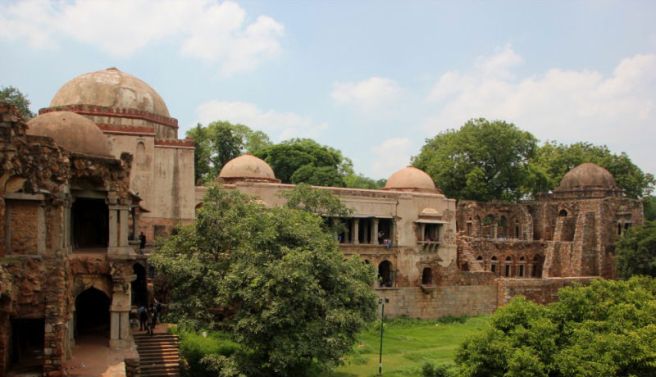
Hauz Khas Village, an “urban village” in south Delhi, started to get popular a few years ago when a number of restaurants, bars, and boutiques started to open.  The heart of the village, however, is ancient.  The neighborhood is named after the Farsi term for “royal tank” (or reservoir), and today there are several 14th century structures overlooking the water, including a small mosque, tombs, and the ruins of a theological college.  It’s a pretty place to visit, a refuge for a few hours from the craziness of mainstream Delhi.

Hauz_khas-Reaturants-_New_Delhi

The village has scores of shops, mostly selling high-end handmade clothing, and dozens of restaurants and bars which are lively at night.  It’s considered an upscale neighborhood, but even so it’s still unmistakably Delhi, with its broken pavements, dusty streets, and clutter.  It’s easily accessible by using by metro or by taxi.

The Hotel Years

roth-joseph-e1401206858971

What must it have been like to live in Germany in the 1920s and 1930s?  As you went about your everyday life, reading the newspapers and paying attention to politics as a good, conscientious citizen should, how clearly would you have seen the edge?  Would you have known that your country and its leaders were heading towards it, that the momentum was unstoppable, and that just beyond the edge was the slow fall into hell?  How visible were the signs, how loud were the alarm bells?  Would it have been possible, if you had been paying attention, to put the puzzle together, to see the whole picture as each piece was revealed?

On January 30th, 1933, the very same day that Hitler became Chancellor, Joseph Roth, a celebrated journalist for the Frankfurter Zeitung, took a train from Berlin to Paris and never set foot again in Germany.  The Hotel Years collects some of Roth’s journalism from the 1920s and 1930s. These sixty-four mostly short pieces (known as feuilletons, a lovely word I’d never heard previously), catch Germany and much of central Europe on the brink of catastrophe.

It wasn’t Roth’s style to write explicitly political pieces.  His feuilletons are mostly exquisite observations – of people sitting alone in hotel lobbies, of a traffic accident, of migrants waving to strangers on a quayside – perfect miniature lenses through which an entire society is glimpsed.  Did his contemporaries, perhaps sitting down over their morning coffee and reading those frequent articles in the Frankfurter Zeitung, sense anything of what we see so clearly 90 years later – a world disappearing, a way of life on the brink of extinction?