Addlands

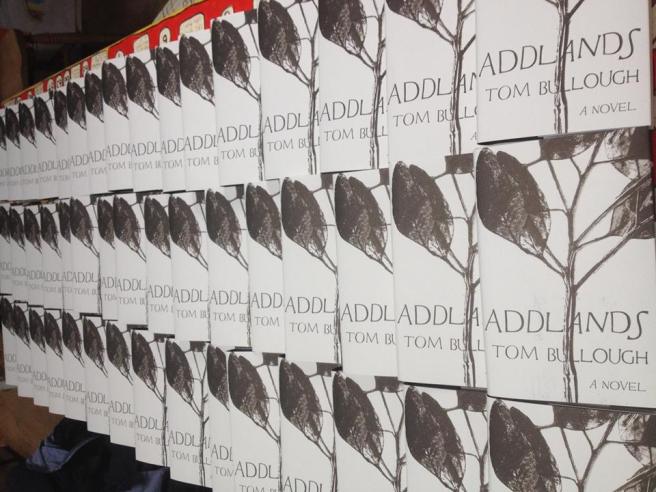
50-copies-of-Addlands

I had no idea novels such as Addlands were still being written.  Novels rooted in the countryside, novels about people’s intimate connections to the land and to nature – the kind of novels that used to be commonplace and that the likes of Zola, Hardy, and Lawrence once wrote.  I’m delighted I found this unforgettable book (through a review in the Financial Times, of all places), and not only because it introduced me to a wonderful new talent.  It woke me up to an entirely new genre: modern pastoral fiction.

Addlands is set in the Welsh borders and tells the story of a poor farming family, the Hamers,  over a period of seventy years (1941 to 2011).  Nothing much happens that doesn’t happen in any human life – birth, death, love, work, enmity – but Addlands has the force of an epic.  Reading it felt like listening to a long hymn to the land, to its rhythms and cycles, to humans and animals, and to the forces of the last century that are changing it all.

I considered having a dictionary close at hand when I started to read Addlands.  Whilcar, fescue, wittan, dankering – these and many other words previously unfamiliar to me appear in the first few pages of the novel.  I decided to forego the dictionary, thinking that the interruptions would obstruct my immersion into the extraordinarily vivid world created by Tom Bullough and into his sinuous, lyrical prose.  I think I was right.  This is a book to wash over you, to buffet you, to stun you.  Understanding some of the words can wait for the second or even third reading that a novel of this power and skill demands and merits.

“In crystalline, perfect, and stunning prose, Addlands does what literature should unstintingly aspire to do; make individual lives the essential stuff of epic.  The presence of this book – in shops, in homes, and in the minds of its readers – will improve the broken, atomized world.  It’s an astonishing work of words.”  Niall Griffiths.

New Zealand (South Island)

I’ve wanted to visit New Zealand for as long as I can remember.  A small gap between business commitments in Sydney and Tokyo gave me the opportunity I’d been looking for, so the first question was North Island or South Island?  Everyone I asked – local friends and others – seemed to agree.  If time is short, head south.

My flight from Sydney to Christchurch landed after midnight.  After renting a car and finding my hotel, it was nearly 2am by the time my head hit the pillow, but I got on the road by 7:30, hoping to make the most of my few days on the South Island.  Driving south from Christchurch in mist and light rain, I passed sheep farms, vineyards, and the occasional small town.  An expensive speeding ticket from a remarkably polite policeman was the only excitement of the first few hours.  Things changed when I arrived at Lake Tekapo.  Although the low cloud and mist obscured the mountains, they made a beautiful cloak for the lake, and the view from The Church of the Good Shepherd was eerie and unforgettable.

tekapo

Tekapao is the gateway to MacKenzie Country, a sparsely populated, wild, and craggy place.  I pulled off the road at the summit of Lindis Pass to take pictures of the snow-covered, misty mountains.  The weather continued to be uncooperative and it wasn’t until I reached Arrowtown, a pretty and historic gold mining town, and Queenstown that I started to get glimpses through the low cloud of the spectacular scenery for which the region is famous. By the time I strolled to Queenstown’s waterfront in the early evening, looking for somewhere for dinner, the clouds were starting to drift away and the views over Lake Wakatipu were gorgeous.

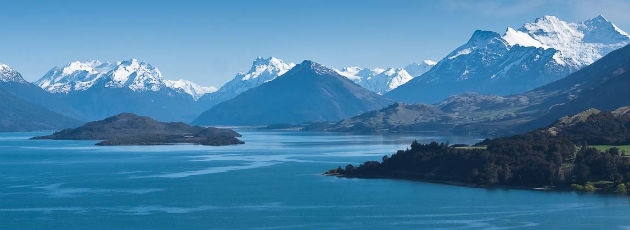
The next day was sunny, clear, and chilly, so I drove to Glenorchy, via 40 kilometers of the most beautiful mountain roads I have ever seen.  Although famous as the setting for many scenes in The Lord of the Rings movies, I found very few other visitors and had the wharf and the stunning views of the Humboldt Mountains all to myself.  My solitude continued for another 20 kilometers or so along an unmade road until I reached Paradise.  Can you imagine a more fitting place to end my few days in the South Island?

1328819077_large

Sydney Harbor

Sheets of rain fell the evening some friends took me for dinner at Sydney’s Opera House. The floodlit building, one of the most recognizable in the world, glowed in the darkness, making the massive bulk of the nearby Harbor Bridge look menacing.  The following morning the rain had cleared when I took the ferry from Barangaroo to Circular Quay just for the pleasure of passing under the bridge and seeing the Opera House drying out in the sunshine after the previous day’s flood.

Sydney-Opera-House-and-the-

Every visitor to Sydney is pulled towards its glorious harbor.  I’ve been to the city several times and no visit feels complete without a stroll past the Opera House and The Rocks, or a ferry ride to somewhere like Manly.  A massive extension to the Harbor is now underway as the former container port at Barangaroo is redeveloped into a new residential and entertainment district.  Enough of the work has been completed to get a sense of how the place will look overall.  My first impression wasn’t positive – the tall office and apartment buildings looked generic and undistinguished – but I should defer judgement until it’s finished in a year or so.  I hope it works out.  Sydney’s is one of the world’s most beautiful urban waterfronts and the developers are playing with something precious and iconic.

And, just in case you’re interested, that restaurant at the Opera House (Bennelong) was very good.

Newlands Valley

One day last week I hiked with my sons to Moss Force waterfall in Cumbria.  Near the top of the falls, we turned to look back along the Newlands Valley towards Keswick.   It was a rare sunny day in the Lake District and it’s hard to imagine a more beautiful view than the one of the wide valley we saw that afternoon.  No picture, especially one taken using a mobile phone, can do justice to the valley, but this at least gives some impression of it.

IMG_1967

The Newlands Valley isn’t the gentle, rolling landscape that persists in most people’s imaginations of the “typical” English countryside.  This is a dramatic, sparsely populated place, closer in style to the Scottish highlands.  It’s tempting to think that extraordinary, wild places of this kind can or will survive without us, but the truth is that their enduring beauty owes something to careful stewardship, not just by individual farmers and local authorities, but also to organizations such as the National Trust and English Heritage.  Time and time again during the wonderful few days I spent in Cumbria, I realized how precious such places are and how much effort and investment continues to be needed to make sure that they’re enjoyed by (and protected for) my sons, their children, and future generations.

Under The Harrow

hqdefault

Under The Harrow is another one of those debut novels that comes garlanded with rave pre-publication reviews.  It struck me as a competent enough psychological thriller.  The basic plot and setting – the gruesome murder of a young woman in a small English country town and its discovery by the victim’s sister- is certainly well-worn territory.  If anything distinguishes it from a hundred other novels otherwise much like it, it’s the siblings’ secrets and complicated relationship gradually laid bare by the tragedy.

Much has been made in the reviews of the mature, precise, and controlled prose style, and it’s certainly true that Flynn Berry writes like a much more experienced novelist.  It will be interesting to watch what she does next, even if I wasn’t especially impressed by her first effort.

Brexit Blues

brexit-shutterstock2

Although I remember the UK joining the European Economic Community in 1973, I was too young to pay any attention to the details.  For almost my entire life, the country in which I was born has been integrated politically and economically into the continent of Europe.  I have never looked at that integration as anything but positive.  Of course, I was aware that my enthusiasm for the EU wasn’t shared by all Britons, but their criticisms and complaints always seemed trivial and silly.  I could never take the “Little Englanders” very seriously.  Many, including most of the UK’s politicians, felt the same way.  That proved to be a very costly mistake.

More than forty years after its historic decision to join the EEC, Britons recently made another historic decision, this time to leave the EU.  Although that vote was only narrowly in favor of the exit, the choice was made and it’s irrevocable.  I’m convinced it’s one of the most important political decisions of my lifetime and one that will have very damaging consequences for the UK.

My family and I chose to make the United States our home ten years ago.  Throughout that time my sense of being a European and my pride in being a European have grown.  The idea that my children in the future might not be able to work and travel without restrictions in Europe is a horrible one for me.  They’re fortunate that they’re entitled to have Irish passports, so their future in Europe is secure, but others aren’t so lucky.  A young generation of British Europeans has been betrayed by older voters who were lied to by politicians eager to stoke the fires of fear and xenophobia.  All of us – young and old, Europhobes and Europhiles, wherever we live in the world and whatever our nationality – will be affected by that betrayal and those lies.


The Noise Of Time

Julian-Barnes-The-Noise-Of-Time

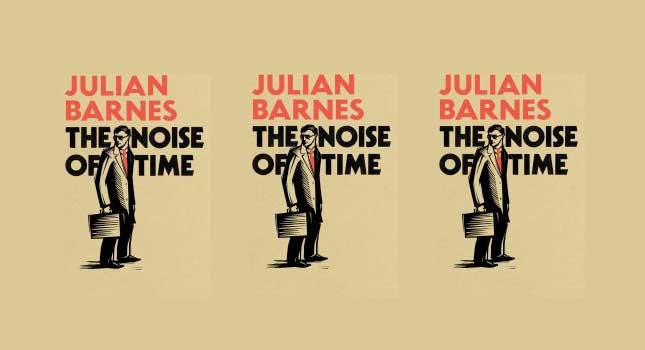
Imagine a regime so powerful, so intrusive, and so cruel that you lived under the constant threat of arrest, detention, interrogation, torture, and death.  Now imagine that such things could happen to you without warning, at any time of the day or night, not because you were a politician or activist, but because you were an artist, musician, or writer.  Would you be able to sleep, waiting for that knock on the door?  Or would you stand ready, dressed with your bag packed, for the fateful call?  How far would you go to survive and how much would you bend just to be able to work?  And even when the threat of violence had receded, when your fame protected you from physical abuse, how would you live with a regime that had total power to decide if your work was good or bad, permissible or illicit, available or banned?  Would you stand up for your artistic principles, risking state-imposed silence, or would you subtly comply with the state’s demands just to be given the opportunity to be heard?

For Dmitri Shostakovitch and many, many others (including Prokofiev, Akhmatova and Solzhenitsyn), these were not theoretical questions, but a daily reality under Stalin’s Soviet Union.  Julian Barnes’s new novel, The Noise of Time, imagines three phases of the composer’s life, three symbolic “Conversations with Power”.  The first centers on 1936 and the denunciation by the regime of his opera, Lady Macbeth of Mtinsk.  The second takes place in 1948 when the composer was compelled to attend the New York Peace Congress in New York and obliged to publicly denounce Stravinsky and others.  In the final Conversation with Power, in 1960, after Stalin’s death and the accession of Khrushchev, Shostakovitch was forced into membership of the Soviet Communist Party, something he had resisted his whole life.

Reading The Noise of Time is like listening to an interior monologue or a fearful, anxious soliloquy, never spoken aloud. The subject of that soliloquy is what happens when Art conflicts with Power.  What should the artist do in that conflict?  Seek to be a hero and risk losing his life and the lives of his loved ones?  Or look to survive by hiding, bending, and evading, in the hope that the art he produces will say the things he cannot dare to say in other ways?

Breaking Cover & Close Call

97816204061759781632865267

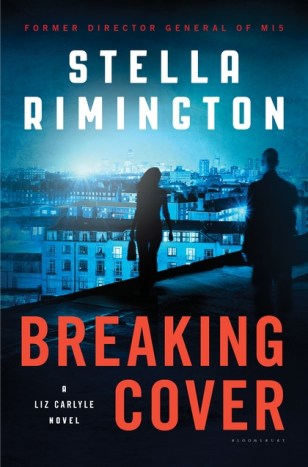
When the oppressively hot and humid days of a New York summer arrive I find it impossible to focus on “serious” fiction, so I asked a publishing friend to recommend some light, summer-friendly reading.  He sent me two spy novels by Stella Rimington.  Rimington is practically a household name in the UK, having been the first woman to lead its Security Service (MI5) and one of the first Director Generals to be publicly named by that notoriously secretive organization.

Both books proved to be easy, undemanding reads – just what I wanted.  Rimington’s world is a simple, clear-cut, and slightly old-fashioned one in which hard-working, dedicated intelligence officers outwit the bad guys, whether they’re home-grown British jihadis or old-style Russian spies.  The stories are simple enough (this isn’t Le Carré’s world of moral complexity and divided loyalties) and occasionally more-than-a-little implausible.  Who cares?  This is the kind of fiction where you suspend disbelief and go along for an enjoyable ride.

Measure For Measure

7410611810_690e8c40d8_o

It was especially interesting to see Shakespeare’s Measure for Measure during a uniquely rancorous election season in the U.S. and only two days after the UK electorate voted to leave the European Union, a campaign that was marked by an extraordinary level of deceit.  After all, this is a play partly about what we have a right to expect from our political leaders.  Is it OK for them to lie and to cheat?  Should they be held to higher ethical standards than the people they seek to lead?  And when they fail, as they so often do, should we forgive them?

This marked my first visit to the Hudson Valley Shakespeare Festival.  I can’t wait for the next time.  The setting was wonderful, with a view down the lawn overlooking the Hudson River.  The stage was nothing more than a square of dirt and the production had few props or costumes.  The result was focus in all the right places: on all that ethical and political intrigue and, of course, on Shakespeare’s beautiful verse.

High Dive

a4035985-9859-45e6-b12a-8ec4dd7351b5-460x276

I remember it very well.  The IRA’s attempt in 1984 to assassinate Margaret Thatcher and other prominent members of the Conservative government was the organization’s most audacious action of its long mainland terror campaign.  The idea was simple enough. An IRA volunteer planted a bomb in the Grand Hotel in Brighton, where the entire Cabinet was staying for the Conservative Party conference, and set the detonator 24 days in advance.  From the IRA’s perspective, the plan worked, at least in part.  The device exploded on schedule, causing devastation and generating huge publicity for the nationalist cause.  But the main target – the entire Conservative leadership, including the Prime Minister – escaped serious injury, though one Member of Parliament and some party officials were killed in the explosion.

The incident provides the background to Jonathan Lee’s novel High Dive but the bombing itself occupies only the last few pages.  The main part of the story focuses on three characters: the hotel’s deputy manager (tasked with preparing for the politicians’ visit), his teenage daughter working part-time at the hotel, and the volunteer who planted the bomb.  It captures three otherwise ordinary lives, each in the middle of a period of personal crisis, at an extraordinary moment.  The hotel manager, disappointed in his career and his marriage, facing serious illness; his daughter, temporarily adrift, looking for purpose and excitement; and the terrorist/freedom fighter, also searching for meaning.

High Dive made very little impression on me.  It’s one thing to show that the tragic victims of political violence (and even its perpetrators) are usually ordinary people – individuals with the same dreams, fears, and anxieties as everyone else.  It’s another to be able to elevate the ordinary and mundane into something significant.  Jonathan Lee wasn’t able to carry it off.