The Gifts of Reading

Coincidences, whether they amaze, unsettle, or delight, can have extraordinary power.  Some of that power, it seems to me, comes from the messages they deliver or the influences they can have on our thoughts, feelings, and actions.

I’m interested in what friends and acquaintances read.  I recently stayed in England with some old and dear friends I hadn’t seen for several years.  Jet lag woke me earlier than usual, so I used a little of the time before breakfast to browse their bookshelves for inspiration.  My friends, both keen walkers and lovers of remote places, had several books by an author previously unknown to me, Robert Macfarlane.  As I flicked through the pages of his books, reading occasional passages, Macfarlane’s voice spoke clearly and loudly in the quiet of the pre-dawn of his love for landscape, language, and the connections between both.  I made a note of the titles, planning to buy copies on my return home.

Image result for robert macfarlane the gifts of reading

A day or two later I traveled to London and went to an exhibition at the British Museum I had been intending to see for several weeks about a writer whose books I love, Patrick Leigh Fermor, and his friendship with two painters, John Craxton and Niko Ghika.  The thrilling exhibition celebrated their friendships, their shared love of the Hellenic world, and the influence of both on their writings and paintings.  I recall leaving the museum and walking into the chill and winter greyness of London and feeling the warmth and brightness of Crete, Hydra, and the Mani still warming me.  I walked a mile or so to Hatchards in Piccadilly, planning to browse the new releases and to look for a gift to send to my friends to thank them for their hospitality.  There, face up on a table, were copies of a tiny book by Macfarlane called The Gifts of Reading.  Without opening it, I bought a couple of copies, one for myself and one for my friends, pleased with the coincidence.  It was only a week later, flying back to New York, that I read the book and discovered that it’s partly about Patrick Leigh Fermor.

It felt like the completion of a circle.  The discovery of a new writer in my friends’ house, the lovely exhibition, the serendipitous appearance of Macfarlane’s book on a Hatchards’ tabletop, and its celebration of the author featured in the exhibition.  The Gifts of Reading is an exquisite miniature, a tiny meditation on friendship, generosity, and the power of books, and for me a reminder of my extraordinary good fortune.

Kettle’s Yard

When I lived in Cambridge, some twenty years ago now, I used to visit Kettle’s Yard fairly frequently.  It made a big impression on me.  It’s the former home of Jim Ede who was a curator of the Tate Gallery in the 1920s and 1930s, but who is now best known as a collector and as a friend to artists such as Henry Moore, Ben Nicholson and David Jones. After a period living abroad, mostly in Tangier and the Loire, Ede returned to England in 1956 to look for a home where he could create “a living place where works of art could be enjoyed, inherent to the domestic setting“. He found what he was looking for in Cambridge, a city he knew from his schooldays.  Four slum cottages were bought, knocked together and transformed into a home and into a showcase for the extraordinary collection of artworks he’d acquired from friends and contacts.

Image result for kettles yard

It’s not the paintings and sculptures that draw so many visitors to Kettle’s Yard, though its collection of works by the likes of Alfred Wallis and Ben Nicholson is outstanding.  Rather it’s Ede’s unique aesthetic, which he communicated so brilliantly in the book he wrote about the house, A Way of Life, that captivates and makes the place unique and so memorable.  It’s not an easy spirit to summarize, but it seems to me to have nothing to do with the sterile “interior design” that so many people strive for when creating the spaces in which they live.

Bildergebnis für Kettles yard

Ede believed that the organization of a living space, the careful positioning of paintings, furniture, sculpture, and natural materials such as pebbles and driftwood, should speak about the life lived in that space: its purpose and meaning.  He looked to reflect in his surroundings a harmony that he saw as an ideal elsewhere.  It’s that harmony – and the calm, contemplative spirit that comes with it – that delights visitors to Kettle’s Yard and draws them back. Ede bequeathed the house and its contents to the University of Cambridge so that future generations could enjoy the unique space he created and the spirit that infuses it.

Bildergebnis für Kettles yard

Carrington’s Letters

Image result for dora carrington

Other than Virginia Woolf, I can’t think of a central figure in The Bloomsbury Group who achieved real greatness. Many of those whose lives touched the fringes of the Group, T.S. Eliot, for example, or D.H. Lawrence, or John Maynard Keynes, grew into painters, poets, philosophers, and economists of huge distinction and global reputation, but Bloomsbury’s core members were mostly minor figures.

Yet the Group’s hold on the popular imagination continues to be huge, far greater than the work of its individual members merits.  The likes of Vanessa Bell, Lytton Strachey, Roger Fry, and Vita Sackville West are known by a large audience, but I wonder how many now ever read their books or look at their paintings. To explain the persistent power and appeal of Bloomsbury, you have to look beyond the work and focus on a word that would have meant nothing to Bloomsbury: lifestyle. The group’s contempt for suffocating social mores, its embrace of sexual freedom and equality, and its elevation of artistic effort seem perennially avant-garde, attracting new followers in every generation, regardless of the accomplishments of Bloomsbury’s leaders.

Dora Carrington is for many a standard bearer of the code by which Bloomsbury lived.  She was a minor painter, though she has loyal admirers and her reputation has grown over the years. A handful of her portraits (the best known of which is of Lytton Strachey – see below) can be found in prominent galleries and collections.  Her significance for those who admire her lies in the independence of her spirit and her determination to live on her own terms as both an artist and a woman.

Image result for leonora carrington lytton strachey

Those qualities shine through this wonderful collection of letters.  Carrington’s life wasn’t a conventionally happy one.  Her work got little recognition beyond Bloomsbury and her love for Strachey, a gay man, brought little real fulfillment for her.  Her suicide at the age of 38, only two months after his death, has come to define her in the eyes of many as a tragic figure.

Anne Chisholm has done an outstanding job editing the letters of this strange, complex, and uncompromising artist.  At their center stands her besotted and passionate commitment to Strachey, but there are also some lovely vignettes of Bloomsbury’s key figures, including Virginia Woolf and Mark Gertler, among others.  This isn’t a book to be read cover-to-cover, but something in which to dip occasionally to remind oneself of the extraordinary ideals of Bloomsbury and the fierce dedication of those who lived by them.

A Legacy of Spies

img_3259

Peter Guillam, a long-retired British spy living in quiet retirement in Brittany, receives a letter from his former employers, asking him to return to London to account for his part in a murky operation in Berlin in the early 1960s.  And so begins what seems to be Le Carré’s final visit to The Circus.

There’s plenty of the traditional “trade craft” here to delight fans of espionage novels, as well as bags of Cold War atmosphere, but this is a world away from the silliness of James Bond and Jason Bourne.  This is deeply serious stuff;  about growing old, about deceptions, disloyalty, and coming to terms with the past.

A Legacy of Spies feels like a long and final note of farewell.  It’s extraordinary to think that nearly fifty years have passed since Le Carré’s debut novel and the start of a writing career in which he has amassed millions of devoted followers and countless accolades.  If this proves to be the last we hear from The Circus, there’s at least some solace seeing an author bowing out with his powers undiminished and in complete control of a genre that he mastered a long time ago.

Tourism: an ugly business?

I made my second visit to Petra last week.  It’s one of the world’s unique places, a monument of incomparable beauty and grandeur. Like many popular historical sites, it attracts every year a huge number of tourists who contribute much-needed money to the fragile local economy. But mass tourism isn’t an entirely innocent or trouble-free phenomenon, an uncomplicated boon for visitors and locals alike.  Government agencies are becoming more and more aware of the environmental damage tourists do in places such as the Galapagos Islands, Iceland, and the Great Barrier Reef, and are taking steps to do something that would have been inconceivable a few years ago: discourage tourism.

The pernicious effects of tourism go beyond the environmental impact on fragile places.  In Petra last week, there were scores of children skipping school to sell worthless trinkets to visitors.  I saw a man kicking, viciously and repeatedly, one of the horses that take tourists around the monument.  These weren’t isolated incidents.  Signs around the site indicate the Jordanian government’s awareness of such abuses.

What’s the proper response to such things?  Stay at home, denying oneself the experience and the local economy the money it needs?  Complain to local authorities?  Refuse to use abusive services and find less harmful ways to contribute to local development?  None of this is easy.  A starting point is to be thoughtful and to recognize that each of us is part of a growing problem: the ugly underbelly of tourism.

1474930509720

I’timad-ud-Daulah

DSC01775-28600x450-29

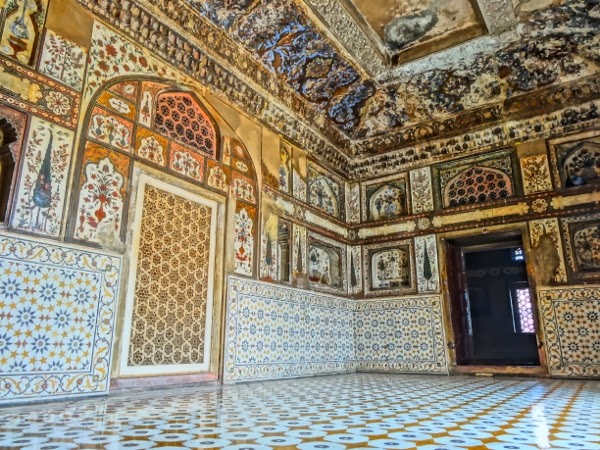
Very few of the millions who visit Agra every year to see the Taj Mahal make the short journey across the Yamuna river to visit I’timad-ud-Daulah.  It was an article by Simon Schama in the Financial Times that alerted me to the tomb commissioned by Nur Jahan and built in the 1620s to house the remains of her father, Mirza Ghiyas Beg.  I had missed it on four previous visits to Agra, but it was top of my “must see” list when I returned there recently.  It’s a little bit of a stretch to call it “forgotten”, as Schama does, but I had to myself on the morning I visited.

The locals refer to it as Baby Taj.  It’s easy enough to see why but the comparison is slightly insulting because it diminishes a monument that in some respects surpasses its much more famous neighbor.  While the building’s exterior is gorgeous, decorated with onyx, jasper and topaz, it’s when you step inside that you’re likely to be thunderstruck. The richly painted ceilings and walls, covered in plants and flowers, are a riot of color, and make the interior of the Taj itself seem restrained and monochrome.  Next time you’re in Agra, ask your tuk-tuk driver to head to I’timad-ud-Daulah, and take an hour to pay homage to the artists and craftsmen of seventeenth century India who created what is truly one of the wonders of the cultural world.

itmad-ud-daulah-agra

The Perfect Nanny

ows_151639952235853

A novel occasionally comes along that attracts hordes of readers to a genre that they normally wouldn’t consider.  The Fifty Shades trilogy did it for erotica and Gone Girl gave a similarly positive lift to sales of mysteries.  The Perfect Nanny, published as Chanson Douce in France and as Lullaby in other English-speaking markets, looks like it might have the same impact on … what?  The domestic thriller or readable literary fiction genres?  Leila Slimani’s novel is a difficult one to classify, but one thing’s for certain.  Having won the prestigious Prix Goncourt in France, it’s far better written than anything E.L. James or Gillian Flynn are ever likely to produce.

At first sight the setting might appear gruesome and schlocky.  An apparently perfect nanny, a godsend to two busy working parents, murders the small children in her care.  But the plot, sensitively handled and never titillating, is a vehicle for some profoundly serious issues: race, class, parenthood and domesticity.  It’s an unsettling book because it reminds us of the casualties and consequences of the “wanting it all” mindset and the profoundly unequal societies we are busy creating.

Delhi Days

This year marks the fortieth anniversary of my first visit to Delhi.  I have returned many times in those forty years and it remains one of my favorite cities.  I recently had the opportunity to spend a few days there with someone seeing it for the first time.  I enjoyed being a tour guide, accompanying her to Humayun’s Tomb, Gandhi Smriti, and the Lotus Temple.  February can be a lovely month in Delhi, with cool, clear days and that extraordinary light, and we were blessed with brilliant blue skies.

Delhi has been transformed since my first visit and although I find it easy to remember the city of those days and the wonder-struck teenager I was, I have no nostalgia for the dirty and crumbling Delhi of the late 1970s.  It’s a cleaner, less chaotic city for sure, but seeing it through someone else’s eyes made me realize it’s lost none of its power to amaze.

First-time visitors to India tend to arrive in the country laden with misconceptions, half-truths, and distortions.  This is what Chimamanda Ngozi Adichie describes as “the danger of a single story” in her wonderful TED Talk.  Those who love India and its people, those who are drawn back again and again – and I’m certainly one of them – know it’s a place of a billion stories.  Some of them are mine.

1034039879

Nakameguro

Nakameguro-10

When the cherry trees that line the Meguro river are heavy with blossom, the crowds fill the narrow streets of Nakameguro, a tiny neighborhood not far from Ebisu and Daikanyama.  On a chilly late January afternoon, with tidy mounds of snow reminding us of winter’s grip, I had few companions for my riverside stroll.  I try to visit the area whenever I’m in the city and have come to think of it as “Tokyo’s Brooklyn”.  With its dozens of small coffee shops, hipster boutiques, and salons (not to mention an absurd number of tiny dogs), it’s a favorite spot for Tokyo’s affluent younger residents, especially at weekends.  I always drop by Cow Books and Irma Records, two of my favorite stores, but, just like almost anywhere else in Tokyo, it’s the people-watching that takes me back to Nakameguro time and time again.

Elmet

Elmet-Featured-Image

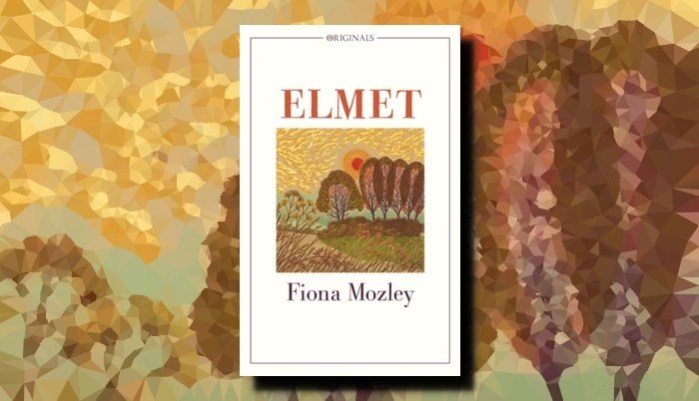
It’s hard to imagine that a novel so sure-footed and so confident as Elmet could be an author’s first.  Set in modern-day Yorkshire, it tells the story of two children, Cathy and Daniel, raised on the margins of society by their father. They live in the deep countryside in a makeshift house built by “Daddy”, go to school only intermittently, and live on what their father earns through prizefighting and other casual jobs.  With no friends and minimal interaction with society, the children form a powerful bond with their fearsome father, famed for his strength, courage, and brutality, and with the surrounding natural world.  Their efforts to create a rural idyll for themselves fail as modern “civilization” encroaches in the most hostile way imaginable.

Elmet is certainly not a perfect novel, but the scale of the achievement is such that it feels ungenerous to cavil at its shortcomings.  One of the many pleasures was the fun I had detecting the author’s literary influences.  Ted Hughes (obviously), Emily Brontë, and D.H. Lawrence stood out, but with time I think I could find others. I’m already looking forward to seeing what Fiona Mozley does next.