Dia:Beacon

Image result for dia beacon

A recent visit to Dia:Beacon, one of several I’ve made in the past ten years, gave me a new appreciation of the art of the curator.  The sheer size of the space poses difficult questions: how to divide the cavernous interior and how to organize the flow between the spaces to navigate visitors around such a diverse collection.  What struck me during my most recent visit was the agility and intelligence of the curators in their management of the space and the exhibits.

The collection itself continues to be an intriguing one.  A significant number of the pieces displayed feel safe and accessible, almost decorative.  There’s an emphasis on color or its absence, for example in the selection of works by Dan Flavin, Anne Truitt, Blinky Palermo and others.  The whole thing can begin to feel like a monument to the safer end of the 20th century canon until demanding individual pieces by the likes of Bruce Nauman suddenly jolt you out of the comfortable familiarity of Richard Serra and On Kawara.

Every visit to Dia:Beacon reminds me of what a treasure it is: the galleries, the space overall, the grounds, and even the first-rate bookstore.  It’s a place with just enough surprises to never feel completely familiar.

Avid Reader

The hordes of young people who still aspire to working in the publishing industry have dreams that look a lot like the professional life lived by Bob Gottlieb.  Over several decades working at Knopf and Simon & Schuster, Gottlieb shaped the books, careers, and occasionally the lives of many writers.  Some, such as Joseph Heller, Toni Morrison, Edna O’Brien, and John Le Carré, were literary heavyweights.  Others were stars of a different kind: Katherine Hepburn, Lauren Bacall, and Bill Clinton, for example.

Avid Reader, Gottlieb’s autobiography, manages to avoid the gossipy character and self-satisfied tone of many memoirs of the publishing industry.  In part, that’s because he realizes how fortunate he was in his choice of career and is endearingly modest about his achievements.  His mantra, that it’s the authors and the books that matter, tends to underplay the real contribution he made to some wonderful books, a contribution most of his admiring authors were more than happy to acknowledge.

I would have liked more detail about the process of editing and Gottlieb’s approach to it.  He was (and still is) an extremely accomplished editor.  Avid Reader, entertaining and informative as it is, never quite explains the “secret sauce”.

Image result for gottlieb avid reader

The Last Interview

The books I discover and buy are rarely those displayed on the table-tops of bookstores but very occasionally, among the overstocked dross, a gem catches my eye.  That happened recently in a store in Chelsea Market when I spotted The Last Interview and Other Conversations.  What a find that proved to be.

Image result for james baldwin the last interview and other conversations

The book collects four interviews given by James Baldwin between 1961 and 1987, the last one recorded just a few months before he died in Provence. They cover the preoccupations of his life and his work: the state of America, relationships between the races there, and the condition of being an exile.  Along the way, there are some wonderful anecdotes and vignettes, of Norman Mailer, Miles Davis, and Richard Wright among others. The distinctiveness and power of Baldwin’s voice – and the fierce independence of his mind and spirit – shout down through the years in these conversations.  “I don’t see anything in American life to aspire to.  Nothing at all.  It’s all so very false. So shallow, so plastic, so morally and ethically corrupt”.

What comes across so clearly in these transcripts is how passionate, uncompromising, and eloquent a witness he was in the world.  At the end of the interview with Studs Terkel, Baldwin said “I want to be an honest man.  And I want to be a good writer“.  He was both and how lucky we are that he was.

The Death of Truth

“It stupefies, it sickens, it infuriates.  The daily news fills one with wonder and awe: is it possible? is it happening? And of course with sickness and despair. The fixes, the scandals, the insanities, the treacheries, the idiocies, the lies, the pieties, the noise …”

Philip Roth wrote these words in 1961.  They are a reminder that the ability of American reality to disgust, to appall, and to confound didn’t begin with the election of Trump. One of the great achievements of Michiko Kakutani’s new book, The Death of Truth, is to hold up to our eyes two complementary truths: politicians lying and distorting for their own purposes is nothing new (think of Bush and his cabal justifying the war in Iraq); and the Trump administration’s mendacity is at a level so unparalleled that it represents a threat to the future of American democracy itself.

Image result for the death of truth kakutani

The central point of the book is simple enough.  Trump’s relentless lies add up to a planned and systematic distortion of reality and a carefully constructed narrative designed to exploit the fears and prejudices of his supporters. Deploying powerful technological tools unavailable to the ideologues of the past – right and left, fascist and communist – and aided by the trolls and bots of hostile foreign actors, Trump has tapped into segregated America’s relativism and narcissism to advance an Orwellian program designed to centralize power and wealth in the hands of a small minority.  Kakutani offers few remedies to withstand the onslaught: don’t give in to cynicism and defeatism, stand up for the institutions that have served America so well and for so long (especially a free press), and commit to the pursuit and expression of truth.  That last part looks especially tricky right now …

As you would expect from someone as well-read as Kakutani, the range of sources deployed to support her arguments is wide and varied but this is no dry academic thesis. There’s no attempt here to be cool, distant, and dispassionate.  This isn’t the calm and measured analysis of the Trump presidency that will come in time.  It’s a book hot with outrage and incredulity. That might prove to be its lasting value: a passionate but coherent indictment of terrible and dangerous times written up-close while the storm is raging around us.

Warlight

Image result for warlight by michael ondaatje

Warlight is only the second novel by Michael Ondaatje I’ve ever read.  Like millions of others, I loved The English Patient when it was published in 1992 and remember my appreciation of it being deepened by the Oscar-laden film adaption starring Ralph Fiennes and Juliette Binoche I saw a few years later. Fulsome reviews led me to his newest book.  It’s set in London in the years immediately following the second world war and is narrated by Nathaniel, a boy who, along with his sister, is abandoned mysteriously by his parents and left in the care of a collection of strange, elusive figures.  The care provided, if care it is, is minimal.  Nathaniel abandons school for a menial job in a London hotel and shady, nighttime dealings on London’s rivers and canals, ferrying undocumented greyhounds to illegal race tracks.  A sudden and violent encounter re-unites him with his mother, now revealed as an important figure in Britain’s secret intelligence operations in post-war Europe.

It was the dreamlike atmosphere of Warlight that stayed with me in the days after I finished reading it, the eeriness of postwar London’s rivers and bombed-out streets.  Something elusive and slippery pervades and dominates and that felt right for a novel that seems to me to be about how and what we remember and how memories, the ones we choose to recall and those we try to forget or ignore, make up so much of who we are.

West Cork Musings

Related image

Fifty years ago, a little boy, uncomfortable in his new shoes and unfamiliar tie, stood in a small village churchyard in West Cork and watched while his favorite uncle posed with his new bride for their wedding pictures.  From where he stood the boy could see clearly the church in which his grandfather and father had been baptized and the school house in which both had studied. The newly-married couple, both more than six feet tall with the black hair and blue eyes common in that place, looked like glamorous giants to the little boy, who blushed and fidgeted under the attention of relatives and family friends he hardly knew.

In the passing half century, the little boy grew, as little boys tend to do.  The much-loved uncle and aunt aged, as uncles and aunts tend to do, acquiring white hair along the way but keeping the clear blue eyes. The school had been extended.  The simple church, unchanged, now the setting for the latest in a long line of family weddings that have been held there since that day fifty years ago.  The bride, tall, black-haired and beautiful – just as her mother had been.  Permanence and change, side by side as they always are.

Names matter here.  Family names – surprisingly few – that root you in a place and connect you to others, the living and the long dead.  Personal names handed down from generation to generation, some – Cornelius and Florence, for instance – surprising to outsiders.  And ancient place names, individual parishes and farms, places of sad departures and longed-for returns.  Dromkeal and Corran, Farranfadda and Derrynakilla. Places marked by no signposts and separated by old stone walls, but distinct nonetheless through centuries of comings and goings, stories and memories.

Weddings here are uncommon reunions of the far-scattered and the local, of those who wouldn’t leave and those who couldn’t return, and celebrations of something more than a couple’s love.  This is clan-gathering, memory-sharing, storytelling time in a place everyone calls home.

Last Stories

In his long writing life it was commonplace for critics to compare William Trevor to Chekhov; that’s how highly he was considered as a writer of short stories.  Although he wrote twenty or so novels – some of them wonderful – the short story was his true métier, the craft at which he excelled and in which, at least in my opinion, he had no equals, not even Chekhov and Alice Munro.

Last Stories is just that: the final collection of ten stories from the master who died in 2016.  Isn’t there a rule somewhere that says the powers of great artists inevitably decline in old age?  If so, William Trevor didn’t get the message because some of these stories are as good as anything he ever wrote and I imagine will make other writers, even those supposedly at their peak, groan with envy.

I gave Last Stories to a friend as a birthday gift and later wondered if I had chosen wisely.  A thick mist of melancholy clings to these stories.  No one reads Trevor for the jokes and there’s no denying that the dignity he saw in the human condition was something hard-won from solitude and often from quiet, unremarked loneliness.  The brilliance of his craft, though never showy, stopped me repeatedly as I read this beautiful collection of miniatures.  What a magnificent storyteller he was.

William Trevor (William Trevor Cox), by Mark Gerson, February 1982 - NPG x88231 - © Mark Gerson / National Portrait Gallery, London

Day of the Dead

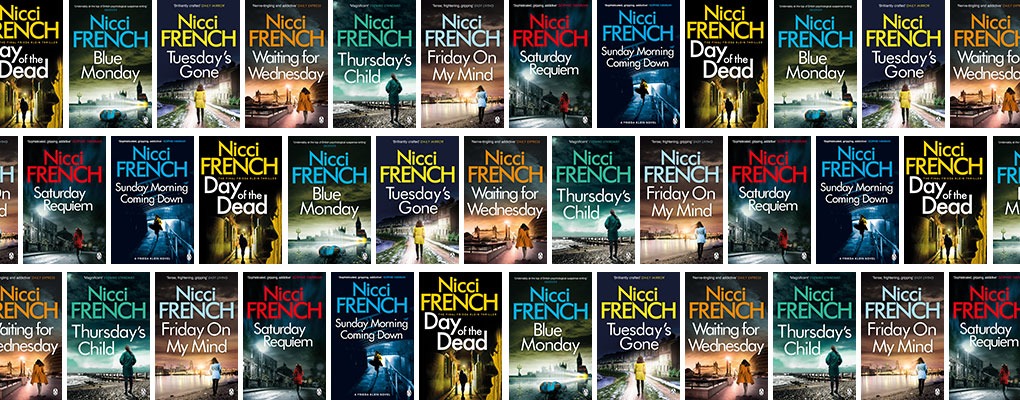
Day of the Dead is the eighth and final installment in the series of crime novels featuring the psychotherapist Frieda Klein and her would-be nemesis Dean Reeve.  By now it’s familiar fare: an implausible story line redeemed by likeable characters and driven by slick, cleverly plotted storytelling.  Frieda and Dean, having played cat-and-mouse over eight novels, are heading towards their inevitable final confrontation, the path to which is littered with more bloody corpses than London would normally expect to see in a year.  Fear not: I won’t spoil the fun by revealing the dénouement.  I’m going to miss this series, which I’ve been reading for several years.  It will be interesting to see where husband-and-wife team Nicci Gerard and Sean French go next.

Image result for day of the dead nicci french

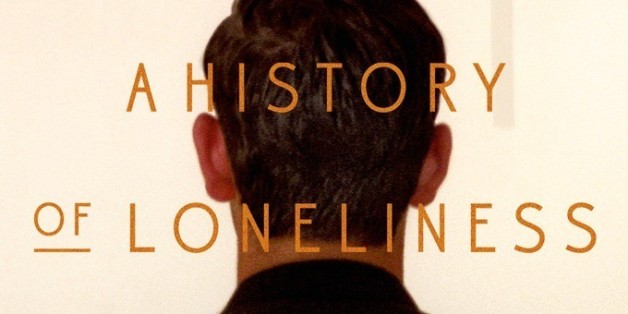
A History of Loneliness

Image result for boyne history of loneliness

The abuse of children over many decades by Roman Catholic clergy was made possible by many things but the silent complicity of otherwise blameless priests, who knew what their colleagues were doing but failed to report it, was key to its persistence.  John Boyne’s novel, set in Ireland, has as its central character one such witness, Father Odran Yates.  His crime isn’t the appalling cruelty practiced so relentlessly by other priests or the explicit covering-up by the bishops and cardinals of his church.  His sins are hubris and selfishness.  His self-regard, bolstered by the reverence accorded to priests over centuries, makes true connections with others impossible.  Yates can’t see this, nor what’s unfolding under his slightly upturned nose.  Of course, he has his own scars.  His father drowns one of his sons and then takes his own life.  His mother, embittered by this tragedy and her disappointing marriage, centers all her cloying affection and ambition on her remaining son.  Fr. Yates, preoccupied with his own clerical career and haunted by a sad and trivial infatuation with a waitress, sees the signs of persistent abuse in his colleague and friend but fails to act until the devastation is uncovered by others and the evidence is irrefutable.

Boyne’s novel isn’t perfect.  The interludes in Rome and Norway, for example, are unconvincing and clumsy.  Nevertheless, this is a haunting book.  Not for what it uncovers about the cruelty of the abusers or the suffering of the victims; nothing could be more shocking than the official accounts of what happened in those decades.  What lingers after closing A History of Loneliness is the tragic confirmation, if confirmation were needed, that the only thing necessary for the triumph of evil is that good people do nothing.

Packing My Library

Image result for personal library

For bibliophiles like me, it’s the stuff of nightmares.  Moving from a spacious farmhouse in the Loire Valley to a one-bedroom apartment in Manhattan sounds horrible enough, but on top of that having to pack a personal library of more than 30,000 books, deciding which to discard, which to store, and which to retain? Hideous.  That was the task faced by  Alberto Manguel and recounted with insight, humor, and elegance in his memoir, Packing My Library.  Señor Manguel, a distinguished critic, translator, library director and writer, thinks of himself primarily as a reader and book-lover, and what a sensitive and subtle one he is, gently teasing apart the tightly connected strands of possessiveness, obsessiveness, curiosity, commitment, and awe that bind all book lovers to their libraries.  A shelf in my own library is devoted to books about books and Packing My Library has now taken its place there alongside favorites by Diana Athill, Gabriel Zaid and others.

The book’s subtitle is “An elegy and ten digressions“.  It’s hard to miss the quality of pensiveness and sorrow that infuses the memoir, as if the act of boxing his precious library awoke an existential sadness, provoking melancholic reflections on creativity, collecting, solitude, faith, and much more.  Not that this is a humorless memoir.  Quite the opposite, in fact, but it’s serious, as all important books must be, and it gives appropriate place to the sorrow that’s inescapable in every life. The separation from his beloved library foreshadows the bigger letting-go that faces every one of us.