Human Relations & Other Difficulties

Why would one bother reading a collection of old book reviews, books one had never read or never intend to read? In the case of Human Relations And Other Difficulties, because Mary-Kay Wilmers, the editor of the London Review of Books, writes so wisely and so wittily about people and their relationships.  At first sight the reviews seem to cover a wide range of topics – the life of Alice James, menopause, Patty Hearst, Pears’ Cyclopedia, and much more – but Wilmers has something she turns to time and time again: the relationship between the sexes. Looking at the lives of Jean Rhys, Ann Fleming, Barbara Skelton, and Vita Sackville-West is the springboard for serious reflection on how men have constrained and limited women’s lives.  When I imagined Wilmers writing these pieces, the image of a skilled surgeon came into my mind: someone cool, meticulous, and appropriately removed, completely at ease with her tools and very clear about what she intended to do with them.  A witty surgeon admittedly, and one you might like to have dinner with, but someone engaged in a serious business.

Image result for mary kay wilmers human relations and other

Canterbury Cathedral

Image result for canterbury cathedral

England’s ancient cathedrals have always been special places for me.  Salisbury, Ely, Winchester, Wells, Lincoln – each so distinctive but all suffused with the same ineffable spirit.  Places of worship and prayer for those who worship and pray.  Objects of wonder for the more secular-minded who love these soaring spaces and the art and music that fills them.

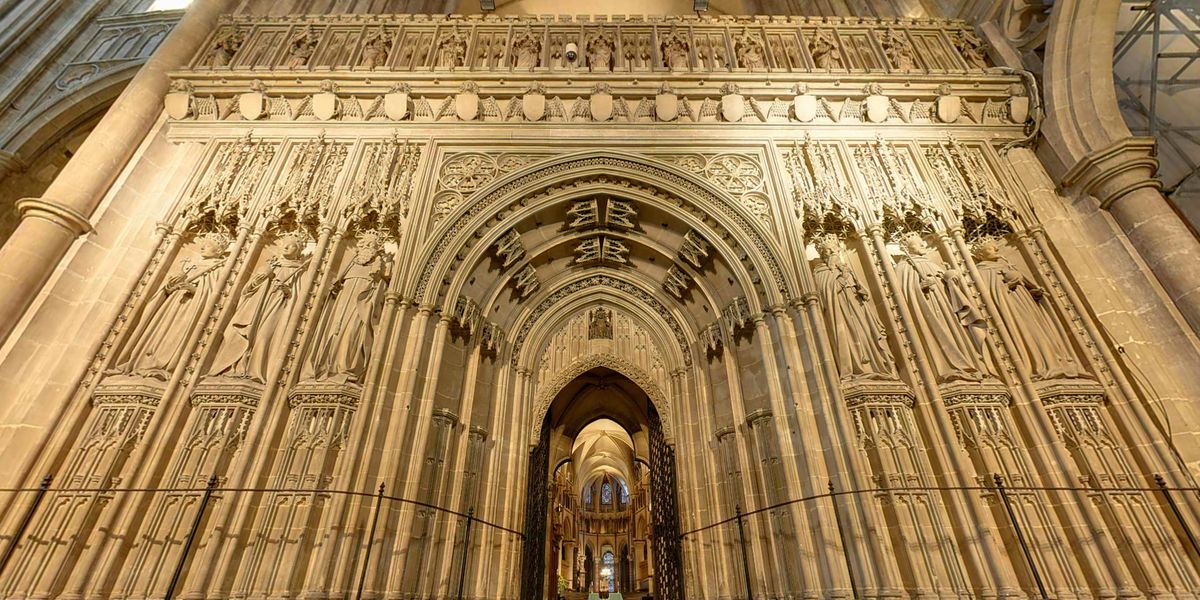
Stepping through the west door and into the nave of the cathedral at Canterbury is an overwhelming experience.  So much sheer beauty and so much more besides held within the giant and ancient stone space – ingenuity, aspiration, devotion, longing, humility, hubris, creativity.  Centuries of human feeling of every kind held in place by the arches, pillars, and walls of this glorious building and absorbed into its stone, wood, and plaster. And centuries of action, from coronations to murders.

Seeing Canterbury Cathedral for the first time through the eyes of one of my sons was unforgettable.  Its recumbent statues marking the resting places of long-dead kings, queens, princes, and archbishops; stone steps polished by the feet of centuries of pilgrims; brilliant stained glass; the 12th century wall paintings of St. Gabriel’s chapel, the music from the giant organ.  Don’t let anyone tell you that the young can’t be awestruck or that these beautiful buildings have lost their power.

Image result for st gabriel's chapel canterbury cathedral

Derby Day

Few sporting rivalries are as intense as the one between Manchester’s two football teams: United and City.  United fans like me, accustomed to decades of comfortable superiority and to sneering at their near neighbors, are now suffering as City dominates English football.  The teams, separated by a few miles and and lifelong allegiances, meet twice every season for the Manchester derby.  Don’t for one moment mistake this for a football match.  This is a confrontation between two warring tribes.  When a friend offered us four tickets to the recent derby, we all hopped on a plane behind enemy lines to City’s Etihad stadium.

The game took place on Armistice Day and the 100th anniversary of the end of the Great War.  A famous coach once said that football isn’t a matter of life and death; it’s far more important than that.  None of the 55,000 supporters in the stadium who fell silent to commemorate the war dead believe that, but you would never have guessed it once the first ball was kicked.

There’s no hiding it.  The game didn’t end well for my team and it was a painful reminder that United’s glory days aren’t coming back anytime soon.  But what a joy it was to watch it through the eyes of my sons.  Their first derby, their first visit to the Etihad’s cauldron of noise and passion, and a useful reminder that in the longest relationships it’s important to know how to handle an occasional disappointment.

Image result for manchester derby

Paris Echo

Image result for paris echo sebastian faulks

London is one of those ancient cities where history seems to intrude at every turn, a place where the membrane between the past and the present seems thin and permeable.  Just take a walk along one of its rivers or canals or wander the streets in almost any neighborhood and you’ll feel the presence of past generations.  Walking in London means walking a few feet above hidden graveyards and buried rivers, past the homes of the famous and the unremembered.  Preservation – always so important to Londoners – is about more than protecting precious buildings and writers like Iain Sinclair, Gillian Tindall, and Peter Ackroyd have taught us brilliantly that the past is never fully past in a great city.  All we have to do is look and listen carefully to see the glimpses and hear the echos everywhere.  T.S. Eliot expressed this perfectly in The Four Quartets

Time past and time future
What might have been and what has been
Point to one end, which is always present.

What I feel about London, Sebastian Faulks feels about Paris.  History in a city is “what gives depth to a day.  It’s the silver behind the glass.  Otherwise, life would be like being permanently on the Internet.  Click. Open. Shut. Click.” Hannah, an American historian, is in Paris to study the lives of women during the Nazi occupation, reading transcripts and interviewing survivors.  Her personal past – a bad relationship in Paris several years previously – presses on the present.  Tariq, a young, poor, and illegal immigrant from North Africa, explores a different Paris, its deprived banlieues, far from the tourist sites, in search of traces of the mother he barely knew.  Their individual and shared odysseys see them crisscrossing multiple versions of Paris – ancient and modern, rich and poor, yesterday’s and today’s – its streets and its Métro.  At every turn, images and voices from the past press against and poke through the thin veil separating Hannah and Tariq from the Paris of the 1940s.

But what’s our responsibility to the past?  Do we have a duty to remember?  Or does remembering prevent us living fully in the present?  How much history do you really need to know and is forgetting inevitable?  A Polish writer called Wislawa Szymborska understood this.  Those who knew/what was going on here/must make way for/those who know little./And less than little./And finally as little as nothing./In the grass that has overgrown/causes and effects/someone must be stretched out/blade of grass in his mouth/gazing at the clouds.

Antony and Cleopatra

Bad news for the young.  Some things are best and most fully enjoyed when one is older.  In fact, let’s go one step further.  Age and experience are essential to appreciate some things.  Malt whisky, for example, and certain Shakespeare plays like King Lear and (one of my favorites) Antony and Cleopatra.  I first read the great Roman play nearly forty years ago but had never seen a production until recently when I headed to The National Theatre in London to watch Ralph Fiennes and Sophie Okenedo take the lead roles.  What a gorgeous piece of work it is, filled with the most beautiful language and poetry, some of which I was surprised to find lodged in my memory since those days at university.

Image result for antony and cleopatra

I was a little disappointed by some aspects of the production.  The modern dress staging had a cold, corporate feel to it that blunted the sumptuousness of language and imagery for which the play is famous, and Ms. Okenedo’s Cleopatra could have used a little more grandeur and majesty for my taste.  No matter; this isn’t a theatre review.

Antony and Cleopatra was probably first performed in 1607, part of that extraordinary burst in creativity later in Shakespeare’s life that gave us King Lear, Macbeth, and The Tempest.  The plays of that period are all to some extent meditations on ageing and the conflicts that come with it, the days of waning powers and the realizations that accompany those days.  It’s worth remembering that Shakespeare was in his early forties in 1607, a time when average life expectancy in England was about 35 years, so it’s not surprising his thoughts would have been focused on old age and mortality.  And what a clear eye he had when it came to understanding the transience of power, the fickleness of achievements, careers, and reputations:

Kingdoms are clay; our dungy earth alike
Feeds beast as man. The nobleness of life
Is to do thus; when such a mutual pair
And such a twain can do ‘t, in which I bind,
On pain of punishment, the world to weet
We stand up peerless.

And, yes, it’s difficult to understand that when you’re young.

Now We Shall Be Entirely Free

Image result for andrew miller now we shall be entirely free

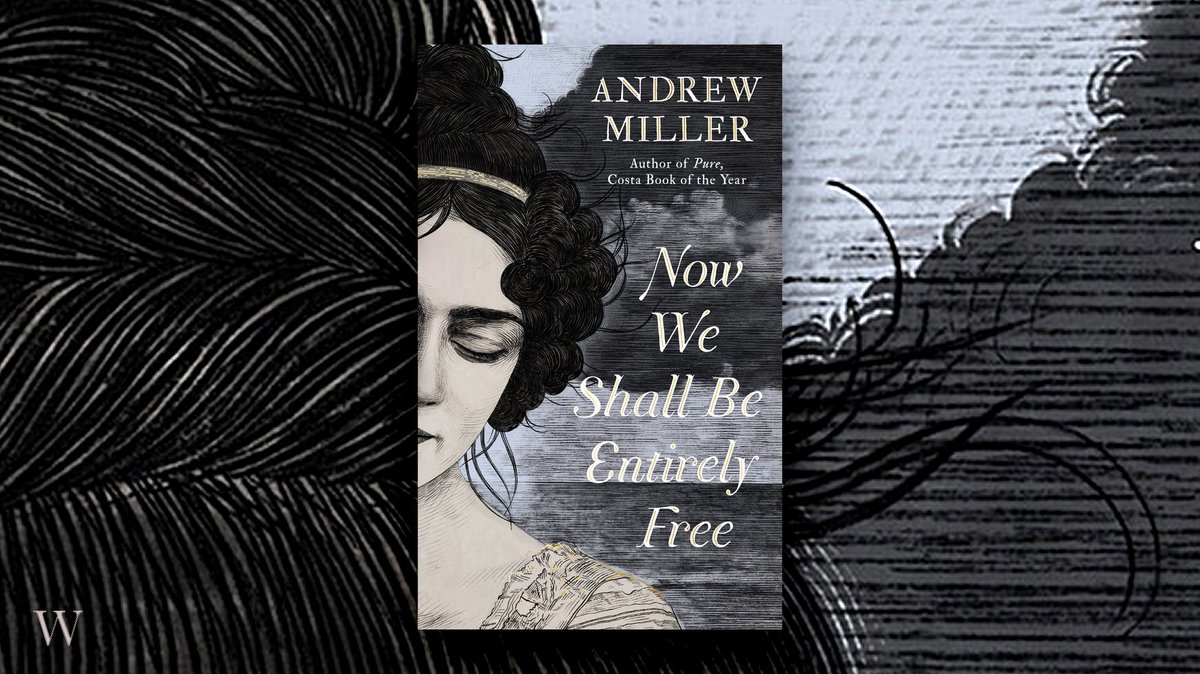
It was only after I started Andrew Miller’s new novel, set at the time of the Napoleonic Wars, that I realized how little historical fiction I read.  I’m not sure why that is.  Great stories can be set in any context, so there must be some reason why I avoid “period novels”.  In some cases it’s no more complex than being unable to relate to the setting in any meaningful way and that inability impeding my enjoyment. Ishiguro’s last book, The Buried Giant, set in the Dark Ages and a world of ogres, was a perfect example of this.  I enjoyed it less because I couldn’t imagine myself into the setting.

I discovered Now We Shall Be Entirely Free while waiting to see a friend at the publisher’s office.  The opening pages – brilliantly written and as seductive as any detective story – gripped me right away and I had to find out more about the mysterious, sick, and damaged soldier returning home to England from Spain in 1809.  The rest of the novel – part love story, part thriller – lived up to that wonderful first chapter.  Miller writes beautifully, with every word and phrase chosen and weighted with the care of a poet.  That alone would make me recommend this novel, but it’s also a surprisingly topical and resonant book about the cruel injuries of war, the enduring trauma of violence, and the curative powers of love.

A Town Like Alice

Image result for a town like alice

How do you select the books you read? For me, reviews certainly influence what I buy, especially those in the weekend edition of the Financial Times or Sunday’s New York Times.  Advertisements on bookselling websites have no sway whatsoever and I’m almost allergic to the clumsy “if you liked this, you’ll love this” trick that the likes of Amazon.com seem to think is so clever and influential.  Serendipity plays an occasional part, as does the guidance of friends, many of whom are voracious readers.  Their tastes and mine don’t seem to overlap very much but I’m always keen to hear what they recommend.  When one of those friends gave me A Town Like Alice for my birthday and said it was one of her all-time favorites, I was intrigued to read it.  Other than a vague awareness of it and its author, Nevil Shute, I knew nothing.

I can see now why my friend thinks so highly of it. The story it tells is a powerful one and its impact is all the greater because Shute’s style is so readable.  In some respects it’s clearly a product of the late 1940s, not least in its uncomfortable descriptions of the Japanese in Malaya during the Second World War and of the Australian aborigines in the years immediately after. But it’s far more than a quaint and entertaining period piece.  The character of Jean Paget, moving as she does from the drudgery of wartime London to the cruelties of detention in occupied Malaya and then to the Australian outback in the years after the conflict, is an extraordinary precursor of the strong, independent women everyone takes for granted in fiction today.

Iceland Musings

“Accidental incest. It’s a problem here”.  Quite an opening to a conversation, don’t you think?  Sitting at a bar in the center of Reykjavik, I was introduced by a business acquaintance to one of the least expected hazards of living in a country with fewer than 400,000 people and with a long history of isolation from the rest of the world.  Of course, Icelanders, an imaginative and ingenious bunch in my experience, have a solution to the tricky problem of inadvertently propositioning a close relative in a bar: a smartphone app that displays your lineage (back to the 9th century in the case of my acquaintance) and tells you if you’re related to the man or woman to whom you’re attracted.  Clever?  Yes, of course, but Icelanders seem to me like pretty resourceful and pragmatic people, so not a great surprise.

It was De Montherlant who famously wrote “Happiness writes in white ink on a white page“.  He might have said the same thing about beauty because I find it very difficult to describe Iceland. Stunning. Unique. Unforgettable. That just about does it.  Anything more tends to sound trite and unnecessary.  Of all the places I’ve visited, only New Zealand gets close for scenic beauty.  Vivid green, mossy plateaus stretching towards ice-covered mountains, beaches of black sand, stunning waterfalls, and bubbling hot springs: these are the treasures and memories of Iceland.  That app was pretty impressive, too.

Image result for vik iceland

When All Is Said

Sometimes the pleasure of reading fiction is very simple: immersion in a good story skillfully told.  That was certainly true with Anne Griffin’s debut novel, an advance copy of which I was given by a publisher friend in London recently.  He warned me that the story would grab me and not let go, and he was right.  On the long flight home, I wasn’t tempted for a moment to watch movies or take a nap, engrossed as I was in a tale about family, aging, bereavement and love.

Maurice Hannigan, 84 years old, a wealthy Irish farmer and landowner, sits at a hotel bar reminiscing about his life and the five people who made it meaningful, raising a glass to each of them in turn.  Not long widowed, Maurice has set his affairs in order and it’s time for the final reckoning.  Love, loss, greed, and regret: all loom large in Maurice’s long monologue as his memory stretches back through the years.

This is a very assured first novel by an author who’s a natural storyteller.  It won’t win awards; those tend to be in the gift of judges who admire stylistic tricks or linguistic flair.  It will, however, delight readers who love a good tale about the important things in a life.

Image result for old man sitting at a bar

Canterbury

Image result for canterbury cathedral

Almost thirty years have passed since I was last in Canterbury.  My memories of the city are few and fuzzy and only the magnificent cathedral stands out clearly when I try to recollect my previous visit.  A lovely late summer weekend of blue skies and warm sunshine was the perfect backdrop for my return recently.

The sheer number of buildings of outstanding historical and architectural importance in Canterbury is remarkable.  The cathedral, a World Heritage site and the mother church of Anglicanism, is, of course, a treasure and one of the most important religious buildings in the world.  I’ll be dedicating a future post to this extraordinarily beautiful and impressive work of art and faith.  It’s the appropriate and stunning starting point for anyone who loves historic buildings but the city has so much more to offer.  Medieval parish churches, ancient city walls (parts of which date to Roman times). and an extraordinary richness of vernacular architecture make Canterbury a place in which history lives and breathes very vividly.  I’m likely to visit many times in the years ahead and I’m already looking forward to what I’ll discover.