48 Hours in Beirut

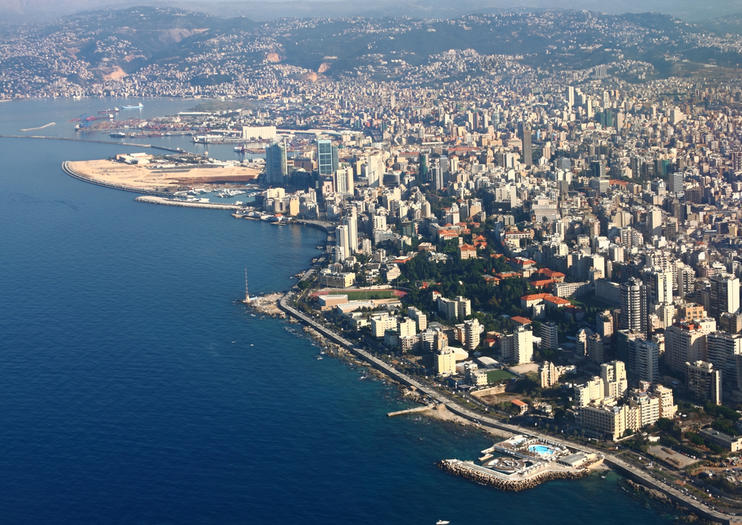
I have wanted to see Beirut for a very long time.  It always seemed to me to be one of those places people told stories about.  Stories of a lost golden age when it was “the Paris of the Middle East”, a city where French and Arab cultures met and mixed. In recent years people have told less glamorous stories about Beirut. The civil war that ravaged Lebanon from 1975 to 1990 and the city’s past association with violent extremism gave (and still give) to Beirut a whiff of danger that it finds hard to eradicate. Perhaps it was no surprise that I felt both excited and anxious when I boarded the short flight from Amman recently.

Image result for beirut 2019

After crisscrossing Beirut for two days, I left feeling overwhelmed by its contrasts. There’s certainly no shortage of sophistication and chic. The downtown souks, the luxury car showrooms, the fancy restaurants at Raouché, speak of an affluence that only a tiny number of Beirutis can enjoy.  The refugee camp in Chatila, not far from the airport, tells a different story. The city’s Armenian neighborhood, Bourj Hammoud, with its narrow, crowded streets lined with jewellery stores are a short drive from Verdun and its American-style malls. Checkpoints that slow the traffic to a crawl alert you as you enter areas controlled by Hezbollah. Buildings hollowed out by war, their masonry pitted by bullets, can be seen everywhere, reminders of not-so-distant conflict and symbols of what could happen again all too easily.

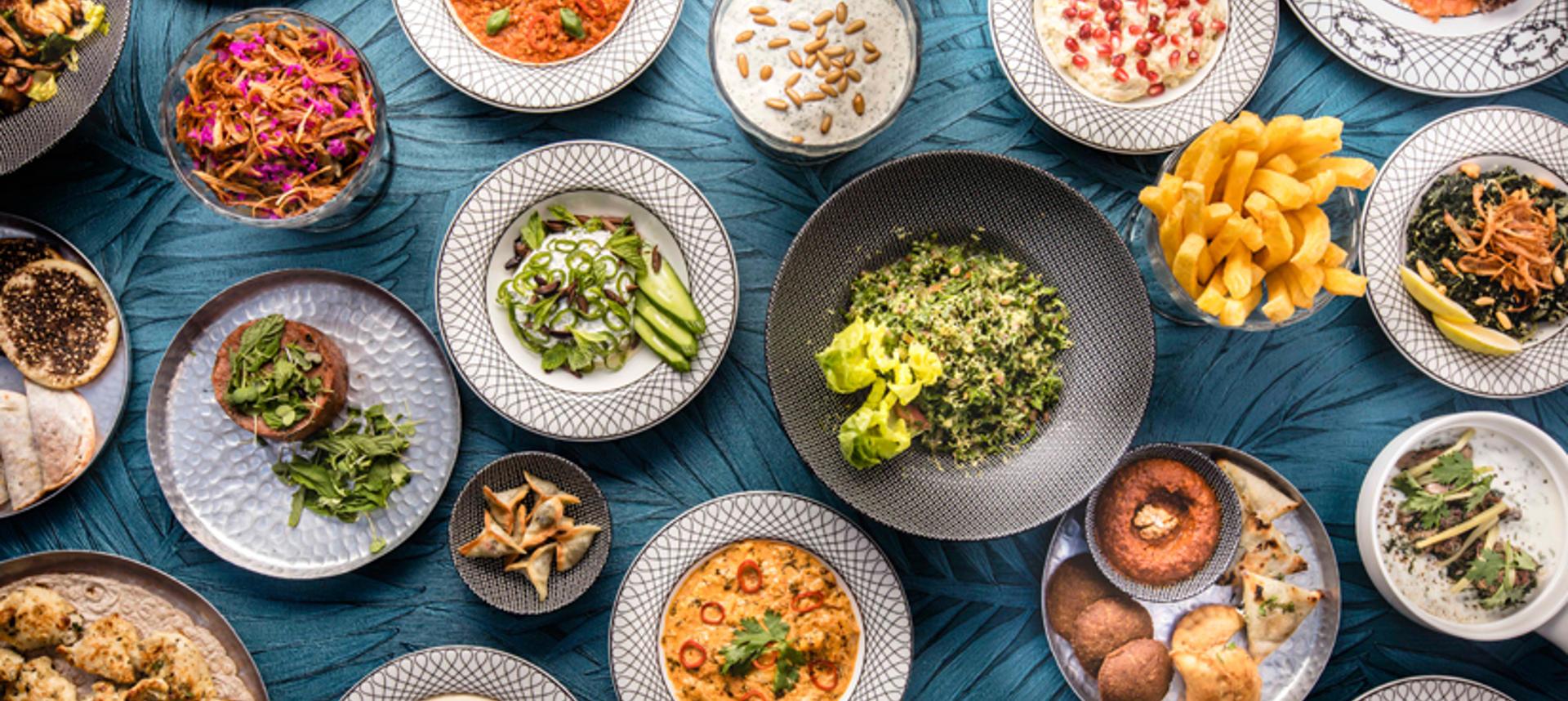
The Beirutis I met, so generous and welcoming, so delighted to see foreigners in their city, wanted to talk about things that matter. Memories of the civil war, fears of future conflict in the region, the co-existence of Druze, Shia, Sunni, and Christians in their small, crowded country: these were the topics of conversation as they loaded my plate with the wonderful dishes for which Lebanon is famous. The Lebanese I met, many with deep connections to far-off places such as France and Canada, all spoke of a deep love of their homeland and of a real sadness about what it has suffered in recent times.

I’m told visitors are coming back to Lebanon, drawn by the same stories I’d heard and by the chance to see wonders such as Jeita grotto, Baalbek and the Cedars of God. The numbers are small, most likely because of the savage conflict in neighboring Syria and the political tension that never seems to loosen its grip on the region. I can’t wait to return for a longer stay.

Image result for em sherif beirut


Sydney Downtime

The early morning ferry from Circular Quay to Manly was almost empty.  It edged its way slowly between the opera house and a visiting cruise ship and picked up speed as it found more open water.  Although the sky was blue and cloudless, it was a chilly early spring morning in Sydney and I wasn’t prepared to brave the ferry’s top deck.  By the time I stepped off the boat and walked to Manly Beach, the day was starting to warm, but it was still a shock to see so many hardy surfers in what must have been freezing Pacific waters.  I got a window table at The Pantry overlooking the beach and whiled away half an hour watching the dog-walkers and swimmers while I waited for my friends. On days like these it’s easy to see the appeal of Sydney’s lifestyle.

Later that day I took a bus to Bondi beach, the starting point for a coastal walk that took me to Tamarama, Mackenzies Bay, and Bronte. The beaches along the route are picture perfect.  Wide stretches of clean, white sand pounded by white-fringed waves are a magnet for surfers and sun worshipers, both locals and visitors from around the world. Winter had loosened its grip on the southern hemisphere and given us warm sunshine, and people could start to imagine the summer ahead.

Later, back in Sydney’s central business district, it’s easy enough to forget that this is a city deeply connected to water, a place for open air living.  Away from its harbor, wharves, and beaches, Sydney is a pretty but unexceptional place.  Turns towards its water and face the immensity and beauty of the Pacific and it immediately becomes one of the most seductive and beautiful cities the world has to offer.

Image result for Bronte sydney


She Said

Image result for she said kantor

Isn’t it strange that independent investigative journalism is flourishing? After all, weren’t we told not that long ago by the self-appointed pundits that the internet and social media spelled the death of journalism?  And yet here we are with The Panama Papers, the Theranos scandal, and countless other stories uncovering the misdeeds of the rich, powerful, and famous. Turns out the demagogues, the technologists, the money men, and the powerful in general often have a lot of nasty secrets that they want to hide from everyone else.  And we know about those nasty secrets because of investigative reporters.

Nasty doesn’t get close to describing the behavior of Harvey Weinstein, the movie producer brought down by a team from The New York Times led by Jodi Kantor and Megan Twohey.  His relentless and reckless abuse of women over decades is a shocking story. No less shocking were the efforts made by a cadre of lawyers and advisors to cover up his misdeeds and to put pressure on those who threatened to reveal them.  It’s a great credit to the reporters and leadership of the NYT that they stuck to their task of exposing this dangerous, powerful man despite a barrage of intimidation.

She Said is the account of the reporters’ work.  In parts it reads like a thriller. Victims, some of them famous actors, others vulnerable colleagues of Weinstein, are encouraged to go on the record to tell their stories, sometimes at great risk. A dangerous cat-and-mouse game is played with Weinstein and his advisors in the run-up to publication. It’s tense and compelling stuff.

The final section of She Said shifts the focus away from Harvey Weinstein and on to Justice Kavanaugh.  I think that was a mistake.  The Kavanaugh scandal – and I’m in no doubt it is a scandal – deserves its own full account and shouldn’t have been tacked on here almost as an appendix.  It’s a small quibble.  Kantor and Twohey have written a necessary and vivid history of the Weinstein affair and have reminded us, if reminders were needed, that investigative reporting will be essential if basic freedoms are going to be preserved and abusers of all kinds are going to be held to account.


The Road to Wigan Pier

Image result for english coal miners 1930s

The world of the 21st century would have disgusted George Orwell.  He would have been appalled that we allow billions of people to live in poverty and squalor while a comparatively tiny number has inexcusable wealth and wields incalculable power. He would have been angry that inequality is now part of every society in every country, the largest and smallest, those at the top of the GDP league table and those at the bottom.  He would have said it directly: huge gaps between the richest and the poorest aren’t unfortunate consequences of an otherwise well-functioning system.  They are a fundamental part of that system, built in to its design and necessary to its operation. Orwell not only saw and understood the world clearly. He also described it clearly with a prose so precise, so brilliant, and so lucid that he has become an exemplar for anyone who wants to write well.

It has been many years, possibly decades, since I read any Orwell.  The faded paperback copy of The Road to Wigan Pier on my bookshelves was one I bought in 1977, but even at that great distance, and with much of its details forgotten, I can remember the effect the book first had on me. Re-reading it now, its power has grown with the passage of time.  The conditions Orwell  described in working class England in the 1930s (within my own parents’ lifetimes) were not significantly different from those that Engels and Mayhew saw in Victorian England.  That’s damning enough, but what really shocks and scandalizes is the realization that similar poverty persists today in the cities of the US and UK, not to mention in so many countries in the “developing” world.

The Road to Wigan Pier is divided into two connected essays. The first and most successful part is a brilliantly written account of the living and working conditions in English mining communities in the 1930s. The second part is a disquisition on socialism.  It’s interesting as a “period piece”, but is much less compelling and hasn’t aged well.

The popularity of Orwell’s novels, especially 1984 and Animal Farm, practically guarantees that successive generations discover his genius. I hope readers move beyond those stories and experience his extraordinary documentary non-fiction.

The Nickel Boys

Image result for the nickel books

Colson Whitehead was a new name to me when The Underground Railroad won a Pulitzer Prize and the National Book Award. I still haven’t read what everyone tells me is a wonderful novel, but I picked up his newest book for a long flight I was taking recently. What a great choice it proved to be.

The NIckel Boys is the story of Elwood Curtis, a black boy from Florida about to launch into life when a terrible yet common miscarriage of justice propels him into the Nickel Academy, a segregated “reform school”.  The central part of the novel recounts Curtis’s efforts to survive the institution’s brutal regime and his attempt to live up to Martin Luther King’s call, “Throw us in jail, and we will still love you”.

Those of us who have never experienced the cruelties and injustices, large and small, of persistent racism, can only read a novel like this in a state of rage and sadness. Colson Whitehead’s calm, measured prose – never exaggerated, never overstated – only makes those feelings more intense. Part of the deep resonance of The Nickel Boys is the terrible recognition it evokes of how little has changed in America in recent decades.

Ships of Heaven

Image result for ships of heaven book

I find it puzzling that I can’t remember which of Britain’s cathedrals was the first I visited.  I was born and raised in London, so commonsense tells me it ought to have been St. Paul’s, Westminster Abbey, or Westminster Cathedral, yet it’s a visit to Wells that’s lodged in my mind as my oldest “cathedral memory”.  But what was I doing in Somerset as a child?  I have no idea, but since that time I’ve spent countless hours exploring many (but not all) of these magnificent buildings.  I’m not alone.  Cathedrals such as Salisbury, Canterbury, and York are among the most visited attractions in the country.  Hundreds of guides to them have been written and published over centuries.  Some celebrate the architecture, others the history and spirituality of these ancient monuments to faith, community, and power.

With his Ships of Heaven, Christopher Somerville has added to the pile a very personal reflection on what some of these cathedrals mean to him and an affectionate book that celebrates some of the people who built them and those who maintain them today. He selects seventeen of the hundred-plus cathedrals in the UK and offers a vivid account of how they were built and what it takes to ensure their survival.  It’s not a book for anyone looking for the minutiae of religious or architectural history but it’s certainly an accessible introduction for those who want to learn more about these buildings that seem to grip people’s imaginations, delight the senses, and inspire affection, faith, and wonder. Most of my favorites are here, with one exception (Winchester – a cathedral I grew to love in the years I lived nearby), plus a few I’ve never seen such as remote Kirkwall.  I can’t think of a better way of saying how much I enjoyed Somerville’s book than it made me want to visit all of them.

Cathedrals project permanence and solidity with their overwhelming weight of ancient stone and wood, but their true story is a more surprising one of vulnerability and change.  All were built on fragile and decaying foundations.  Time and weather have been unkind to the structures, as have men determined to rob, spoil, and vandalize them.  In truth Britain’s cathedrals are marvels of evolution and survival, living structures protected, nurtured, and shaped by generations of faithful custodians determined that the buildings and their treasures, like the faith they represent, should be handed on to those that come after.

Morocco Musings

Image result for ouirgane morocco

I recently spent two weeks crisscrossing Morocco, a trip that took in the Atlantic coast, the High Atlas Mountains, and two of its extraordinary cities, Marrakesh and Fès. The journey began in Marrakesh where we rented a riad, a traditional Moroccan house built around an internal courtyard, in the heart of the city’s ancient kasbah. For three days and in temperatures often exceeding 100 degrees, we explored the Red City’s ancient streets, alleyways, and markets, barely touching the surface of the Medina’s complex labyrinth.  There’s so much to see, both ancient and modern – the Saadian Tombs from the 16th century, the lavishly decorated Bahia Palace, the gorgeous Jardin Majorelle lovingly restored by Yves St. Laurent and Pierre Bergé – none of which should be missed.  But, as is so often the case in other cities, the heart, soul, and pulse of Marrakesh is to be found in its alleys, squares, and markets.  Get lost in the souk’s maze of streets, wander at night among the food vendors and hawkers in Jemaa el-Fnaa, have coffee in one of the hundreds of rooftop terraces, buy spices and sweets, and bask in the unique atmosphere of ancient and modern Marrakesh, one of the world’s most beguiling cities.

Leaving behind Marrakesh’s madness, we headed south into the High Atlas Mountains. If you crave a little respite from the heat and crowds of Morocco’s cities, the Ouirgane valley is a good place to find it.  With its orchards of olives and almonds and tiny Berber villages, this is a quiet, sleepy and strangely timeless backwater with a gorgeous mountain backdrop.  There’s not much to do except relax amid stunning mountain scenery, but that’s the whole point.

The drive from Ouirgane to Fès took ten hours, including an unscheduled and unfriendly encounter (the first of several) with Morocco’s corrupt traffic police who like to fleece unwitting tourists. Driving in Morocco isn’t especially stressful but the constant attention from police officers looking for baksheesh is wearing. (Tip: ask them for an official receipt and permission to take a photo of their ID card.  It’s amazing how quickly their appetite for conversation disappears!). It was a relief to abandon the car for a few days outside the walls of the Medina (Fès el Bali), a vast warren of streets so narrow and ancient that all motorized vehicles are banned, making it (I’m told) the largest urban space in the world with no traffic.

Fès is quite simply magnificent.  I can’t think of a city (not even Rome, Venice, or Athens) with an ancient past that’s so immediate and so tangible.  Founded in the 9th century and extended to roughly its present size in the 12th and 13th centuries, the Medina feels timeless. Maybe it’s the absence of vehicles, the density of the ancient buildings, the persistence of old crafts like copper-beating and weaving – the result is unique in my experience; a thriving, working city with such a clear and visible thread to more than a thousand years of history.  Little wonder it was designated by UNESCO as a World Heritage site. Because the Medina is so difficult to navigate, I did something I almost never do and hired a personal guide to help us find and explain its highlights.  I’m glad I did and would recommend it to anyone planning a trip.  The treasures of Fès are too numerous to list here, but it’s important to mention the Al-Attarine and Bou Inania madrassas and the leather tanneries.  As with Marrakesh, it’s important not to rush Fès and to allow lots of time to wander the streets, and savor the markets and coffee shops.  Its food scene is also impressive.  I celebrated my birthday in Nur, an outstanding restaurant owned and run by Najat Kaanache who has worked with some of the world’s greatest chefs.  It was fun to be with her in her kitchen after dinner and to hear about the challenges of running a fine dining restaurant in a Medina where all supplies have to be delivered by handcart or donkey! I was sad to leave Fès and the beautiful riad we rented in the heart of the Medina, but it was time to head to Essaouira on Morocco’s windy Atlantic coast for yet another perspective on this wonderful country.

There’s something about ocean towns. Maybe because they look out to empty expanses and distant places or because they encourage people to wind down a little, there’s that indefinable mood, that sense of a place exhaling and relaxing.  Essaouira is famous for its blustery beaches, its quaint fishing port, and its walled Medina, and has attracted surfers, hippies, and musicians (like Jimi Hendrix and Frank Zappa) for decades.  It’s a chilled-out, pressure-free place with a small souk and a plentiful supply of bars and restaurants.  Check out Caravane Café for dinner in its elegant courtyard, take tea at L’Heure Bleue Palais, and stroll around the fish market at sunset.  The locals say if you stay a few days, you may never want to leave.  True for Essaouira and true for Morocco.

Image result for blue boats essaouira

The Comforts of Home

The Comforts of Home is the ninth installment in Susan Hill’s very successful series of Simon Serrailler mysteries.  By now the pattern is well-established. Each novel seeks to weave a tapestry using two threads: the increasingly complicated personal life of Serrailler and one or more crimes under investigation. In The Comforts of Home the domestic thread is the dominant one and Hill looks as assured and adept as she always does writing about Serrailler’s complicated relationships with his sister, father, and other family members.  The “crimes”, such as they are, feel cursory and halfhearted here, as if Hill’s normally skillful plotting has deserted her temporarily.  A tenth installment is due later in the year, so it’ll be interesting to see what balance she strikes in the next novel.

All in all, this isn’t one of the strongest books in the series.  Having said that, reading a new novel from Susan Hill, this one included, feels like pulling on a favorite sweater: warming, comforting, familiar and reassuring.

Image result for the comforts of home susan hill

Secret Service

Political life has become so debased in recent years, with elected leaders snuggling up with dictators and totalitarian regimes interfering in democratic elections, that it must be difficult for thriller writers to come up with plots more preposterous than real life.  The premise of Tom Bradby’s latest novel is that the UK’s Foreign Secretary and about-to-be Prime Minister is a Russian spy.  I doubt anyone would find such an idea far-fetched in today’s world.  Kate Henderson, head of MI6’s Russia desk, has to find the truth while watching her back in an organization in which no one is above suspicion.

Tom Bradby is a well-known journalist and news anchor in the UK.  I had no idea he was also a novelist until I read a glowing review of Secret Service in the Financial Times.  I enjoyed reading it, but it’s no genre masterpiece.  It’s a simple enough tale, with sharply drawn characters, and enough pace and tension to make it a perfect, undemanding summer read.

Image result for tom bradby secret service

The Outline Trilogy

Image result for rachel cusk trilogy

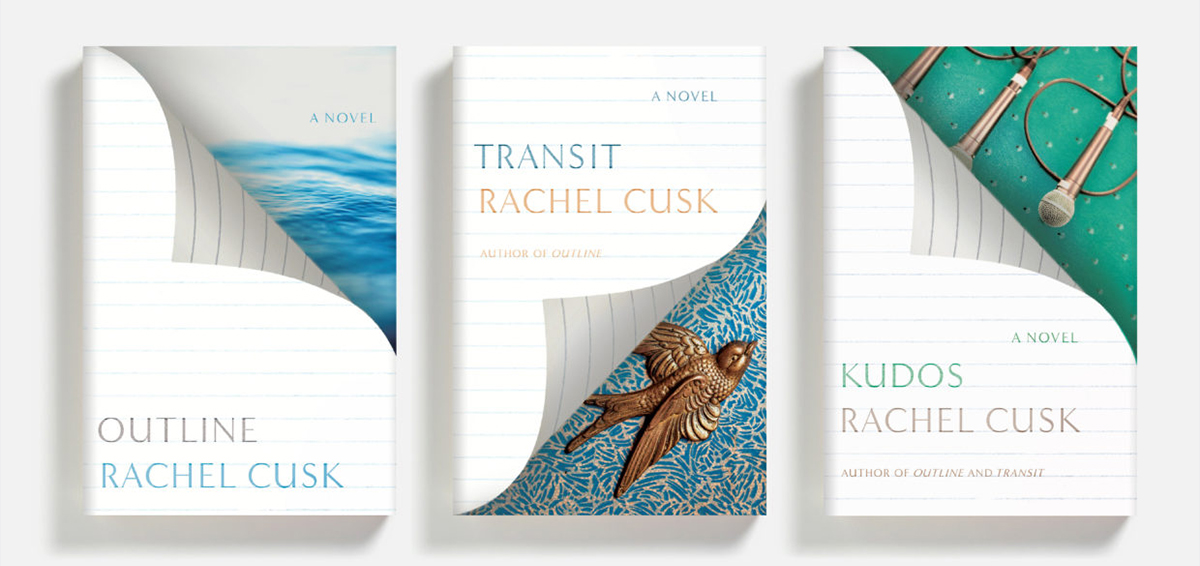
Rachel Cusk’s three connected novels – Outline (2015), Transit (2017), and Kudos (2018) – were my summer vacation reading this year.  I had read Outline when it was first published but decided to re-read it to get a proper grasp of the entire trilogy.  The novels have been acclaimed widely and I was keen to understand why because my first experience of reading Outline hadn’t been especially enthralling at the time.

The novels have very little in the way of a conventional plot. They all feature a single narrator, a published writer called Faye.  We don’t learn much about Faye’s basic biography.  We know she’s divorced, has children, and has moved back to London from the countryside.  We know she teaches creative writing and attends literary conferences. In all three novels we follow her through a series of apparently disconnected encounters and conversations: with students, fellow writers, a festival organizer, a former boyfriend, a builder renovating her apartment, and so on.  Our picture of Faye grows in increments through these encounters.

Although I’m very glad to have read all three novels and was very impressed by them, they probably weren’t ideal vacation reading (at least for me). These are demanding, sinewy books; cerebral, chilly, and difficult to penetrate. Cusk has serious ambitions for these novels, nothing less than how to live today and how to interact with others. Something necessarily difficult and complicated is at work here, something that demands effort, persistence, and patience – much like life itself.