Deirdre Bair

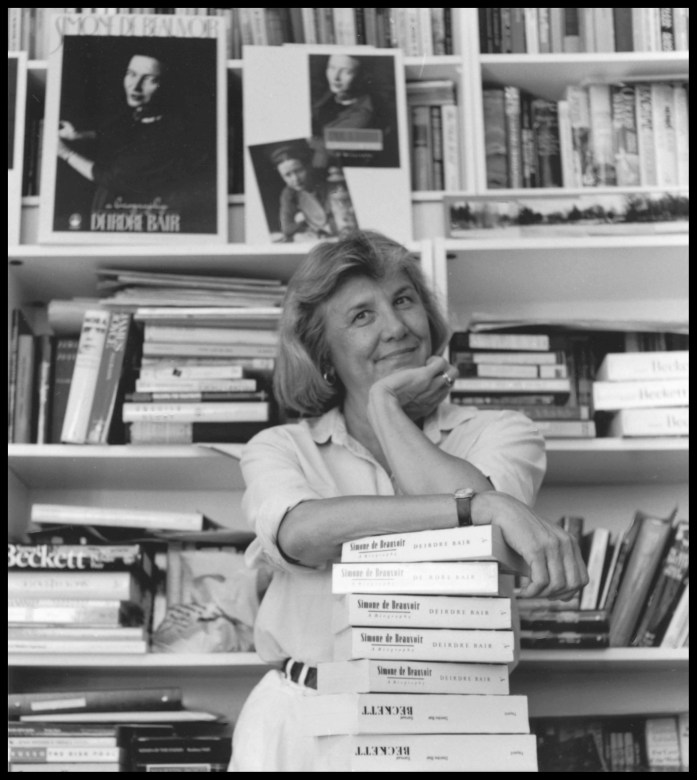
Back in January I wrote here about Parisian Lives, Deirdre Bair’s delightful memoir of her life as a biographer. The following month I visited Paris, one of my final trips before the pandemic gripped the world, and sent a message to Deirdre, knowing how much she loved that city and how many memories it held for her of her times spent with Samuel Beckett and Simone De Beauvoir. We set one date after another for lunch in Manhattan and postponed them all as the city’s restaurants were forced to close. Ten days ago, Deirdre emailed me to say we would “celebrate in happier days”. That celebration and that happier day never arrived. Deirdre died suddenly on April 17th, the very day we had earmarked for lunch on West 44th Street.

Portraits | nokossi

Hold Still

The Maternal Eye of Sally Mann - The Atlantic

I concentrated on Sally Mann’s photographs for the first time a year or so ago when a publisher friend of mine sent me a copy of A Thousand Crossings. Before that I was only vaguely aware of her work and, when I thought of it at all, associated it with the controversy that flared up a few years ago about unsettling images she had taken of her children. I didn’t know she had written an autobiography until it showed up in a recent feature about must-read books.

Hold Still is a memoir of the passions that have driven and consumed Mann’s life. Her children and husband. Gee-Gee, the African American servant who raised her amid the benign indifference and occasional neglect of her natural parents. Photography, of course, and, perhaps the strongest inspiration of them all, the landscape of the American South, that realm of tragedy, conflict, melancholy, and sentimentality to which her life and her art are so deeply connected.

The best books about art lead you to the art itself, and that was certainly the case for me with Hold Still. It made me want to pore over those misty pictures of the fields, rivers, and skies of the American South that are the wellspring of Mann’s inspiration. It took me also to those challenging and provocative portraits of her family, taken with that same intense, unflinching eye.

Hold Still,' a Memoir by Sally Mann - The New York Times

My Dark Vanessa

My Dark Vanessa book review: Lolita for the #MeToo generation is a ...

I’m always wary of hype, so I was on my guard when a friend gave me a pre-publication copy (the cover littered, of course, with breathless reviews from booksellers) of a novel that’s being promoted as one of the “hot” books of 2020, My Dark Vanessa. It’s a story, set in Maine, of a sexual relationship between a 15 year-old girl and her 42 year-old male teacher. Even before it was published, the book was notorious. It was picked as an Oprah Book Club choice and then suddenly dropped, somewhat mysteriously. Accusations were flung around of “appropriation” and plagiarism. All good for sales, of course.

So, what’s it about, this new, hot property? The novel is narrated by the victim, Vanessa Wye. Its chapters mostly alternate between 2000, when Vanessa begins the destructive relationship with her English teacher, Jacob Strane, at an exclusive boarding school in Maine, and 2017 when Vanessa is thirty-two, living alone, still damaged, still obsessed, and still self-absorbed.

On the evidence of this, her debut novel, Kate Elizabeth Russell is a capable and promising storyteller, but My Dark Vanessa is a dull, flat book. Whatever the jacket says, it’s not “dynamite” or “explosive” and it isn’t a “sensation”.  Vanessa and Jacob, victim and abuser, are little more than cyphers, never properly realized and rarely elevated above the level of stereotypes. My Dark Vanessa will, I’m sure, sell very well and have its few weeks of fame because reviewers and feature writers will do their best to present it as titillating and scandalous. In fact, it’s nothing of the sort. Russell had sincere intentions for the book, but lacks the experience to deliver a work that fully realizes those intentions.

The Bookshop

A woman opens a bookshop in a small town in Suffolk in 1959. There’s not much more to say about the plot of Penelope Fitzgerald’s lovely story first published in 1978, but don’t be fooled into assuming this is one of those small-scale, minor provincial novels. The Bookshop is a tiny, unforgettable gem. Florence Green’s ambition and independence expose the class tensions, power structures, and sexism of small-town life, but satire and polemic aren’t Fitzgerald’s main business here. The Bookshop is about loneliness and disappointment and how we cope with them, and about how destructive petty resentments can be.

Penelope Fitzgerald was awarded the Booker Prize in 1979 and died in 2000. The Bookshop was adapted into a film in 2017 starring Bill Nighy and others. In one of those strange coincidences, Nighy stood next to me when I bought my copy of the novel in London earlier this year.

The Trials of Penelope Fitzgerald | The New Yorker

Reynolds Stone: a Memoir

REYNOLDS STONE wood engraving. Jacket design for the 1st edition ...

Even those who have never heard of Reynolds Stone (1909-1979) know a little of his work. The crest on every British passport, the masthead of The Times, the memorial to Winston Churchill in Westminster Abbey. The first time I remember paying attention to him was more than thirty years ago when I bought a first edition of Iris Murdoch’s The Italian Girl with its beautiful dust jacket by Stone. Murdoch and Stone were great friends and somewhere in my book collection I have a copy of the tribute she paid to him at his memorial service. Of course, Stone seemed to know everyone in Britain’s artistic community. Kenneth Clark, Benjamin Britten, John Piper, Kathleen Raine, and John Betjeman were just a few of the many friends who crowded into the Stones’s beautiful rectory at Litton Cheney in Dorset.

He was primarily a superb engraver, one of the very best and the equal of those more celebrated (like Gwen Raverat), but he was also a very accomplished typographer, letter cutter, and water colorist. His brilliance is fully reflected in this beautifully illustrated and touching tribute written by one of his sons.

James Lees-Milne, when asked to consider writing Stones’s biography, famously remarked “I can’t write about a saint”. He was deeply loved by his family and wide circle of friends and it’s clear there was a profound and sincere humility about him. His life stood securely on three pillars – work, friendship, and family – and it was a life that brought him great satisfaction and contentment. This memoir isn’t uncritical but it’s undeniably affectionate. The picture that emerges here is one of a good man and a great artist.

Stories of the Sahara

Remembering San Mao - the Bohemian Writer That Captured the Hearts ...

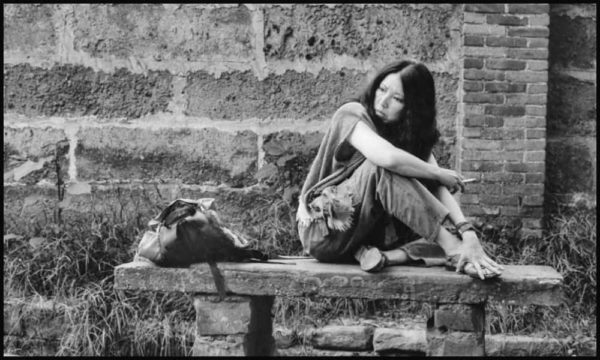
Chen Maoping (who took Sanmao as her nom de plume the name of a well-known cartoon character) was born in mainland China in 1943 and raised in Taiwan. She had a restless, nomadic spirit and spent many years in the 1960s and 70s wandering the world, arriving in the Spanish Sahara (as it was known in those days) in 1974. Stories of the Sahara, a collection of twenty essays first published in 1976, is Sanmao’s account of those years spent among the Sahrawi people.

Even today, Western Sahara is a rarely visited, remote, and quite inhospitable part of the world. Forty years ago, and especially for a young Chinese woman, it must have been a place of significant hardship and some danger. A little of that comes through in Sanmao’s memoir but what dominates the story is her strength, courage, humor, and an unusually distinctive voice. Direct, engaging, and deeply personal, Sanmao speaks across the decades. What an extraordinary person she must have been. It’s little wonder that she has become a cultural icon for those who are fascinated, as she was, by people living at the margins of the world.

Some of the essays, such as Night in the wasteland, Crying camels, and The mute slave, are perfect miniatures of the art of reportage. Vivid, urgent, and deeply compassionate, this is an unforgettable memoir and a must-read for those who love travel writing at its best.

The Man in the Red Coat

Image result for the man in the red coat julian barnesWho hasn’t, at some time or another, studied a portrait in a gallery and wanted to know more about the subject? That multitude of mostly anonymous faces stares down at us, not just from the wall but down through the ages, and in most cases we know nothing about them. What made them pose for the artist, what were they feeling during the sittings, what did they think of the final result? In his latest book Julian Barnes uses Sargent’s famous portrait, Dr. Pozzi at home, as a jumping-off point to learn more about the extraordinary life of Samuel Pozzi, renowned French gynecologist, medical innovator, politician, and socialite. What a story it is. Pozzi seemed to know everyone in the Belle Epoque and was the trusted confidante of many of the leading figures of the day. Wealth, celebrity, and honors followed, but personal happiness in his family life eluded him. He died in 1918, struck down by four bullets fired by a disgruntled patient.

As fascinating as the story is in itself, Barnes has bigger ambitions: to give us a colorful portrait of a fascinating time in French history, to illuminate the French character, and to give us an explicit and necessary reminder in these insular, xenophobic times of how important and rewarding it is to immerse ourselves in the lives, language, and culture of other nations.  Brexit and its evangelists would have appalled Dr. Pozzi, just as they do a shrewd, urbane Francophile like Barnes.

Livery Musings

Image result for stationers hall

“Think of them as medieval trade associations”. That’s what I tend to say to American friends when I’m trying to explain what livery companies are. If that piques their interest, I tell them about the charitable focus of the 110 companies still thriving in the UK and the role they play in the governance of the City of London (aka the city’s financial center and powerhouse). Many of the companies represent professions and trades still thriving and still familiar in modern times. Goldsmiths, clock makers, distillers, butchers, and so on. Some take a little more explanation. Loriners (makers and suppliers of equestrian equipment), broderers (embroiderers), and cordwainers (fine leather workers) – those and others aren’t immediately obvious. The oldest company is The Worshipful Company of Mercers, established in 1394 and thriving still today.

The livery company for publishers, booksellers, and those in the wider content and communications industries is The Worshipful Company of Stationers and Newspaper Makers. It was set up in 1403 and its home is the magnificent Stationers Hall close to St. Paul’s Cathedral. I was recently admitted as a Freeman of the Company at a picturesque and touching ceremony at the Hall in the presence of the wardens, a beadle, and much antique paraphernalia.  Great fun, but with a serious purpose: to help educate a future generation of professionals in the content industries.

A Paris Pilgrimage

At some point in the second half of the 1980s, John Minihan’s famous portrait of Samuel Beckett first appeared in one of London’s Sunday newspapers. I tracked John down – no easy feat in those pre-Google days – and met him over drinks one evening. He very kindly gave me some pictures, told me about his friendship with Beckett, and about the circumstances in which that extraordinary image of the writer was taken. It was 1985 and Beckett and Minihan were meeting across the street from Beckett’s apartment on the Boulevard St. Jacques in Paris, in Le Petit Café of the PLM Hotel.

Samuel Beckett in his local cafe in Montparnasse, Paris

Last week I checked into the Marriott Rive Gauche and discovered quite by chance that the PLM Hotel had morphed into a Marriott at some point in the intervening years and that my room looked out onto Beckett’s modest apartment on the 6th floor of 38 Boulevard St. Jacques. On heading to the lobby it was easy to find the spot Beckett and Minihan had sat that day more than 30 years ago. I strolled over to the apartment block, marveling that it bore no sign or plaque recording the years spent there by a great writer, and then went around the corner to Le Tiers Temps, the nursing home where Beckett died in December 1989.  Time pressures prevented me from completing this mini pilgrimage with a short stroll to the great writer’s resting place in the nearby Montparnasse Cemetery and, as many do, leaving a small pebble on his gravestone as a small mark of honor. Next time, for sure.

Image result for samuel beckett grave site


Here We Are

If we give any thought at all to who we are, I suspect most of us think of our identity as something fixed and permanent. We’re born who we are and we stay that way until we die, with our fundamental essence, much like our eye color, unchanged. Graham Swift, I think, sees things differently and knows that identity is much more slippery and a lot less permanent than most of us realize. Living is a process of subtly shifting and evolving identities. The unique core of every individual changes shape over a lifetime, often unconsciously but sometimes willfully and abruptly. We’re mostly careful to hide the process from others, preferring the illusion of constancy.

Illusion is the key word here because Swift’s latest novel is set in the late 1950s among the popular entertainers – magicians, novelty acts, and comedians – that were the fodder for UK theatergoers in those days. A type of entertainment that today seems archaic was even then beginning to feel old fashioned as it gave way to television and cinema. Ronnie Deane (aka The Great Pablo), along with his assistant, Eve, is the triumph of the summer season in Brighton, delighting crowds with his illusions and magic tricks. When the season ends with the final show, Ronnie has one final trick up his sleeve …

Here We Are is about secrets, memories, and the common and not-so-common illusions of ordinary lives. In the brilliance of its storytelling Graham Swift reminds us again what a magical artist he is.

Image result for graham swift here we are