Blossomed Hours

A friend gave me recently a book published in 1922 by a publishing company called Orchard Hill Press that operated just a few miles from where I live today. At first sight the book seemed unexceptional. A faded, slightly tatty hardcover with an inscription from 1923, Blossomed Hours is what publishers used to call a miscellany: a collection of essays, poems, and reflections by Edward Howard Griggs. Griggs (1868-1951) was a university teacher who, according to the little information I could find on the web, delivered more than 13,000 lectures to more than 8 million people during his lifetime, mostly on subjects such as philosophy, history and culture.

I dipped into the book expecting to put it aside quickly, but found myself drawn in, initially by what The New York Times in 1903 called Griggs’s “easy flowing style, rich in imagery”. But the deeper I read, the more resonances I heard with today’s world. How about this?

Men need today, as every yesterday/To be called back from the senseless rush for gold/And fashion, dissipation – all the way/That dulls the heart of life and makes it cold/Back to love, work and simple, joyous play/Of those emotions that can ne’er grow old.

And this reflection on traveling seemed especially poignant in the lock-down imposed on us all by the pandemic:

To the man of thought, already cosmopolitan, the chief value of travel is in tremendously stimulating the flow of ideas and in contributing a wealth of illustrations. One may travel also through books and reflections. If the stimulation is less acute than that through the outer senses, it is wider in range and more fully at one’s command, without the waste and strain of movement from place to place. There are advantages to the stay-at-home, as well as for the traveller. If one opportunity is denied, use the other more sacredly.

Never judge a book by its (faded) cover.
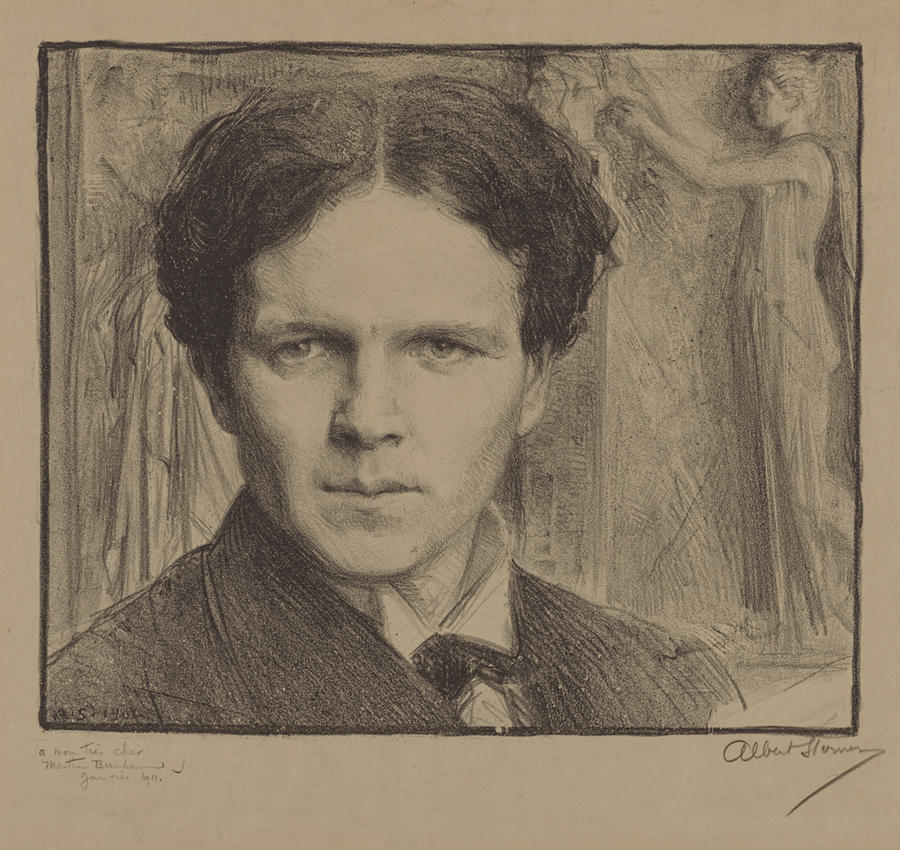
Portrait of Edward Howard Griggs | RISD Museum

Breasts and Eggs

In Mieko Kawakami's “Breasts and Eggs,” Oppression and Dissent ...

Mieko Kawakami is something of a celebrity in Japan’s literary community. She originally published Breasts and Eggs as a short novella in 2008. It was well received by critics and fellow writers and won an award. She then took the unusual step of expanding the original work and in its new form it’s her first novel to be published in English.

The narrator of Breasts and Eggs, Natsuko Natsume, has published one novel and is struggling to complete her second. A native of Osaka, but living alone in a small apartment in Tokyo, Natsuko dreams of having a child. With no partner and with a profound distaste for sex, she explores the world of donor insemination. Her sister, Makiko, comes to Tokyo determined to have breast enlargement surgery, accompanied by her teenage daughter, Midoriko, who refuses to speak and who communicates with her mother and aunt only through messages written in notebooks.

Breasts and Eggs is an unusual and powerful novel. Its theme is identity and its determination for a modern, Japanese woman by mores defined by men and tradition. The power of the book comes less from its theme than from the striking and unique voice of its narrator. As I read it, I felt, as I often do, that it should have been edited more aggressively. At 400+ pages it’s too long and its pace drags sometimes as a result, but this is an arresting and unusual novel. Kawakami is a special storyteller and it’s going to be interesting to follow what she does next.

A Japanese Literary Star Joins Her Peers on Western Bookshelves ...

The Lives of Lucian Freud: Youth

The Lives of Lucian Freud by William Feaver review — women ...

If evidence is needed that it’s possible to admire the art and not the artist, look no further than the first volume of William Feaver’s biography of Lucian Freud. I’ve read over the years many accounts of Freud’s life and work by those who knew him well (for example Celia Paul, David Dawson, and Martin Gayford), and I’d long suspected he wasn’t very likable. But I was still surprised to find from Feaver’s account how consistently unpleasant he seemed to be from such an early age. Egotistical, deceitful, snobbish, and unkind – these were characteristics on full display pretty much from the time he arrived in London from Berlin as a young boy in 1933. Blessed with extraordinary talent, good looks, and that famous family name, on the evidence here Freud seems to have thought from early on that other people existed to be used, seduced, or ignored.

Feaver’s approach to biography is a traditional one, with Freud’s work interwoven carefully with the life. The style is light and slightly gossipy and that seems entirely appropriate given the extent and significance of Freud’s friendships and his apparent gregariousness. Those looking for close analysis of the paintings will be better off elsewhere, but this will be a rewarding and entertaining read for anyone wanting to understand the relationships that led to those extraordinary portraits. Freud was fortunate in his choice of biographer. Feaver is perceptive about the paintings and is very tolerant of his subject’s often horrible behavior.

The book, all 600+ pages of it, follows Freud from his childhood years in Berlin, his arrival in London in 1933, his education and early days as a painter, and ends in the late 1960s at a time when he was an established figure in the London art scene. A second volume is underway.

LUCIAN FREUD: A SELF PORTRAIT

Rockwood Hall

The Rockefeller State Park Preserve was a popular spot for dog walkers and runners long before the pandemic gripped the Hudson Valley and almost everywhere else, but the crowds really started to arrive, especially at weekends, when strict limits were imposed on New Yorkers and others in the wake of the public health crisis. On Saturdays and Sundays, long lines of cars can be seen parked close to the entrances to the Preserve as people discover and explore the beauty spot on their doorstep.

If, like me, you crave a little solitude when you walk, it’s easy enough to avoid the crowds, not least because most visitors seem unaware of the prettiest spot of all just a mile or two away: Rockwood Hall. It’s a beautiful park, a place that offers a number of undemanding trails, some of which offer lovely views of the Hudson River. It’s also something of a palimpsest and walkers who pay attention to such things will see signs of what Rockwood Hall used to be. From the mid-1880s it was the site of one of the largest private homes in the United States, a 204-room mansion built by William Rockefeller with grounds landscaped by Olmsted. Nothing of the house remains today except a section of the foundations and some of the brick carriageways. The Rockefeller family donated the site to New York State in 1999, an act of generosity that allows people like me to enjoy some of the loveliest walks in the Hudson Valley.

Been There Done That Trips | Rockwood Hall State Park ...

Musings on Moving

How to talk to others about not traveling during the coronavirus ...

“One can travel this world and see nothing. To achieve understanding it is necessary not to see many things, but to look hard at what you do see.” Giorgio Morandi.

How are you coping without traveling? That’s the question I have been asked most often since Covid-19 forced almost everyone to stay close to home. I returned on February 28th after three weeks in Tokyo, London, and Paris and, apart from one or two short trips to Manhattan, haven’t wandered more than ten miles from home since that day thirteen weeks ago. That’s not likely to change much until the end of August at the earliest. If that proves to be the case, it will be the longest period in more than thirty years that I haven’t stepped on board an airplane.

Do I miss it? In some ways, no. Who could possibly miss long lines at airport security, airline food, weather delays, lost baggage, and 16 hour flights? There’s a lot to be said for discovering or re-discovering the wonderful places just beyond my doorstep. But much is lost in a lock-down. What I miss is that particular and unique type of engagement with family, friends, colleagues, and acquaintances that Zoom and other tools can’t hope to replace or emulate. I miss the sensations: the sights, smells, and sounds of places that I had planned to visit in these months – Lilongwe, Beijing, Oslo, or wherever. And I miss the thoughts and feelings that those sights, smells, and sounds would have evoked. That’s what Giorgio Morandi (and others like him who rarely travel) don’t understand. Traveling isn’t about seeing things and places. It’s about the engagement of all the senses and the personal transformations, small and large, that come with that engagement.

Those of us who love to travel will do so again. We might do it differently, but we’ll do it. We’ll most likely do it more carefully and thoughtfully. The pandemic has taught us or reminded us what’s truly valuable and what’s expendable. And what’s top of my travel list when conditions allow me to wander again? London and West Cork. After that let’s take it one precious step at a time.

Our Riches

Edmond Charlot opened a small bookshop, publishing company, and lending library in Algiers in 1935. He was twenty years old. He called his new bookshop Les Vraies Richesses (Our True Wealth), after a book by Jean Giono. Charlot published the early work of his friend Albert Camus, but his contribution to the world of books goes far beyond that happy piece of talent spotting. Putting literature into the hands of readers was the driving passion of his life, a passion that drove him into occasional conflict with governments and occupying powers and more than occasional financial hardship. His courage and single-mindedness were extraordinary and reminded me of the personal sacrifices publishers and booksellers still make every day in conditions hostile to free thought and expression.

Kaouther Adimi has written a sweet, elegiac book about this remarkable man. Part history and part biography, Our Riches is more than anything a meditation on books and what it means to love reading, publishing, and selling them.

Edmond Charlot - Wikipedia

The London Train

Discovering a new author is one of the great joys of reading. I came across Tessa Hadley for the first time only last year and I have been reading through her short backlist with huge pleasure since then. Late in the Day and The Past were two of the best novels I read last year and, although it’s a little early in 2020 to be definitive, I don’t expect to read a better or more enjoyable novel than The London Train this year. Its structure is unusual. What appear to be two largely separate stories, linked through the simple device of journeys between two places, London and Wales, come together cleverly just before the end of the book. The first of the stories, The London Train, tells of Paul’s search for his young daughter who has gone missing in London. Only Children, the second story, tells of a journey in the opposite direction and of Cora’s retreat from an unhappy marriage to her family’s home in Wales.

Hadley’s writing stands within a very strong English tradition. It puts me in mind sometimes of the likes of Margaret Drabble and Anita Brookner. Maybe it’s the settings – the emotional lives of the English upper middle classes with all that turbulence beneath the polite surfaces – or the understated style in which it’s all brought to life. The precise and almost forensic way in which she peels back the layers of apparently unremarkable lives and uncovers the longings and losses beneath is so impressive.

The London Train

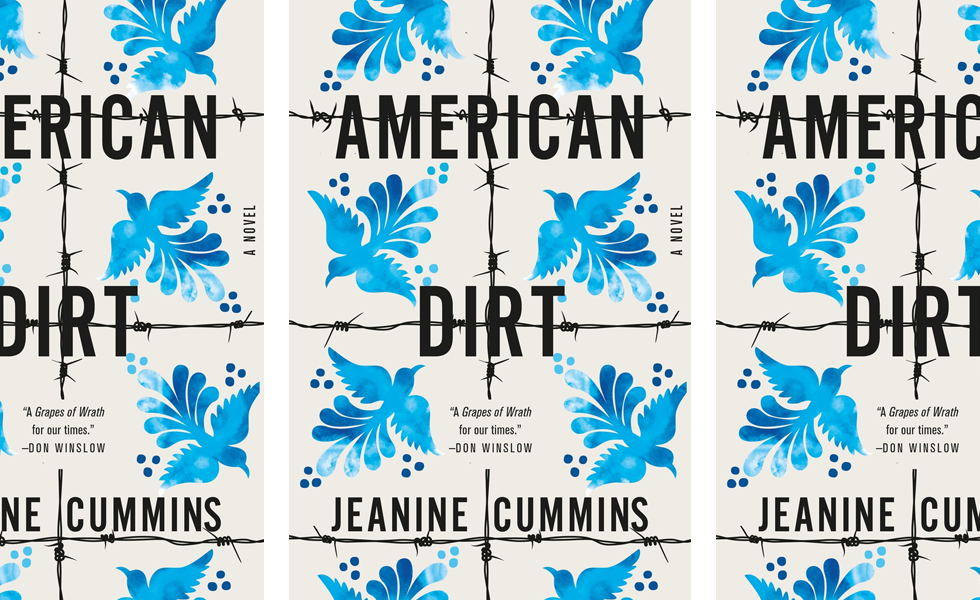
American Dirt

17 Great Books to Read Instead of American Dirt - The Texas Observer

Anyone who loves novels and hasn’t been living in a cave for the past six months has heard of American Dirt. It attracted plenty of positive reviews before it was published from the likes of John Grisham and Stephen King, was an Oprah Book Club choice, and earned its author, Jeanine Cummins, an advance of $1 million. What could possibly go wrong? Well, almost everything seems to be the answer to that question. In a very public argument that seemed to me to generate far more heat than light, critics lined up to level a slew of accusations against Cummins. The most persistent complaint can be summarized by a phrase I wasn’t familiar with before the controversy, “cultural appropriation”. The heart of the accusation seems to be that Cummins, a white woman with no direct personal experience of migration, cannot and should not “appropriate” the experience of a Mexican woman forced to flee her home in Acapulco and seek safety in the United States because of threats from a drug cartel.

This seems at first sight to be nonsensical. Isn’t fiction by definition fictional? Beatrix Potter was never a rabbit, J.K. Rowling was never a boy, and Tolkien was never a hobbit. Literature is the expression of imagination. Jeanine Cummins is entitled to imagine the experiences of migrants from Central America and to set down for readers the expression of that imagination. Readers will decide the value, veracity, and validity of that expression, but they aren’t entitled to deny her right to make it.

As for the novel itself, it’s a heartfelt and sincerely told story. It’s also an undeniably gripping account of some of the terrible sacrifices made daily by those looking for new lives in the United States. But – and this is where some of Cummins’s critics are on safer ground – the central character (Lydia) is never entirely convincing. Perhaps I was influenced more than I realized by the furor surrounding American Dirt, but Lydia’s voice never felt fully authentic to me.

Lost in Connemara

Ros Muc | Coláiste na bhFiann

It’s a place I know very well, a place of stone and bog, of heather covered mountains, big skies, and dangerous seas. A sparsely populated wilderness on the westernmost edge of Europe. Connemara has seen more than its share of suffering and its stories often speak of loss, penury, disappointment, exile, and death. Lost in Connemara is a collection of five such stories, printed in both English and Irish and selected by Brian Ó Conchubhair.

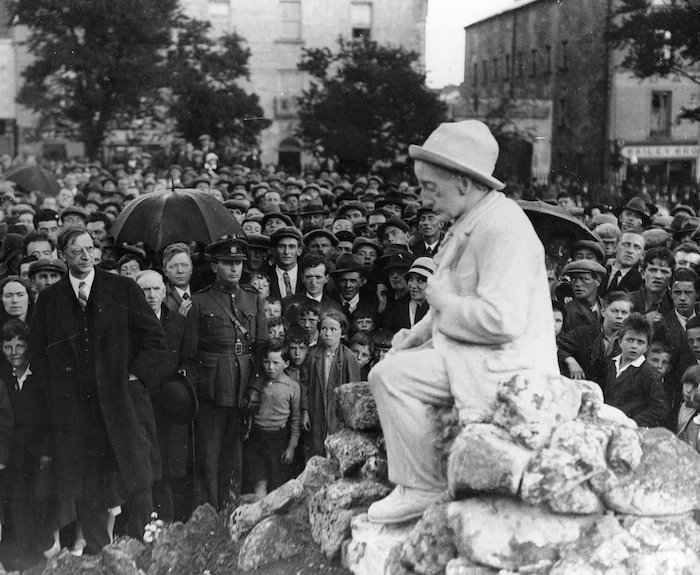
The first of the stories, Páidín Mháire, was written by Pádraic Ó Conaire (1882-1928), a relative of my mother and arguably one of the best Irish-language storytellers. His statue (below) used to sit in a prominent spot in Eyre Square in Galway before vandals knocked poor old Pádraic’s head off, forcing the local council to move him to the safety of a local museum. I remember as a child sitting on his stony lap while my mother proudly took pictures of me with our famous relative.

There are some gems in this short collection, notably The precious last days by Pádraic Breathnach. I’m very grateful to Micheál O’Chonghaile, the publisher at Cló Iar Chonnacht, for the gift of this book. It’s so impressive to see the literary traditions of these remote places being preserved and promoted.

Pádraic Ó Conaire: man and monument A look at the life of Ó ...

Nightshade

Is it courageous or foolhardy to demolish parts of your life to find something more fulfilling, to turn your back on a loveless marriage in pursuit of passion, or to walk away from wealth for a simpler way of living?

Eve Laing, 60 years-old, a celebrated painter, chooses demolition, discarding husband and home as she sets out on the path to a new life and new artistic vision. The backdrop to Nightshade is the London art world and the novel’s story line follows a long night-time journey through the city by Tube and on foot.  I don’t think the author intended this to be a “state of the nation” novel, but to my mind one of its greatest strengths is this particularly vivid sense of place and how it communicates so effectively a feeling of what the UK is like right now: febrile in its uncertainty, fragmented and fractured by inequality and division.

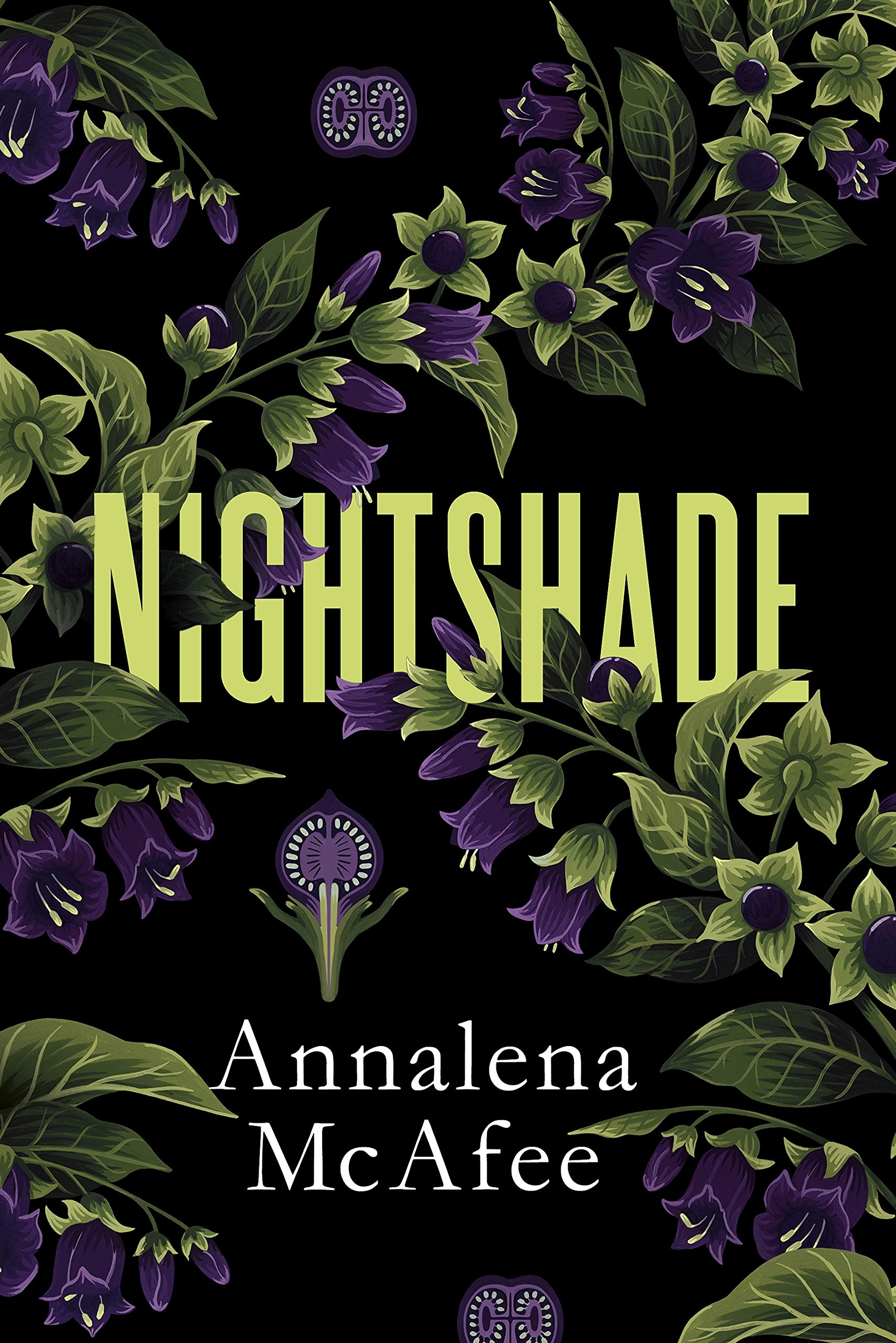
Nightshade is an ambitious novel, preoccupied with sexual equality, gender politics, the posturing and hypocrisy of the contemporary art world, and much more. If that makes it sound stuffy or arid, let me tell you it isn’t. It’s an elegant and thought-provoking read and, especially in its final third, something of a thriller. This is the first novel by Annalena McAfee that I’ve read. I was impressed. And what a gorgeous dust jacket ….

Nightshade: Annalena McAfee: 9781787301948: Amazon.com: Books