Winchester Cathedral

Wednesday Tour: Hurray for Henrys - Winchester Cathedral

Walk around any ancient church and you will see the names of the long dead and the long forgotten who hoped for some remembrance by attaching their names to a part of the structure. Soldiers, scholars, saints, politicians – all hoping for a little immortality through their posthumous association with a grand place of worship. It’s not so different from tagging a bus shelter or a subway car or from carving your initials into a favorite tree. Maybe someone will pass by in a hundred or a thousand years and wonder who you were. In a cathedral as old and as beautiful as Winchester, the “graffiti” is a little grander, but it covers almost every surface, carved into elegant monuments, tombstones, glass, and plaques.

Winchester Cathedral’s origins are in the 7th century, but the oldest part of what the visitor sees today is from the church started in 1079 by Bishop Walkelin. To that base generation after generation has added for nearly a thousand years, and it’s nothing short of a miracle that what stands today is such a beautiful, harmonious whole. Winchester has seen it all – wars, plagues, vandalism, and pillage – and stands today, as it has in some form for nearly 1,400 years, as a monument to faith, power, and wealth. Walking the nave and transepts in 2020, as I did earlier this week, means following signs on the ancient floor to keep two meters distant from other visitors and using hand sanitizer provided as you enter the grand west end of the cathedral. The ancient stones and windows have seen it all before. They have seen pandemics come and go. They have watched one generation of visitors following another, each one in turn awed by the scale and beauty. Sic transit gloria mundi, but in Winchester Cathedral the glory passes very slowly indeed.

Troubled Blood

Troubled Blood | Know Your Meme

A detective novel that weighs in at nearly 1,000 pages is, among other things, a declaration of self-confidence by the storyteller. Maintaining the reader’s interest and sustaining the necessary suspense in a story of that length are feats that would test any novelist, even one with the bona fides of J.K. Rowling (writing here under her pseudonym, Robert Galbraith). Does she pull it off? Mostly, yes, but the author or her editor could have pruned the manuscript quite hard without damaging the overall story.

Troubled Blood is the fifth in the Cormoran Strike series and the pattern is well established by now. On this outing Strike and his partner/love interest take on a cold case, the mysterious disappearance more than forty years earlier of a London doctor, Margot Bamborough. It’s a complicated yarn with the usual large parade of potential suspects and, on this occasion, a plot layer of astrological nonsense that I found very irritating. The best part of this series is the central character and his growing affection for his sidekick, Robin Ellacott, so I was pleased to see Galbraith giving plenty of attention to that side of the story. Troubled Blood, like the others in the Strike series, is undemanding, entertaining fodder, and firmly within a distinctively English tradition of whodunits.

The Book in the Cathedral

The simple premise of this slim book is that a manuscript donated to Corpus Christi College (Cambridge) by Matthew Parker, Archbishop of Canterbury in the mid-16th century, is the Psalter of St. Alphege and was in the possession of Thomas Becket when he was martyred in Canterbury Cathedral in December 1170. Christopher de Hamel, academic librarian and manuscript expert, makes the case in this fascinating historical detective story. As we approach the 850th anniversary of Becket’s death, this delightful book provides a compelling introduction to readers unfamiliar with his remarkable life and even more remarkable times.

The Book in the Cathedral

Covid-19: first impressions (UK)

PPE and quiet amens: places of worship in England prepare to reopen |  Religion | The Guardian

When I arrived recently in the UK for the first time in six months, it coincided with warnings from the government there that the introduction of a further nationwide lock-down might be unavoidable because of rising Covid-19 infections across the country. Regional restrictions, mostly in the north of England, were already in place. I was intrigued to understand better why that was the case.

JFK airport had been almost empty when I left New York and there had been fewer than fifty passengers on my flight to London. Touching down at Heathrow, things seemed largely familiar. Everyone – passengers and airport staff – were wearing masks. It was only after driving to Canterbury that big differences started to be apparent. Walking around the ancient city that afternoon, I was shocked to find myself almost the only person wearing a mask on the street. Mask-wearing in shops and supermarkets was ubiquitous, but the moment those same, apparently careful people stopped shopping, they discarded their masks. Restaurants, pubs, and coffee shops – all very busy – had complied with social distancing rules imposed by the government – but no one was wearing masks while they ordered and waited for their food. Completely different from my experience during the past six months in NY where everyone wears a mask all the time in public.

I looked for some explanation and found none. Some I spoke to pointed to the low levels of infection in Kent, but I’ve heard from friends in other parts of the UK that mask-wearing, other than in stores, is uncommon all over the country, even in regions and cities where rates of infection are high. What’s going on? Pandemic fatigue? Perceived invulnerability among the young and healthy? I’ve no idea, but it’s making me anxious. At this rate it’s going to be a hard winter for the UK.

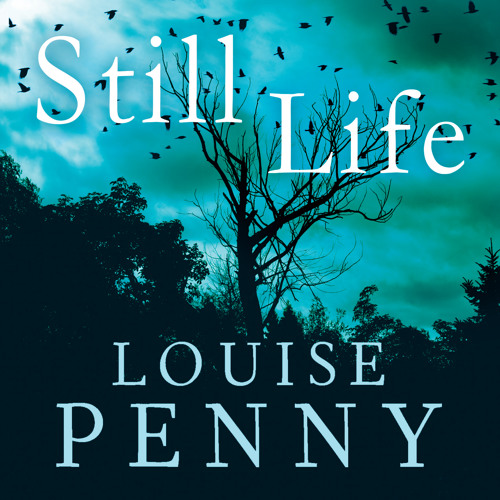
Still Life

Many friends, all of them devoted readers, have told me how difficult they have found it to read during the months of the pandemic. I know how they feel. I haven’t abandoned reading but I have found it requires more effort to pick up a book and to persevere with it than at any time in my life that I can remember. Every part of everyone’s routine has been upended by the virus, so it’s hardly surprising that reading should be disrupted, but it feels like concentration itself has been infected and with it the steady calmness on which it depends.

The cure to a “reading drought” is sometimes simple: find a book so compelling and a story so well told that you feel drawn back to it irresistably. That was the recommendation I was given recently by a good friend just before she introduced me to the novels of Louise Penny. Since finishing Still Life I’ve recommended it to lots of friends only to discover that everyone knows Penny’s work (except me, it seems).

Much like Susan Hill and her Serrailler series or P.D. James and her many Dalgleish novels, the appeal of Still Life centers on the allure of a charismatic, flawed, and brilliant detective (in this case Armand Gamache of the Quebec murder squad). Gamache shows up in a small, pretty village in the Eastern Townships to investigate the death of a much loved, retired schoolteacher who seems at first sight to be the victim of a hunting accident. Needless to say, nothing is quite as it first appears …

Still Life doesn’t have the most plausible of plots and it lacks the twists and turns that delight those readers who love to have their brains twisted. What it lacks in intricacy, it more than makes up for with charm. And, more than anything, it has that quality that defines a great mystery writer: compassion for people and their all-too-human foibles and failings. I bought the next two books in the Gamache series, so Still Life must have worked its magic and broke my reading drought.

Still Life by Louise Penny (Chief Inspector Gamache #1) by Hachette Audio  UK on SoundCloud - Hear the world's sounds

The Glass Hotel

Station Eleven's Emily St. John Mandel on coronavirus pandemic, The Glass  Hotel | EW.com

The plot of The Glass Hotel centers on a Madoff-style Ponzi scheme built and operated by a conman called Jonathan Alkaitis, a shamelessly criminal enterprise that upends and in some cases destroys the lives of those it touches. The novelist’s interests, however, are far more extensive than a simple exposure of the commonplace greed that has gripped the financial sector for decades. Mandel’s preoccupation here is with the various worlds that exist side-by-side, the porousness of the boundaries between them, and the compromises and excuses individuals make to preserve their status in the more privileged strata.

The novel, though set over several decades, anticipates our current crisis, and asks searching questions about how people react to disasters. The atmosphere is nervy and febrile, with characters teetering on the edge between reality and fantasy, wholly isolated from one another, and absorbed in delusion.

Emily St. John Mandel’s last novel, Station Eleven, was, I’m told, a bestseller. That was news to me. One positive consequence of my ignorance on this point was that I was able to pick up The Glass Hotel with no preconceptions whatsoever and with none of those distracting questions – will it be as good as her last book? Mandel is a very accomplished writer and I’m now looking forward to exploring her earlier novels.

Underland

Review: Robert Macfarlane — Underland - The Mancunion

Some books are so good and so important you feel fortunate that you were ever made aware of them and privileged to have read them. Underland is one such book. I remember very clearly the first time I picked up a book by Robert Macfarlane. I was visiting friends who live in England’s Midlands and woke one morning (thanks to jet lag) much earlier than my hosts. Not wanting to disturb them by clattering around in the kitchen, I settled into their living room before dawn to study the bookshelves. There I found several titles by Macfarlane and started to dip into them somewhat randomly. I was captivated right away and remain so to this day.

Underland tells the story of Macfarlane’s adventures in the subterranean worlds; the caves, root systems, mines, and catacombs, and of the rich (and endangered) lives lived in these hidden places by humans, flora, and fauna. His travels take him from the caves of Somerset and abandoned phosphate mines of Yorkshire to hidden passageways below Paris and to the Norwegian fjords and seas of Greenland. But this isn’t some travelog from the underground. Underland is an extended plea to all of us to listen to the signals that the Earth is sending us from its deepest regions, from the Arctic ice flows to the fungal networks in our forests. These signals speak of deep distress in the hidden places on our planet, distress caused by the often irreparable damage we are doing, not just to natural habitats but on the cultures and communities that depend on the survival of those habitats.

Macfarlane writes about the natural world with the sensitivity and precision of a poet. Every word is chosen with meticulous care, and not simply in service of descriptive accuracy. Macfarlane wants to move, inspire, and confound his readers as much as he wants to inform them. His love and deep knowledge of language can be found on every page. Underland stretches the vocabulary of even the most avid word lover. Katabatic, gneiss, flensing, mycelia – Macfarlane is as much an explorer of the English language as he is of the worlds beneath our feet.

Underland is a passionate book, filled with curiosities and with extraordinary people, and it’s a total delight. It shifted my perspective about the world I move through every day, made me think for the first time about the realms beneath my feet, and the connections between sub-surface and surface.

The world appears to have shrunk for everyone in recent months. Underland is a vital and timely reminder that this is a temporary and dangerous illusion. The world, in fact, is far larger than we can comprehend and far more vulnerable than we appreciate. Those are the messages the underworld is giving us. Macfarlane wants us to listen, reflect, and act.

How To Be An Antiracist

Ibram X. Kendi’s bestselling book was published before the recent wave of protests that erupted following the murder of George Floyd in Minneapolis, but it has found a new audience as a result of that particular tragedy. It’s a deeply-felt, powerful, and sophisticated book that weaves Kendi’s life experiences with his thoughts on how we might arrive at “an antiracist world in all its imperfect beauty”.

I don’t want to over-simplify a book that is nuanced and subtle, but it’s heart can be found in these sentences in the opening pages. “The opposite of “racist” isn’t “not racist”. It is “antiracist” …. One either allows racial inequities to persevere, as a racist, or confronts racial inequities, as an antiracist …There is no in-between safe space of “not racist”. Starting from this observation, Kendi builds a transformative concept, pulling into its construction insights from history, law, ethics, and science. But this is no dry, academic thesis. This is a call to action, an appeal to personal transformation that grows into activism and ultimately institutional change. If that activism and change don’t materialize, it won’t be the author’s fault, but the responsibility of all those who read this remarkable book and fail to act urgently.

How to Be an Anti-Racist: Ibram X. Kendi — INFORUM

Death in Her Hands

Ottessa Moshfegh on her new book, Death in Her Hands | EW.com

Her name was Magda. Nobody will ever know who killed her. It wasn’t me. Here is her dead body. Isn’t that a great opening to a novel? Direct, but oblique. Clear, but puzzling and tantalizing. The words appear on a neat handwritten note that Vesta Gul finds when she’s on her daily walk in the woods near her home. Vesta, recently widowed, lives in a modest lakeside cabin with only her dog, Charlie, for company. Here is her dead body, the note says, but there’s no corpse, leaving Vesta to speculate about the victim, perpetrator, motive, and so much more. With almost nothing to work with, Vesta has the freedom to create a wildly elaborate narrative to explain the cryptic note, making Death in Her Hands a story about creating stories and the functions those stories perform in our lives.

Listen to anyone telling a story and you’ll learn much about the storyteller. That’s certainly true of Vesta Gul. As her imagination takes flight, we hear things about Vesta that she might not want us to know, about her snobbishness, her controlling husband, and her horrible marriage. Ottessa Moshfegh has written an intriguing, cryptic novel about the purpose and power of storytelling and the myths and memories we intertwine and confuse every day.

Unexpected Triumph

1973 Triumph TR6 for sale | Hotrodhotline

I’ve never longed to own a classic or vintage car. Sure, I’ve often admired them from afar (with particular fondness for the Aston Martin DB4 and Mercedes 300SL) and silently congratulated those who put so much time and money into preserving them. But owning one? No thanks. Too complicated, too risky, too expensive, and too time-consuming. So how did I end up with a 1972 Triumph TR6 in British racing green? Happenstance. Chance. Luck (good or bad, it remains to be seen). And, of course, never having wanted such a car, I’m now a zealous convert, speeding around with the top down and generally behaving like a careless teenager or, even worse, like an aging and disreputable “petrol head”.

This phase of innocent enthusiasm will pass and might be replaced by a new phase marked by remorse and incredulity. Who knows? For now, I’m smitten by a beautiful example of British design and engineering from a bygone age. The previous owner, a friend of mine, cared for the vehicle for many years. It’s now my turn to be its custodian – perhaps the most unlikely in its history – as it approaches its 50th birthday.