Last year’s reading

Environmental Books to Read and Teach in a COVID-19 Semester

2020 was a bumper year for book publishers. It seems, cloistered at home, that we all bought more books. But have we been reading them? Several friends, all of them dedicated readers, told me last year that they found it difficult to concentrate on books, their minds infected with anxiety and sadness while their bodies stayed untouched by the virus. I read slightly fewer books in 2020 than I did in 2019 (thirty-seven versus thirty-eight), mainly because the places I’ve grown used to consuming them most intensively – airplanes, hotel rooms, departure lounges and the like – were denied to me.

For the first time I can remember I read slightly more non-fiction than fiction (nineteen versus eighteen). Why? I’m not sure. The year’s highlights were all non-fiction: Caste, Underland, Stories of the Sahara, The Man in the Red Coat, and A Month in Siena. Every one of these was wonderful. In contrast, while I read several good novels (The London Train, Here We Are, and especially Hamnet), not one was groundbreaking, brilliant, or completely captivating. I’ll need to choose my fiction more wisely in 2021.

The Searcher

The Searcher: A Novel - Kindle edition by French, Tana. Literature &  Fiction Kindle eBooks @ Amazon.com.

Tana French is a sentimental writer. She believes in heroes (usually flawed), resolutions (sometimes improbable), and redemption. Sentimentality is a useful quality in a mystery novelist, especially when it’s laced with some cynicism. It makes for attractive leading characters and tends towards the kind of neatly resolved stories that are a big part of the genre’s attraction.

A year has passed since I last read one of her novels. That was The Wych Elm, an intricate, tightly knotted story set in Dublin that I remember as having been too long and too meandering to be entirely satisfying. A year on and the prolific Ms. French has taken us to a very different Ireland for her newest story, to its “wild west”, Connemara. It’s here, appropriately enough, that Cal, a former Chicago police officer, has chosen to retire, spending his time fixing up a dilapidated old farmhouse and getting to know his quirky neighbors before trouble comes calling. It’s the kind of trouble that makes it important to acquire a rifle, thereby completing the picture of a 19th century frontier man transplanted to 21st century rural Ireland.

At its heart, The Searcher is a straightforward morality tale, with echos of those black-and-white cowboy movies made by the likes of John Ford in the 1950s. (I assume the novel’s title is a conscious nod to Ford’s film of 1956). It appeals to our longing that right should prevail, even in times when the lines that separate good guys from bad, justice from injustice, and redemption from perdition get blurred. Bad things may happen to good people. Greed and stupidity may be rife and innocence in short supply, but good outcomes are still possible if individuals do the right thing. How much you enjoy The Searcher may depend on whether you believe that.

Ghostways

Eric Ravilious, Hollow Lane (1938) Eric Ravilious, Hollow Lane from 'The  Writings of Gilbert White of Selborne', ed., H.J. Massingh… in 2020 | Art,  Wood engraving, Woodcut

In my final book of 2020 I continued my journey through the works of Robert Macfarlane. That I should end the year in his company seems right in some way because he has been a delightful and consoling companion at various times in a year none of us will forget.

Ghostways brings together in a single, slim volume two essays previously published separately. Holloway first appeared in 2012 and Ness in 2018, with words by Robert Macfarlane and illustrations by Stanley Donwood. Both are works that defy categories. Ness is a prose-poem, a kind of elegy or lamentation inspired by Orford Ness, a ten-mile spit of shingle in eastern England where, for some seventy years or more, the British government tested deadly weapons in strict secrecy. Holloway tells of journeys in Dorset made by Macfarlane and his friends in 2004 and 2011 to find one of the ancient, sunken paths (hollow ways) that can be found carved into the soft landscape of Britain. “A route that centuries of foot-fall, hoof-hit, wheel-roll, and rain-run have harrowed into the land”.

As in other books he has written, the sense of place is strong in Ghostways, the experience of place not as something “out there” but as a realm in which a person can travel and slip – from one moment to the next – from the present into the past or the future. Language isn’t just how such experiences are communicated to oneself and others, but integral to the experiences themselves. Words are more than words, places are more than places. To experience is to express, and to express is to experience. In movement we encounter language, and in word-making we effect movement and change in the world. Places, like words, are vulnerable to loss, but both can be recovered with care and with sensitivity to our lived experience. Ghostways is a powerful and affecting hymn to the vulnerability of our world, and a strange and gentle reminder to us all to live in it fully and sensitively.

House of Correction

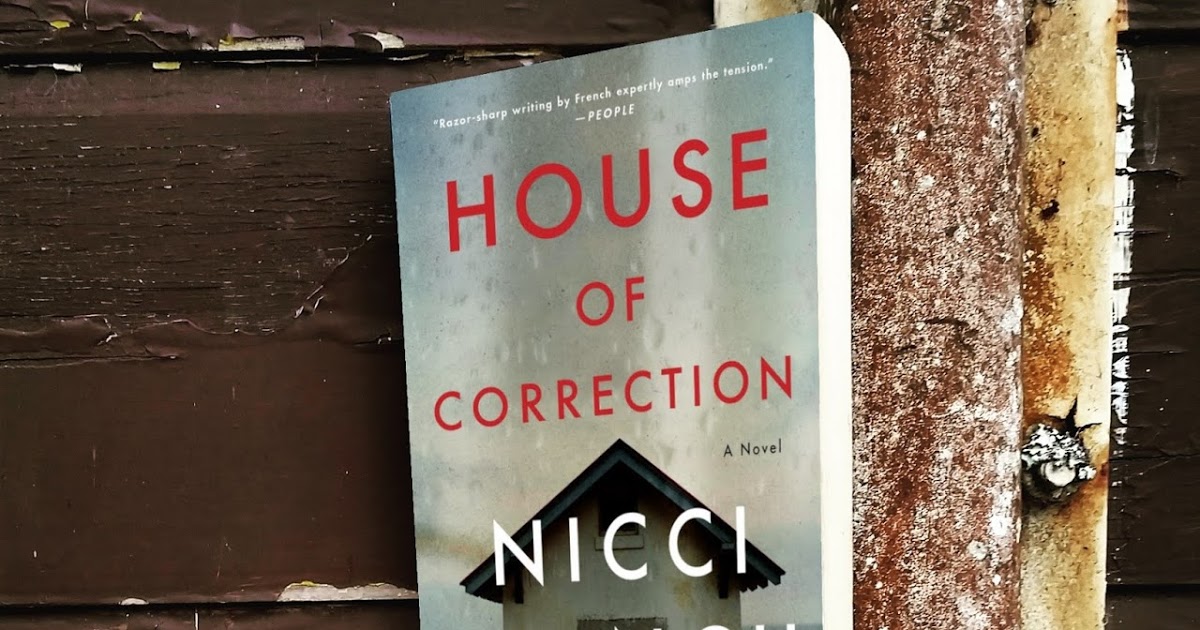
A woman sits in prison awaiting trial for murder. She dismisses her lawyer, preferring to conduct her own defense in spite of having no prior legal experience. How does she prove her innocence while incarcerated? Two thirds of House of Correction takes place within the prison, with the final third dedicated to the trial itself and its aftermath. Nicci French sets herself an interesting challenge, but it’s one she fails to pull off. Why? For the age-old reason that neither the central character nor the story line are interesting enough to make the experiment worthwhile. Plot ingenuity is all very well, but in itself it’s not enough to make a compelling novel.

but books are better: Book Review: HOUSE OF CORRECTION, by Nicci French

Caste

Isabel Wilkerson

Some books change how you think. The change is often a minute but permanent adjustment to how you see, experience, and explain the world, a deep, transformational shift that’s not necessarily visible to anyone else but you. Caste is such a book. It’s one of the two truly remarkable books I read in 2020, the other being Robert Macfarlane’s Underland.

America’s shameful history of racism is an ugly tapestry made up of millions of individual acts of discrimination, hatred, violence, and murder. Every generation, for more than three hundred years, has added to that tapestry and intensified its ugliness. Its persistence is due not just to those who actively wove it but to those who stood back and did nothing as it took shape. Isabel Wilkerson looks at American racism through the lens of caste, identifying and exploring parallels in two other notorious caste systems, the antisemitism of the Third Reich and the rigid, religiously defended divisions of India.

Although it has all the usual trimmings of an academic work (pages of notes, bibliography, and so on), Caste is written with the kind of affecting directness and warmth that is rarely displayed in a work of scholarship. It’s that combination that gives the book its remarkable power and authority. Wilkerson isn’t striving for lofty detachment. She wants to change her readers, their perceptions and attitudes. Whether or not you accept her central premise about caste (I did, but not entirely) doesn’t much matter ultimately. What matters is that her utterly compelling and brilliantly written account of racism in America should shake our understanding and that the jolt should reverberate insistently until far-reaching and permanent change is achieved.

The Lost Spells

The Lost Spells by Robert Macfarlane, Jackie Morris, Hardcover | Barnes &  Noble®

Anyone who knows the work of Robert Macfarlane knows that it’s suffused with a sense of loss. Lost words, lost creatures, lost habitats. His most recent book, The Lost Spells, picks up the theme and opens with these words. “Loss is the tune of our age, hard to miss and hard to bear. Creatures, places and words disappear, day after day, year on year”.

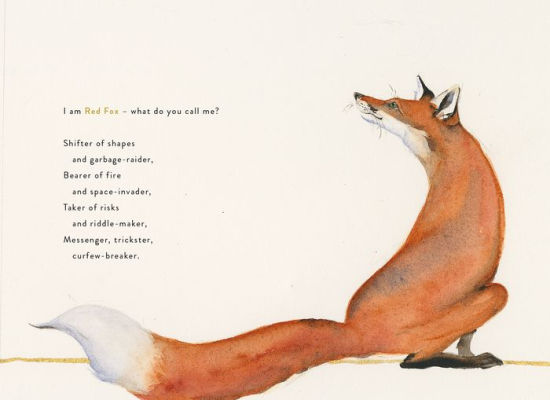
This is Macfarlane’s second collaboration with the brilliant artist, Jackie Morris. It’s a gorgeous set of spells or incantations to be read aloud, celebrating the beauty and fragility of the natural world. Various birds, trees, and creatures are rendered in stunning combinations of words and pictures. Vivid enchantments for our beautiful, endangered world.

The Lost Spells by Robert Macfarlane, Jackie Morris, Hardcover | Barnes &  Noble®

Bad Behavior

There are many celebrated contemporary novelists whose work I have never read. Don DeLillo, Thomas Pynchon, Stephen King, Michael Chabon, to name only a few. These omissions don’t bother me much. I’ll get to them eventually or I won’t. In other words, knowing they’re out there, famous and unread (by me), isn’t enough in itself to make me read their books. If, however, I learn about a well regarded novelist I’ve never even heard of before, I feel flashes of curiosity and irritation about my own ignorance that are strong enough to push me to the bookshop. That happened recently when I saw a profile in the FT of Mary Gaitskill. My local bookseller, who’s usually too well-mannered to show her disapproval about the gaps in my reading experience, was nevertheless surprised and suggested I start with the short story collection that launched Gaitskill’s career in the late 1980s called Bad Behavior.

Having now read these nine stories, I can better understand why Gaitskill’s reputation is so high and why her distinct and unusual style is so celebrated. The cast of characters here is uniformly unattractive and occasionally loathsome – cruel, narcissistic, exploitative, and deluded. But, unappealing as these people are, there’s a slice of life captured in these strange, cinematic stories, that feels vivid and authentic. I can’t recall reading in recent years anything about human relationships quite so relentlessly bleak as this collection, but it’s a testimony to Gaitskill’s talent that each of these small vignettes of unhappiness and solitude is made so compelling and memorable.

Why is Bad Behavior So Good? | Literary Hub

Snow

Christie meets Cluedo in John Banville's new crime thriller

What’s going on here? That was the question I kept asking myself as I read the first few chapters of Snow. Why is a writer as sophisticated and as clever as John Banville pulling me into what seems like a classic Agatha Christie-style murder mystery? A Catholic priest is killed in a grand but faded country house, his mutilated body placed carefully in the library. Who’s the murderer? The old soldier who owns the house, his nervous wife, her shifty brother, the stable boy, the local doctor? Only very gradually did it occur to me that it was the very familiarity of this archaic, slightly stale genre, with its precise rules and restrictions, that Banville wanted as his setting for a theme altogether more ambitious: the horrors of clerical abuse and the subtle divisions in Irish society perpetrated by religion and social class.

In the harsh winter of 1957, Inspector Strafford is sent from Dublin to rural Wexford to investigate the brutal murder of Father Lawless. The crime is perpetrated in a house belonging to a member of the Protestant gentry, a milieu very familiar to Strafford, himself a Protestant. In a country and at a time in which the Catholic church has immense influence, Strafford is expected to uncover and conceal, to solve the crime but also to bury its most salacious circumstances.

Snow is a powerful novel but not an entirely satisfying story. Banville interrupts the action with an “interlude” narrated by the victim, a device that somewhat clumsily reveals the motive for the murder without divulging the identity of the killer. Although Strafford solves the crime, he does so without exercising much skill. Snow offers little to hardcore fans of mystery fiction, but I doubt that will bother Banville much. The decades of abuse perpetrated by priests and its systematic cover-up by an all-powerful Church – those are the crimes he wants us to remember.

A Fatal Grace

Only my second in the lengthy Gamache series by Louise Penny and I fear the charm is wearing off. How many killings can the small village of Three Pines really bear? More importantly, how much of this slightly irksome cast of characters can I bear? The gratuitously rude old poet, the bitchy bistro owners, and the rest of the gang were charming enough in the first installment, but it all seems just a little too twee on the second outing.

To Penny’s credit Gamache and his team of investigators continue to intrigue and Gamache himself is undeniably a clever creation. I doubt if that’s enough to sustain a series of this length, but plenty of other readers seem to disagree if the sales figures are to be believed. The problem with A Fatal Grace is a simple one. The central plot is dull and far-fetched, and I found myself unable to care about the outcome. No amount of cozy characters and Canadian charm can make up for that.

Amazon.com: A Fatal Grace: Chief Inspector Gamache, Book 2 (Audible Audio  Edition): Louise Penny, Ralph Cosham, Macmillan Audio: Audible Audiobooks

Hamnet

Review: 'Hamnet,' By Maggie O'Farrell : NPR

Relatively little is known about Shakespeare’s immediate family, but we do know he had a son, Hamnet, who died of unknown causes in 1596 at the age of eleven. Maggie O’Farrell places this family tragedy at the heart of her latest novel, imagining that Hamnet fell victim to one of the plague outbreaks that afflicted England in the late 16th and early 17th centuries.

Shakespeare (never named in the novel) isn’t center stage in Hamnet. That places goes to his wife, called Agnes in the novel but more usually referred to as Anne in historical studies. What a creation she is in O’Farrell’s hands! A deeply intuitive, sensitive woman, Agnes is attuned to the natural and spiritual worlds to a degree that makes her an uncomfortable presence for some of her family. The loss of her young son threatens to unhinge her until she joins a performance of her husband’s new play, Hamlet ….

For the less accomplished or less sophisticated writer, the historical novel is a cruelly exposing genre. Rendering a bygone period persuasively is an exercise fraught with risk. It’s not faithfulness to detail that’s usually the problem. In fact, most historical novelists tend to overdo the details, thinking that layer upon layer will be enough to transport the reader to the appropriate era. The real difficulty is drawing a convincing central character that thinks and acts in ways faithful to the age. That’s far harder than it first seems. In a great historical novel (Hilary Mantel’s Cromwell series comes to mind), characters never feel like 21st century people dropped into, for example, the Elizabethan or Victorian worlds. In Hamnet, O’Farrell has given readers a beautifully rounded and believable central character and a deeply moving study of grief.