First Person Singular

I love Haruki Murakami’s writing. All of it. That would have once made me part of the in-crowd, but not so much these days. I sense a shift among critics about Murakami. The reviews are getting that little bit less adoring than they used to be, and it feels as if it’s becoming safe and fashionable for some reason to knock him. Not so much a volte face, but certainly the beginnings of a shift. It’s hard to know what’s changed. Yes, he can be repetitive, long-winded, and inconsistent, and he has glaring weaknesses such as the depiction of women in his writing, but that’s been the case for many years.

I’ve always admired his short stories especially, so I was eager to read his latest collection of eight tales, First Person Singular. I expected to enjoy it, and I did very much. Having said that, I admit the flaws that infuriate his critics are here in abundance and this is not by any means Murakami on top form. And yet there are passages of lovely writing and that unique, unmistakable voice.

Now in his early 70s, Murakami seems preoccupied here by time passing, by aging and mortality, and by the strange unreliability of memory. Murakami Man in First Person Singular is as puzzled and confounded by life’s big questions as he always was, and remains consoled by the same small comforts; music, mainly jazz and classical, baseball, and reading. Women, as before, seem to beguile and confuse him – failing to show up when they should, confronting him aggressively without warning, committing crimes, or even killing themselves without explanation. First Person Singular is familiar Murakami but never vintage Murakami.


First Person Singular' a magical mystery tour of the self - Buzz - The  Maine Edge

Girl, Woman, Other

BBC Radio 4 - Girl, Woman, Other by Bernardine Evaristo, Winsome and  Penelope

I was well aware after it won the Booker Prize in 2019 that Girl, Woman, Other was a critical and popular success, but I’m not sure I would have read it without my wife’s fulsome recommendation. I’m very pleased I did. It’s a novel with such distinctive and vibrant energy, and quite unlike anything I can recall reading before. It’s a beautiful kaleidoscope of the experiences of black, British women and a cross-section of society whose voices have for so long been largely muted in, or entirely absent from, UK fiction.

I’m probably guilty of nitpicking, but I wonder about the author’s decision to (almost) eliminate punctuation from the novel. It must, in part at least, have been motivated by a desire to allow the many voices to come across distinctly and singularly, but I found it ended up having the opposite effect and muffling the differences between the characters. No matter. It certainly didn’t diminish my enjoyment and clearly didn’t impede the huge commercial success of the novel.

Darke

Darke by Rick Gekoski – Canongate Books

Grief, suffered alone, can mutate into self-pity and misanthropy. When his wife dies of cancer, James Darke, retired teacher, bibliophile, and world-class snob and curmudgeon entombs himself in the family home. Everyone is shut out. Phones and emails go unanswered. Even the letter box in his front door is removed. Sustaining himself on cigars and alcohol, Darke succumbs to a darkness only occasionally illuminated by a bitter humor. Spoiler alert! He comes out the other side of his bereavement, saved by the love of his daughter and grandson.

Plenty of humor can be found in anger and bitterness, and James Darke is undeniably a great comic character. Neither God, science, literature, or alcohol can keep you alive forever, and ultimately everyone needs to work out life’s meaning for themselves. The lucky ones have the love of others to help them through.

Rick Gekoski is a rare book dealer and many years ago published a very funny account of that peculiar trade (Tolkien’s Gown). Darke is his first novel.

This is Happiness

This Is Happiness' by Niall Williams has emotional acuity and boisterous  humour | The Star

Niall Williams isn’t as well known as he deserves to be. His novels attract good reviews consistently and prizes occasionally, but not the same level of critical attention that some of his peers in Ireland, for example Anne Enright, receive. It’s a shame because there are few novelists as good as Williams when it comes to crafting sentences, not to mention deeply affecting stories.

This is Happiness is a tender and gentle account of a way of life in rural Ireland that’s now largely vanished but which I remember vividly from childhood holidays in West Cork and Connemara. Set in 1958 and in a fictional village called Faha, it tells the story of Noel Crowe, a teenager dispatched to his grandparents’ home in a remote part of West Clare after having bolted from a seminary in Dublin. Noel arrives in a rare moment of sunny, warm weather and in days of transformation as the poles are installed that bring electricity to Faha for the first time. As is the way with such things, on the surface little happens to Noel that summer, but the little that does happen is peculiarly life changing, not least the discovery of love and infatuation and the difference between the two.

The pleasure I get from reading stories has little to do with plot. I’m perfectly happy when nothing happens or appears to happen in a novel. The delight for me that comes from reading anything by Williams is partly the tender evocation of places and people I once knew and recognize in these pages, partly the sheer beauty of his prose, and his appreciation of the rhythms and currents running through our lives. Needless to say, he explains it all better than I can. “It struck me that Irish music was a language of its own, accommodating expression of ecstasy and rapture and lightness and fun as well as sadness and darkness and loss, and that in its rhythms and repetitions was the trace history of humanity thereabouts, going round and round“.

Jabbed

I showed up at 8am, appointment card in hand, just as the doors were opening. Everything was efficiency and briskness. Men and women from the National Guard, every one of them solicitous and polite, were there in large numbers to handle the formalities and steer us towards the smiling nurses. By 8:17am I was vaccinated, had my sticker, and was heading back to my car. Ten dollars for parking. When did NYC become so reasonable and easy?

Will anything change now that I have my Covid-19 vaccination? No and yes. No because it will take many months before we see the kinds of numbers being vaccinated that will propel a real change in how I live. Yes because that tiny jab in the arm injected me with something more than a vaccine, a little bit of hope that the end might just be in sight.

Getting the vaccine – The Village Sun

Summerwater

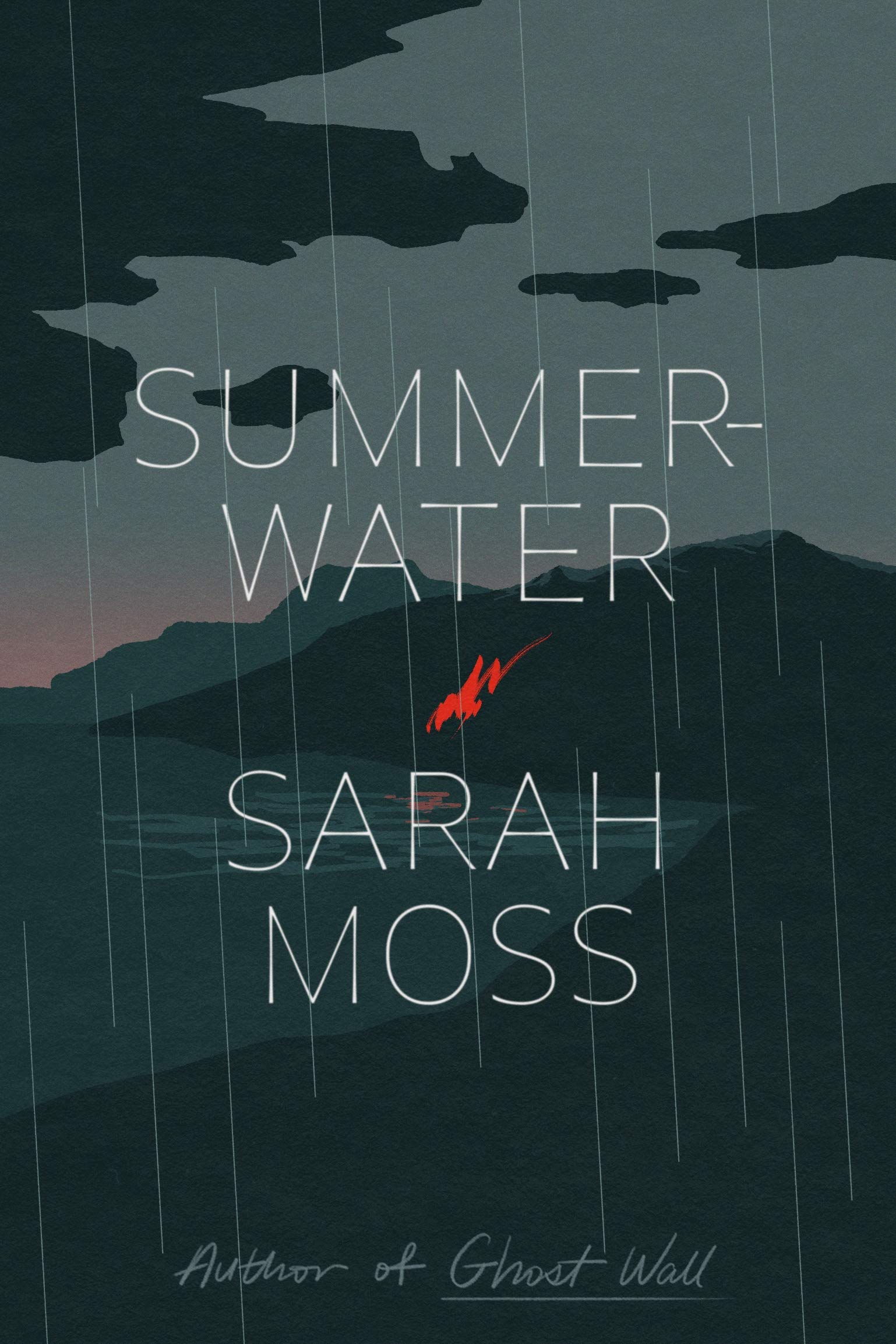
More than two years have passed since I read Sarah Moss’s Ghost Wall, but its atmosphere of oppression and menace has lingered. Similar eeriness seeps from her newest novel, Summerwater. Set in a remote holiday camp in Scotland, Summerwater is the account of a single rainy day seen through the eyes not only of the visitors but of the animals and birds nearby. No one writes quite like Sarah Moss. She’s wonderful at narrating people’s inner lives – and especially the continuous monologue in their heads – in a way that feels authentic. She’s brilliant, too, at depicting family life, its tensions, alliances, and tiny fractures, and is as sure-footed with children as she is with adults.

Summerwater is a very special novel. Truthful, honest, and unsettling, it seems to me to confirm Moss as one of the most distinctive and talented novelists writing today.

Image result for summerwater moss review

Disturbance

Review: 'Surviving Charlie Hebdo' paints a powerful portrait of pain,  trauma and persistence | The National

January 7th 2015 started much like any other day for Philippe Lançon. He got up, took a shower, made coffee, replied to a few emails, exercised, and cycled to work. At around 11:30 he was sitting in a meeting when two gunmen walked into the conference room and murdered ten people. Lançon was shot in the face and was one of the few to survive what Wikipedia rather blandly calls the “Charlie Hebdo shooting”. Even the sudden intrusion of violent death didn’t immediately disrupt the banal routine of an otherwise typical day. Lying in his own blood on the meeting room floor and staring at the bodies of his dead colleagues, Lançon thought about work deadlines, making sure he had his phone, and keeping his backpack close.

I was about to write that Disturbance is Lançon’s account of his recovery, but it isn’t because recovery is meaningless in the context of his experiences. Let’s just say Disturbance is about what happened next. The surgeries to re-build his face, the long stay in hospital, the reactions of loved ones, and so much more, some of it woven around memories of his earlier life: books read, articles written, music heard, and places visited. Lançon would be forgiven some measure of self-pity in the circumstances, but there’s not a trace of it in Disturbance. He despises the sickly, attention-seeking sentimentality of American “victim memoirs”. Like the good journalist he is, he focuses his sharp eyes on what matters, caring not at all what the reader might feel about him. For Lançon, what matters is to be a truthful witness of events. Others can and will interpret and pass judgement, but Lançon witnessed, suffered, and remained. And reported for those who couldn’t and never will.

Fracture

The Japanese art of kintsugi repairs broken pottery by inserting into the cracks and imperfections a lacquer that includes powdered silver, gold, or platinum. The goal of kintsugi is not to disguise damage but to treat it as an integral part of an object, drawing attention to and beautifying the flaw. The philosophy underpinning the art is a fascinating one and so different from how most of us treat human imperfections and damage. The fractures everyone picks up in a lifetime are the things we usually choose to conceal, the damage that gives the lie to the image of flawlessness we want to show to the world. I can’t make up my mind about kintsugi. By accentuating the imperfection, is the beauty of the original lost, or is something entirely new brought to life? Are the cracks what matter? Is it best to conceal the damage or give it prominence? Can art and beauty ever repair what is broken?

In Andres Neuman’s novel, Yoshie Watanabe survives the atomic bomb dropped on Hiroshima by American forces in August 1945, the only member of his immediate family to do so. After the war he makes his career with a Japanese television manufacturer and is posted to Paris, New York, Buenos Aires and, finally, Madrid, returning to Tokyo in retirement before the tsunami of 2011 and the Fukushima nuclear disaster. A life book-ended by two catastrophes. Four women who knew him intimately – one in each city and none of them Japanese – add their stories to his and to that of a slightly obsessive Argentinian journalist. The result is six perspectives of a single man, six views of a life broken and re-made.

Fracture is a complex and ambitious novel. It is also, at its core, a cold one, looking unflinchingly at the horrors we inflict on one another, sometimes by design and sometimes unintentionally, and on the possibility of acceptance, redemption, and repair.

Fracture by Andres Neuman review — tragedy repeating itself | Culture | The  Sunday Times

The Lives of Lucian Freud: Fame

Lucian Freud's Self Portraits: But What do They Mean? – ReportGlobalNews

After finishing the one thousand or so pages of this two-volume biography, it’s hard not to be impressed by the life-long dedication of Lucian Freud to the art of painting and in particular to the painting of the human form. It was the driving passion of his life, provoking, absorbing, and stimulating him for the best part of eighty years. It’s a credit to his biographer that the single-mindedness of Freud’s devotion should be what lingers when the last page of these books is turned. Not the philandering, not the gambling, not the hobnobbing with aristocrats and villains, not the rivalry with Francis Bacon; the struggle to render individual lives in paint is what persists.

Freud has mellowed by the time we meet him in volume 2, but not by much. The casual cruelty, the snobbishness, and deep self-absorption are still in evidence, but as he starts to leave middle age his sharp eye focuses more on his artistic legacy, and with that comes the unrelenting concentration on his work. Partners, children, friends, and dealers all assume a distant second place as the painting takes more and more of his attention and the works become larger, more ambitious, and more demanding.

For Freud the work was everything. Read Feaver’s biography and enjoy the anecdotes and gossip, but, if you can, have reproductions of the work nearby and study them. (I recommend especially the Phaidon edition).

Last year’s reading

Environmental Books to Read and Teach in a COVID-19 Semester

2020 was a bumper year for book publishers. It seems, cloistered at home, that we all bought more books. But have we been reading them? Several friends, all of them dedicated readers, told me last year that they found it difficult to concentrate on books, their minds infected with anxiety and sadness while their bodies stayed untouched by the virus. I read slightly fewer books in 2020 than I did in 2019 (thirty-seven versus thirty-eight), mainly because the places I’ve grown used to consuming them most intensively – airplanes, hotel rooms, departure lounges and the like – were denied to me.

For the first time I can remember I read slightly more non-fiction than fiction (nineteen versus eighteen). Why? I’m not sure. The year’s highlights were all non-fiction: Caste, Underland, Stories of the Sahara, The Man in the Red Coat, and A Month in Siena. Every one of these was wonderful. In contrast, while I read several good novels (The London Train, Here We Are, and especially Hamnet), not one was groundbreaking, brilliant, or completely captivating. I’ll need to choose my fiction more wisely in 2021.