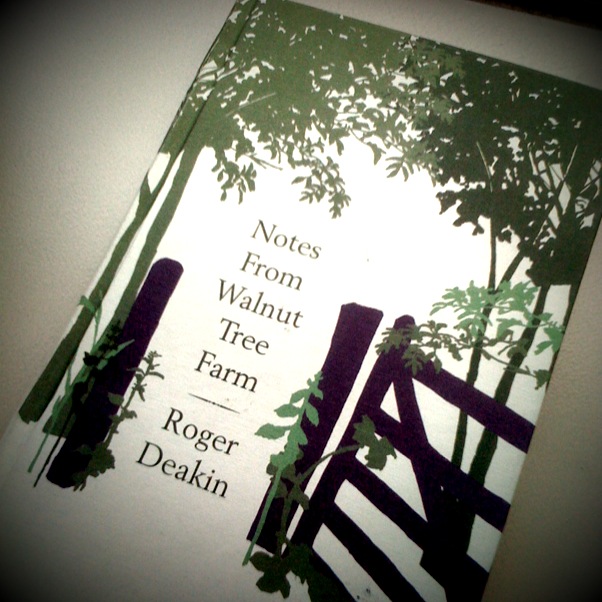
Roger Deakin’s name crops up time and time again in the work of Robert Macfarlane, and always with affection and admiration. It wasn’t until I read The Wild Places that I felt the urge to learn more about the writer, film maker, and environmentalist who died in 2006. Deakin only published one book in his lifetime, Waterlog. Two others, Wildwood and Notes from Walnut Tree Farm, appeared posthumously. The latter collects together entries from Deakin’s notebooks made over several years and organizes them into a sort of monthly anthology. Here you’ll find descriptions of and reflections on the natural world, most of it within easy reach of the ancient cottage Deakin restored in Suffolk. Sometimes he strays further afield (Devon and Somerset, for example), but it’s mostly the woods, hedgerows, and animal life of East Anglia that catches his attention. And what attention it was. The color of a bird’s eye, the movement of a spider, the smell of newly cut logs – these details were pure joy for Deakin and noticing them was, in his mind, an obligation. Deakin’s life was one lived in the natural world, not distanced or separate from it, and his writing communicates so well the intense pleasure that came from that.
I can’t pretend to have thought deeply about modern farming. Like many people, I’m aware in general terms of what the industrialization of farming and the demands for ever cheaper food have done to our environment and to rural communities. James Rebanks, on the other hand, has thought deeply about the subject. His family has farmed in England’s Lake District for more than 600 years. Just think about that. Six centuries of uninterrupted labor on the land, striving to eke a living generation after generation. English Pastoral is his sustained reflection on farming’s past, present, and future. It’s simply an extraordinary achievement and one that has been lauded since its publication last year. I’m not sure I would have become aware of it if it wasn’t being so widely promoted in London’s bookshops when I was there recently. Pretty much every store I entered had it displayed prominently, no doubt to capitalize on the huge interest in books about nature that we see at the moment.
Rebanks writes with deep compassion for his family, his land, his livestock, his community, and the wider world. He asks the tough questions. How do we feed a planet without destroying it? How do farming families make a decent living while respecting and preserving the lands they love? Rebanks doesn’t have all the answers. He doesn’t pretend to. Weaning the world from a diet of cheap food may be a commendable goal, but how do you achieve it when poverty is on the rise? English Pastoral is one man’s reflection on the serious challenges we face, informed by expertise, decency, and a determination to preserve the land for future generations. It’s a must-read.
It was simple luck. I didn’t know when I bought the ticket weeks before that the game would end up being the second coming, the return of Cristiano Ronaldo to Old Trafford, sporting the famous number 7 shirt he had last worn in 2009. A good seat at an ordinary game was suddenly the hottest ticket in town, changing hands for thousands of pounds. It never occurred to me cash in. This was unmissable.
United won 4-1. Ronaldo, always one for the big occasion, scored twice. But this was never about a game of football. This was all about the return of arguably the greatest footballer ever to the club where his career took flight. I will never forget the storm of noise that marked his appearance on the field as more than seventy thousand people screamed his name in unison. The rest of the team – even the minor gods like Fernandes, Varane, and Sancho – were forced out of the spotlight and relegated to the supporting cast. Things will calm down. Most likely even the arrival of CR7 won’t be enough for United to compete this season against the likes of City, Chelsea, and Liverpool. We’re not stupid, just very sentimental, but it was a great day for dreamers.
I’m glad that Bernard MacLaverty’s new stories appear so infrequently. Glad because they unfailingly show the time and care he devotes to them. Glad because the enjoyment they give is so intense that it’s best rationed and savored. It’s a pleasure tinged with melancholy, like the enjoyment of an autumn day when you feel suddenly an intimation of winter ahead. Only the best storytellers can pull it off; the sweetness of life infected yet intensified by loss. John McGahern, Colm Toibin, William Trevor, even James Joyce can do it. So can MacLaverty.
The twelve pieces in Blank Pages and Other Stories all seem to me to be, to some degree, reflections on aging and on the delicate and sometimes painful adjustments to relationships that come with it. A man loses his grandchildren on a day trip to the botanical gardens. Another makes a visit to his frail and declining mother in a far-off nursing home. A widow grieves for a son lost at sea. The settings may change, but not MacLaverty’s approach – the precise uncovering of the layers in a human life to expose the things that are common for all of us but unique to each of us. That’s his brilliance. Each of us lives through and endures in unique ways experiences that are known to every one of us.
There isn’t a mediocre story in this collection and there are at least two masterpieces. Sounds and Sweet Airs, apparently so simple and effortless, is a brilliant and poignant telling of a simple encounter between the old and the young. The End of Days, set during the pandemic of 1918, has Egon Schiele witnessing the death of his pregnant wife from Spanish influenza. Each captures an entire world in a few pages.
None other than Hilary Mantel once asked “Why is Bernard MacLaverty not celebrated as one of the wonders of the world?”. Well, he is by me, but the truthful answer is the world seems to show little appetite for the un-showy yet masterful art, crammed with nuance and subtlety, to which he has dedicated his writing life.
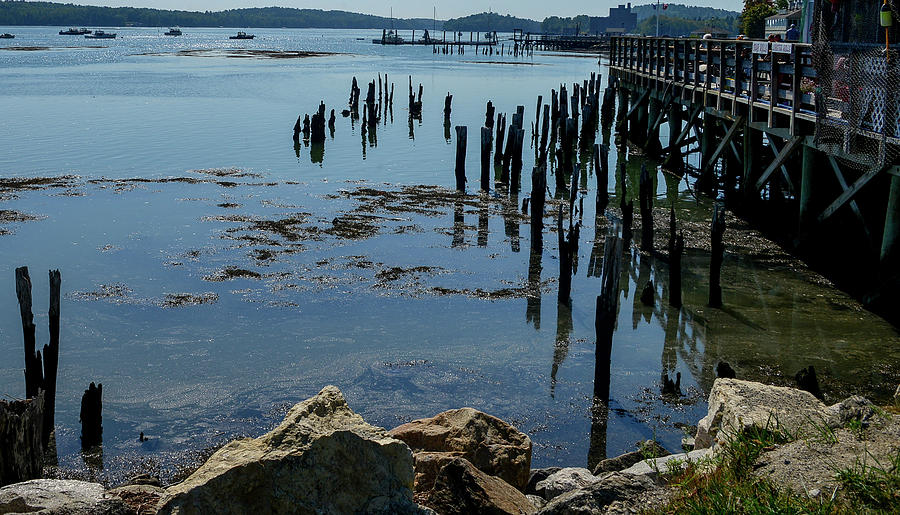
I recently packed up my laptop and headed to work from a cottage in Maine for a few days. Tropical storm Henri made the going slow, but a little more than six hours after leaving home I was hunkered down in Wiscasset watching the rain pour down. Promoted as the prettiest town in Maine, Wiscasset is a picturesque base from which to explore the central part of the state. Towns like Boothbay Harbor, Rockport, and Damariscotta are close by for those craving stores and restaurants. Wiscasset itself is packed with antique stores, many of which seem to open very irregularly and unpredictably. It has a handful of good eating places, including Red’s Eats, the lobster roll shack that has been feeding locals and visitors alike for decades. If long lines and high prices don’t bother you, Red’s is the place for you.
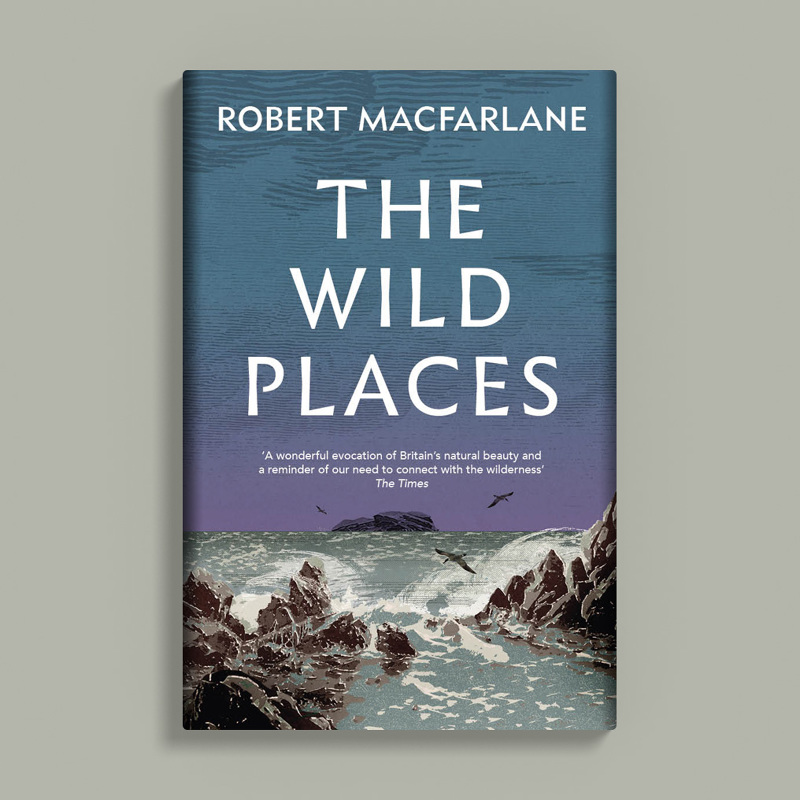
Of course, Maine’s glory is its open spaces. The gorgeous beaches, woods, and lakes attract a lot of visitors in the summer, but I found it easy to escape into places of solitude. Once Storm Henri had passed over, we had days of unbroken warm sunshine, perfect conditions for exploring the wild places of Maine. When I wasn’t working or exploring the neighborhood, I was reading Robert Macfarlane’s The Wild Places. Macfarlane could find plenty of wilderness in Maine, enough to satisfy even the most solitary of hermits. But it would be foolish to be complacent about that state’s wild wonders. The Wilderness Society does a great job raising awareness of the dangers.
I have written here many times about Robert Macfarlane’s books and about how much I admire them. He’s usually pigeon-holed as a nature writer. If that deters anyone from reading his books, all I can say is it shouldn’t. Like all great writers, Macfarlane writes about life. It so happens what he has learned about life has been learned while exploring and thinking about the wild places in our world, about forests and caves, about birds and fish, about water and wind, and about pretty much anything and everything in the natural world that catches his eye.
The Wild Places is one of his earlier books and was first published in the UK in 2007. Much of what I’ve grown to love in his later work is here. The infectious sense of wonder, the restlessness that urges him to explore, the curiosity, and the precision and beauty of the language he uses to express it – it’s all here in fifteen delightful chapters. Like all of Macfarlane’s work, The Wild Places is a celebration of what we have, a record of what remains, a lamentation of what’s already been lost, and a warning about what we stand to lose if we don’t care for the few remaining wildernesses. To my mind that makes it essential reading.
When he started the travels that led to this book, Macfarlane had fixed ideas about wildness and wilderness, a conception of them as standing outside time and human history. By the end of his journeys his perception had changed. Wildness could be found by looking deeply and closely into a nearby hedgerow. Wilderness was a place profoundly influenced by human history.
I read The Wild Places while staying in Maine, a place celebrated for its extravagant natural beauty. Even here, a fight is underway to protect the wilderness in areas like Katahdin Woods and Waters National Monument from threats of logging and encroaching development. There’s still time to heed the warnings of Macfarlane and others, but not much.
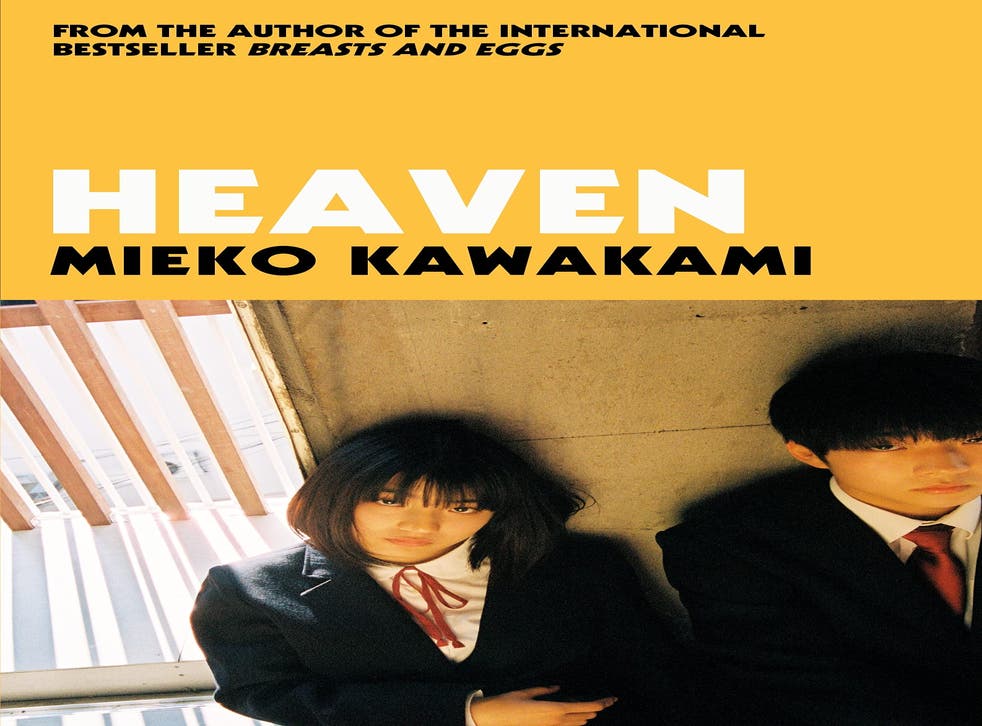
The narrator of Heaven is a teenage boy living in a kind of hell, bullied relentlessly and violently by his classmates because of his lazy eye. His only friend, Kojima, suffers the same fate day after day, week after week, because of her appearance. Their friendship, tentative and uncertain, is the single haven in an endless storm of humiliation and brutality, the only solace in a world of sadness and loneliness.
Does suffering have meaning? For Momose, one of the bullies, no. People hurt others because they can. It’s as simple as that. Countering this nihilism, Kojima asserts that her suffering has significance. “There’s meaning in overcoming pain and suffering.” I don’t want to spoil the ending, but the final word is given to the narrator whose vision of beauty and hope closes the novel.
It has been more than a year since I read Mieko Kawakami’s bestseller, Breasts and Eggs, a novel I remember particularly for its distinctive, unusual voice. I recommended the book to several friends and it was one of those friends who kindly gave me Kawakami’s latest work, Heaven, after spotting it in a London bookshop. I think it’s safe to say it won’t be the voice I remember when I think about Heaven. It will be the harrowing subject matter and Kawakami’s unflinching description of bullying and its consequences.
The quickest of glances along my bookshelves confirms that England has produced some remarkable – and remarkably prolific – diarists. I doubt there is something special in their character that makes the English particularly inclined to the sustained self-absorption, curiosity, and sheer discipline that are necessary for maintaining a diary over years or even decades, but I am at a loss to explain why so many English men and women have kept such compelling diaries. Are there great American, Irish, or Australian diarists? Probably, but none come to mind immediately.
Another oddity is the fact that the best diarists were often not especially distinguished in other respects. James Lees-Milne, for example, did valuable work saving important British houses and estates after the war and was influential in the formation of The National Trust. Alan Clark was on the fringes of power during Margaret Thatcher’s period in office, but was never himself a central figure. The same might be said of Harold Nicolson earlier in the century. Frances Partridge, a friend of everyone in the Bloomsbury set, never achieved the distinction of those to whom she was closest like Lytton Strachey or Dora Carrington. Yet all of them were wonderful diarists and their fame is assured because of the journals they kept.
Henry ‘Chips’ Channon was American by birth but adopted England and Englishness in his early twenties with the most extraordinary passion and commitment. (On the evidence of his diaries, he never passed up an opportunity to be rude about America and Americans). His apparently effortless entry into England’s high society from the 1920s onward may have been eased by a generous allowance from his father, but what sustained him there was charm, wit, and a good marriage. He had some success in politics, but his fame rests on the unusually frank diaries he kept for decades and which are now being published in their unexpurgated form for the first time. (Two further volumes are in the works).
It’s easy to poke fun at Channon. He was an incurable snob. His appetite for socializing with aristocrats was remarkable, as was his indolence, at least in the early years. A large part of the 1920s seems to have passed with little more happening than lunch with Princess so-and-so followed by dinner with the Duke of such-and-such. Although some of his descriptions of this social whirl are entertaining and insightful, the early sections of the Diaries are a bit of a slog for the reader, as they were occasionally, I suspect, for Channon himself.
Things get a lot more interesting in the 1930s when Channon’s social position gave him a close-up view of the unfolding Abdication crisis and, following his election to Parliament, in the years leading to the outbreak of war in 1939. At this point the diaries show him on the wrong side of history. Channon admired Hitler and supported appeasement. In those respects, he was like many of his class and generation, as he was in his casual, uncritical, and horrible antisemitism and racism.
It’s barely believable that only a century ago Britain was led (and largely owned) by the few families that Channon befriended. Little could they have known that within a century most of them would lose their fortunes, houses, lands, and power. And little could Channon have known that he would be the chronicler of a dying way of life and a dinosaur class. On the evidence of these diaries it’s not difficult to understand why Channon never attained high office. His snobbishness must have offended many while his vast wealth and tireless socializing must have made him seem like a dilettante. Above all, his contemporaries must have seen what is all too evident in these private journals, that despite all the charm and all the advantages, Channon suffered from a persistent ennui and self-doubt that prevented him mustering the effort required to climb the political ladder. He may have had charm in abundance, but there’s no disguising the darker sides of his personality. He had terrible judgement, was wrong on all the big political issues of the time, and was an incorrigible snob. It’s a paradox that a man like Channon should have provided one of the most vivid chronicles of a fascinating period of history.
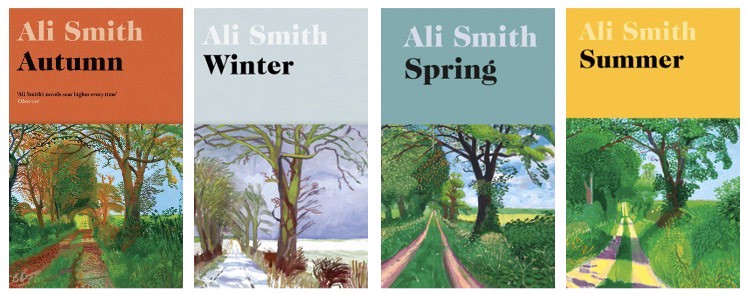
Two summers ago I decided to devote my vacation reading to Rachel Cusk’s Outline trilogy. I had been told the three novels were best appreciated if read back to back. This year I did the same for the four novels by Ali Smith that have come to be known as The Seasonal Quartet. I had previously read (back in 2017) the first in the series, Autumn, and decided to re-read it before moving on to the three others.
Autumn is so many things all at once. A plea for compassion, tolerance, and love in times marked by injustice, divisiveness, and hatred of others. An appeal to look carefully and see clearly, to try to understand what is happening right in front of us and what is being done in our name, to use and value the stories and images that artists give us to make sense of it all. That makes Autumn sound high-minded and grave. It is, but its tone is light and its prose shines with all the brilliance and vividness of a Pop Art painting. It provokes sadness at people’s apparently limitless stupidity and wickedness, but leaves you hopeful for the possibility of better days transformed by uncomplicated love.
Winter, the second in the series, has no plot or character connections to Autumn, but in terms of tone, style, and cadence they are very alike. It continues and intensifies the celebration of those who look beyond the reality presented to them, those who search for deeper meanings, and those who refuse to swallow the lies and distortions served up by the ruling “elites”. The oddballs, the refuseniks, the protestors, the non-conformists, and, of course, the artists. If Pauline Boty was the artist of Autumn, in Winter we have Barbara Hepworth, representing a shift from the city to the countryside and a concentration on the dangers posed to the natural world by the shortsighted destructiveness of humans.
Spring is my favorite of the four, perhaps because the main characters felt so vividly and realistically rendered. Richard, the maker of TV films, is himself unmade by loneliness and loss of purpose. Brittany, a prison guard in a horrible detention center for “illegal immigrants”, finds her life upended by a chance encounter with a mysterious child. The two travel to the north of Scotland where they meet Richard at his lowest ebb. It’s all brilliantly done and with such compassion and humor. At a time of cruelty, stupidity, and dishonesty in public life, Smith calls us to hold on to individual kindness, watchfulness, and honesty.
Summer brings the quartet to a perfect close, gathering the strands of the earlier novels and binding them together into something that by now is obviously a perfect whole. The full sweep of the series becomes clear, embracing a century marked by cruelty, horror, division, and ignorance and a present that shows all the signs of having learned nothing and of being more than enthusiastic about repeating it all over again. But, in the midst of it all, is the potential for individual acts of love, of courage, of seeing clearly, of standing up for what’s right, of not being fooled.
What an extraordinary achievement this series is. Anyone who has lost faith in fiction, or anyone who never had that faith to begin with, should read these four novels.
I enjoyed reading this debut novel by Chris Power. It’s a peculiar hybrid. On the surface it’s a straightforward mystery. An English, Berlin-based novelist (Robert), struggling to write, is approached by another writer (Patrick) with a story to tell of Russian oligarchs and their dark deeds. Can Patrick be believed and trusted or is he just another drunken fantasist looking for attention? Much of this is handled very well by Power. He builds tension nicely and keeps the reader guessing until the end. But he’s more ambitious than many thriller writers and teases us with questions about stories and their complex connections with truth. Who, if anyone, owns a story? Can there ever be only one version of a tale or is a story something that shifts and changes as it’s handed from one teller to another, a thing that belongs to everyone equally, constantly available for renewal and re-shaping?




 Miscellaneous Musings