Norwegian Wood is the novel that propelled Murakami from being a popular storyteller to a global phenomenon. Such was the fame he attracted in Japan after it was published in 1987 that he had to leave the country, choosing to live in Europe and the US until 1995. Although I’ve read many of his novels and stories, Norwegian Wood passed me by until I saw it in a bookshop in Heathrow airport as I was browsing for something to read on a flight.
It’s not difficult to see its appeal or understand its charm. It’s a simple enough love story, though one marked by great sadness, lived by young and attractive people in Tokyo in the late 1960s. It has none of the self-conscious trickery that marks Murakami’s later fiction. It’s a story told plainly and without affectation, with the innocence and idealism of the characters coming through clearly and directly. More than thirty years after it was first published, Norwegian Wood remains fresh and vivid. It’s easy to see how it established the reputation of a writer who went on to become one of the greatest novelists working today.
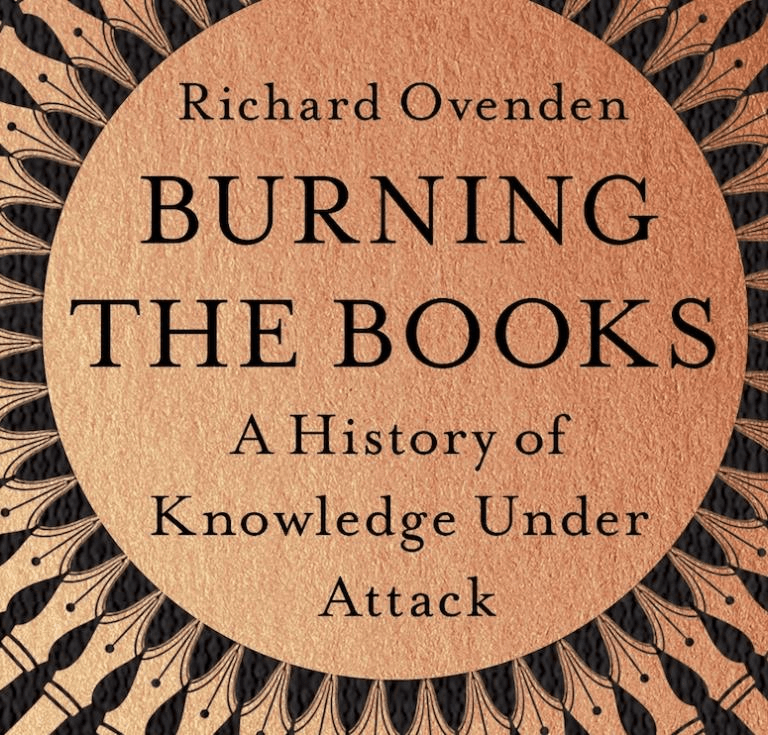
Both the title and the sub-title of Richard Ovenden’s fascinating book – Burning the books: a history of knowledge under attack – are somewhat misleading, because his story is as much about the heroic contribution libraries and archives have made to protect and preserve knowledge as it is about willful and systematic efforts to destroy it. No matter. There’s plenty here for those wanting to know about the destruction of the great library at Alexandria, the fate of England’s libraries following Henry VIII’s dissolution of the monasteries, and the book-burning orgies of the Nazi regime. There’s also much about writers (Franz Kafka, Philip Larkin, Virgil) who wanted to see parts of their own works destroyed, and the executors and friends who (sometimes) defied their wishes.
It’s a tale with plenty of villains, of course. The forces , for example, who deliberately targeted the destruction of the National and University Library of Bosnia in 1992 deserve a special place in any record of infamy dedicated to cultural vandalism. There are heroes, too, and Ovenden is right to celebrate the librarians, archivists, scholars, and collectors who risked so much to protect the precious artifacts in their possession.
Ovenden, who is currently Bodley’s Librarian at the University of Oxford, has written an engaging and approachable work, and has achieved that rare thing of leaving the reader wanting to know more.
Jeff Deutsch has written an elegant and thoughtful encomium to bookstores, one filled with allusions, recollections, and reflections. He is well qualified for the task, having spent decades as a bookseller, most recently at Chicago’s famed Seminary Co-Op bookstore. His belief in the value of good bookstores, and his appreciation of booksellers, doesn’t have its roots in some romantic, misty-eyed nostalgia for days long gone. It’s built on careful thought and extensive reading, and, most of all, on deep engagement with book lovers and the places they build. The result is an intelligent reflection on connections. Connections between readers and books, books and other books, booksellers and readers, between reading and living. People build bookstores, but bookstores also help to build people. In Praise of Good Bookstores left me feeling optimistic about their future, and that’s no small achievement.
I might have missed this important and delightful book if it hadn’t been for the thoughtfulness of a friend at Princeton University Press. Bookstores are wonderful. So are generous friends.
It’s hard to avoid water as you stroll around the east London neighborhood of Limehouse. The Thames is close by and easily accessible via footpaths that take you into the heart of the city or to the Isle of Dogs. There’s also Limehouse Cut, London’s oldest canal, built in 1770 to connect the Thames to the River Lea, and Limehouse Basin, which today is home to a fancy marina.
Signs of gentrification are easy to see. Gordon Ramsey has a restaurant on Narrow Street. Sir Ian McKellen part-owns The Grapes, a historic pub on the same street. Wealthy merchants built fine houses in the neighborhood in the 18th century, but Limehouse has always been a diverse community, a place that has welcomed immigrants for centuries when it was at the heart of London’s docks. It remains that way today.
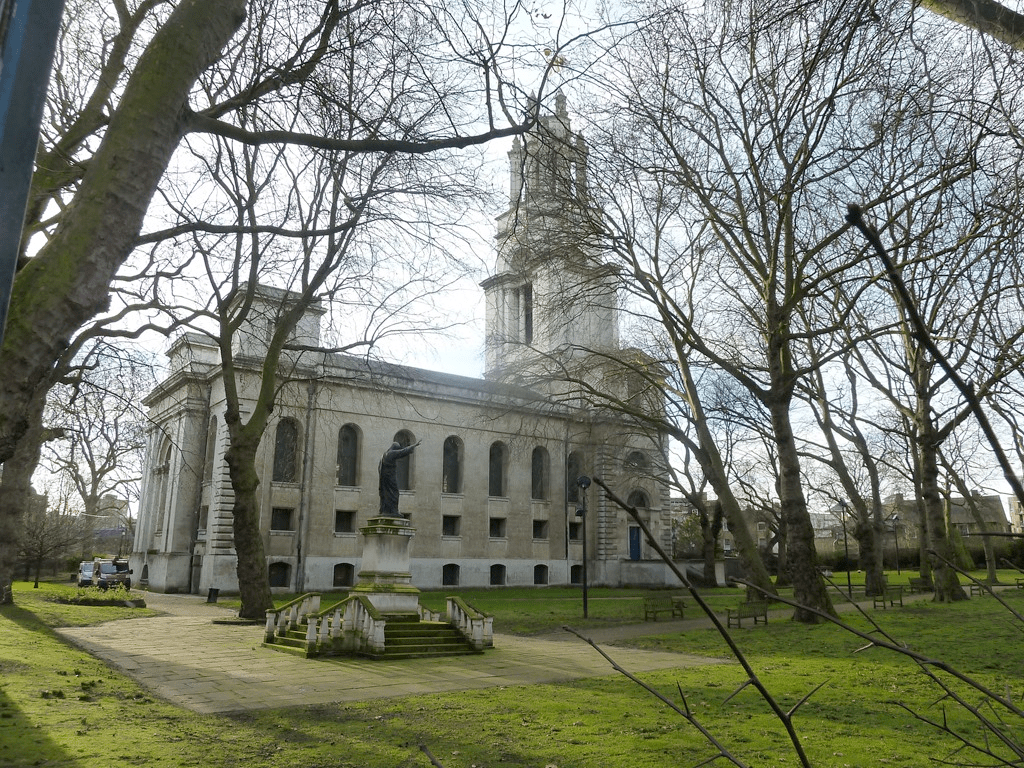
At the heart of the community stands St. Anne’s Church, built in 1730 and regarded as one of Hawksmoor’s finest buildings. Surrounded by busy roads, its churchyard offers a quiet oasis and a reminder of the deep roots this neighborhood has in London’s history.
What’s the best way of celebrating the centenary of the first publication of James Joyce’s Ulysses? By reading (or re-reading) it, of course. The faded paperback copy on my bookshelves (a Penguin Classics edition) tells me that I read it in 1979, and the penciled notes in the margins show the efforts I made as a student more than forty years ago to grapple with the great novel. Time for a new copy, so I decided to treat myself to the edition beautifully illustrated by the great Spanish artist, Eduardo Arroyo. Arroyo completed his work many years before he died (in 2018), but Stephen Joyce refused to approve the edition on the grounds that his grandfather would never have wanted his work illustrated. That strikes me as odd reasoning because I recall seeing an edition illustrated in 1935 by none other than Matisse. In fact, I remember being shown a copy of it on a visit to University College Dublin’s library many years ago, a copy that I was told at the time had belonged to Joyce’s daughter, Lucia. James Joyce never liked Matisse’s illustrations (there wasn’t enough of Dublin in them, so the report goes), so perhaps that was the basis of his grandson’s objections.
The version with Arroyo’s striking illustrations is now available from Other Press. It is a handsome (and heavy) book, and its great value, for me at least and perhaps many others, is that it brings one back to a magnificent novel with a fresh eye. The revelation for me forty years on from reading it for the first time is that Ulysses doesn’t have to be read from cover to cover or in a single swoop. I have found myself reading small sections and paragraphs, enjoying the word play and marveling again at the genius that produced what for me is the greatest novel of the 20th century.
I can think of few more ignorant, lazy, and irritating tropes than the so-called “death of libraries”. It’s a theme almost always pedaled, in my experience, by those with little knowledge or appreciation of reading, books, or culture, and is almost always based on an outdated understanding of the complex roles played by libraries in any society’s culture. Such thoughts were in my mind as I was guided around The House of Wisdom in Sharjah by its director of operations, Mohamed Boufarss.
The building, designed by Foster + Partners, opened in December 2020. It’s the embodiment of a commitment by the Emir of Sharjah and his daughter, Sheikha Bodour Al Qasimi, to put culture at the center of the local community’s life, and one of many large investments they have made to promote reading and literature. The vision is brilliantly executed in The House of Wisdom, a place that is part library, part meeting place, part exhibition space, and part community center. On the day I was there, the space was filled with young people enjoying the books, restaurant, coffee shop, and exhibits. Technology is everywhere, with state-of-the-art discovery tools, free access to reading devices, 3D printing labs, even an Espresso Book Machine.
The House of Wisdom is not only a thrilling, beautiful, and perfectly executed building. Its vision is at least as beautiful and thrilling – to make the discovery of ideas and reading easier for everyone and to celebrate them in a place of wonders.
How does one live a life that is authentically one’s own, free from all the constraints imposed by upbringing, social class, and convention? When the pressure to be “normal” and “reasonable” seems overwhelming, what responsibilities does one have to passion and to the longing to break free? Such questions, as perennial as they are, seem to be felt more deeply and sharply at those inflection points in history when society, for a brief moment, seems determined to abandon slow, gradual evolution in favor of a more sudden rupture, a more decisive separation from the old ways.
England in the 1960s was such a time. With their music, their clothes, and their language, young people proclaimed loudly they wanted nothing to do with what came before. The wars, the famines, the class divisions; all these would pass away just as soon as the old men in suits gave way to their children. The children grew up (as they tend to do), started their own wars and famines (as they tend to do), and got busy destroying the planet, but for a brief moment some found themselves in no man’s land with decisions to make. Move forward or stay still. Suburb or city, tradition or rebellion, old or young?
Phyllis Fischer, neither rich nor poor, not yet old but no longer young, lives in the London suburbs, keeping a tidy house, taking care of her husband (someone frightfully clever in the Foreign Office), and raising two young children. The Fischers have lived in Cairo but are now contentedly and quietly entombed in that borderland between city and country. Everyone knows how to behave. Everyone knows what is expected, until Nicky, the son of family friends, comes for dinner.
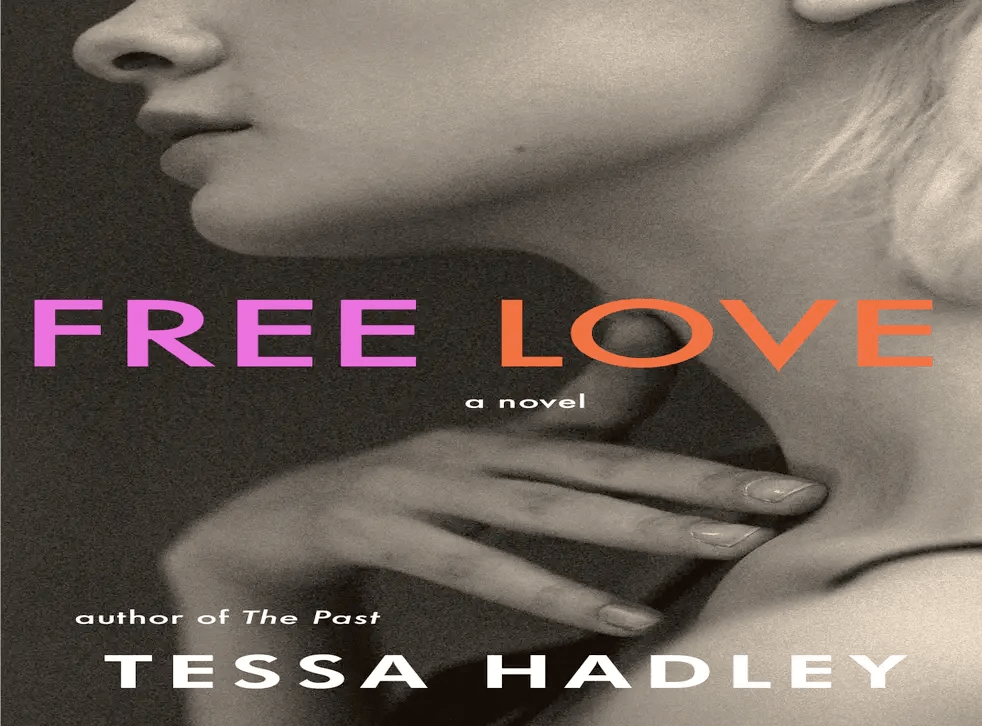
I have written here several times of my admiration of Tessa Hadley’s novels. I can think of very few writers for whose new work I wait so expectantly, so it took a lot of will power not to put everything else on hold when Free Love arrived on my doorstep (thanks to a friend at HarperCollins US). Deferred gratification has its own powerful appeal, so I decided to save the novel for a long flight when I would be free of distractions and duties and I could focus properly on devouring a work I knew I would enjoy. Hadley never disappoints; Free Love is a wonderful novel and enhances Hadley’s reputation as an especially insightful, compassionate, and humane writer.
My classmates at school in London were a diverse bunch. Their parents had settled in England, traveling from places like Jamaica, Italy, India, Portugal, Cyprus, and Ireland to find work in the decades following the Second World War. All of them had stories to tell of discrimination and prejudice, and occasionally direct experience of racial hatred and violence. They knew what it felt like to be in the underclass. They had all seen the signs in the windows saying “No Blacks, No Irish”. They had all been refused service in restaurants and pubs. Beneath these everyday expressions of racial hatred lay something very dangerous, the deep-rooted inequality in Britain’s institutions and systems, and in processes that could lead so easily to people losing their freedoms or, even worse, their lives for no other reason than their faces didn’t fit.
Nadifa Mohamed’s novel, set in Cardiff in 1952, is based on the real-life story of Mahmood Mattan, a Somali sailor convicted and executed for the murder of a local shopkeeper, a murder he didn’t commit. A combination of fabricated evidence, corrupt police officers, and false witness statements based on nothing more than hatred of immigrants was enough to seal Mattan’s fate and send him to the gallows, leaving behind a grieving family. It’s a horrific tale, the type of story that we hear too frequently but that never loses its power to appall. Such stories don’t necessarily make good novels, and The Fortune Men, though affecting in many ways, somehow ultimately lacks the powerful punch it ought to have had. There’s so much to admire in Mohamed’s novel, but ultimately the man at the heart of this story, the complicated man who journeyed from Somalia to Wales and the hangman’s noose, never comes fully to life, and never quite becomes something more than a name in a newspaper clipping from seventy years ago.
My Christmas gifts included not only last year’s Booker Prize winner (The Promise), but also two of the titles shortlisted. I’ll get around to The Fortune Men in due course, but I was especially intrigued by Avni Doshi’s Burnt Sugar, not least because it’s unusual to see a debut novel make it to the shortlist of such a prestigious award. I started the novel with high hopes (it has a terrific opening line – “I would be lying if I said my mother’s misery has never given me pleasure”), but I tired of it quite quickly. Yet another novel about troubled mother-daughter relationships and the unreliability of memory? Enough already. It didn’t help that I found the whiny, self-obsessed narrator obnoxious. Avni Doshi is clearly very talented, but Burnt Sugar should have been a novella at most.
There was a time many years ago when I was diligent about reading all the titles on the Booker Prize shortlist. I’ve grown out of that habit. Looking back over a list of the prize’s winners in the past fifteen or so years, I see I had read only one (Girl, Woman, Other by Bernardine Evaristo) before picking up the 2021 winner, The Promise. The novel was widely, and in some places wildly, praised when it appeared and again when it got the prize, so I was pleased when it showed up, neatly wrapped, under the Christmas tree.
It’s an ambitious novel, though not obviously so. The story itself is simple enough and follows from the mid-1980s to roughly the present day the declining fortunes of the Swarts, a white family who own a ramshackle farm not far from Pretoria. The novel opens with a gathering of the clan for the funeral of Ma and we’re quickly introduced to the grieving Pa (part owner of a reptile-themed amusement park), his three children, Amor, Astrid, and Anton, and some of the wider family. This is South Africa in the 1980s, so we also meet the black farm workers and servants. Among these is Salome, the old housemaid, to whom Ma had made a promise.
No spoilers here, so that’s enough about the plot. Suffice to say the Swart family sees plenty of death over the next 200 pages, and as for that fateful promise made to Salome you’ll have to read the book to find out what happens. I recommend you do. It may have its flaws (I didn’t like the intrusive, occasionally clumsy narrator), and it’s not “the most important book of the last ten years” (as it says on the cover), but it’s a powerful and affecting story through which the painful and hopeful recent history of South Africa is told. If you have read anything by some of the other greats of modern South African literature – Nadine Gordimer, J.M. Coetzee, and André Brink, for example – you may feel, as I did after finishing The Promise, that Damon Galgut is an exciting newcomer to that great community of writers.









 Miscellaneous Musings