In the hands of its best practitioners the spy novel has always been a vehicle for exploring themes such as betrayal, disillusionment, and regret. Throw in atonement and the possibility of redemption and you have David Park’s short and engaging novel Spies in Canaan. Set mostly in Vietnam in the final days of America’s horror-filled engagement there, it tells the tale of an innocent, junior data analyst who gets pulled from his routine translation work into something altogether more murky and complex by a CIA officer. The corruption of innocence, the slow dissolution of ideals, and the effort to live a good life in spite of it all – those are Park’s preoccupations in this atmospheric and memorable story.
The result was no surprise. I doubt there is a better team in the world right now than Manchester City, and the team that I have supported since I was 8 years old, though somewhat improved in the past year, was never going to be a serious obstacle on City’s road to securing the Treble. And so it proved to be. We were beaten 2-1 by a much better team and, quite frankly, the scoreline flattered us. The gulf in quality between the old rivals was there for everyone to see.
But it was a great day nonetheless. My first ever F.A. Cup final. The first time these two teams had ever met in the final. Only my second visit to Wembley Stadium. A wonderful spectacle in early summer sunshine enjoyed by two sets of the most partisan fans you could ever hope to meet. I felt very fortunate to be there, and even the disappointing result could not change that.
Some attractions seem more attractive if you arrive by boat. It was a beautiful, warm, sunny evening when I stepped on to the dock and strolled up the short path leading to the Thielska Galleriet. The museum had been opened to us for a private visit, and we had the great privilege of being able to walk around the rooms without crowds.
The house itself dates back to 1907 and was the home of Ernest Thiel, a wealthy banker, and his wife Signe Maria. It was built in part to showcase their splendid art collection and has been carefully preserved in its original style. For many visitors the centerpiece at Thielska is the collection of paintings by Munch, including his extraordinary portrait of Nietzsche. If all you know of his work is The Scream, the lightness of some of Munch’s work here will be a revelation. There is sculpture in the pretty garden, including work by Rodin.
It’s hard not to sympathize with anyone who takes on the task of writing a biography of John Donne. His was a rich and varied life, driven by a mixture of ambition, restlessness, occasional penury, and an unusual abundance of talent. He was, at various times, a lawyer, diplomat, parliamentarian, adventurer, clergyman, and, of course, one of the greatest poets of the English language. If his prodigious talents were not enough to intimidate would-be biographers, you might think the lack of original sources might be a deterrent. It’s quite remarkable how little is known about a man who, by the end of his life, was something of a celebrity in the worlds of church and state at the beginning of 18th century England.
Any great biographer has to be more than a serious historian. Imagination needs to be married to scholarship, and in that regard Donne is very well served by Katherine Rundell. Super-Infinite: The Transformations of John Donne is a superb piece of work, and richly deserves all the accolades and awards heaped on it. In this account, Donne the man comes alive in all his contradictions and brilliance. “He was a man constantly transforming. He was a one-man procession: John Donne the persecuted, the rake, the lawyer, the bereaved, the lover, the jailbird, the desperate, the striver, the pious”.
It might be argued that the truest sign of a great literary biography is that it drives the reader back to Donne’s own work. I am not convinced. Much of Donne’s prose work, all those sermons, letters, and devotional writings, are far beyond even a well-read general reader today. The poetry is a different matter. I suspect Rundell’s brilliant advocacy for Donne will encourage many to re-visit or read for the first time those extraordinary love poems.
I hadn’t expected to come across a new novel by John Banville when I was browsing the tables of Daunt Books in Marylebone a couple of weeks ago. The surprise was all the more pleasant when I realized The Lock-Up was the latest installment in his Strafford & Quirke series. There is much here that’s familiar. Quirke, the state pathologist, is as curmudgeonly as ever, while Strafford, the “Big House” Protestant detective, is as cool and analytical as his sidekick is emotional and unpredictable. But something is different about The Lock-Up. Perhaps it is the novel’s sweep, covering events not just in Ireland but in wartime Germany and in Israel in the years immediately after its foundation. Or maybe it’s the darker atmosphere; the evil of antisemitism, the horror of its expression in Nazi Germany, and the shameful complicity of the Catholic Church.
This novel was a delight to read, but I think even Banville’s most steadfast fans will conclude, as I did, that the denouement felt hurried and too neatly packaged. The journey was a delight, but the destination was a disappointment.
Everyone of my generation in the UK knows what is meant by the Troubles, but it’s a term we have to explain to our children. The sectarian conflict in Northern Ireland was never far from the surface when I was growing up. Most evenings the television news featured some new atrocity. A car bomb, a random murder, a punishment beating, sometimes indiscriminate violence inflicted by the British army, the Irish Republicans, or one of the many Loyalist groups. Occasionally the mayhem spread beyond the borders of Northern Ireland, as it did when Lord Mountbatten was murdered off the coast of the Irish republic or when a hotel bomb in Brighton narrowly missed Margaret Thatcher.
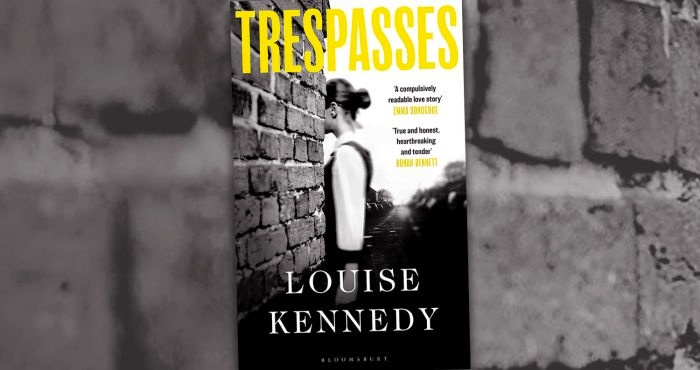
The Troubles are not just the backdrop to Louise Kennedy’s fine novel, Trespasses. They are intrinsic to every episode and every conversation, and as present and unavoidable in the lives of its characters as their pulses and heartbeats. Cushla Laverty is a Catholic and teaches in a local school in Belfast. She helps out when she can behind the bar of the pub her family owns. It’s a pub that includes Protestants among its customers, and one of them is Michael Agnew, a well known attorney. The two start an intense relationship that cuts across religious, class, and political divisions. Trouble is certain.
Kennedy writes beautifully, and not just about families, love, and divisiveness. She gives us real human beings, vividly and convincingly. Cushla’s alcoholic mother, Michael’s snobbish middle class friends, and most of all schoolchildren in all their wonderful innocence. Trespasses is something special.
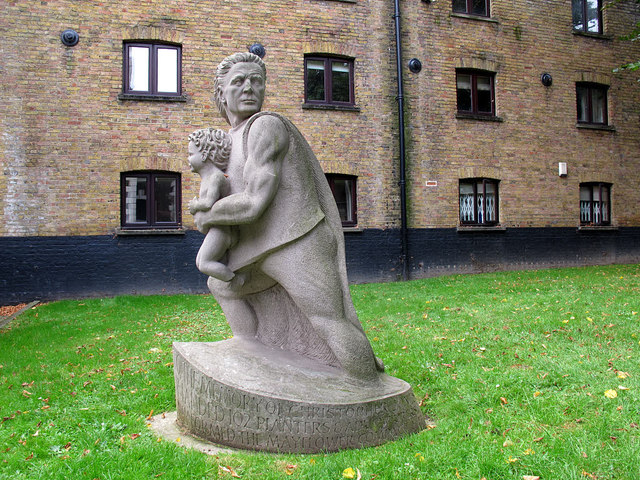
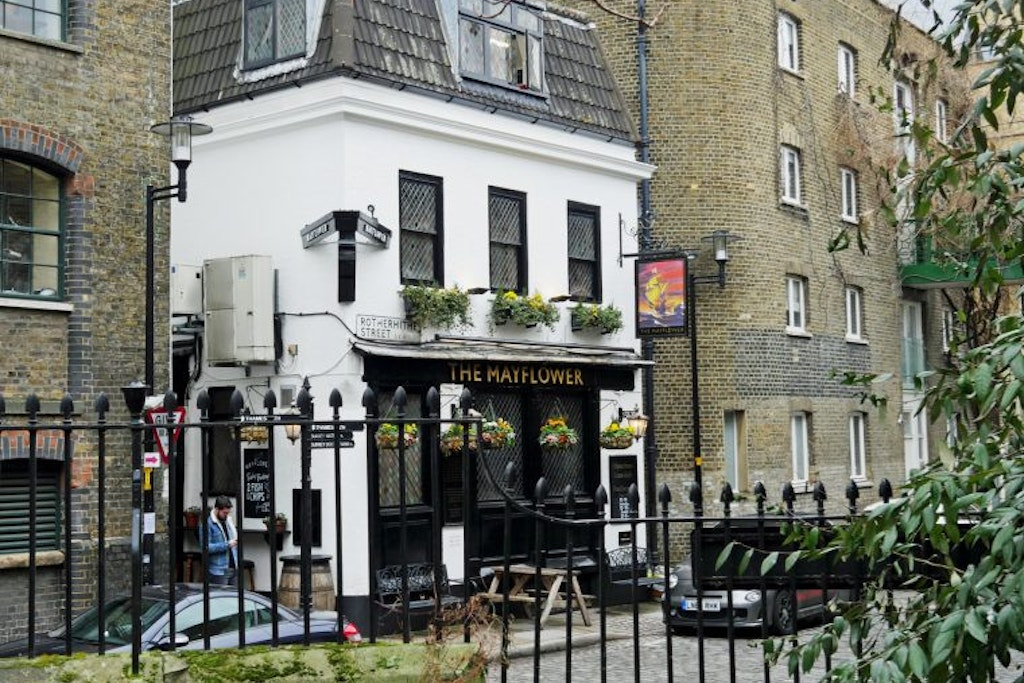
Rotherhithe attracts quite a lot of tourists these days. I was having lunch in The Mayflower on Saturday and I heard many more American voices than English ones. I suppose it’s not that surprising. The views of the Thames from here are pretty and it’s a pleasure to stroll along the cobbled streets looking at sights such as the church of St. Mary The Virgin, the Brunel Museum, and the Norwegian Church. For U.S. visitors, of course, the appeal is even more obvious. The Mayflower, the ship that carried the Pilgrim fathers, set sail from Rotherhithe and its captain lived and died in Rotherhithe. A statue commemorating him can be found in St. Mary’s churchyard. After all that local history, you may feel, as I did, the need to settle in to one of the comfortable seats in The Mayflower pub and enjoy some excellent food and local beer. If so, give in to the temptation. You won’t be sorry.
Seicho Matsumoto was forty years old when his first book was published. He may have been a slow starter, but by the time he died in 1992 his work had won multiple prizes and he had become widely recognized as Japan’s leading crime writer, earning the somewhat dubious and patronizing tribute from Le Monde, “The Simenon of Japan”.
Tokyo Express first appeared in Japan in 1958. The plot is straightforward and has none of the trickery and deliberate complexity that spoils so many detective stories these days. A Tokyo police officer investigates an apparent double suicide on a remote beach in the south of Japan. The country’s railway timetables play a big part in piecing together what really happened. The whole story has a charm that is difficult to describe. The elegant design of the novel was what drew Tokyo Express to my attention, but it was Matsumoto’s storytelling style that held my attention until the final page.
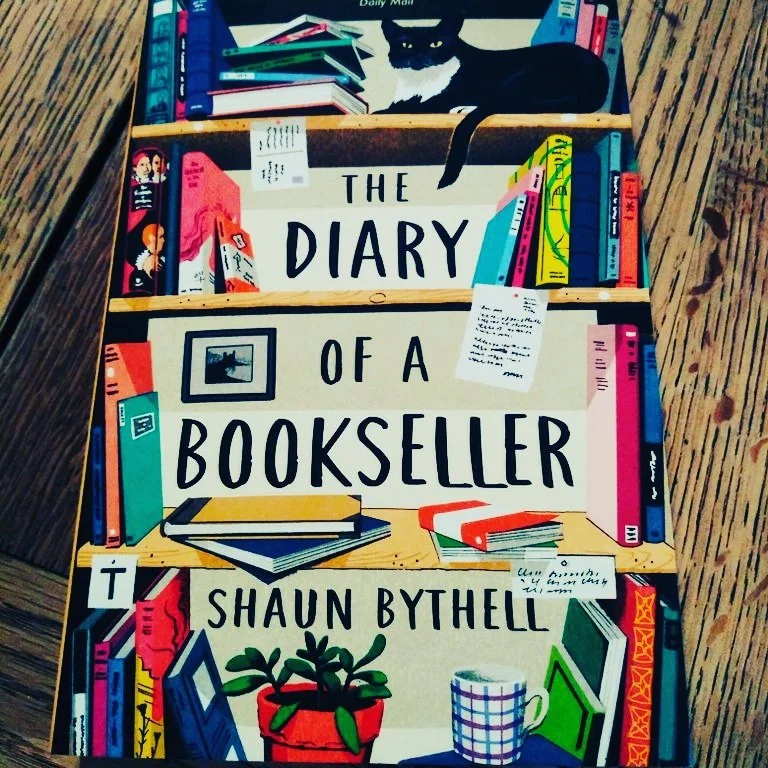
I bought this book in one of the few bookshops left in Singapore. Kinokuniya is a large, modern chain store located in one of the many upscale malls on Orchard Road. It could hardly be further in style from the The Book Shop, a rambling used book store in Wigtown, a small town in a little known part of Scotland. The Book Shop’s owner, Shaun Bythell, decided to keep a journal for roughly a year, beginning in 2014.
Bookselling isn’t for everyone. Used and rare bookselling suits even fewer people, which may be just as well because the trade, at least in its traditional form, is dying. Any romantic image that might still cling to it will most likely be dispelled by anyone who reads The Diary of a Bookseller. It’s not just the low earnings (Bythell records daily sales with every diary entry) or that rampaging and competing behemoth, Amazon. If those don’t kill a bookseller’s passion, the browsing public most likely will. There seems to be something about used bookshops that attracts the mad, the stupid, and the miserly.
It’s a great credit to Bythell (and his eccentric band of helpers) that he has persevered and built a celebrated and successful business. Not one that has made him rich perhaps, but one that has given him, at least intermittently, a kind of perverse satisfaction. A sense of humor and an eye for the absurd must help. This is a book rich in hilarious anecdotes and one that made me laugh out loud several times. The world needs more Shaun Bythells and more shops like the one he has nurtured in Scotland. Singapore certainly does.
I seem to be on something of a winning streak as far as reading novels is concerned. After Andrew Miller’s wonderful work comes Sebastian Barry’s latest, Old God’s Time. Its central character, Tom Kettle, is living in quiet retirement after a career as a Dublin detective. He spends his days pottering around a small apartment overlooking the sea, but his peace is broken when two of his former colleagues come knocking on his door ….
My summary makes the novel sound like a thriller, but it isn’t, at least not in the conventional sense. There may be deaths, one of them a murder, intrigue, suspicion, and a few policemen, but Barry has more in his sights than conventional clever plotting. Tom Kettle has memories and secrets, some of them shocking and tragic, and the arrival of the detectives uncovers the very worst of them. This is a novel about aging and about the ties that bind a family. It’s about memories, fantasies, stories, and the differences between them. Because it’s by Sebastian Barry, it’s written beautifully, infused with a poignancy, tolerance, and compassion that is typical of his work. Nobody who loves fiction and wants to see a master at work should miss this book.




 Miscellaneous Musings