
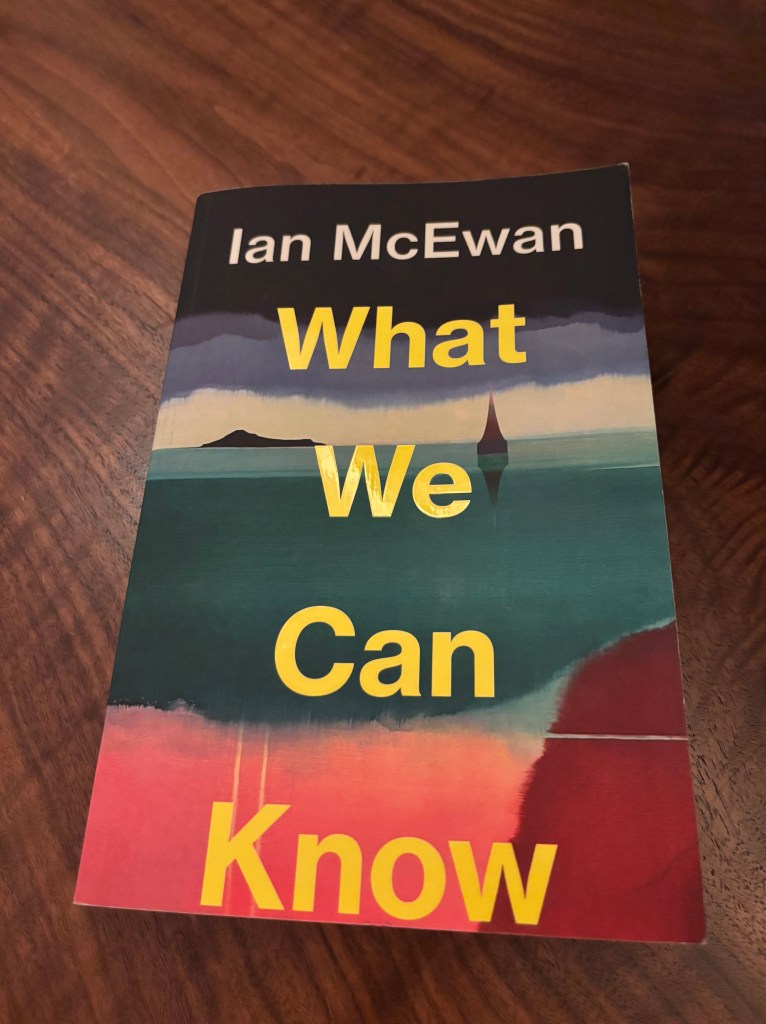
What can we really know about the past, even in a world in which almost everything – every email, every photograph, every recording – is preserved? What can we ever know about the figures of history, the writers, the artists, the politicians and so on? Do all those biographies that scrutinize every detail of a life ever capture what the living, breathing, and thinking person was truly like ? Do biographers and academics ever get close to the objects of their examination? And what does all that uncovering of the past teach us about the present? Perhaps instead of trawling through archives and reading books and manuscripts, we might learn more about today by imagining a future world and looking back at the present from that vantage point. What we can know is about what we can know. It’s about trying to understand what we can ever really understand, about the past and the present. That is vital because if we can really see clearly, if we can really understand, and if we can really know, from that understanding and knowledge perhaps we might start to value, protect, and preserve what is valuable and meaningful, and stop destroying what really matters before it is too late.
What we can know is is that unusual thing, a novel of ideas. It’s a wonderful accomplishment and to my mind one of the best things McEwan has written for a long time. The story is set in 2119 in Britain, a country which by that time is an archipelago, much of its earlier landmass having been left uninhabitable by rising sea levels. Tom Metcalfe is an academic and his research centers on a poem, written in 2014 and recited at a famous dinner party. No written copy of the poem has ever been found, making it that rarest of things, an unpreserved masterpiece known only by its reputation and by the memories of those who heard it spoken aloud on one occasion more than a century in the past. For Tom the effort to discover the whereabouts of this unread poem is his life’s mission. No spoilers here!
McEwan’s probing intelligence is one of the features I most associate with him and in his least successful novels it can be on full display unleavened by emotional insight. In What we can know the balance is almost perfect. It’s certainly a clever and thought-provoking story, but it also has tenderness, wit, and compassion.
 Miscellaneous Musings