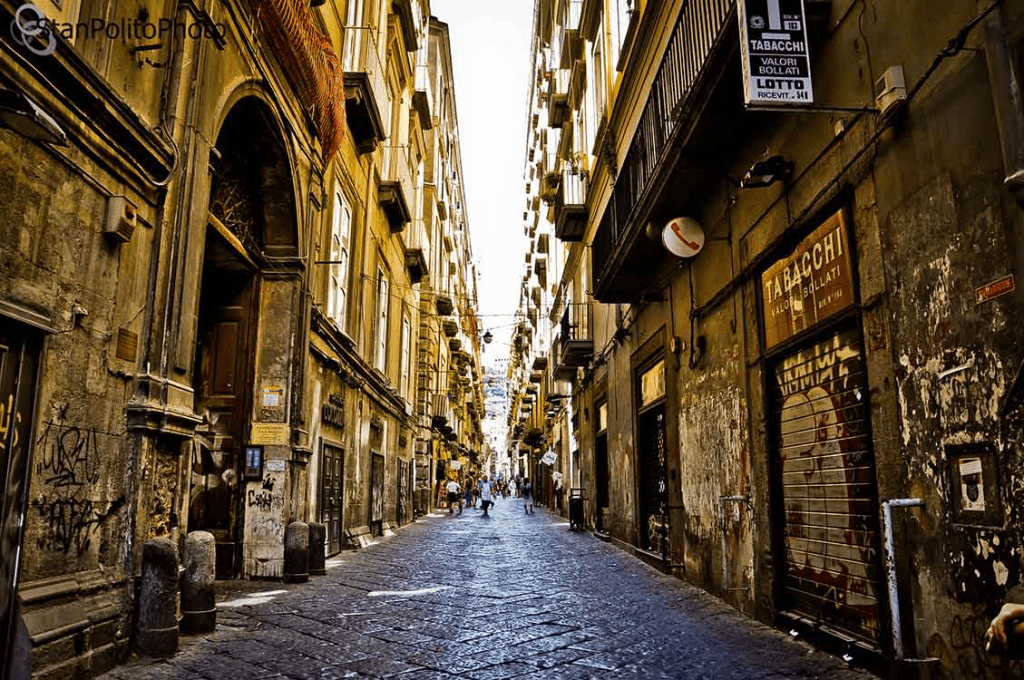
Naples

Some reputations are well deserved. Read anything about modern-day Naples and its scruffiness and edginess will feature front and center. I spent a few days in the city recently and, even allowing for everything I had read, I was surprised how dilapidated, graffiti-strewn, and down-at-heel it is. In the old city it seems every square inch of the walls has been defaced by graffiti, even historic buildings. In a place filled with ancient churches, museums, and monuments, it feels as if not a penny has been spent to restore or maintain them.

Surfaces are one thing, and spirit is another. Naples has charm, energy, and vitality in abundance and radiates them day and night. It’s a quirky, noisy, chaotic place, one that prides itself on its reputation for flouting the rules. Food, football, and living life to the full; those are the passions and charms of Naples.

Resist the temptation to use the city as nothing more than a gateway to Pompeii and the Amalfi coast. Take a few days to explore it, and it will repay the effort. Visit the Duomo, take an evening stroll down Spaccanapoli, eat the best pizza and gelato money can buy, and watch the Neapolitans at work and play. Don’t miss Vasari’s sacristy in San’Anna dei Lombardi or the archaeological museum. Naples isn’t “tourist pretty”, but it has a unique and unforgettable energy of its own.

The Amalfi Coast

What do Amsterdam, Venice, and Reykjavik have in common? The answer is over-tourism. And not just over-tourism, but tourism so excessive that authorities in those cities (and many others) are looking at strategies to actively discourage visitors. Based on my personal experience in recent weeks, I want to add two names to the list of over visited places: Capri and Positano.

My advice to anyone planning to visit Capri is simple. Don’t go. By all means take a boat trip around the island and look at the pretty coves and rock formations, but under no circumstances dock at the main harbor and explore the main town. Even at low season, the place is choked with tourists who, undeniably with the best intentions, have destroyed what must have been a beauty a generation or two ago.

Positano, that most picturesque town, is well on its way to sharing the same fate as Capri. The streets climbing up from the port and small beach are lined with mostly average restaurants and uninteresting shops selling expensive tat to tourists. Just by being there, I felt I was hastening the demise of a place of stunning natural beauty.

Sorrento, Atrani, and, most of all, Ravello are a delight, but even those towns have to be visited early in the morning (and preferably at low season) before the hordes arrive. After a few days on the Amalfi coast, I was glad to leave and saddened by its gradual and inevitable desecration, to which I had unwittingly contributed.