Heart, be at peace

Novelists who choose to narrate a story using multiple voices set themselves a very difficult challenge. Making a handful of characters sound distinctive and recognizable is tricky enough, but deploying a chorus of twenty-one voices to tell a story pushes the skills of the writer, and the tolerance of the reader, to the absolute limit. Donal Ryan is clearly a very accomplished writer (some earlier work won prizes), but on the evidence of Heart, be at peace, he just bit off more than he could chew.

I didn’t feel this way in the early stages of the novel. In some of the initial chapters, the voices seemed distinct and some of them struck powerful and poignant notes, but as the novel progressed it all melded confusingly into something of an amorphous blob, a soup where few of the ingredients could be identified reliably from the others.

The Ireland portrayed by Ryan here is a gritty and edgy place. There is little sense of ease. People are troubled and their emotions frayed, trying to make their way or just survive. Relationships are similarly uneasy. There is betrayal, jealousy, disappointment, and very little that’s simply loving and kind. My hunch is that Ryan has powerful stories to tell but has chosen the wrong way to tell them. This is a book where the whole is less than the sum of the parts.

The Land in Winter

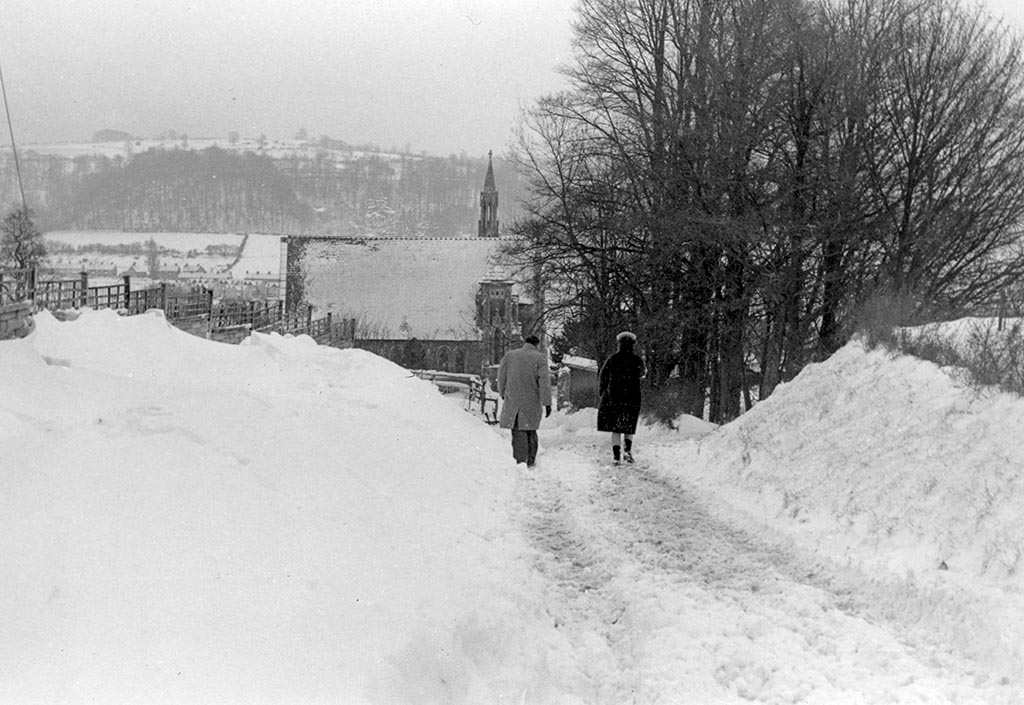
I have written here in the past about my admiration for Andrew Miller’s fiction, so when I saw The Land in Winter showing up on critics’ “best books of 2024” it was bound to be one of my first priorities in 2025. The winter referred to in the title is the infamous one of 1962-1963 when Britain recorded some of the lowest temperatures ever recorded and heavy snowfalls persisted in many parts of the country until early March. Miller’s story is set in a frozen and fog-bound village not far from Bristol and has as its central characters two young couples living as neighbors. Eric, the local doctor, and his genteel wife, Irene, occupy a cottage next to a small farm where Bill is struggling in his first farming venture while his young, bohemian wife, Rita, stays at home reading science fiction novels. At the opening of the novel, both women are in the early stages of pregnancy.

It’s ostensibly a novel about marriage and love, about the accommodations and compromises that individuals make as they seek to manage the task of living with someone else. Miller is superb at exploring the nuances of relationships, but this is just the foreground and he has bigger ambitions. England in 1963 was still a country living in the shadow of a world war and a place where its horrors were still vivid for some. Miller’s theme is how we avoid madness and how we carve out lives and futures when those horrors are so close and so real. The snow, ice, and fog that have frozen and paralyzed Somerset foreshadow a world broken beyond repair by environmental catastrophe.

The Land in Winter is a novel of unusual subtlety and nuance. That won’t surprise anyone who has read Miller’s earlier work. He’s an ambitious and cunning writer, and understands better than most how the conventions of traditional fiction can be adapted and subverted to explore and explain the deepest workings of human behavior. It is not a perfect novel. Some of the story’s tension is dissipated when the plot moves beyond the confines of the snowbound village and some of the peripheral characters are sketched rather than drawn. These are quibbles. The Land in Winter should be on the reading list of anyone interested in the best of contemporary English literary fiction.

The City and its Uncertain Walls

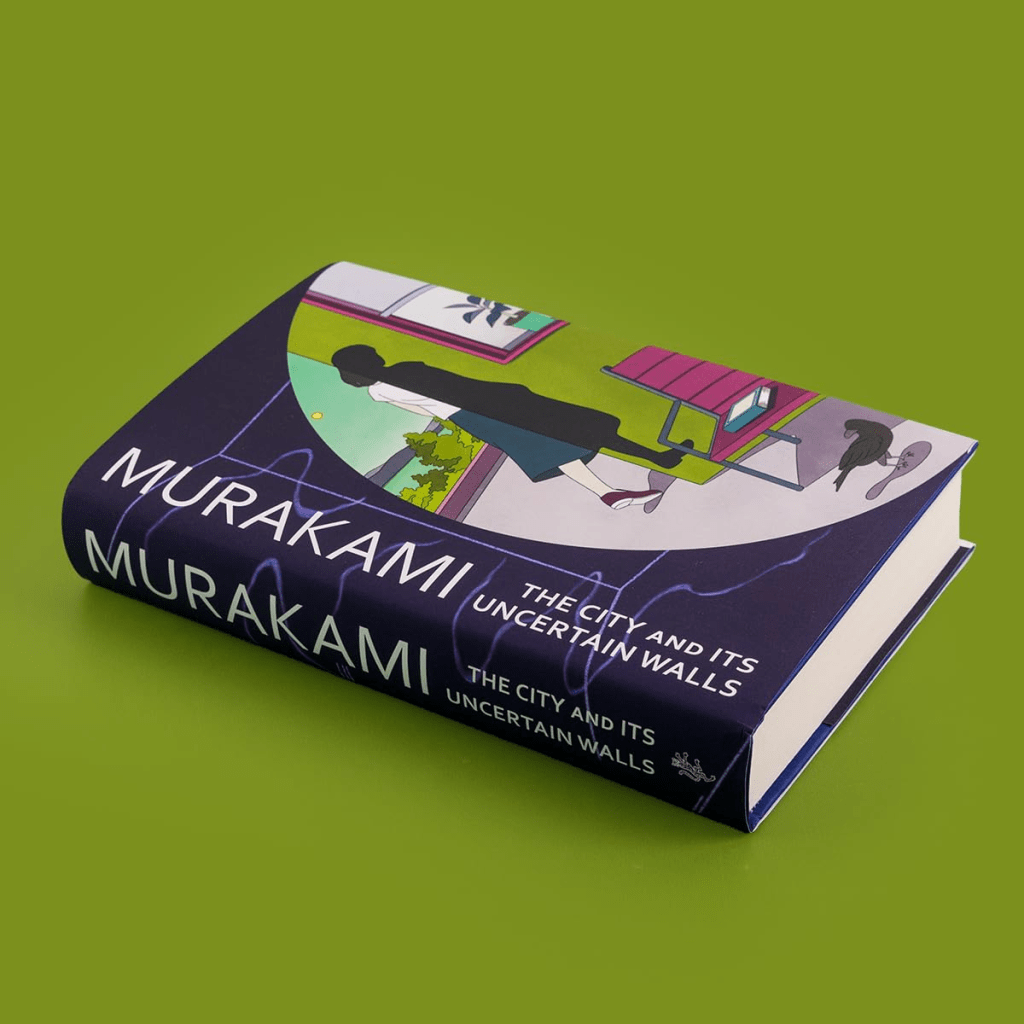
A book’s dust jacket can tell you a lot. The one covering the UK hardcover edition of The City and its Uncertain Walls has the word Murakami printed in large letters on the spine and front cover. No first name. Not Haruki Murakami, just Murakami. The author’s name is much larger than the title. The message is clear. Murakami is special. Murakami is a big deal. Murakami is a brand.

The publication of a new novel by Murakami is an event these days. Lots of advance publicity building anticipation among his millions of admirers around the world. Lots of talk about the Nobel Prize (which still eludes him), and pages of critical reviews. Has he lost his edge? Are the novels too bloated and self-regarding, etc. etc. All of this reflects the enormous global following he has attracted and can sometimes detract from what matters: the appreciation of the work.

This most recent novel has not been well received critically. Reviewers have focused a lot on the fact that it re-works an earlier novel and an even earlier novella published many years ago. Murakami himself addresses that in an Afterword. I have not read either of the earlier works, so my appreciation of The City and its Uncertain Walls was entirely unaffected. I found it to be an engaging, thought-provoking novel, marked by that distinctive atmosphere that is unique to Murakami. It is a novel, at least in part, about how to live. How to connect with others, how to be separate from them, and what that final separation – death – might mean. Murakami’s legions of fans won’t be surprised by any of this. What it really means to be an individual in a world of other individuals has always been his great interest. Our fundamental “aloneness” and singularity and how we deal with the expectation and reality of interaction with others. The boundaries and intersections between things, between individuals, between life and whatever might (or might not) come after, between what’s real and what isn’t, between fact and fiction – this is Murakami’s territory, and it’s all on display and explored in his inimitable style in his latest work.

Life, Death and Everything in Between

The earliest picture in this retrospective of Don McCullin’s career was taken in 1960 and the most recent in 2022. McCullin will always be pigeonholed as a “war photographer” because of the searing images he took in places like Vietnam, Cyprus, Northern Ireland, and Biafra. Many of his best-known photographs from such conflicts are included in this collection. The grieving Turkish widow, the shellshocked American soldier in Vietnam, the starving child in Biafra holding an empty corned beef can – pictures that shocked the world at the time and still have enormous power fifty or more years after those particular horrors were recorded. New battlegrounds have replaced the old, but the horrors persist. The grief, starvation, mutilation, and death that war and famine bring never go away. McCullin, who will be 90 this year, has turned his lens in recent times away from the war zones, choosing to focus in old age on landscapes and ancient monuments.

McCullin’s subject has always, it seems to me, been the resilience, dignity, and fragility of people tested to their limits by the cruelties and horrors imposed on them by their fellow human beings. What he has seen and recorded are experiences that words cannot describe. We need pictures to get anywhere close to those experiences and their meaning. That has been McCullin’s mission for more than sixty years and no one has done it more powerfully.

Back to the Local

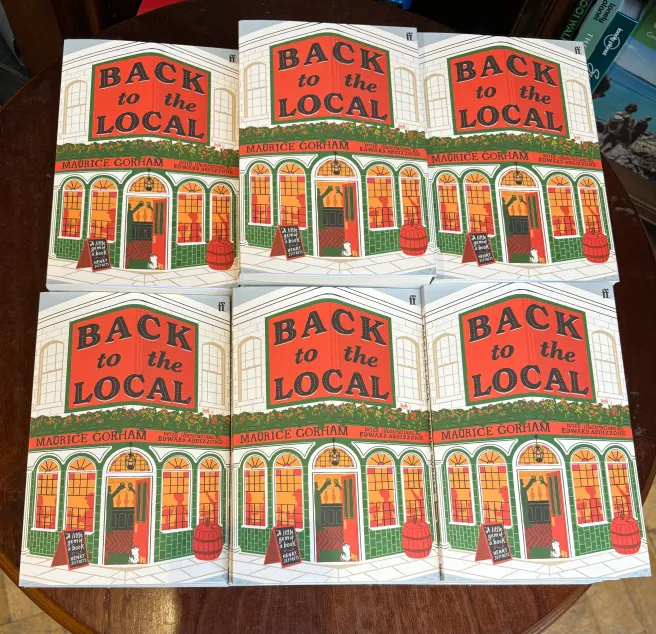
It was clever of Faber & Faber to re-publish Maurice Gorham’s delightful book on London’s pubs. Back to the Local was first published in 1949 (with its illustrations by Edward Ardizzone) and even then had a whiff of nostalgia about it. Gorham mourned the destruction of some of his favorite pubs in World War Two and complained about the changing habits that had led to the modernization and gentrification of others, all the while celebrating what he loved and wanted to see preserved. It’s fun to wonder what he would make of things seventy-five years on.

Londoners love their pubs and tend to be sentimental about them. Every generation discovers them and bemoans the changes they see. For myself, I celebrate the survival of the true neighborhood local. Even today there are more of them than one might think. Of course, like everyone, I deplore the trends that some others might cherish – the sports bars, the themed pubs, the fake “historical” pubs, and so on. Gorham’s little book is a fun reminder that preferences and prejudices are what being a London pub lover is all about. If one pub is not to your liking, move on to one of the other 3,500 that London has to offer.

Death at the Sign of the Rook

Kate Atkinson’s latest novel is the sixth to feature Jackson Brodie, the sour and sweet private investigator. We find him back in the north of England, Yorkshire specifically, hired to investigate the disappearance of a valuable painting. The missing painting leads to another missing painting which in turn leads to a shadowy woman who may (or may not) have stolen them both. Brodie’s sleuthing takes him to a country house hotel in a snow storm. Not just any country house hotel, but one hosting a Murder Mystery Night for its guests ….

If this all sounds a little like Agatha Christie, that’s exactly what Kate Atkinson intends. In the hands of a less accomplished writer, not to mention one with a less sure comic touch, it might all seem more than a little self-conscious or twee. That is not the case here. Atkinson is having fun adapting a well-worn genre to her popular Brodie series and the fun is infectious. Having said that, the build-up to the gathering of the characters at the hotel (roughly the first two thirds of the novel) was what I enjoyed the most. The denouement was a bit too contrived for my tastes.

Death at the Sign of the Rook is a light and frothy tale and a great addition to the series. Perfect holiday reading.

The Party

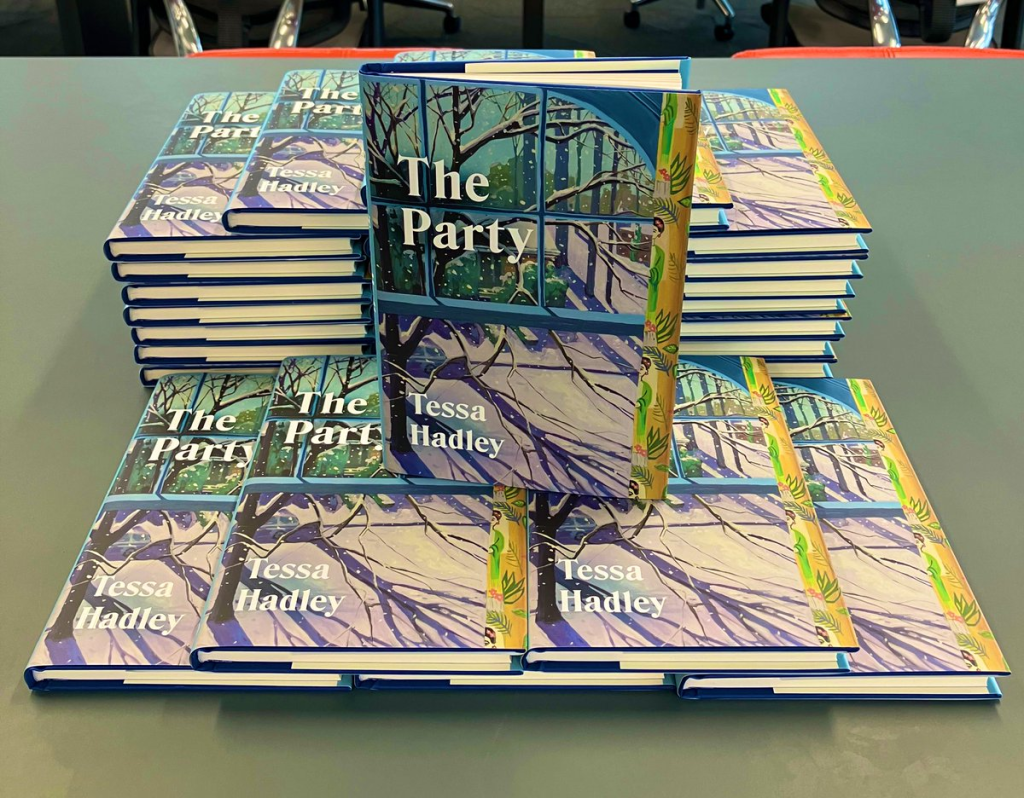
A new book from Tessa Hadley is always a treat, even a slim novella like The Party. It ought perhaps to have been called Two Parties because the story is bookended by two social events, attended by two sisters, Evelyn and Moira, both students. The first takes place in a Bristol pub shortly after the end of World War Two and the second, more of an ad hoc get-together, in a grand but faded house elsewhere in the city the following weekend.

How far can any of us really achieve the lives we want to have? What real influence do we have over the shape of our future? Can we realize the lives we want by sheer force of personality and determination, or are our futures mapped out for us by factors over which we have so little control such as class or gender constraints, real or perceived? These are the questions that interest Tessa Hadley, and she uses the sisters with their common upbringing and history as exemplars of two distinct perspectives. Not that Moira and Evelyn are simple cyphers. Not at all. Hadley is far too accomplished a writer for that, and Evelyn especially is a brilliantly realized character.

Does this all sound a little old-fashioned, like Anita Brookner or Barbara Pym for the 21st century? Perhaps, but don’t be put off. There is more inventiveness, daring, and insight in Hadley’s writing than some more experimental novelists can dream of realizing.

Creation Lake

Only a very confident and self-assured author takes a familiar genre, in this case the spy novel, and uses it as a channel for ideas. A burden comes with that decision. Spy novels are traditionally plot-driven vehicles and readers of the genre expect pace, twists and turns, and action. So manipulating and subverting the classic espionage tale is all very well, but the ideas had better be worth the effort and at least some of the familiar features of the genre had better be respected. No one ought to buy Creation Lake expecting a conventional spy novel, and anyone who does will be disappointed. If that happens, some reviewers might be responsible. The Guardian critic talked about “a killer plot and expert pacing”. That’s downright misleading in my view.

Sadie Smith, the heroine and narrator of Rachel Kushner’s latest novel, is a spy working in the private sector and has an assignment to infiltrate a shadowy group in rural France suspected of planning acts of sabotage. Sadie is unscrupulous, a quality that might be considered an asset in her line of work. It has, however, got her into trouble in the past when, working for a spy agency in the US, she was found to have entrapped an innocent man and got fired as a result. Now in France, she has seduced an impressionable activist to gain entry to the suspected terrorist cell. This lack of a moral compass might be Sadie’s least unattractive quality. Her superficial pronouncements on everything from Europe and its culture (overrated) to Italian food (horrible), her glib philosophizing (“The truth of a person, under all the layers and guises, is a substance that is pure, and stubborn, and consistent”), her unassailable belief in the superiority of English (in other words American) culture marks her out as the worst kind of entitled, privileged, and semi-educated American who has everything, values little, and has earned nothing. Sadie hacks into the emails of Bruno Lacombe, the leader and guru of the protest group, and pokes fun at his tiresome ideas, but his silly intellectualizing about what we can learn from Neanderthals makes him look like a genius compared to Sadie and her moral vacuity.

I am surprised that Creation Lake was shortlisted for The Booker Prize. It’s a novel that’s executed with lots of confidence and it’s an enjoyable enough read, but I couldn’t shake off the feeling that there’s no substance or heart in the book. Rachel Kushner’s critical reputation seems to be growing with every new novel, but on the evidence of the two I have read (The Flamethrowers and Creation Lake), I don’t understand why.

Nicholas Hawksmoor: London Churches

I can hear the bell of St. Anne’s, Limehouse tolling as I write. The church is preparing to celebrate its 300th anniversary, and every time I walk past it, I imagine what the local people must have thought back in the 1720s when this monumental structure started to take shape around them. Even today, with Canary Wharf’s glass and steel towers looming in the distance, St. Anne’s holds its place proudly, but three centuries ago it must have been nothing short of astounding.

I was inside St. Anne’s recently to see an exhibition of photographs taken by Helene Binet and displayed to mark a project to restore all of Nicholas Hawksmoor’s extraordinary London churches. Hawksmoor was the great beneficiary of Queen Anne’s so-called Fifty Churches Act of 1711. The grandiose project envisioned originally never came to full fruition. Only twelve churches were completed. Nevertheless, the vision gave us what many today call the Hawksmoor Six: St. Anne’s, Limehouse, St. Alfege in Greenwich, St. George-in-the-East, Christ Church, Spitalfields, St. Mary Woolnoth, and St. George’s, Bloomsbury. We can add the decommissioned church of St. Luke’s, Old Street, and the now demolished St John Horsleydown, but it’s the Six that most people know and that are the subject of the conservation effort.

As I strolled around looking at the huge, imposing photographs, and reading about the restoration appeal, I got talking to a volunteer who alerted me to a wonderful book by Mohsen Mostafavi and Helene Binet, Nicholas Hawksmoor: London Churches. Binet’s sharp black-and-white photographs steal the show here, but the floor plans and stylized outlines of each church are also rendered beautifully, and are accompanied by short essays. No book can do justice to the splendors of these remarkable and precious churches, but when I’m away from London I like to dip in to London Churches to remember them.

The Western Wind

The Western Wind is a novel set in a small and isolated English village at the end of the 15th century. Its narrator is the local priest, John Reve. John’s parish, Oakham, is a farming community, mostly poor, mostly hardworking, and mostly god-fearing. As the story opens, its wealthiest and worldliest member, Tom Newman, is missing, feared drowned in the treacherous local river after unprecedented storms and floods. His torn shirt has been found, nothing more, and the villagers are distressed and fearful. The local dean, representing ecclesiastical and temporal power, has arrived to investigate, making things uncomfortable for Fr. Reve.

My summary makes the novel sound like a medieval mystery story. To some extent it is, but there’s so much more to The Western Wind. It’s a beautifully written and thoughtful tale about faith, superstition, and power, and about how and where we find meaning in life. It’s a novel that never strives to be explicitly historical, but is filled with authentic detail of life in a medieval English village. It plays with time, telling the story in reverse, and this helps make medieval Oakham shockingly modern. It’s best read slowly and carefully, with every sentence savored.