Death at La Fenice

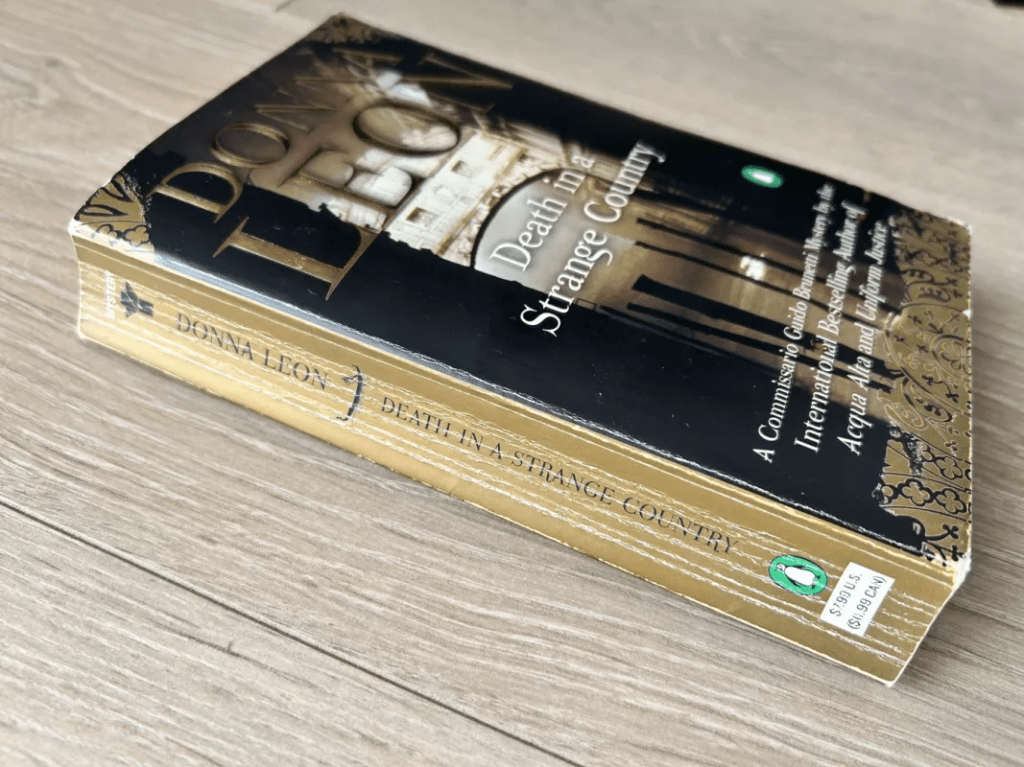
Summer vacations are the perfect opportunity to dive into a mystery series. Nothing makes a long flight or train journey pass more quickly. Having exhausted some of my favorite novelists in the genre (Henning Mankell, Susan Hill, Nicci French, et al), and on the cusp of a trip to Europe, it seemed like the perfect time to make a start on a series that I have inexplicably overlooked until now – Donna Leon’s celebrated Brunetti novels. There are now more than 30 titles in the series, so I’m making no commitment to read them all at this point, but it seemed only right to start at the beginning, Death at La Fenice.

A celebrated conductor is found dead in his dressing room during an intermission at a performance at the famous Venice opera house. The cause of death is immediately clear, cyanide poisoning, but who killed the maestro, and why? Enter Commissario Guido Brunetti, the senior detective assigned to solve the puzzle. Flawed in many ways, Brunetti is a contrary, anti-establishment figure, a man who loves his family, Venice, and his work (probably in that order).

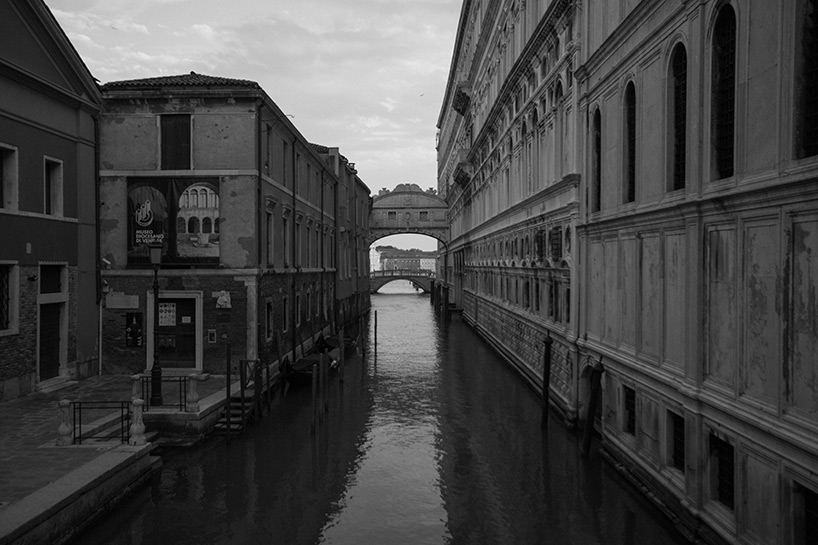
Death at La Fenice sets, I suspect, the tone of the entire Brunetti series. This is a long love letter to Venice and a prolonged character study of a passionate Venetian. The plot here is secondary and the denouement feels hurried. I have already bought numbers 2 and 3 in the series, so we’ll see if anything changes.

Wild Houses

Colin Barrett’s name usually appears on those lists that get published from time to time of up and coming Irish writers. The Irish fiction scene is thriving these days, so that’s quite a tribute. I read and enjoyed one of his earlier short story collections, so I was interested to see what his debut novel, Wild Houses, would be like.

It is an enjoyable yarn set in rural Ireland (Mayo, specifically) and its community of minor criminals. What distinguished it for me was the sensitive depiction of the central character, Dev. A gentle giant, bullied at school, mourning the death of his mother and the incarceration of his father in a psychiatric hospital, Dev lives alone and isolated in the deep countryside in the family home until the local gangsters come calling. Barrett communicates with real empathy and tenderness Dev’s trauma and the passivity that is one of its main symptoms. That, for me, was what made an otherwise unremarkable novel worth the time.

Pariah Genius

Great artists have always attracted coteries of hangers-on, sycophants, and spongers. The members of the clique that surrounded Francis Bacon and Lucien Freud in Soho in the 1950s and 1960s have attained a minor celebrity status without ever achieving much distinction or success of their own. Would anyone know or care about the likes of Dan Farson, Henrietta Moraes, Isabel Rawsthorne, and David Archer if they hadn’t pedaled stories, true or false, about Bacon and Freud or if they hadn’t had walk-on parts in the lives of arguably the most celebrated British painters of the 20th century? Probably not. But I would make an exception for John Deakin, the subject of Iain Sinclair’s “psychobiographic fiction” Pariah Genius.

Deakin’s reputation as a photographer has had a resurgence in recent years. That has helped to re-balance his legacy, or at least correct the one-dimensional portrait of him as a much disliked, scarcely tolerated drunk who sat for Freud and provided photographs for Bacon that became source material for some of his greatest portraits.

Iain Sinclair’s book is not a biography in any conventional sense. It certainly isn’t a critique of Deakin’s photography. The author and publisher describe it as a novel, only because, I suspect, there is no better way to categorize this unclassifiable, imaginative re-telling of Deakin’s personality and character. In the final analysis, it doesn’t really matter what it is. Just enjoy it – a characteristically ingenious and enthralling piece of writing from one of the most distinctive and original voices around.

Long Island

After finishing Colm Toibin’s most recent novel, I looked at a few reviews to see what critical reaction to it had been and I was struck by how many reviewers referred to its “restraint”. It’s an important insight and one, it seems to me, that goes to the heart of the impact that Long Island makes. The main characters will be familiar to readers of Toibin’s earlier novel Brooklyn. Eilis Lacey, now married with two children, leaves her home in Long Island to make a visit to Ireland, ostensibly to see her aging mother but really to escape a crisis in her marriage. There she picks up a relationship with an old flame, Jim Farrell, a local pub owner. No plot spoilers here, except to say there’s not much of a plot and that doesn’t matter at all. Read Long Island for the brilliance of the characterization and the almost unbearable narrative tension that Toibin creates, but above all for the deep emotion teased out of ordinary lives with such poignancy, power and, yes, restraint.

Abroad in Japan

Abroad in Japan is a simple enough account of Chris Broad’s decade living in Japan. What sets it apart from similar books is the affection and respect Broad clearly has for his adopted home. He avoids the default position many foreign commentators take when talking about the Japanese, the “they’re weird and wonderful” or “they’re impossible to understand” attitude that I’ve always found to be so patronizing and superficial. Broad has deep affection for the country and its people, has worked to learn the language and customs, and has put down deep roots. This is no travelogue, but a funny love letter to a country he has explored from top to bottom.

I have made 20-30 visits to Japan over the years and I have grown to love the country. I would never pretend to understand or know it well, because it’s a place that demands and repays deep immersion, but I enjoy returning there more than any other place I have visited. Some of that is down to its sights, its food, and its customs, but mostly it’s about the Japanese people – their kindness, hospitality, curiosity, and warmth.

Roman Stories

I found reading Roman Stories a discomfiting experience and I think that is exactly what Jhumpa Lahiri wanted. The people in these stories find themselves in episodes of crisis, isolation, or disorientation. An expatriate woman waiting for surgery, an immigrant child minder forced to live in a different continent from her young son, another immigrant forced out of his home by his neighbors’ racist hatred, a lonely widow trying to make sense of a city transformed since her childhood. Everyone is sad, uncomfortable, angry, or alone. Rome, the author’s adopted home in recent times, is the setting for all the stories, and it’s not the Rome the tourists see. It’s a city in decline, a place scarred by graffiti and garbage, where the immigrants are mistreated and those born and raised there are uneasy and alienated.

There are powerful and poignant stories here (I liked The Procession especially), but I finished the collection feeling that many failed to make the impact the author intended. For me short stories require a sharpness of focus and a precision of expression. Something is lost in this most exacting of genres if the lens roams too freely. I wanted less, but the author always seemed to want to give more.

Michelangelo: The Last Decades

When Michelangelo moved to Rome from Florence in 1534 he was nearly 60 years old. He would have been considered an old man by the standards of the time. (Average life expectancy was around 70 years). He was to live another three decades, decades that saw him produce some of his most remarkable work. An exhibition at the British Museum, Michelangelo: The Last Decades, chronicles and celebrates this period. It’s not to be missed and, by the looks of the long lines outside the museum at opening time this morning, many agree with me.

The number and scale of the commissions he accepted in those decades would have daunted even a younger person. Everyone, it seemed, wanted to be his patron, and he found it difficult to refuse the various popes and noblemen offering him architectural and painting work. Little wonder that he took to preparing outlines and sketches that were finished by lesser artists. The magnificent drawings, mostly completed in chalk on paper, are the heart of this small exhibition, and looking at them close-up it’s hardly surprising that his contemporaries marveled at this “divinely inspired” talents. Anyone whose experience of Michelangelo has been confined until now to his vast frescos or monumental sculptures ought to beat a path to the British Museum and marvel at these wondrous drawings.

Small Memories

There is quite a long list of “literary giants” whose work I have never read. From time to time I make resolutions to shorten the list, to read even just one work of a celebrated writer I have so far overlooked, and plug a hole in my ignorance. A planned family visit to Lisbon (that never happened) led me to the shelves in Daunt Books in Marylebone set aside for books by Portuguese writers, and it was there I spotted Saramago. Other than the fact that he came from Portugal and had been awarded the Nobel Prize in Literature, I knew nothing about him. There must have been some uncertainty at work in the back of my mind because I chose a small volume of reminiscences, leaving on the shelves the longer (and reputedly challenging) novels. With the planned trip abandoned, I put Small Memories aside for a few weeks. It’s a simple collection of reminiscences from Saramago’s childhood in Azinhaga and Lisbon in the 1920s and 1930s, told directly and without affectation. There is such warmth in his recollection of incidents and experiences, and of family and school friends, and such vividness in his retelling of the unexceptional events of his early life. Saramago’s boyhood was one of poverty and simplicity, but there is no trace of bitterness or self-pity to be found in Small Memories. I can’t say it made me want to delve further into his work, but I enjoyed every page of this short, touching memoir.

Steeple Chasing

When I started to visit ancient churches more than thirty years ago, I discovered quite quickly that my tastes were particular. The older the better, the plainer the better – that pretty much sums up my preferences. While I’m delighted to have any opportunity to spend hours wandering around some Early English parish church filled with elaborate carving, statuary, and stained glass, I am happiest in the unadorned and simple interiors of Saxon and Norman places of worship. Don’t ask me why.

Peter Ross’s tastes, I’m glad to say, are more inclusive and embracing than mine. Steeple Chasing – Around Britain by Church is his account of wandering around such places just when the Covid-19 pandemic was starting to bite the UK. His tour includes some well known church treasures, for example Durham Cathedral and Westminster Abbey, but also less celebrated places of worship, ancient and not-so-old, like Pluscarden Abbey and small parish churches in Herefordshire and Yorkshire.

Ross’s book is not an architectural guide. Having said that, I learned a lot about individual churches, some of which I thought I knew well. His purpose is different; to understand what places of worship mean today, what functions they perform and what hold they continue to have even when so few people visit them for religious ceremonies or private prayer. It’s an important, valuable, and charming book, filled with anecdotes and personalities. It left me itching to re-start my own wandering around such places.

Walk the Blue Fields

This collection of short stories first appeared in 2007, quite some time before Claire Keegan became the literary star she is now. The huge fanbase she has these days as a result of more recent books like Foster has led her publishers to re-issue many of her earlier books, and I’m happy about that.

Walk the Blue Fields has the feel of an early career book. The stories are uneven. Some hit the mark brilliantly, such as the title story and Surrender. Others don’t quite come off and the reader gets a sense of Keegan testing her reach and abilities. No matter. I’m planning on reading soon her debut collection, Antarctica, and that will complete my tour of the works of a writer who has become a firm favorite in such a short time.