Siena: the Rise of Painting 1300-1350

Critics lucky enough to get a sneak preview last year of Siena: the rise of painting 1300-1350 hailed it as the must-see exhibition of the season. They weren’t wrong, but they were guilty of understatement. The show is a once-in-a-lifetime masterpiece. It transfers from The Metropolitan Museum in New York to The National Gallery in London at the end of January. Anyone who loves painting and who missed it in Manhattan might, if circumstances permit, want to consider booking a flight and an entrance ticket now. It is sure to sell out, and rightly so.

The exhibition featured a range of objects, including sculpture, textiles, manuscripts and liturgical artifacts, but it is the paintings that steal the show. Paintings of sublime and timeless beauty, paintings of extraordinary sophistication that anticipate what was to come in the Renaissance. The focus is on Martini, the Lorenzetti brothers, and especially on the brilliant Duccio di Buoninsegna, whose Maesta altarpiece is the star exhibit. Many of the individual paintings that originally made up the Maesta were dispersed over the centuries, and what makes this a unique exhibition is seeing many of them brought together again. It is no exaggeration to say this may never happen again once the show ends in London.

The show is also a triumph of exhibition design and the Met’s staff deserve congratulations for finding such creative ways to see these precious and fragile masterpieces up close and in some cases from 360 degrees. The designers in London have a high bar to reach!

The Vegetarian

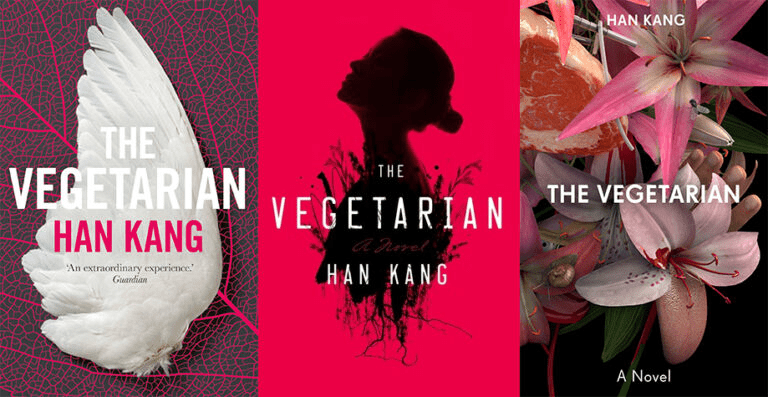
Long before The Vegetarian showed up as one of my Christmas gifts, I had planned to read something of Han Kang’s work. The award in 2024 of the Nobel Prize focused that intention, but it started several years ago when I bought (but never read) The White Book.

There can be few pleasures more satisfying for the dedicated reader than the discovery of a brilliant, new voice. The Vegetarian is that rare thing, a book quite unlike anything else. Eerie and disturbing, fierce and deeply strange, it’s a work that refused stubbornly to leave my mind after I had turned the final page.

Yeong-hye stops eating meat. The reaction of her family is, to say the least, extreme, and sets in motion a sequence of events as appalling as they are unforeseen. But The Vegetarian is far more than an account of one woman’s struggle to have control of her destiny. It becomes an extraordinarily powerful and dark fable about power and obsession. In less skillful hands, this might have turned into something more mundane, but Han Kang’s prose, simultaneously cool and passionate, elevates The Vegetarian into a nightmare of Kafka-like intensity.

The City and its Uncertain Walls

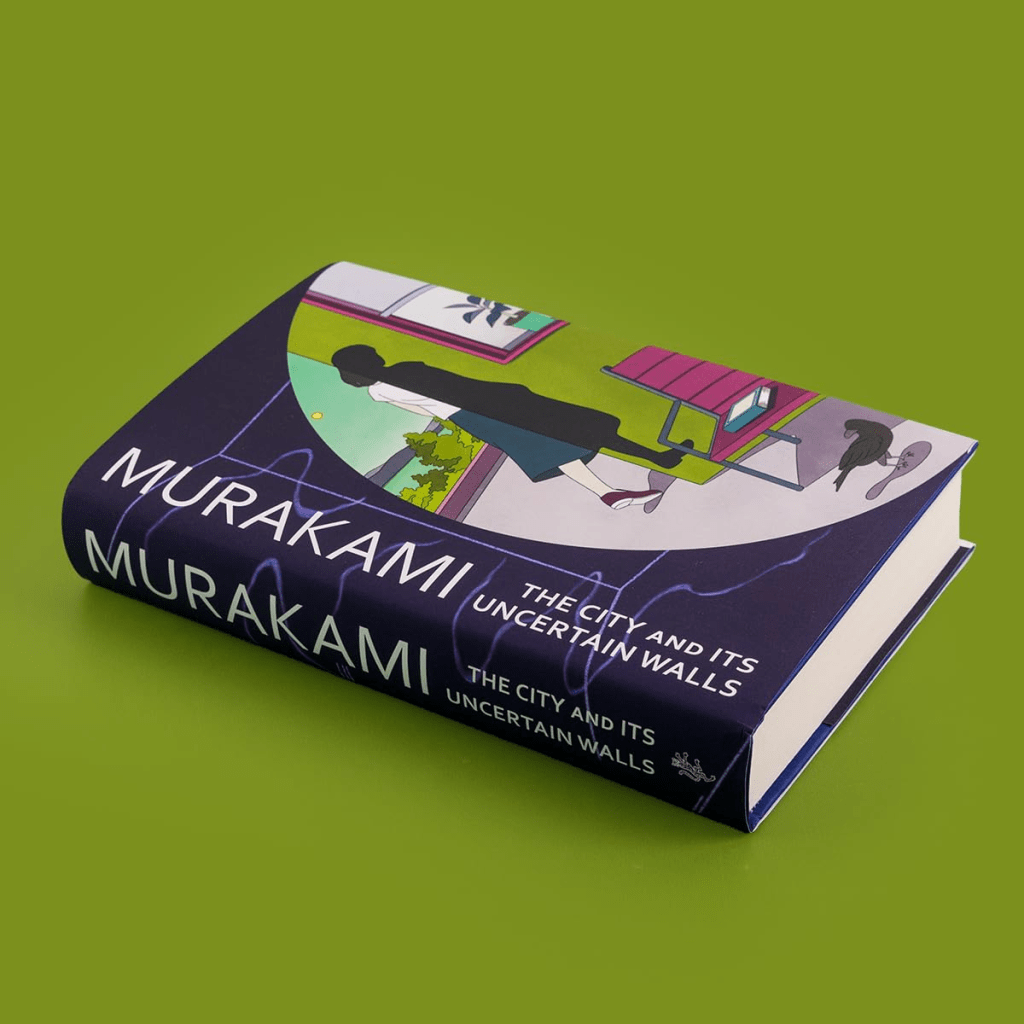
A book’s dust jacket can tell you a lot. The one covering the UK hardcover edition of The City and its Uncertain Walls has the word Murakami printed in large letters on the spine and front cover. No first name. Not Haruki Murakami, just Murakami. The author’s name is much larger than the title. The message is clear. Murakami is special. Murakami is a big deal. Murakami is a brand.

The publication of a new novel by Murakami is an event these days. Lots of advance publicity building anticipation among his millions of admirers around the world. Lots of talk about the Nobel Prize (which still eludes him), and pages of critical reviews. Has he lost his edge? Are the novels too bloated and self-regarding, etc. etc. All of this reflects the enormous global following he has attracted and can sometimes detract from what matters: the appreciation of the work.

This most recent novel has not been well received critically. Reviewers have focused a lot on the fact that it re-works an earlier novel and an even earlier novella published many years ago. Murakami himself addresses that in an Afterword. I have not read either of the earlier works, so my appreciation of The City and its Uncertain Walls was entirely unaffected. I found it to be an engaging, thought-provoking novel, marked by that distinctive atmosphere that is unique to Murakami. It is a novel, at least in part, about how to live. How to connect with others, how to be separate from them, and what that final separation – death – might mean. Murakami’s legions of fans won’t be surprised by any of this. What it really means to be an individual in a world of other individuals has always been his great interest. Our fundamental “aloneness” and singularity and how we deal with the expectation and reality of interaction with others. The boundaries and intersections between things, between individuals, between life and whatever might (or might not) come after, between what’s real and what isn’t, between fact and fiction – this is Murakami’s territory, and it’s all on display and explored in his inimitable style in his latest work.

Life, Death and Everything in Between

The earliest picture in this retrospective of Don McCullin’s career was taken in 1960 and the most recent in 2022. McCullin will always be pigeonholed as a “war photographer” because of the searing images he took in places like Vietnam, Cyprus, Northern Ireland, and Biafra. Many of his best-known photographs from such conflicts are included in this collection. The grieving Turkish widow, the shellshocked American soldier in Vietnam, the starving child in Biafra holding an empty corned beef can – pictures that shocked the world at the time and still have enormous power fifty or more years after those particular horrors were recorded. New battlegrounds have replaced the old, but the horrors persist. The grief, starvation, mutilation, and death that war and famine bring never go away. McCullin, who will be 90 this year, has turned his lens in recent times away from the war zones, choosing to focus in old age on landscapes and ancient monuments.

McCullin’s subject has always, it seems to me, been the resilience, dignity, and fragility of people tested to their limits by the cruelties and horrors imposed on them by their fellow human beings. What he has seen and recorded are experiences that words cannot describe. We need pictures to get anywhere close to those experiences and their meaning. That has been McCullin’s mission for more than sixty years and no one has done it more powerfully.

Back to the Local

It was clever of Faber & Faber to re-publish Maurice Gorham’s delightful book on London’s pubs. Back to the Local was first published in 1949 (with its illustrations by Edward Ardizzone) and even then had a whiff of nostalgia about it. Gorham mourned the destruction of some of his favorite pubs in World War Two and complained about the changing habits that had led to the modernization and gentrification of others, all the while celebrating what he loved and wanted to see preserved. It’s fun to wonder what he would make of things seventy-five years on.

Londoners love their pubs and tend to be sentimental about them. Every generation discovers them and bemoans the changes they see. For myself, I celebrate the survival of the true neighborhood local. Even today there are more of them than one might think. Of course, like everyone, I deplore the trends that some others might cherish – the sports bars, the themed pubs, the fake “historical” pubs, and so on. Gorham’s little book is a fun reminder that preferences and prejudices are what being a London pub lover is all about. If one pub is not to your liking, move on to one of the other 3,500 that London has to offer.

Reading in 2024

Looking backwards is one of the pleasures of maintaining this blog. It has become a habit of mine at the end of each year to take a look at my reading choices in the previous twelve months. What have my reading habits been? Have any new trends or influences crept in or are the old preferences still firmly in place? Do the choices I made in the past year reveal commendable experimentation or deplorable predictability?

It’s clear, especially as far as fiction is concerned, that I tend to go back to favorite authors and that I’m quick to pick up the new books they publish. Tessa Hadley, Niall Williams, and John Banville were examples of that in 2024. I’m not searching out new novelists (new to me, that is) as often as I think I should. I read for the first time this year only Jose Saramago, Paul Lynch, and Samantha Harvey. I was glad I did in every case. I’m not showing much interest in classic fiction or indeed anything written before the 21st or 20th centuries. Turgenev’s First Love was the exception in 2024, and what a delight that was! I am reading too much second-rate mystery fiction. That needs to change. Two novels stand out from the herd: Time of the Child by Niall Williams and The Western Wind by Samantha Harvey. Both were outstanding and I have recommended them far and wide.

My non-fiction reading was more varied, but my interests are visible clearly nonetheless. Literary memoirs (Werner Herzog, Iain Sinclair, and John McPhee), travel writing inspired by spiritual quests, architecture, and some politics. I think I chose well in 2024, and there were few, if any, regrets. All the non-fiction I read this year was uniformly excellent and engaging.

I am already thinking of 2025. Every time I go into a bookshop, I leave with a different resolution. Read more classics. Read some of the great American novels. Read books from different cultures. Will I follow through on any of these high-minded ambitions? I guess I’ll see soon enough.

The Drowned

The arrival of a new installment in John Banville’s highly successful Quirke/Strafford series gladdens my heart. The latest, The Drowned, which I think is the tenth, continues and extends a very popular franchise. Continuity matters to devotees of such series. Familiar characters (Quirke, the pathologist, and Strafford, the Inspector), a familiar setting (Dublin in the 1950s), and most of all a familiar atmosphere or ambiance, a world of looming menace, the immanence of illness and death, and the strategies we all deploy to make sense of it all while searching for happiness.

It is clear Banville understands very well how the success of such series depends on a balance of the familiar with the new. The Drowned sees one established character depart while the stage is set for the entrance of new ones. Established relationships shift into a different gear, all against the background of a fairly straightforward plot.

Banville is a wonderfully sensitive and skilled storyteller. The Drowned, like its predecessors in the series, is the sort of novel one wants to devour in a single sitting, perhaps sitting by the fire on a winter’s day, or on a long, comfortable train journey.

Death at the Sign of the Rook

Kate Atkinson’s latest novel is the sixth to feature Jackson Brodie, the sour and sweet private investigator. We find him back in the north of England, Yorkshire specifically, hired to investigate the disappearance of a valuable painting. The missing painting leads to another missing painting which in turn leads to a shadowy woman who may (or may not) have stolen them both. Brodie’s sleuthing takes him to a country house hotel in a snow storm. Not just any country house hotel, but one hosting a Murder Mystery Night for its guests ….

If this all sounds a little like Agatha Christie, that’s exactly what Kate Atkinson intends. In the hands of a less accomplished writer, not to mention one with a less sure comic touch, it might all seem more than a little self-conscious or twee. That is not the case here. Atkinson is having fun adapting a well-worn genre to her popular Brodie series and the fun is infectious. Having said that, the build-up to the gathering of the characters at the hotel (roughly the first two thirds of the novel) was what I enjoyed the most. The denouement was a bit too contrived for my tastes.

Death at the Sign of the Rook is a light and frothy tale and a great addition to the series. Perfect holiday reading.

Chichen Itza

At some point it would be good to take my time and wander around the Yucatan peninsula at my own pace, exploring the many Mayan archaeological sites for which it is famous. On a recent and very brief visit to the region I had to restrict myself to a single nearby treasure, Chichen Itza, the complex of Mayan ruins dominated by the massive step pyramid known as El Castillo. The city prospered between 600 and 1200 A.D. and even in today’s much diminished site it is obvious that it was built by a thriving civilization.

Chichen Itza’s proximity to the coastal resorts means it is often choked with tourists, so it is wise to pick the time of one’s visit carefully. It is also worth noting the large number of vendors surrounding the site that sell all sorts of tourist tat. Once inside the main site it is easy enough to ignore them, but prepare to be hassled on the way in and out.

I enjoyed the visit immensely. It provoked a determination to visit the region for a longer period and to learn more about Mayan civilization before I make my next trip.

Time of the Child

Niall Williams’ latest novel is one of the finest I have read in a very long time. I rarely use the word, but I think it’s a masterpiece. The novel is beautifully crafted and practically every sentence is a joy to read. It is written with a lyricism that is so rare in contemporary fiction and with a sensitivity for language and for its nuances that feels like a skill from a bygone age. Who else writes like this today? Marilynne Robinson comes to mind, but few others.

Time of the Child is set in the fictional village of Faha in the west of Ireland. The time is December 1962. Electricity, televisions, and telephones came to the village just a few years earlier, but many of Faha’s residents are stuck in earlier times. They live in houses illuminated by candles and heated by peat fires. They work mostly on the land, and the rhythms of their lives are set by the changing seasons and by religious festivals. The priests have power. The church and the pubs are where people meet. If this sounds far-fetched, it isn’t. My childhood visits to rural Connemara and West Cork started in the mid-1960s, and Williams’ depiction of the place is faithful to what I saw and experienced.

A gift arrives in this isolated and timeless place. A newborn baby is abandoned in the village churchyard and discovered by a local boy. Thinking it dead, he takes it to the local doctor. What happens next is a mystery. Whether by Dr. Troy’s skill or the power of prayer, the baby girl is revived and given the name Noelle. No more about the plot. I do not want to spoil anyone’s enjoyment of the novel.

Time of the Child is everything I want in a novel. Exquisite lyrical prose, deep insight into what it is to be human and humane, into how to live alone and in community, and what it means to be open to the possibility of transformation and redemption.