Brian

Brian lives alone in a small, rented flat. He has a dead-end job. He has no contact with his family, no romantic relationships, and avoids all unnecessary interactions with colleagues. The closest thing he has to friends is the small group of film aficionados he meets on his nightly visits to the British Film Institute. His unhappy childhood has left him fearful, anxious, and determined to eliminate the risks and uncertainties of daily life. He knows how difficult that is but the occasional intrusion of unpleasant surprises (the local launderette closes without warning) and accidents (he is hospitalized after being hit by a car) make him all the more determined to try. The guiding principles of his life are Keep watch. Stick to routine. Guard against surprise.

Film is not just Brian’s passion. It’s his way of understanding the world and interacting with it. It affirms and tempers his solitude, and channels him to worlds of experience and feeling otherwise inaccessible. The months turn into years. Brian retires, and little changes in his routines, but the final page sees an anonymous act of kindness. Is it the start of something new?

Brian is an unusual and unusually affecting novel. Depictions of solitude can be patronizing, but Jeremy Cooper avoids that pitfall with a characterization that is generous, kind, and ultimately moving.

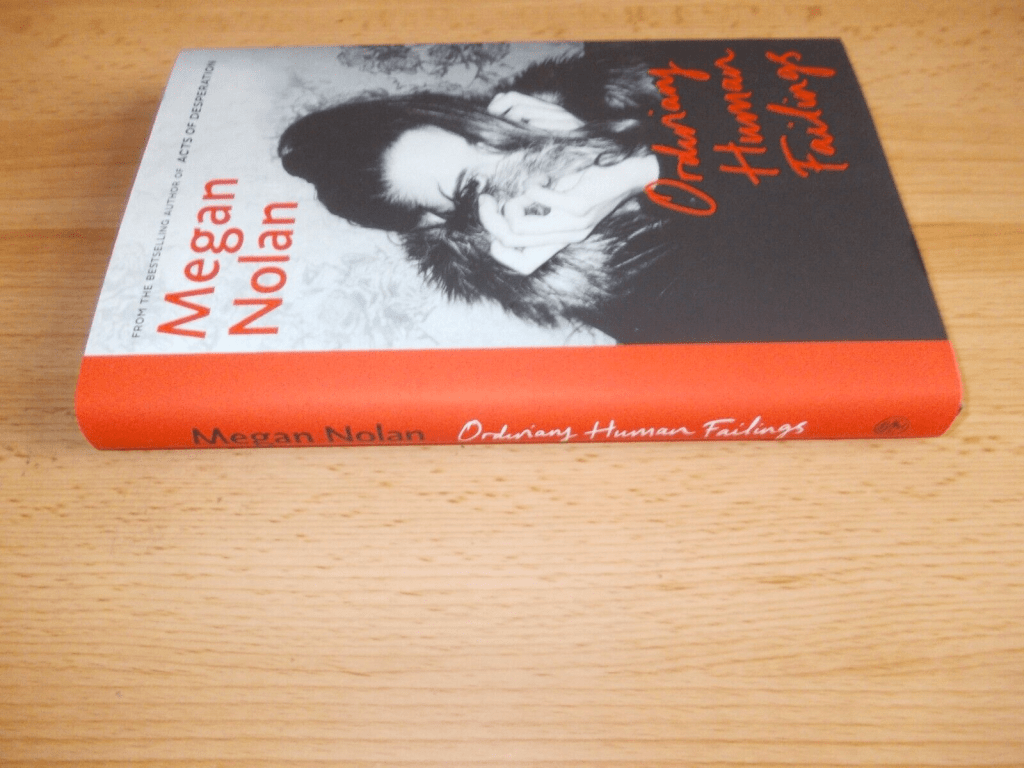
Remain Silent

Susie Steiner, the author of the Manon Bradshaw trilogy that I just finished reading, died in 2022. Her plots may ostensibly have been all about dying (sometimes in the most gruesome and pathetic of circumstances), but her real preoccupations were really about the difficulties of living. How hard it is to grow old, how painful it can be to raise children, how frustrating work can be, and how tough marriages and families are. Her ability to write about such things without preaching and without talking down to readers, and to do it all in such an entertaining and empathetic way, is the heart of Steiner’s appeal.

The final book in the series, Remain Silent, was my least favorite. The flipping between past and present and the multiple perspectives were discordant and fractured my attention. In some way that I cannot pinpoint it all felt rushed and less cared for than its predecessors. That’s not to say I disliked the book, just that I felt disappointed after the highs of the previous two.

Persons Unknown

A 13 hour flight to Tokyo seemed like the perfect excuse to indulge the Manon Bradshaw habit I acquired after reading Missing, Presumed. Persons Unknown has the same cast of characters as the first book in the series, but it’s an altogether darker novel. The murder of a high-flying wealth manager leads detectives to a grotesque world of exploitation and violence, but DI Bradshaw is forced to the sidelines of the investigation because the initial suspect is none other than her adopted son.

Whatever superficial differences there might be between the stories, there is a common ingredient that makes this series work so well: credible and likable characters. The long flight passed quickly in Manon Bradshaw’s quirky company. I’m hooked and I have already bought the final book in the trilogy.

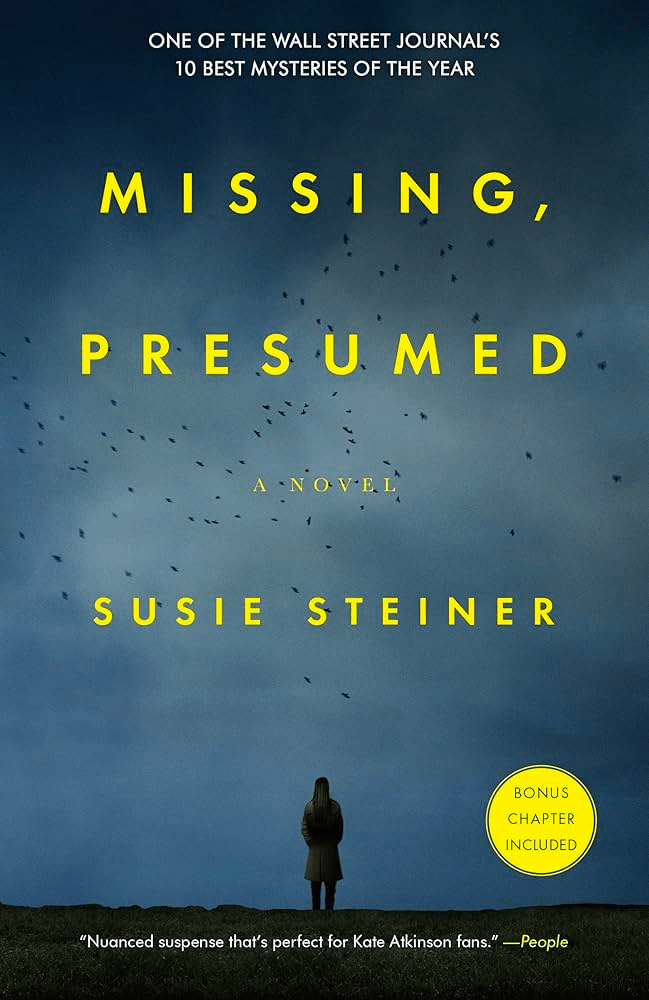
Missing, Presumed

The flawed detective has at this point become a staple ingredient of police procedurals. From Colin Dexter’s Morse to Henning Mankell’s Wallander, we have all become accustomed to the clever sleuth whose personal life is a mess. DS Manon Bradshaw is squarely in that tradition. As Missing, Presumed opens, we find her on her latest Internet date with yet another comically unsuitable man. Just beneath Manon’s growing disillusionment with men and life in general lies a suspicion she can’t quite shift that she would be better off alone or that some character flaw makes her unsuited to a lasting relationship.

At work in the Cambridgeshire police service, things are somewhat different for Manon. She might lack flair, but she has doggedness and determination, and whatever world weariness might have blighted her personal life hasn’t yet spoiled her appetite for the job. The job on this occasion is finding out what has happened to a Ph.D student who goes missing from her home without explanation. A complicated love life and a privileged background add spice to what might otherwise have been an unremarkable missing persons case.

As is so often the case with this genre, the real fun lies less in the plot than it does in the characterization. I’m already looking forward to seeing what happens next wtih Manon Bradshwaw.

The Running Grave

They keep getting longer and longer. The latest in the highly successful Cormoran Strike series, The Running Grave, weighs in at 940 pages. I was happy to turn the final page because I had grown tired of the intricate and bloated (but not compelling) plot long before that point. But at least I could finish it, something I could not say about the previous installment. Someone needs to have a quiet word in J. K. Rowling’s ear. Less is sometimes more.

The Letters of Seamus Heaney

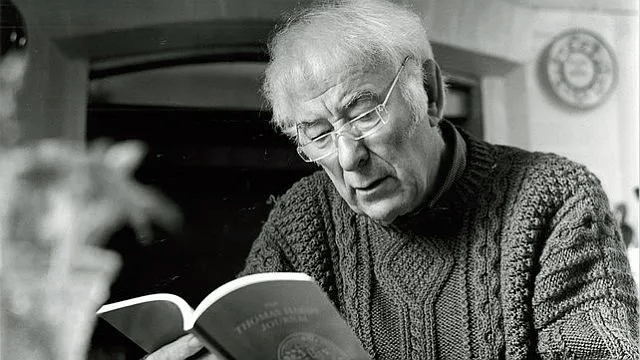
Why does anyone read a published collection of letters? In my own case, to learn more about someone who interests me, and to discover something of the human individual behind the public persona. Seamus Heaney, whose work I have loved since I encountered it first in the mid-1980s, presented two faces to the world. First, the peerless poet who left us a body of work of unique beauty. Second, poetry’s global ambassador whose life, especially after winning the Nobel Prize, seemed an exhausting parade of readings, lectures, and public endorsements of the works of others, both the long dead and those young writers just starting out. Away from the glare of literary celebrity, Famous Seamus, as he was sometimes called, steps out of the pages of this collection of letters first and foremost as a great and loyal friend. The best letters here are those he wrote to his dearest friends, the likes of Michael Longley, Seamus Deane, and Ted Hughes.

The collection opens in December 1964 just before his first collection of poems was accepted by Faber & Faber, and ends just before his death in 2013. Someone else will no doubt collect, organize, edit and publish his earlier letters, but Christopher Reid chooses wisely to begin this selection just as Heaney, then twenty-five, was on the brink of beginning his career as a published poet.

It should be no surprise to anyone that Heaney wrote beautiful letters. What a joy it must have been to receive one of them, filled, as they so often were, with teeming images, brilliance, fun, and warmth. His letters to fellow writers, notably to those younger than him, like Paul Muldoon, offer words of encouragement, praise, and support. As he grew older, and as the Nobel Prize brought great fame and never ending demands on him, the strain started to show, but there was always time for friends. Private letters don’t always show their writers in a favorable light. Heaney had no such worries. I closed this book concluding that the great poet was also a wise, loving, and generous man.

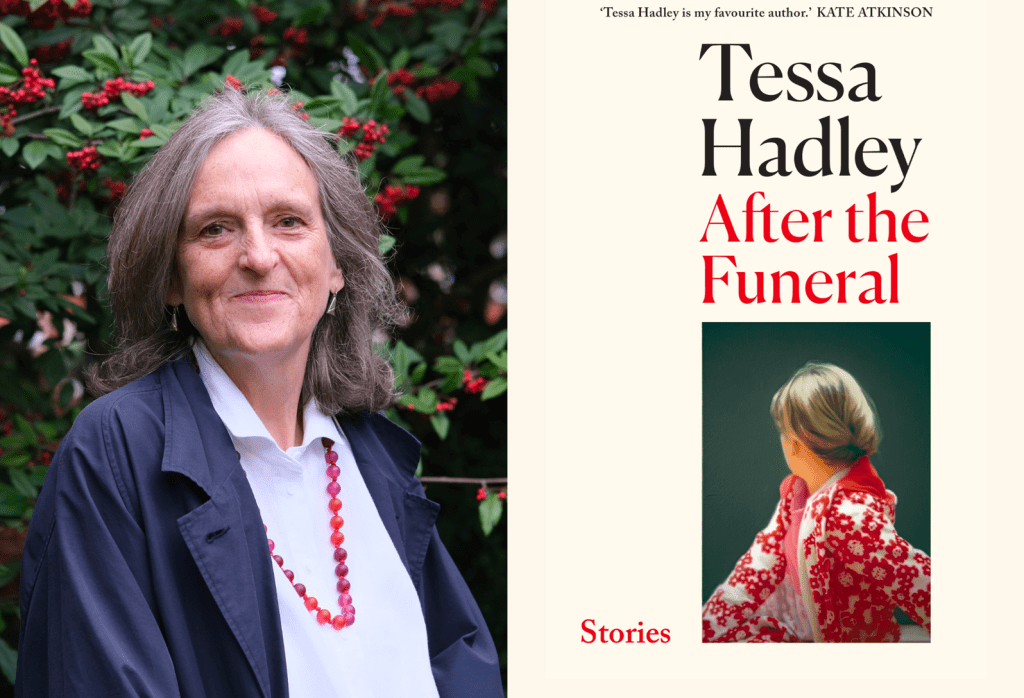
After the Funeral

I have read many of Tessa Hadley’s novels and enjoyed all of them. She is, I think, one of the most accomplished novelists working today and is certainly one whose new work I buy as soon as it’s published. Having bought After the Funeral as a birthday gift for a friend, I was curious to see how I would respond to a collection of Hadley’s short stories, so when I spotted a signed edition when I was killing time at Daunt’s bookshop in Cheapside, it felt like the right moment to find out.

The short story is such a demanding and unforgiving genre. In the hands of the very best practitioners (William Trevor is my favorite example), a short story can capture perfectly a whole world or a whole person in the span of a few pages. Done well, there’s nothing quite like the experience of reading a great story.

Many of the stories in After the Funeral catch people, and especially women, in those moments of particularly intense emotion. Funerals and weddings, of course, but also those extended rites of passage like the death of a parent; all of these feature. It’s a superb collection of stories, but that’s hardly surprising coming from someone so in command of her craft.

Porquerolles

I scarcely noticed a feature in The Financial Times earlier this year encouraging readers to visit the latest “hot” destination, the small island of Porquerolles. Yet only a few months later there I was after a short ferry ride from Hyeres. For most visitors, Porquerolle’s beaches are the top attraction. After disembarking, they head to the bike rental places along from the ferry terminal and on to one of the many beautiful stretches of sand.

My plan was different. I was there to see Villa Carmignac, a gallery dedicated to contemporary art and housed in a striking building just a short walk from the small downtown area. It’s the brainchild of Edouard Carmignac and was set up in 2000 to house a collection of some 300 works of art. Figures like Lichtenstein, Richter, and Warhol feature, but also a large number of less well known artists. It’s well worth a visit, not least to see the beautiful building itself with its cool, white space and aquatic ceiling.

Whether you’re interested in swimming, sunbathing, or immersing yourself in modern art, Porquerolles makes for a wonderful day trip, especially in September when the summer crowds have left.

Three London galleries

The Gilbert & George Centre opened in April this year, a few steps from the artists’ home in Fournier Street. Its inaugural exhibition, The Paradisical Pictures, is an interesting one. The pictures, intensely colored like all their recent work, feature Gilbert and George, staring out from behind and sometimes partly concealed by rotting vegetation and flowers. Their eyes are reddened, perhaps by fatigue, grief, or demonic power. Are these sinister images of decay and death some kind of exhortation to reverse the damage we are all inflicting on the world? Like almost all their work, the surface playfulness, the cheerful vividness of the colors, and the omnipresence of the artists themselves, are counterpoints to the deep seriousness of the exhibition’s message. The Centre itself consolidates the presence of Gilbert and George in Spitalfields, giving them a permanent place to display their work in a neighborhood they have called home since 1968.

From East London I headed to Trafalgar Square, the heart of London’s traditional art establishment, and The National Portrait Gallery. The NPG reopened in June after being closed for three years. Among other things, the collection was re-hung during the closure, and I was interested to see the results. That wasn’t as easy as I had hoped because half of London had the same idea. The galleries were very crowded – a good thing, of course – so I restricted my trip to some of the rooms on the second floor and to a wonderful small exhibition dedicated to the sketchbooks of Lucian Freud. I’ll certainly be going back, but next time I’ll choose the time more wisely.

Ordovas, a leading commercial gallery, has its premises in Savile Row, a few minutes’ walk from the NPG. I try to make a visit whenever I’m in London because its exhibitions, though small, are always curated with real care and always seem to include treasures I’ve never seen. My most recent visit was no exception. Entitled Endless Variations, it features only eight works, four by Francis Bacon and four by Andy Warhol. It claims to “explore common interests and influences shared by the artists”. I am not convinced, but what matters is the opportunity to see up close three masterworks by Bacon, Portrait of Henrietta Moraes (1969), Study for Portrait of John Edwards (1984), and Three Studies for Portrait of George Dyer (1964). All are magnificent, confirming, if confirmation were needed, that Bacon was one the greatest painters of the late 20th century. Warhol may be the better known of the two, but his work looks trivial and vacuous in this setting.

Le Thoronet

At some time around 1157, a group of Cistercian monks abandoned a property they had occupied near Tourtour and moved to Le Thoronet, a site more fertile and better suited to their system of agriculture. No one can be sure when they completed work on the monastery, but it’s likely to have been at the very beginning of the 13th century. The monks remained there until the abbey was deconsecrated in 1785. Many of the buildings were acquired by the French government in 1854 and Le Thoronet was one of the first sites to be added to the list of national monuments.

Unlike many ancient abbeys, Le Thoronet was largely built in one, uninterrupted period, and it’s this fact that gives the site such architectural integrity and purity. Much of it is beautifully preserved, especially the church and cloisters. Visit outside the summer months and you’ll experience the deep tranquility and splendor of this magnificent place without the crowds. Time on this occasion didn’t allow me to get to Le Thoronet’s sister abbeys in Provence, Senanque and Silvacane, but I’m already hatching a plan for a future visit.