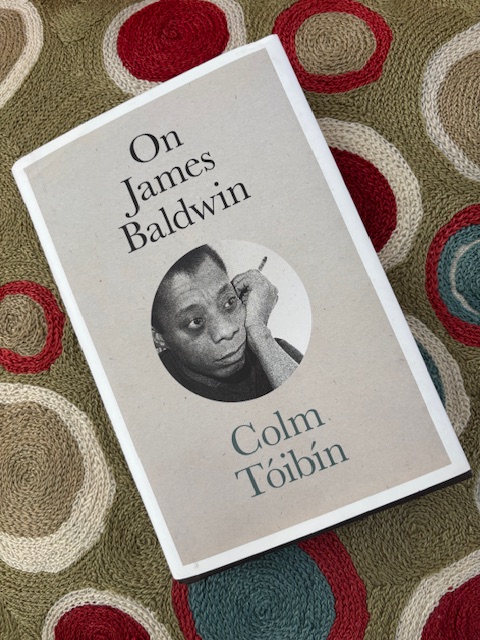
When I heard that Colm Toibin, one of my favorite writers, had written a book about James Baldwin, I was intrigued. I saw the obvious biographical similarities between the two. Both of them gay men, both with experience of living and writing in adopted homelands (Baldwin in France, Toibin in the US), and both touched deeply in different ways by the religious traditions in which they were raised. Intrigued and enthused I might have been, but I was also a little concerned that the book might demand a deep knowledge of Baldwin’s work (something I don’t have), and might be academic or dry (it’s published by a university press). I need not have worried. No doubt I would have got more from On James Baldwin if I had read more of Baldwin’s work or if I knew better books such as Giovanni’s Room, but this is as much a book about Toibin as it is about Baldwin. It’s also one that draws insightful parallels with the work of other notable emigre writers such as James Joyce, Ernest Hemingway, and Henry James. Best of all, it made me want to read more James Baldwin, and I guess that’s mission accomplished!
Martin Gayford wrote a book a few years ago about the experience of having his portrait painted by Lucien Freud. Man with a Blue Scarf proved to be not only an insightful, up-close-and-personal look at Freud, but also an engaging account of what it took to be one of his sitters. It’s one of my favorite books. Gayford has now focused his attention on David Hockney, transcribing a series of conversations he had with the prolific artist over more than a decade.
The portrait that emerges from the book is of an inexhaustibly inventive, restless, curious, and thoughtful artist. Now in his late eighties, Hockney has spent some seven decades not just painting and drawing, but thinking deeply about the act of looking. The book is filled with his insights on his own working methods, on other painters (Constable, Fra Angelico, Picasso, Van Gogh and many more), his fascination with new technologies, and the tireless determination to see clearly and record faithfully. It’s not in any sense a conventional biography, but Gayford’s clever and sensitive questioning tells you more about the personality, passions, and compulsions of this extraordinary painter than a traditional account might.
A Bigger Message is a book for Hockney fans for sure, but also for anyone interested in the mind and work of a great artist.
I set myself the challenge some time ago to read David Kynaston’s monumental history of post-war Britain. I thought of it as a challenge not because it’s a difficult read. Far from it. Kynaston writes elegantly and clearly and is never dull. It is, however, a long series, running to some 2,500 pages over the four volumes covering 1945 and 1965. (Further books are planned taking the series to 1979).
I have just finished the first volume, Austerity Britain: 1945-1951 and was mightily impressed by it. Political and social history is rarely as vivid and engaging as this. It begins with Britons celebrating the end of World War 2 and ends with the run-up to the election of 1951 and the return to power of Winston Churchill, by then in his mid-70s. The period was, for the vast majority of British people, one marked by deprivation and hardship. These were years of empty shelves, ration books, shopping coupons, and general drabness. Yet against this background the British people were living through a period of extraordinary innovation and change. These were the years that saw the launch of The National Health Service, the beginnings of comprehensive education, extensive nationalization of key industries, and the rebuilding of much of the country’s urban infrastructure after the devastating destruction of the war and earlier social neglect.
Kynaston’s extraordinary achievement is to compose an utterly convincing “soundscape” of British life in the period by collecting so many voices and stories from such a range of people. This is not history told by the great and the good. The important politicians of the time (Attlee, Bevan, Wilson, and so on) feature, of course, but so do hundreds of ordinary citizens from all over the country. Miners, shopkeepers, factory workers, and housewives are all given a voice here through letters, diaries, and the findings of the Mass-Observation research project started in the 1930s.
In many respects, and perhaps only in the most superficial and obvious respects, Britain today looks, sounds, and feels nothing like the nation of the 1940s, but I was struck most not by the differences but by the similarities of the country eight decades apart. So many of the same problems persist. Managing the consequences of its long gone empire, deep class and wealth divisions, vital social issues such as affordable housing; these were the challenges of the 1940s and continue to be challenges eighty years later.
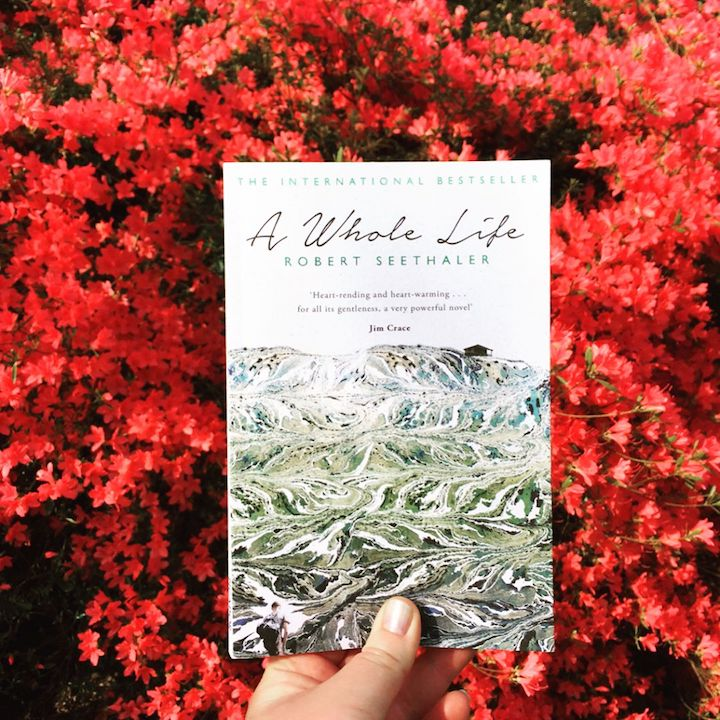
Flicking through a Saturday edition of The Financial Times recently, I came across one of those Q&As in which someone in the public eye (I’ve forgotten who) is asked about their interests, habits, recommendations, and so on. The interviewee, when asked about the best book they had read in the past year, spoke effusively about Robert Seethaler’s novella, A Whole Life. I had never heard of the writer or the book and was surprised to learn that the book had been shortlisted for the Man Booker International Prize. My only surprise after reading it is that it didn’t win.
In 150 pages of spare, elegant prose, Seethaler tells the story of Andreas Egger, a man who spends almost his entire life in the mountains of Austria. It’s a life of great simplicity marked by hard work, hardship, occasional cruelty, and a lot of solitude. “He had never felt compelled to believe in God, and he wasn’t afraid of death. He couldn’t remember where he had come from, and ultimately he didn’t know where he would go. But he could look back without regret on the time in between, his life, with a full-throated laugh and utter amazement.”
A Whole Life is, quite simply, a wonderful work of art. What it does with great stealth and skill, in spare, soft-spoken prose of real elegance and power, is capture a simple life, and to encourage those who read it, without sermonizing, to make the best of their lives however those lives turn out. Unmissable, A Whole Life is close to perfection.
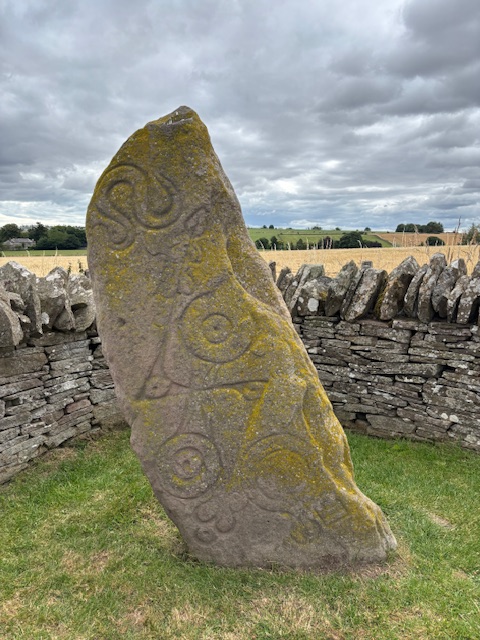
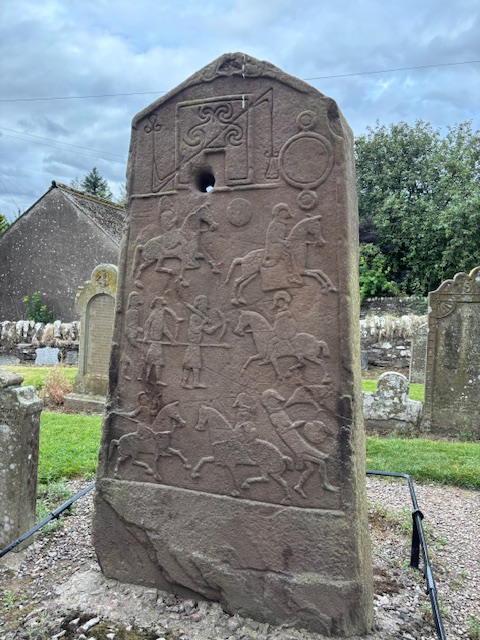
Relatively little is known about the Picts. They lived in what is now northern Scotland between 300 AD and 900 AD before gradually integrating with other tribes and kingdoms. They resisted the expansion of the Romans and earned the reputation of being fearsome warriors. They left behind a significant artistic legacy, and it was specifically their beautifully carved stones that drew me recently to the tiny village of Aberlemno in Angus. Normally one would find four stones in Aberlemno, three by the roadside and one in the churchyard, but a storm recently toppled and damaged Aberlemno 3, causing it to be removed from the site for inspection and repair.
Precise dating of the stones is, of course, difficult, but there seems to be consensus that the earliest could have been carved in the 6th century and that the most recent (Aberlemno 2, the one in the churchyard) is from around 850 AD. Aberlemno 1 is carved with mysterious Pictish symbols, including a serpent, a double disc and what appears to be a comb. It’s a powerful and confidently executed piece of work, but much simpler than Aberlemno 2. The stone in the churchyard feels like two distinct works. One side depicts Pictish symbols and figures in what looks like a battle, while the other side is a Celtic cross with beautiful and elaborate knotwork and keywork designs.
The stones, beautiful works of art though they are, are also extraordinary reminders of a long disappeared civilization. They have stood for all to see for more than 1.200 years, among a community, not hidden in a museum. I hope they are cared for and protected for generations to come because they testify to our persistent and enduring creativity.
Like most people with large book collections and limited shelving space, from time to time I fill a few bags with the unwanted and unloved and make a trip to the local thrift store. While doing so recently, I came across The Optimists by Andrew Miller. Miller is one of my favorite novelists, so it was a little bit of a shock (and a pleasant surprise) to discover an unread book by him in one of my bookcases. The novel was published twenty years ago. That makes it one of his earliest novels, but also one released after he had received some critical acclaim (for Oxygen).
In my experience anything by Miller is worth reading, but The Optimists is the least persuasive and satisfying of those I read previously. The plot is engaging enough, focusing on Clem Glass, a celebrated war photographer adjusting to life at home following an assignment in Africa in which he had witnessed and recorded unimaginable horrors. It’s also an ambitious book, exploring recovery from trauma, the role and value of artists in the face of wickedness, and the tricky relationship between images and truth. The ambition isn’t part of the failure of this novel. It’s the transparency of the ambition and the obviousness of Miller’s plan that undermines what he wanted to achieve. It’s all just a little too evident and too neatly packaged, and the lack of subtlety became distracting and grating. Also, the imaginative effort required to get into the mind and experience of a war photographer exposed to atrocities is just too much for Miller. It felt forced and ultimately unconvincing.
So, not one of Andrew Miller’s most satisfying or successful novels, but a thoughtful and thought-provoking read nevertheless.
The critical reputation of an artist can be shaped for a generation by a major retrospective of their work. When large numbers of works are exhibited, a reputation can be enhanced or diminished. In the case of Diane Arbus: Constellation (at the Park Avenue Armory), I fear the overall impact might be a damaging one.
Part of the problem, and this is obviously nothing to do with the artist, is that Constellation is one of the worst staged shows I have ever seen. More than 400 pictures are displayed entirely randomly and largely without captions. Some are hung so high on the wall that only exceptionally tall visitors could see them properly, while others are near the floor. It is, let’s be clear, a complete mess. Arbus deserves better than this amateurish staging.
The photographs themselves are surprisingly uneven. The best ones are brilliant. Unsettling portraits of what Arbus called “freaks” or ordinary people captured on a street or in a park. These are often arresting and disturbing, and reflect Arbus’s genius for capturing with humanity, generosity, and good humor the enormous diversity of life as it’s lived. Children playing in the park, society hostesses in their salons, and performers in the “freak shows” that were still a feature of New York in the 1960s – all are caught in a single moment with tenderness and without judgement. By way of contrast, her few portraits of well-known people (Herbert von Karajan or James Brown, for example), are less successful, though I loved her picture of Marianne Moore with W.H. Auden.
Some of Arbus’s interests are explored here too extensively. There are, for example, dozens of pictures of people wearing masks of various kinds. The effect overall is somehow to emphasize the narrowness of her artistic vision, not its breadth. A wiser curator would have selected fewer pictures. So, in summary, a great talent not well served by the show’s curator, but Constellation is worth seeing.
Claire teaches literature at a university in the west of Ireland. She has left her life in London and, after the deaths of her parents and the end of her relationship to Tom, has moved back to where she grew up. Whatever she’s escaping from or whatever she’s hoping to find, it’s all put in jeopardy when Tom moves into a friend’s cottage nearby ….
I bought my copy of Elaine Feeney’s latest novel on the strength of an earlier one I had read and enjoyed (How to Build a Boat) which had been longlisted for the Booker Prize. I had high hopes but turned the final page with a little disappointment.
There is some exceptional writing in the novel. The Christmas meal hosted by Claire for her friends and family, the childhood flashback when a horse is injured, and especially the harrowing visit of the Black and Tans are rendered so vividly and persuasively. The problem is with the whole, not individual parts. At no point did I care much or at all about Claire’s emotional attachment to Tom or the anguish and joy it provoked. Without that, what was supposed to be the heart of the story didn’t move or engage me at all and I was left occasionally admiring but never immersed.
My one previous visit to Morocco, six years ago, had been for pleasure and had included stays in Fes, Marrakech, Essaouira, and the Atlas Mountains. On this occasion, it was work all the way, but I managed to squeeze in a couple of hours personal time for an all-too-quick visit to Rabat’s medina. Unlike those in Fes and Marrakech, the old quarter of Rabat, laid out in its present form in the 17th century, seems to get few tourists, so it’s perfectly easy to walk around without attracting the unwanted attention of shopkeepers selling carpets, argan oil, or whatever.
My destination was the Kasbah of the Oudayas. It sits adjacent to the medina and on a hill overlooking the sea. Its oldest parts date back to the 12th century, notably its elaborately carved Great Gate and Old Mosque. The small area around the Kasbah is beautifully preserved, with streets of traditional houses and gardens, and mercifully few of the trappings aimed at tourists. Walking around without crowds and enjoying a coffee in a small cafe was a real treat.
I enjoyed my few days in Rabat. It’s a relaxing, safe, and calm city (at least compared to the frenetic atmosphere of Fes and Marrakech). My hosts were delightful and generous. It would be good to go back one day with more time and fewer work commitments.
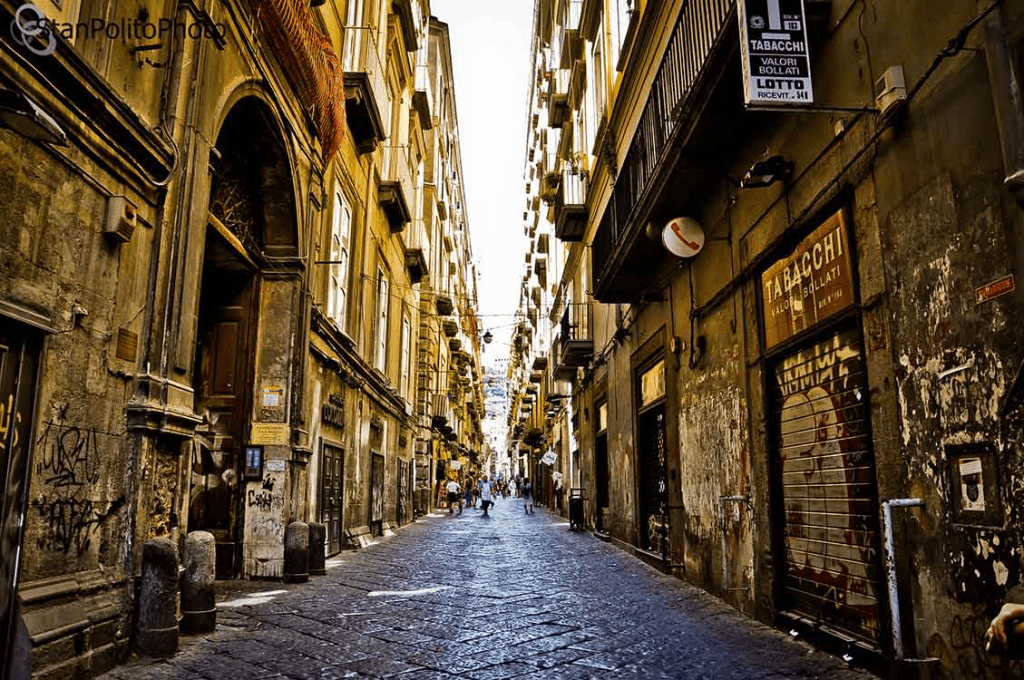
Some reputations are well deserved. Read anything about modern-day Naples and its scruffiness and edginess will feature front and center. I spent a few days in the city recently and, even allowing for everything I had read, I was surprised how dilapidated, graffiti-strewn, and down-at-heel it is. In the old city it seems every square inch of the walls has been defaced by graffiti, even historic buildings. In a place filled with ancient churches, museums, and monuments, it feels as if not a penny has been spent to restore or maintain them.
Surfaces are one thing, and spirit is another. Naples has charm, energy, and vitality in abundance and radiates them day and night. It’s a quirky, noisy, chaotic place, one that prides itself on its reputation for flouting the rules. Food, football, and living life to the full; those are the passions and charms of Naples.
Resist the temptation to use the city as nothing more than a gateway to Pompeii and the Amalfi coast. Take a few days to explore it, and it will repay the effort. Visit the Duomo, take an evening stroll down Spaccanapoli, eat the best pizza and gelato money can buy, and watch the Neapolitans at work and play. Don’t miss Vasari’s sacristy in San’Anna dei Lombardi or the archaeological museum. Naples isn’t “tourist pretty”, but it has a unique and unforgettable energy of its own.






 Miscellaneous Musings