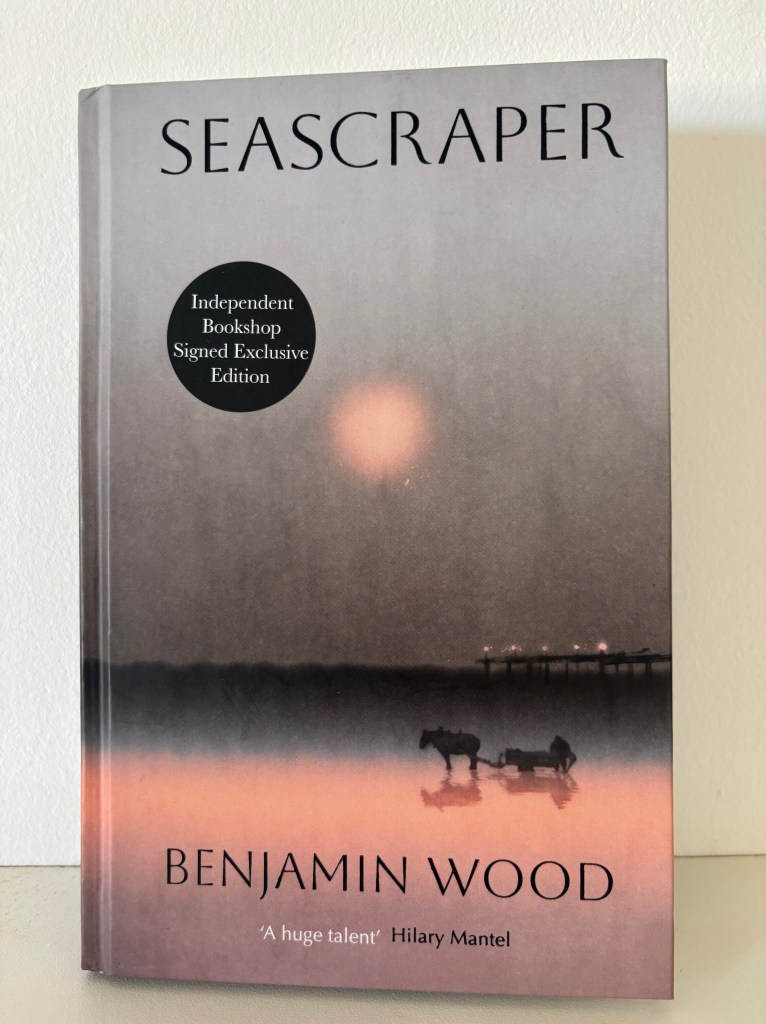
Seascraper

Thomas Flett is a shanker. Every morning at low tide he takes his horse and wagon to the beach, scrapes the sand and the shallow waters for shrimp, and delivers his haul for sale in the nearby town. He does it reluctantly and even resentfully, dreaming all the while of the folk music he would like to write and perform. Thomas lives with his mother in a rundown cottage. Money is scarce, so he conceals his ambitions from her, hiding his guitar and everything of his inner life. Work is hard, leaving him little or no time to follow his dreams, until one day, without warning, an American film director shows up scouting for suitable locations for his new project.

Disappointed and disillusioned young men, tied to labors they loathe, tethered by poverty, and dreaming of other lives are something of a literary staple. Think of Thomas Hardy, for example. Seascraper is firmly within that tradition. That in no way is intended to diminish Benjamin Wood’s achievement here. His tale is a memorable and poignant one, and he writes with great feeling for the frustrations of daily life and especially of thwarted ambition. In spite of that, Seascraper for me didn’t quite come off. It’s filled with atmosphere and the character of Thomas is written with subtlety and insight, but minor characters feel sketched rather than fully drawn. Nevertheless, this is a fine novel and one I’m pleased to have read.
Les Tres Riches Heures

Some experiences really are once-in-a-lifetime experiences. About a year ago it was announced that in mid-2025 one of the rarest and most exquisite medieval manuscripts would go on display to the public. Les Tres Riches Heures du Duc de Berry is an illuminated book of hours (a book of prayers intended to be read at specific hours of the day) first created between 1412 and 1416 for John, Duke of Berry, the brother of King Charles V of France. The manuscript, believed to be the work of the Limbourg brothers, was left unfinished because the brothers died, most likely victims of plague. Further work was done on the manuscript later in the 15th century by Barthelemy d’Eyck and Jean Colombe.

The manuscript is very rarely displayed because of its fragility and has only been seen by the public twice since the end of the 19th century. Even scholars have been denied access since the 1980s and forced to rely on facsimiles. The need to repair its binding gave an opportunity to exhibit some of the unbound pages at the Chateau de Chantilly where it is usually housed, an event so rare that it was described as one of the cultural highlights of the century. Needless to say, art lovers, historians, and bibliophiles have descended on Chantilly in huge numbers since June, but by the time I arrived in mid-September the crowds had subsided and I was able to see the exhibited pages up close.

Twelve pages were on display the day I visited, each one representing a month of the year. It is hard to describe how vivid, rich, and elaborate the illumination is on these pages, as well as the perfection of the calligraphy. It is a credit not just to the artists, but also those charged with the care and conservation of this treasure, that the illustrations look as if they could have been painted yesterday, such is the depth and brilliance of the color.

Some works of art defy categorization. This precious manuscript, a priceless example of medieval art, is one of them. I feel privileged to have seen it.

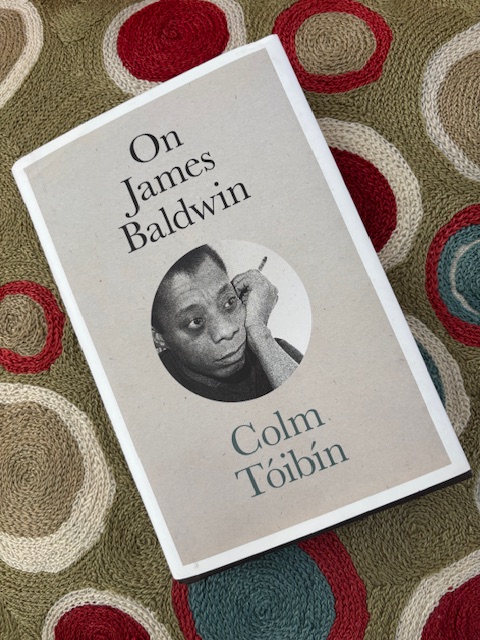
On James Baldwin

When I heard that Colm Toibin, one of my favorite writers, had written a book about James Baldwin, I was intrigued. I saw the obvious biographical similarities between the two. Both of them gay men, both with experience of living and writing in adopted homelands (Baldwin in France, Toibin in the US), and both touched deeply in different ways by the religious traditions in which they were raised. Intrigued and enthused I might have been, but I was also a little concerned that the book might demand a deep knowledge of Baldwin’s work (something I don’t have), and might be academic or dry (it’s published by a university press). I need not have worried. No doubt I would have got more from On James Baldwin if I had read more of Baldwin’s work or if I knew better books such as Giovanni’s Room, but this is as much a book about Toibin as it is about Baldwin. It’s also one that draws insightful parallels with the work of other notable emigre writers such as James Joyce, Ernest Hemingway, and Henry James. Best of all, it made me want to read more James Baldwin, and I guess that’s mission accomplished!

A Bigger Message

Martin Gayford wrote a book a few years ago about the experience of having his portrait painted by Lucien Freud. Man with a Blue Scarf proved to be not only an insightful, up-close-and-personal look at Freud, but also an engaging account of what it took to be one of his sitters. It’s one of my favorite books. Gayford has now focused his attention on David Hockney, transcribing a series of conversations he had with the prolific artist over more than a decade.

The portrait that emerges from the book is of an inexhaustibly inventive, restless, curious, and thoughtful artist. Now in his late eighties, Hockney has spent some seven decades not just painting and drawing, but thinking deeply about the act of looking. The book is filled with his insights on his own working methods, on other painters (Constable, Fra Angelico, Picasso, Van Gogh and many more), his fascination with new technologies, and the tireless determination to see clearly and record faithfully. It’s not in any sense a conventional biography, but Gayford’s clever and sensitive questioning tells you more about the personality, passions, and compulsions of this extraordinary painter than a traditional account might.

A Bigger Message is a book for Hockney fans for sure, but also for anyone interested in the mind and work of a great artist.