Austerity Britain: 1945-1951

I set myself the challenge some time ago to read David Kynaston’s monumental history of post-war Britain. I thought of it as a challenge not because it’s a difficult read. Far from it. Kynaston writes elegantly and clearly and is never dull. It is, however, a long series, running to some 2,500 pages over the four volumes covering 1945 and 1965. (Further books are planned taking the series to 1979).

I have just finished the first volume, Austerity Britain: 1945-1951 and was mightily impressed by it. Political and social history is rarely as vivid and engaging as this. It begins with Britons celebrating the end of World War 2 and ends with the run-up to the election of 1951 and the return to power of Winston Churchill, by then in his mid-70s. The period was, for the vast majority of British people, one marked by deprivation and hardship. These were years of empty shelves, ration books, shopping coupons, and general drabness. Yet against this background the British people were living through a period of extraordinary innovation and change. These were the years that saw the launch of The National Health Service, the beginnings of comprehensive education, extensive nationalization of key industries, and the rebuilding of much of the country’s urban infrastructure after the devastating destruction of the war and earlier social neglect.

Kynaston’s extraordinary achievement is to compose an utterly convincing “soundscape” of British life in the period by collecting so many voices and stories from such a range of people. This is not history told by the great and the good. The important politicians of the time (Attlee, Bevan, Wilson, and so on) feature, of course, but so do hundreds of ordinary citizens from all over the country. Miners, shopkeepers, factory workers, and housewives are all given a voice here through letters, diaries, and the findings of the Mass-Observation research project started in the 1930s.

In many respects, and perhaps only in the most superficial and obvious respects, Britain today looks, sounds, and feels nothing like the nation of the 1940s, but I was struck most not by the differences but by the similarities of the country eight decades apart. So many of the same problems persist. Managing the consequences of its long gone empire, deep class and wealth divisions, vital social issues such as affordable housing; these were the challenges of the 1940s and continue to be challenges eighty years later.

A Whole Life

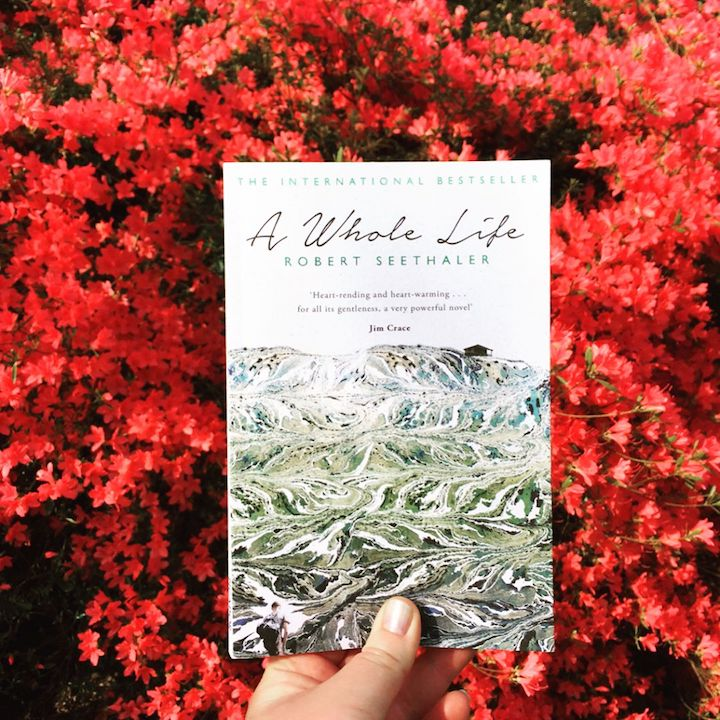
Flicking through a Saturday edition of The Financial Times recently, I came across one of those Q&As in which someone in the public eye (I’ve forgotten who) is asked about their interests, habits, recommendations, and so on. The interviewee, when asked about the best book they had read in the past year, spoke effusively about Robert Seethaler’s novella, A Whole Life. I had never heard of the writer or the book and was surprised to learn that the book had been shortlisted for the Man Booker International Prize. My only surprise after reading it is that it didn’t win.

In 150 pages of spare, elegant prose, Seethaler tells the story of Andreas Egger, a man who spends almost his entire life in the mountains of Austria. It’s a life of great simplicity marked by hard work, hardship, occasional cruelty, and a lot of solitude. “He had never felt compelled to believe in God, and he wasn’t afraid of death. He couldn’t remember where he had come from, and ultimately he didn’t know where he would go. But he could look back without regret on the time in between, his life, with a full-throated laugh and utter amazement.”

A Whole Life is, quite simply, a wonderful work of art. What it does with great stealth and skill, in spare, soft-spoken prose of real elegance and power, is capture a simple life, and to encourage those who read it, without sermonizing, to make the best of their lives however those lives turn out. Unmissable, A Whole Life is close to perfection.

The Aberlemno Stones

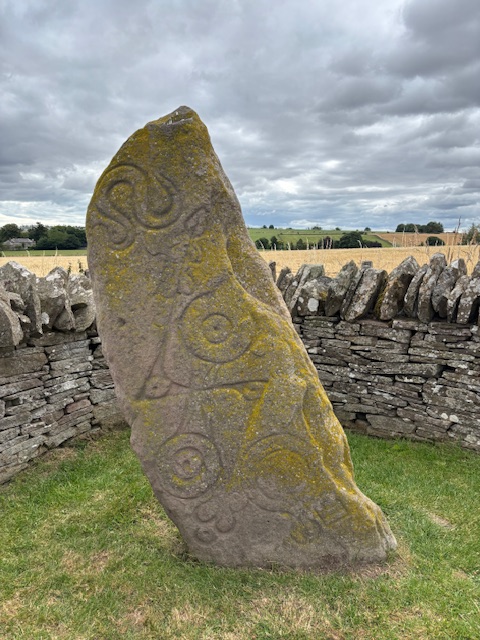
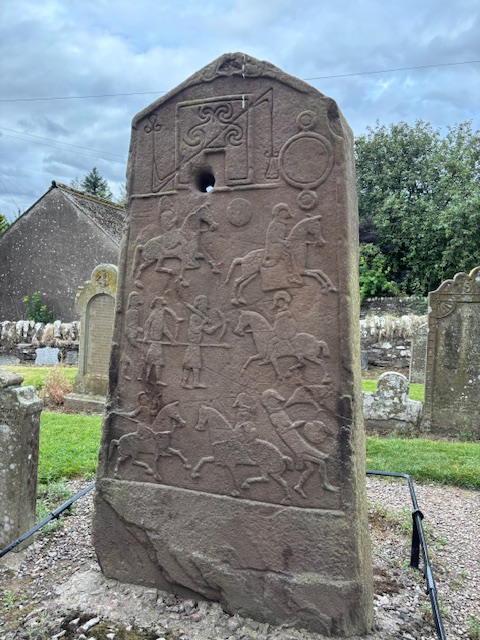
Relatively little is known about the Picts. They lived in what is now northern Scotland between 300 AD and 900 AD before gradually integrating with other tribes and kingdoms. They resisted the expansion of the Romans and earned the reputation of being fearsome warriors. They left behind a significant artistic legacy, and it was specifically their beautifully carved stones that drew me recently to the tiny village of Aberlemno in Angus. Normally one would find four stones in Aberlemno, three by the roadside and one in the churchyard, but a storm recently toppled and damaged Aberlemno 3, causing it to be removed from the site for inspection and repair.

Precise dating of the stones is, of course, difficult, but there seems to be consensus that the earliest could have been carved in the 6th century and that the most recent (Aberlemno 2, the one in the churchyard) is from around 850 AD. Aberlemno 1 is carved with mysterious Pictish symbols, including a serpent, a double disc and what appears to be a comb. It’s a powerful and confidently executed piece of work, but much simpler than Aberlemno 2. The stone in the churchyard feels like two distinct works. One side depicts Pictish symbols and figures in what looks like a battle, while the other side is a Celtic cross with beautiful and elaborate knotwork and keywork designs.

The stones, beautiful works of art though they are, are also extraordinary reminders of a long disappeared civilization. They have stood for all to see for more than 1.200 years, among a community, not hidden in a museum. I hope they are cared for and protected for generations to come because they testify to our persistent and enduring creativity.