Let me go mad in my own way

Claire teaches literature at a university in the west of Ireland. She has left her life in London and, after the deaths of her parents and the end of her relationship to Tom, has moved back to where she grew up. Whatever she’s escaping from or whatever she’s hoping to find, it’s all put in jeopardy when Tom moves into a friend’s cottage nearby ….

I bought my copy of Elaine Feeney’s latest novel on the strength of an earlier one I had read and enjoyed (How to Build a Boat) which had been longlisted for the Booker Prize. I had high hopes but turned the final page with a little disappointment.

There is some exceptional writing in the novel. The Christmas meal hosted by Claire for her friends and family, the childhood flashback when a horse is injured, and especially the harrowing visit of the Black and Tans are rendered so vividly and persuasively. The problem is with the whole, not individual parts. At no point did I care much or at all about Claire’s emotional attachment to Tom or the anguish and joy it provoked. Without that, what was supposed to be the heart of the story didn’t move or engage me at all and I was left occasionally admiring but never immersed.

Rabat

My one previous visit to Morocco, six years ago, had been for pleasure and had included stays in Fes, Marrakech, Essaouira, and the Atlas Mountains. On this occasion, it was work all the way, but I managed to squeeze in a couple of hours personal time for an all-too-quick visit to Rabat’s medina. Unlike those in Fes and Marrakech, the old quarter of Rabat, laid out in its present form in the 17th century, seems to get few tourists, so it’s perfectly easy to walk around without attracting the unwanted attention of shopkeepers selling carpets, argan oil, or whatever.

My destination was the Kasbah of the Oudayas. It sits adjacent to the medina and on a hill overlooking the sea. Its oldest parts date back to the 12th century, notably its elaborately carved Great Gate and Old Mosque. The small area around the Kasbah is beautifully preserved, with streets of traditional houses and gardens, and mercifully few of the trappings aimed at tourists. Walking around without crowds and enjoying a coffee in a small cafe was a real treat.

I enjoyed my few days in Rabat. It’s a relaxing, safe, and calm city (at least compared to the frenetic atmosphere of Fes and Marrakech). My hosts were delightful and generous. It would be good to go back one day with more time and fewer work commitments.

Naples

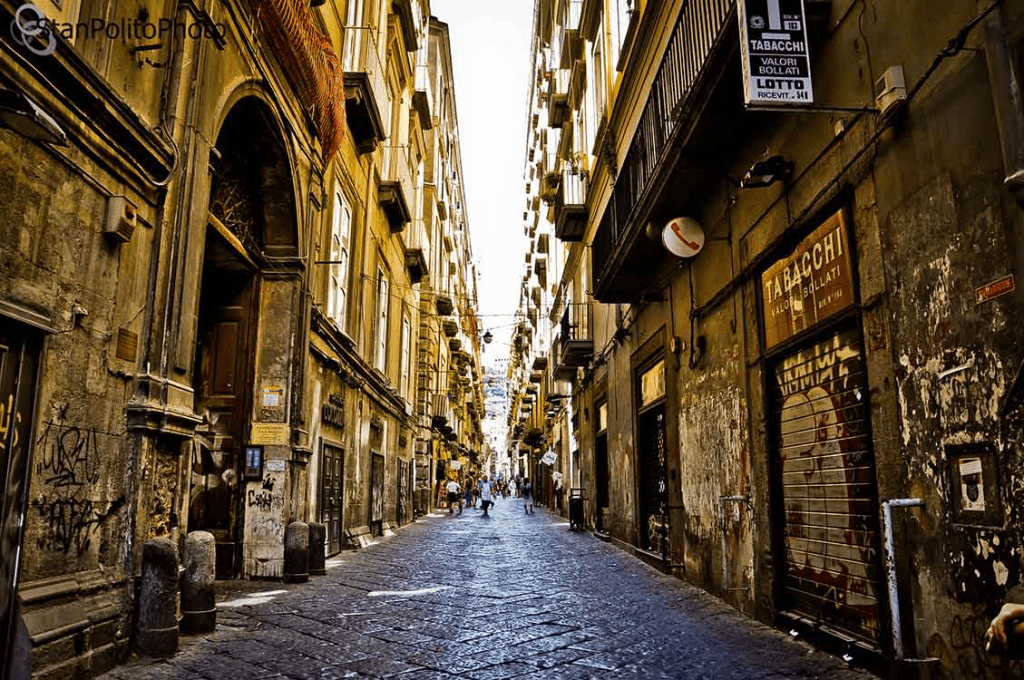
Some reputations are well deserved. Read anything about modern-day Naples and its scruffiness and edginess will feature front and center. I spent a few days in the city recently and, even allowing for everything I had read, I was surprised how dilapidated, graffiti-strewn, and down-at-heel it is. In the old city it seems every square inch of the walls has been defaced by graffiti, even historic buildings. In a place filled with ancient churches, museums, and monuments, it feels as if not a penny has been spent to restore or maintain them.

Surfaces are one thing, and spirit is another. Naples has charm, energy, and vitality in abundance and radiates them day and night. It’s a quirky, noisy, chaotic place, one that prides itself on its reputation for flouting the rules. Food, football, and living life to the full; those are the passions and charms of Naples.

Resist the temptation to use the city as nothing more than a gateway to Pompeii and the Amalfi coast. Take a few days to explore it, and it will repay the effort. Visit the Duomo, take an evening stroll down Spaccanapoli, eat the best pizza and gelato money can buy, and watch the Neapolitans at work and play. Don’t miss Vasari’s sacristy in San’Anna dei Lombardi or the archaeological museum. Naples isn’t “tourist pretty”, but it has a unique and unforgettable energy of its own.

All the Beauty in the World

I rarely notice museum guards. When I do, I find myself pitying them. The job looks exhausting and boring in equal measure. Being surrounded by priceless treasures cannot be much compensation in the circumstances. Patrick Bringley’s delightful account of working for ten years at The Metropolitan Museum did little to change my outlook, at least as far as that particular job is concerned.

All the Beauty in the World tells his story. Leaving behind an enviable position at The New Yorker magazine, Bringley, devastated by the illness and death of his much loved older brother, sought (and found) refuge and consolation amid the beauties and wonders of The Met’s collections. In his decade as a guard, Bringley learned a lot about art and history, but much more about himself and the life he wanted to live. It’s no exaggeration to say art saved his life. It taught him how to look and to live. Whether one believes there is a “purpose” to art or not, surely no one who loves looking at pictures and sculptures denies their power to heal, console, educate and transform. The book is a deeply felt account of his journey, and along the way it gives us a fond and funny insider’s account of that extraordinary institution and some of the people who protect its treasures and educate its visitors. I recommend it highly.

The Amalfi Coast

What do Amsterdam, Venice, and Reykjavik have in common? The answer is over-tourism. And not just over-tourism, but tourism so excessive that authorities in those cities (and many others) are looking at strategies to actively discourage visitors. Based on my personal experience in recent weeks, I want to add two names to the list of over visited places: Capri and Positano.

My advice to anyone planning to visit Capri is simple. Don’t go. By all means take a boat trip around the island and look at the pretty coves and rock formations, but under no circumstances dock at the main harbor and explore the main town. Even at low season, the place is choked with tourists who, undeniably with the best intentions, have destroyed what must have been a beauty a generation or two ago.

Positano, that most picturesque town, is well on its way to sharing the same fate as Capri. The streets climbing up from the port and small beach are lined with mostly average restaurants and uninteresting shops selling expensive tat to tourists. Just by being there, I felt I was hastening the demise of a place of stunning natural beauty.

Sorrento, Atrani, and, most of all, Ravello are a delight, but even those towns have to be visited early in the morning (and preferably at low season) before the hordes arrive. After a few days on the Amalfi coast, I was glad to leave and saddened by its gradual and inevitable desecration, to which I had unwittingly contributed.

Ripley’s Game

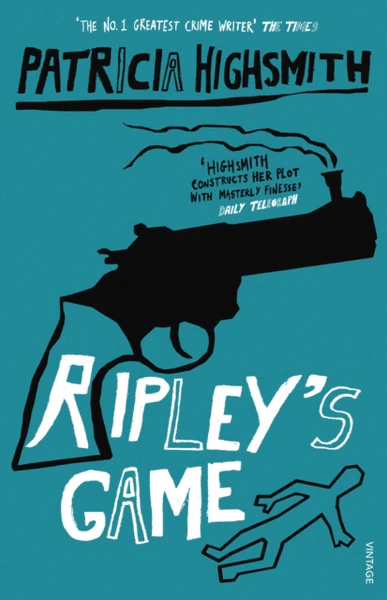
In need of some vacation reading, I dropped by a local bookstore in Sorrento with a couple of shelves of English-language novels and found Patricia Highsmith’s Ripley’s Game. That seemed like a perfect choice because the film and TV adaptions of The Talented Mr. Ripley had been shot, at least in part, along the beautiful Amalfi coast. And so it proved. Ripley’s Game is a tightly plotted and psychologically convincing novel, written by a master of the genre when she was at the height of her powers. Highsmith’s preoccupation is a simple and important one. If the circumstances are propitious, can a conventional, respectable person be convinced to commit an evil act? What does it take to tip a good man into murder?

I have read more plausible stories, but I enjoyed every page of my first Ripley novel and am now looking forward to the others.

Twelve Post-War Tales

Graham Swift has for me been the most consistently satisfying storyteller from that generation of British writers that began to publish in the early 1980s. Some of his peers have been more prolific (Ian McEwan and Salman Rushdie), and others have won greater acclaim (Kazuo Ishiguro and Julian Barnes), but Swift is the one whose books I look forward to most and have been the most dependably rewarding.

Twelve Post-War Tales is, I think, only his third collection of short stories in a writing career that began in 1980. Many of the stories feature, directly or indirectly, a moment or incident of great crisis for the world. A retired doctor volunteers his time to help out at his local hospital during the COVID pandemic. The attacks of September 11th upend the plans of a family due to return to America after a diplomatic posting to London comes to an end. Pearl Harbor, the assassination of JFK, the burning of Crystal Palace, and the Blitz; incidents of global or national importance become the lens through which a small, individual life is examined for signs of impact and trauma.

The writing here is masterful, as anyone who knows Swift would expect, and there’s something arresting and truthful in every story. Having said that, it’s an uneven collection, and one or two of the tales miss the intended marks. A small quibble. This is a wonderful book by a master of the short story art.