The Land in Winter

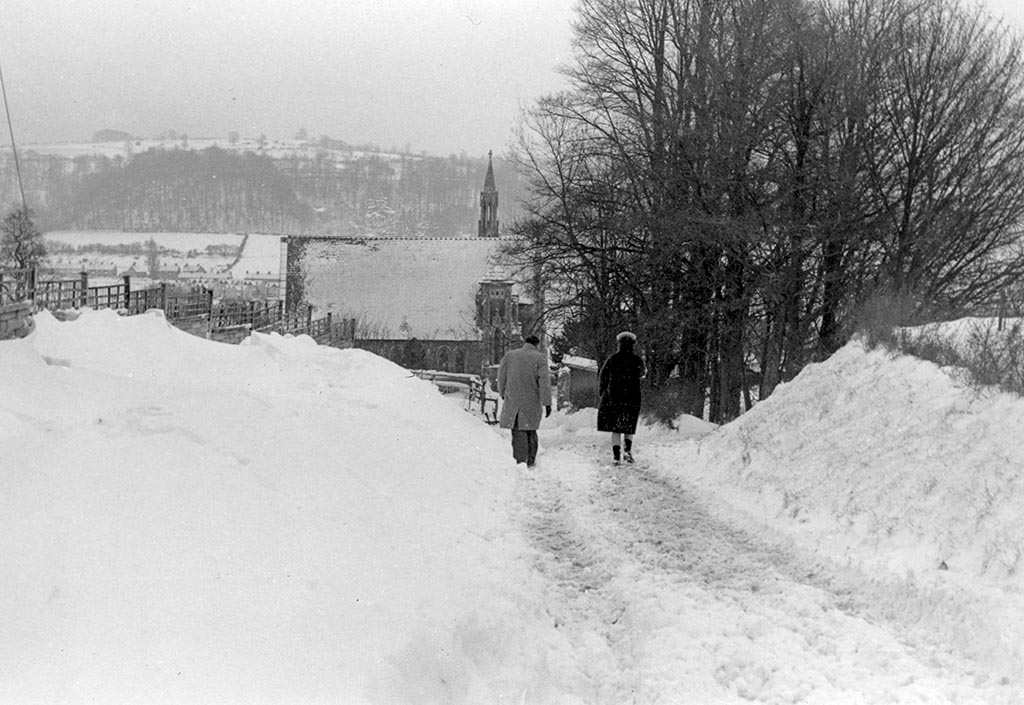
I have written here in the past about my admiration for Andrew Miller’s fiction, so when I saw The Land in Winter showing up on critics’ “best books of 2024” it was bound to be one of my first priorities in 2025. The winter referred to in the title is the infamous one of 1962-1963 when Britain recorded some of the lowest temperatures ever recorded and heavy snowfalls persisted in many parts of the country until early March. Miller’s story is set in a frozen and fog-bound village not far from Bristol and has as its central characters two young couples living as neighbors. Eric, the local doctor, and his genteel wife, Irene, occupy a cottage next to a small farm where Bill is struggling in his first farming venture while his young, bohemian wife, Rita, stays at home reading science fiction novels. At the opening of the novel, both women are in the early stages of pregnancy.

It’s ostensibly a novel about marriage and love, about the accommodations and compromises that individuals make as they seek to manage the task of living with someone else. Miller is superb at exploring the nuances of relationships, but this is just the foreground and he has bigger ambitions. England in 1963 was still a country living in the shadow of a world war and a place where its horrors were still vivid for some. Miller’s theme is how we avoid madness and how we carve out lives and futures when those horrors are so close and so real. The snow, ice, and fog that have frozen and paralyzed Somerset foreshadow a world broken beyond repair by environmental catastrophe.

The Land in Winter is a novel of unusual subtlety and nuance. That won’t surprise anyone who has read Miller’s earlier work. He’s an ambitious and cunning writer, and understands better than most how the conventions of traditional fiction can be adapted and subverted to explore and explain the deepest workings of human behavior. It is not a perfect novel. Some of the story’s tension is dissipated when the plot moves beyond the confines of the snowbound village and some of the peripheral characters are sketched rather than drawn. These are quibbles. The Land in Winter should be on the reading list of anyone interested in the best of contemporary English literary fiction.

Siena: the Rise of Painting 1300-1350

Critics lucky enough to get a sneak preview last year of Siena: the rise of painting 1300-1350 hailed it as the must-see exhibition of the season. They weren’t wrong, but they were guilty of understatement. The show is a once-in-a-lifetime masterpiece. It transfers from The Metropolitan Museum in New York to The National Gallery in London at the end of January. Anyone who loves painting and who missed it in Manhattan might, if circumstances permit, want to consider booking a flight and an entrance ticket now. It is sure to sell out, and rightly so.

The exhibition featured a range of objects, including sculpture, textiles, manuscripts and liturgical artifacts, but it is the paintings that steal the show. Paintings of sublime and timeless beauty, paintings of extraordinary sophistication that anticipate what was to come in the Renaissance. The focus is on Martini, the Lorenzetti brothers, and especially on the brilliant Duccio di Buoninsegna, whose Maesta altarpiece is the star exhibit. Many of the individual paintings that originally made up the Maesta were dispersed over the centuries, and what makes this a unique exhibition is seeing many of them brought together again. It is no exaggeration to say this may never happen again once the show ends in London.

The show is also a triumph of exhibition design and the Met’s staff deserve congratulations for finding such creative ways to see these precious and fragile masterpieces up close and in some cases from 360 degrees. The designers in London have a high bar to reach!

The Vegetarian

Long before The Vegetarian showed up as one of my Christmas gifts, I had planned to read something of Han Kang’s work. The award in 2024 of the Nobel Prize focused that intention, but it started several years ago when I bought (but never read) The White Book.

There can be few pleasures more satisfying for the dedicated reader than the discovery of a brilliant, new voice. The Vegetarian is that rare thing, a book quite unlike anything else. Eerie and disturbing, fierce and deeply strange, it’s a work that refused stubbornly to leave my mind after I had turned the final page.

Yeong-hye stops eating meat. The reaction of her family is, to say the least, extreme, and sets in motion a sequence of events as appalling as they are unforeseen. But The Vegetarian is far more than an account of one woman’s struggle to have control of her destiny. It becomes an extraordinarily powerful and dark fable about power and obsession. In less skillful hands, this might have turned into something more mundane, but Han Kang’s prose, simultaneously cool and passionate, elevates The Vegetarian into a nightmare of Kafka-like intensity.

The City and its Uncertain Walls

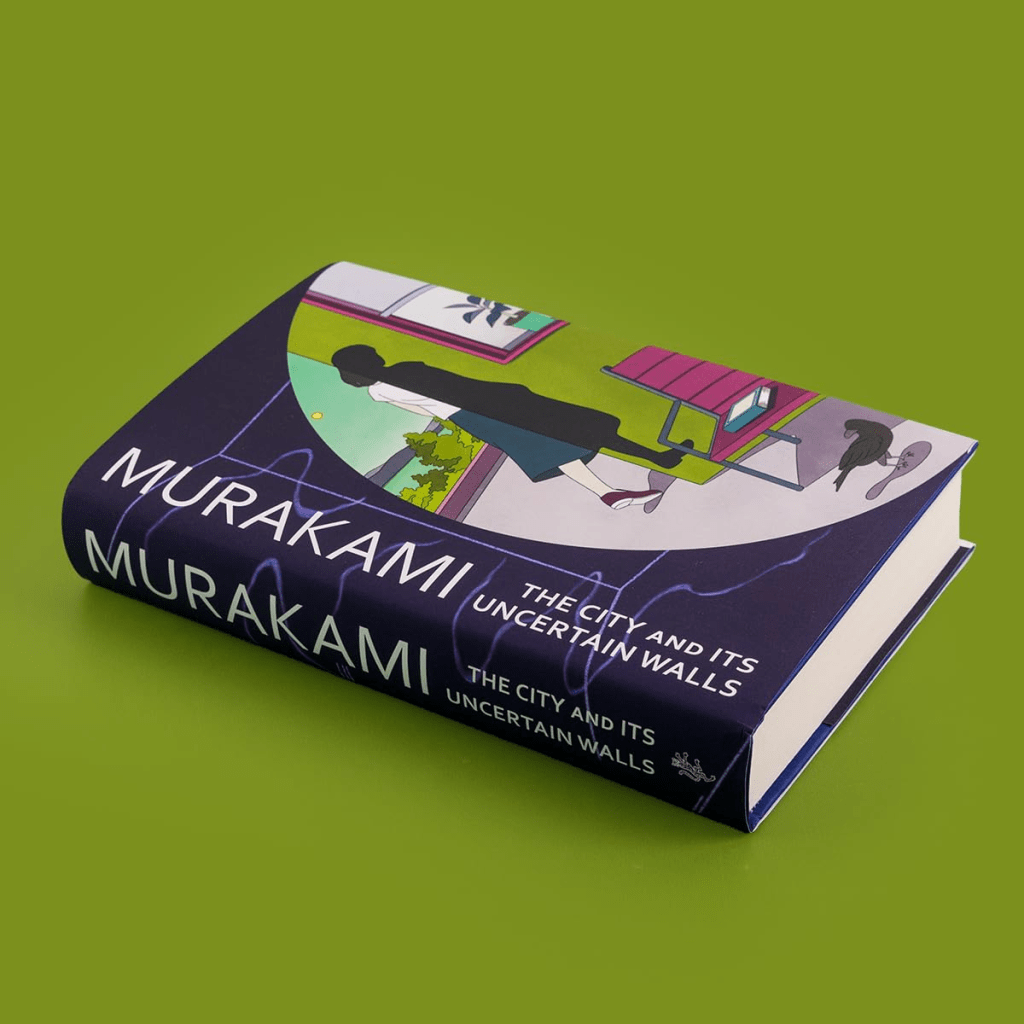
A book’s dust jacket can tell you a lot. The one covering the UK hardcover edition of The City and its Uncertain Walls has the word Murakami printed in large letters on the spine and front cover. No first name. Not Haruki Murakami, just Murakami. The author’s name is much larger than the title. The message is clear. Murakami is special. Murakami is a big deal. Murakami is a brand.

The publication of a new novel by Murakami is an event these days. Lots of advance publicity building anticipation among his millions of admirers around the world. Lots of talk about the Nobel Prize (which still eludes him), and pages of critical reviews. Has he lost his edge? Are the novels too bloated and self-regarding, etc. etc. All of this reflects the enormous global following he has attracted and can sometimes detract from what matters: the appreciation of the work.

This most recent novel has not been well received critically. Reviewers have focused a lot on the fact that it re-works an earlier novel and an even earlier novella published many years ago. Murakami himself addresses that in an Afterword. I have not read either of the earlier works, so my appreciation of The City and its Uncertain Walls was entirely unaffected. I found it to be an engaging, thought-provoking novel, marked by that distinctive atmosphere that is unique to Murakami. It is a novel, at least in part, about how to live. How to connect with others, how to be separate from them, and what that final separation – death – might mean. Murakami’s legions of fans won’t be surprised by any of this. What it really means to be an individual in a world of other individuals has always been his great interest. Our fundamental “aloneness” and singularity and how we deal with the expectation and reality of interaction with others. The boundaries and intersections between things, between individuals, between life and whatever might (or might not) come after, between what’s real and what isn’t, between fact and fiction – this is Murakami’s territory, and it’s all on display and explored in his inimitable style in his latest work.

Life, Death and Everything in Between

The earliest picture in this retrospective of Don McCullin’s career was taken in 1960 and the most recent in 2022. McCullin will always be pigeonholed as a “war photographer” because of the searing images he took in places like Vietnam, Cyprus, Northern Ireland, and Biafra. Many of his best-known photographs from such conflicts are included in this collection. The grieving Turkish widow, the shellshocked American soldier in Vietnam, the starving child in Biafra holding an empty corned beef can – pictures that shocked the world at the time and still have enormous power fifty or more years after those particular horrors were recorded. New battlegrounds have replaced the old, but the horrors persist. The grief, starvation, mutilation, and death that war and famine bring never go away. McCullin, who will be 90 this year, has turned his lens in recent times away from the war zones, choosing to focus in old age on landscapes and ancient monuments.

McCullin’s subject has always, it seems to me, been the resilience, dignity, and fragility of people tested to their limits by the cruelties and horrors imposed on them by their fellow human beings. What he has seen and recorded are experiences that words cannot describe. We need pictures to get anywhere close to those experiences and their meaning. That has been McCullin’s mission for more than sixty years and no one has done it more powerfully.