Tabula Rasa

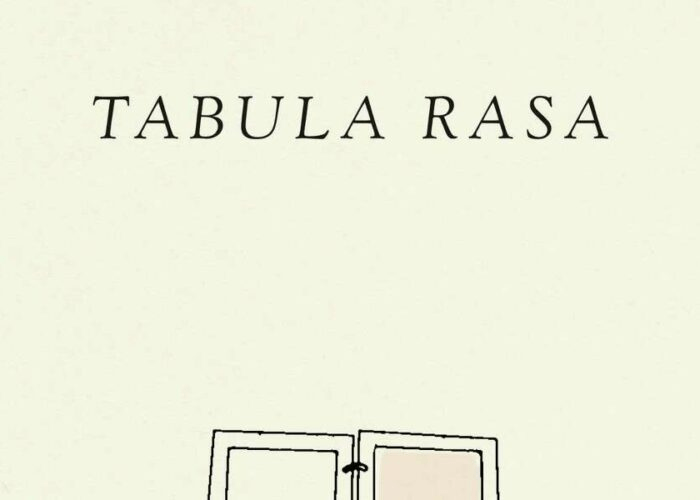
Although I have subscribed to The New Yorker for many years, I wasn’t at all familiar with John McPhee until I saw a copy of Tabula Rasa displayed at McNally Jackson’s store in SoHo in the run-up to the Christmas holidays. That now feels like culpable ignorance on my part, or at the very least a huge gap in my reading experience, because McPhee is something of a legend in American literature and regarded by many as a master of creative non-fiction. The elegant cover of the book was what drew my eye, and I knew after a quick glance at the opening essay in the collection that this was a must-read.

The pleasure I felt reading McPhee’s essays had little or nothing to do with their subject matter. Bridge building, fly fishing, training sessions with long-dead Princeton coaches, imposter syndrome. These, and many more, are subjects about which I know nothing and in which I have little interest. Yet when McPhee writes about them, my attention never wandered. Why? Because of the delight of seeing something done so well. The craft McPhee has mastered is fully visible in every essay, and the beauty of the overall effect is in no way compromised by its display. Read Tabula Rasa to marvel at good writing, if marveling is your thing, and to learn how tough and wonderful it is to turn experiences, memories, and feelings into the kind of prose that will surely last.


The Clementine Complex

Bob Mortimer isn’t well known in the US, but he’s something of a national treasure in the UK, famous as a quirky and offbeat comedian and TV personality. The Clementine Complex (published in the UK as The Satsuma Complex) is a silly and slightly fantastical yarn, as quirky and offbeat as its author. If your taste in fiction runs towards the light, the comic, and the eccentric (imaginary talking squirrels feature here, for example), this is for you.

Every Man for Himself and God Against All

Werner Herzog’s uncompromising gaze appears to challenge the reader from the cover of his autobiography Every Man for Himself and God Against All. “This is me, like it or not”, he seems to be saying, and that is very much the tone of this collection of essays about his life and work. And what a life he has had. Born in a remote part of Bavaria during the Second World War and raised in poverty and hunger, Herzog turned himself into one of the world’s most celebrated and accomplished filmmakers, driven by extraordinary determination, single-mindedness, and a unique artistic vision.

I first discovered Herzog’s films when I was a regular visitor to The National Film Theatre in London in my 20s. They made a big impression on me at the time, and I still think of Fitzcarraldo as one of my favorite movies. But the chapters in this essay collection devoted to the making of those films were for me, somewhat surprisingly, the least interesting. What will stick with me is the account of his boyhood in Bavaria and those early years making his way in Munich. He was a maverick, daredevil, and rule breaker from the very beginning, and he grew into the most marvelous storyteller.

Reading in 2023

I didn’t plan it that way, but my reading in 2023 seems to have been dominated by Irish fiction. Firm favorites like Sebastian Barry and John Banville appeared, but what pleases me especially is how many new names featured in 2023. Books by Elaine Feeney, Megan Nolan, Claire Keegan, Sara Baume, and Louise Kennedy all showed up last year and I’m very glad they did.

There were few turkeys in my choices. That’s a good sign and shows I was choosing wisely. That hasn’t always been the case. But it makes it very hard to choose my Book of 2023, so much so that I’m forced to pick two. Old God’s Time by Sebastian Barry and After The Funeral by Tessa Hadley. Brilliant books by two of my favorite living writers.