

What exactly is Kettle’s Yard? Is it a museum or a private home preserved for future generations? Both, I suppose. But it’s clear from the indelible impression it leaves on so many visitors that it acts in some mysterious way like no other museum or home, that for many it represents a different way to live, a way to put art and beauty at the center of life.
I’m not sure when I made my first visit. Most likely it would have been 1995 when I moved to Cambridge. I may have forgotten the date but the impact Kettle’s Yard made that day never left me. It seemed to me to be the perfect place to live. I suppose the art in the house was bound to make an impression because I had loved the work of David Jones, Barbara Hepworth, Henri Gaudier-Brezska and Ben Nicholson long before the visit. But it was more than that. And it was more than the pared back elegance of the house or the tasteful arrangement of everything. It was something to do with harmony and the determination you find in every part of the house to express a vision that art belongs in our domestic surroundings, not just in galleries and museums.
The house was the creation of Jim Ede. Ede didn’t achieve very much in conventional career terms. His great talent was for friendship and for supporting the artists whose work he loved. His patronage of the likes of Alfred Wallis, David Jones, and many others was fundamental to their careers and reputations. He had a special eye for bringing together and arranging artworks to create unique spaces. Kettle’s Yard was the ultimate expression of that gift, though it opened relatively late in Ede’s life.
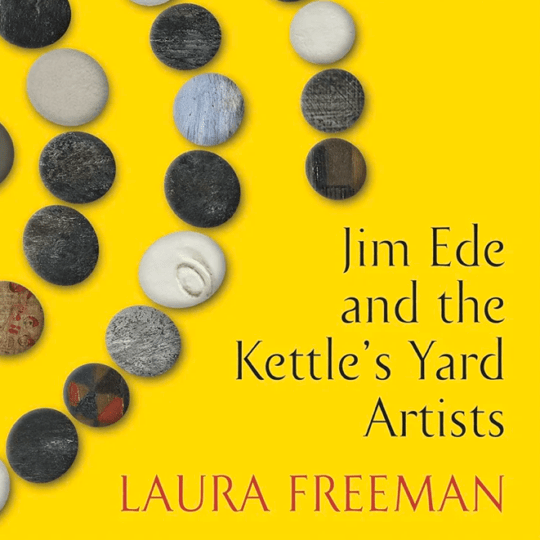
Ede comes alive in all his complexity in Laura Freeman’s wonderful and beautifully illustrated biography. It will delight anyone who has visited and loved Kettle’s Yard. I hope it drives many more who have never seen the house to visit for the first time.
 Miscellaneous Musings